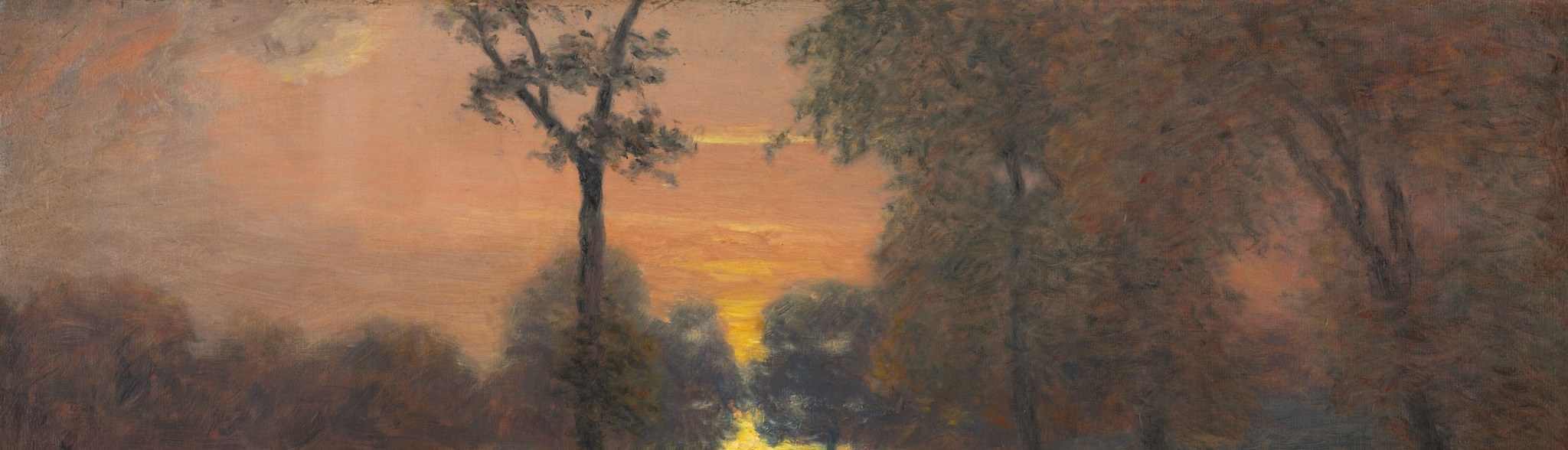
Evening by Hugh Huntington Howard (American, 1860–1927)
Hugh Huntington Howard's "Evening," painted in 1900, beautifully captures a moment of quiet transition at dusk. Held at The Cleveland Museum of Art, this painting reflects the artist's fascination with the fleeting beauty of natural light.
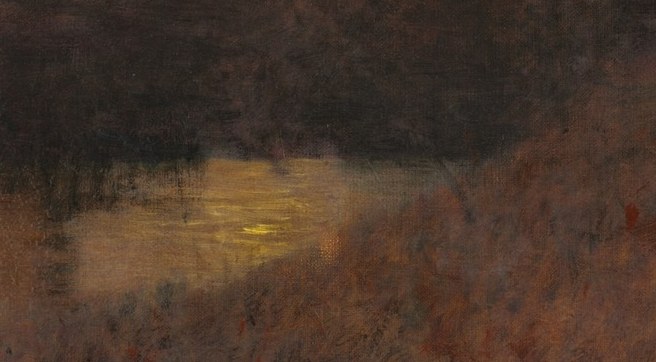
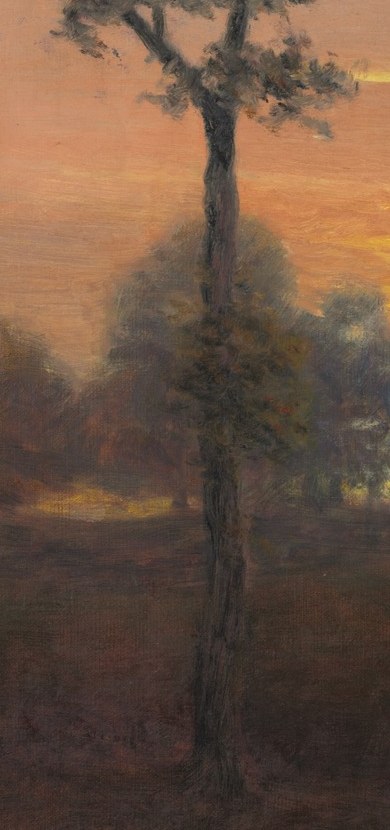
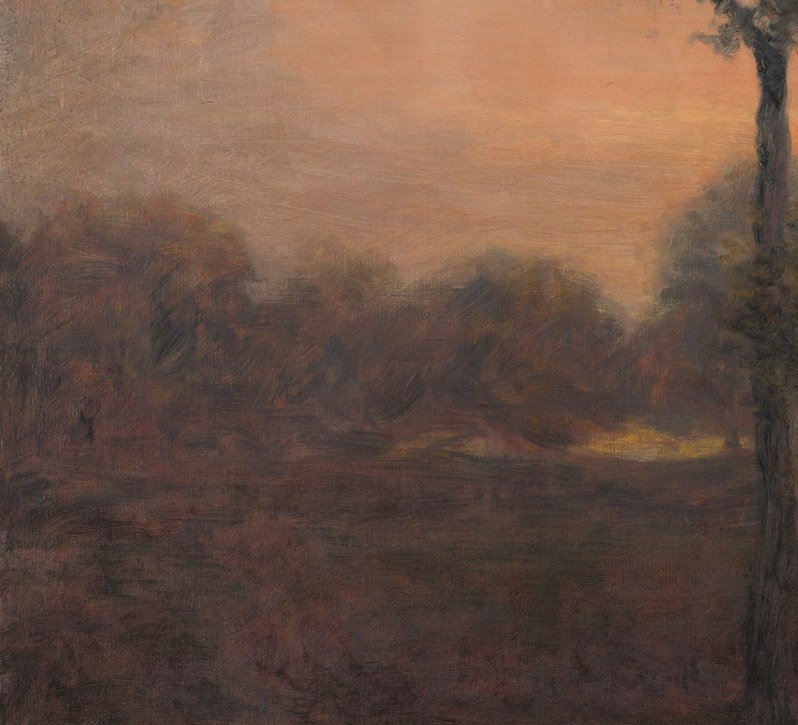
Notice the warm, luminous glow of the setting sun and the sky's rich, fading colors. The water's surface mirrors these tones, creating a tranquil atmosphere, while a solitary tree stands as a focal point against the darkening horizon.
Created at the turn of the twentieth century, this work is a representative example of Howard's landscape art, showcasing his bold brushwork and his ability to evoke deep atmosphere. It invites viewers to contemplate the serene beauty of the day's end.
What feelings does this quiet landscape evoke in you?
Details
Transcript
This American painter loved to capture fleeting moments. Look at the glow of the setting sun, a last burst of warmth. The sky is awash in these warm, transitional colors. His brushwork captures light reflecting on calm water. A solitary tree stands against the fading light. It's the turn of the century, 1900, a time of change. He captures the quiet beauty of evening, a moment of transition.