The Entombment by Titian
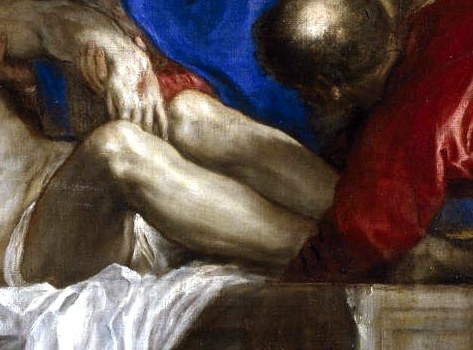
Titian's 1559 painting, The Entombment, in the Museo del Prado, Madrid, was the second version commissioned by Philip II of Spain, after the first was lost in transit.
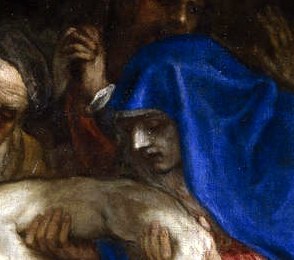
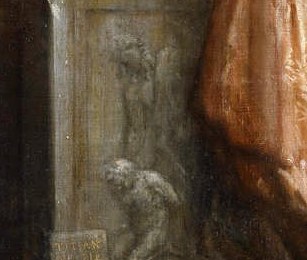
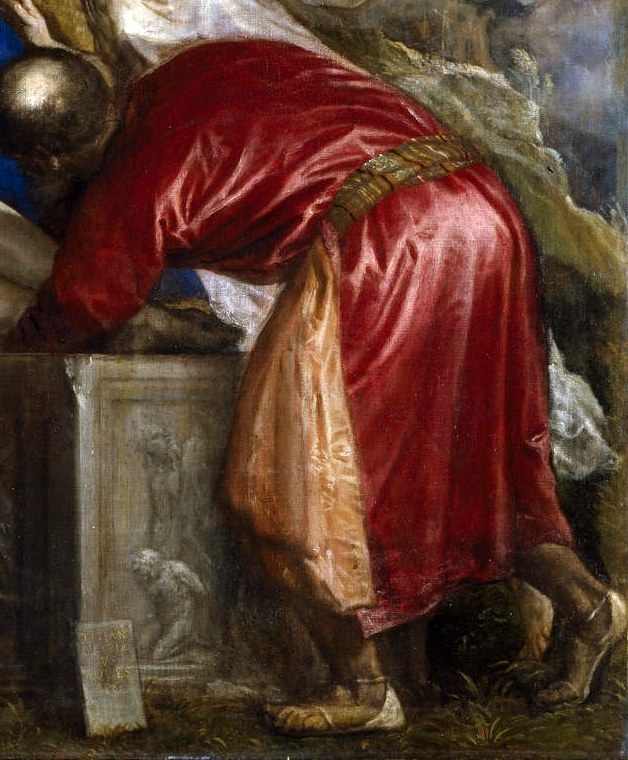
Look closely at the symbolism within the painting. The vibrant blue of the Virgin Mary's mantle is a traditional color representing her sorrow and divine status. But perhaps most striking are the carvings on the sarcophagus itself.
These detailed reliefs show scenes from the Old Testament: Cain and Abel, and the binding of Isaac. These stories were often understood as foreshadowing Christ's own sacrifice and the redemption of humanity. Titian masterfully weaves these theological layers into the visual narrative, grounding the New Testament event in a rich biblical history.
This painting arrived at El Escorial in 1574, displayed alongside other works by Titian, solidifying its place in the Spanish royal collection. What other details do you notice?
Details
Transcript
This painting was commissioned by Philip II of Spain. The composition centers on the lifeless body of Jesus Christ. The Virgin Mary's blue mantle symbolizes sorrow and divinity. Now look at the sarcophagus where Christ is being laid. Its carvings depict Cain and Abel and the binding of Isaac. These Old Testament scenes foreshadow Christ's ultimate sacrifice. Titian painted this as the second version for the King.