Catching Wild Horses - Pawnee by Catlin, George
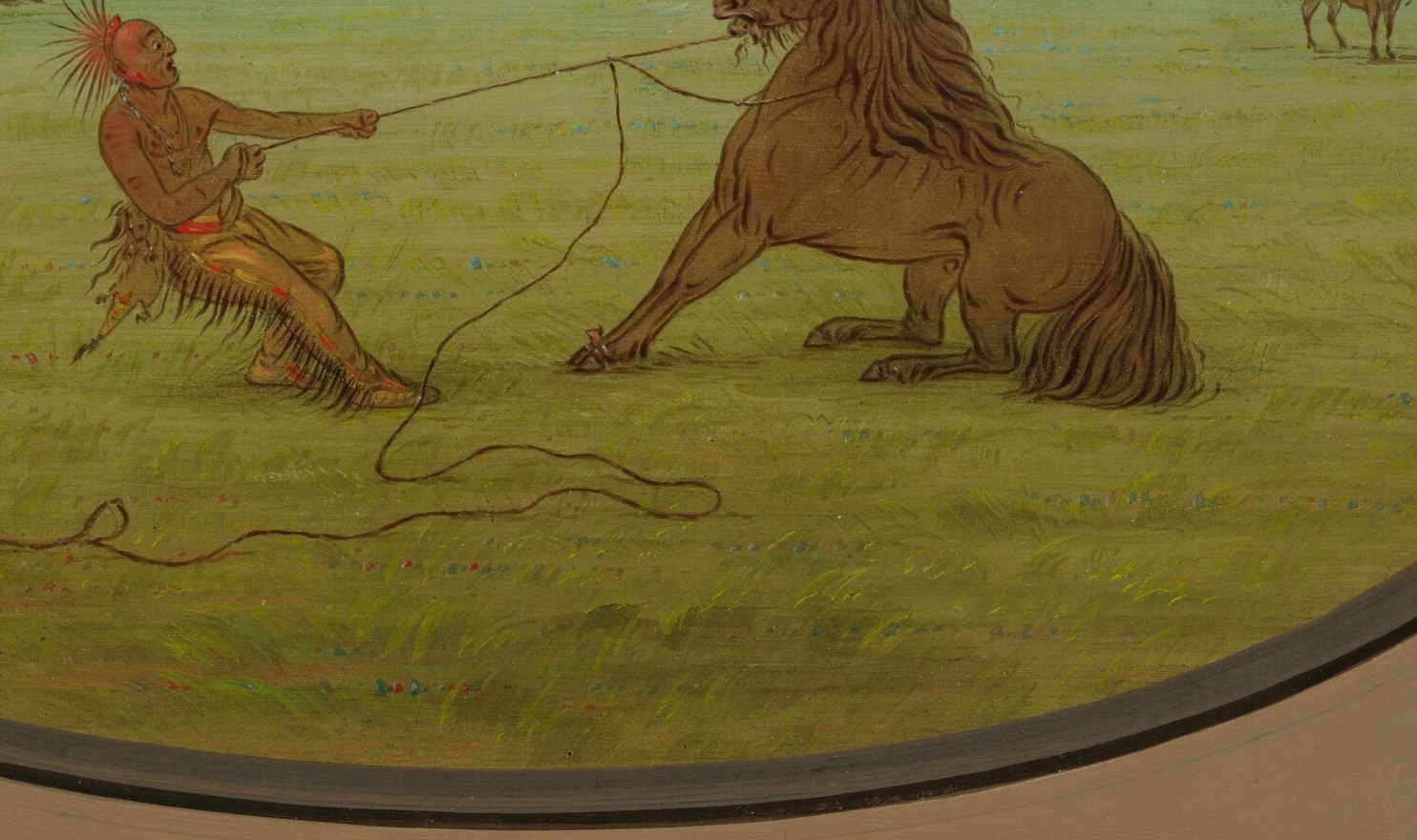
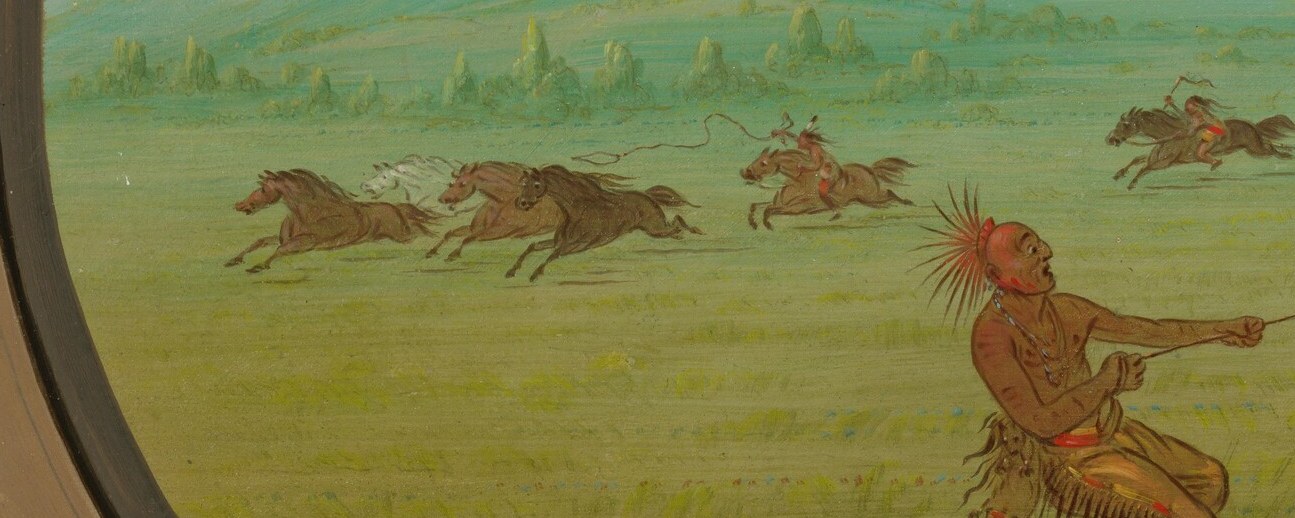
George Catlin, an American lawyer turned painter, dedicated his life to documenting Native American life on the frontier. His painting, *Catching Wild Horses - Pawnee* (1861/1869), now at the Smithsonian American Art Museum, captures a dynamic chase scene on the Great Plains.
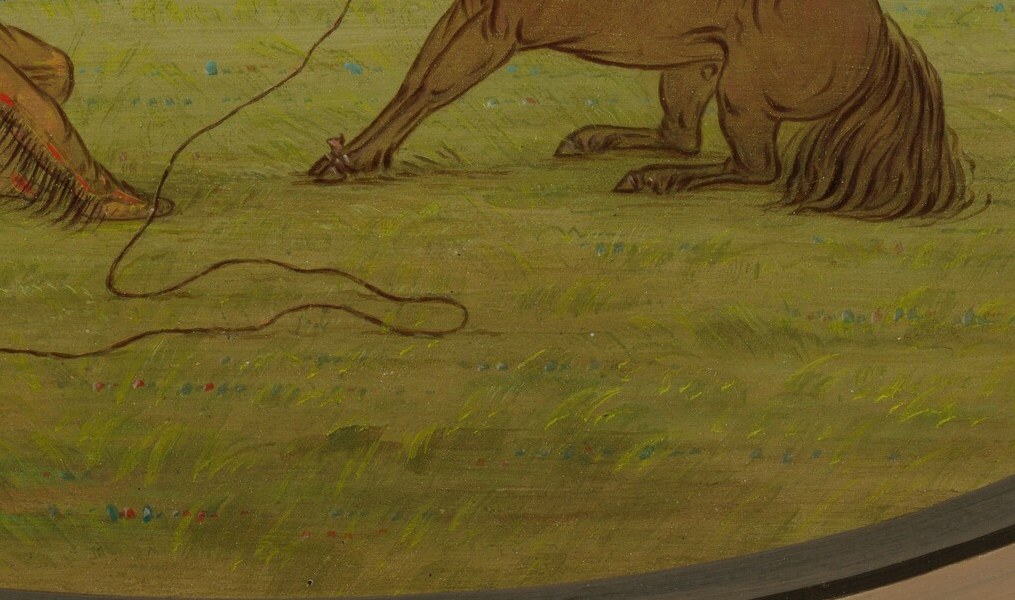
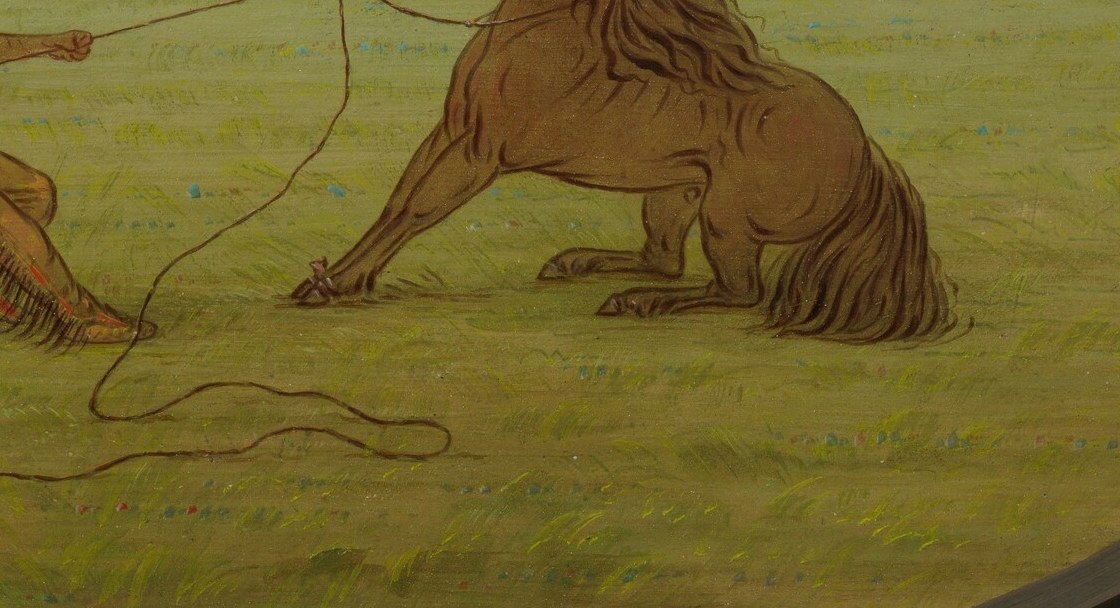
Look closely at the central Pawnee rider, whose traditional attire reflects cultural practices. The artist's loose brushstrokes convey the raw power and resistance of the wild horse struggling against the lasso, highlighting the challenges and significance of horse capture within Plains societies.
Catlin traveled the American West extensively in the 1830s, producing a vast visual record of indigenous customs and landscapes. This painting, created in his later period, serves as an ethnographic record, preserving the customs of Plains tribes amidst a rapidly changing frontier.
It offers a valuable glimpse into 19th-century representations of Native American life and the intimate relationship between the Pawnee people and the horses they depended on.
Details
Transcript
In the 1830s, this artist traveled the American West. He aimed to document the lives of Plains Indian communities. This rider, in traditional Pawnee attire, captures a wild horse. Catching wild horses was vital for subsistence and culture. Notice the struggle, captured with loose, gestural brushstrokes. This work preserves a disappearing custom of the American frontier.