The Furnace by Carl Gaertner (American, 1898–1952)
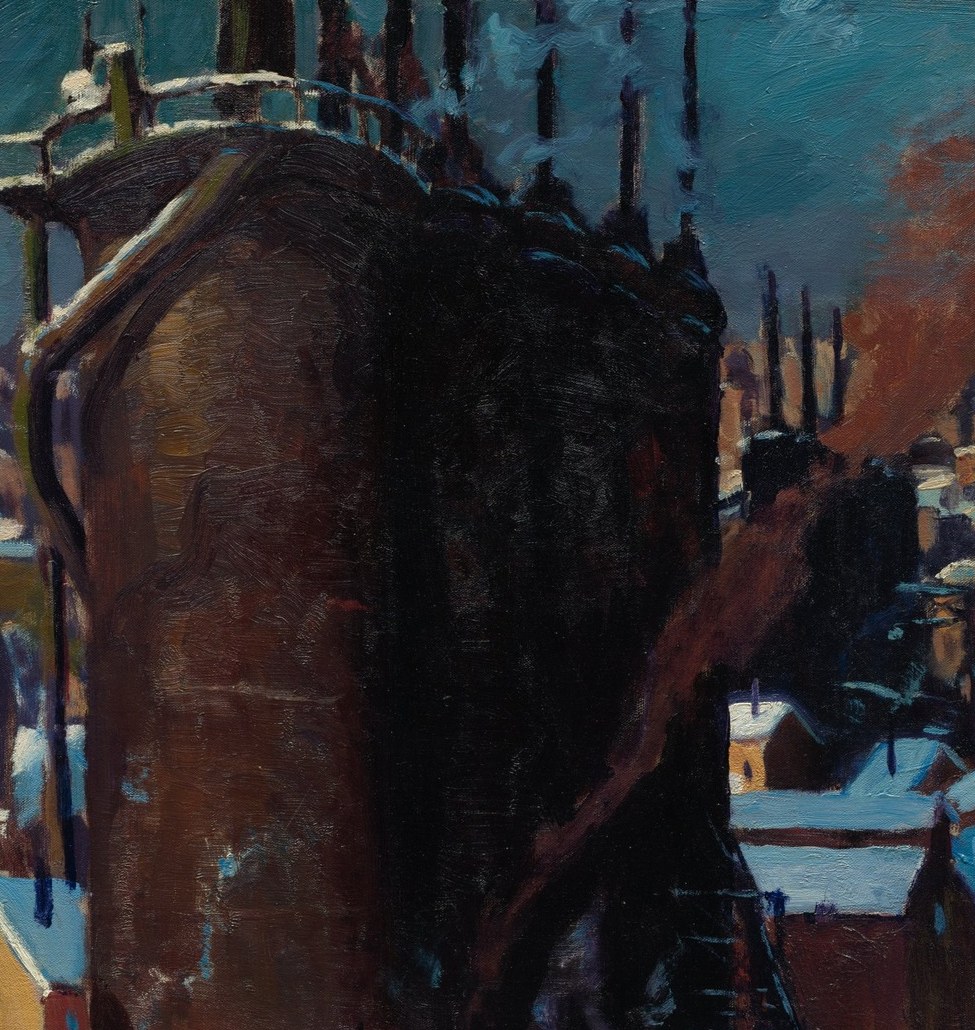
Carl Gaertner's 'The Furnace,' painted in 1924, offers a stark look at industrial Cleveland during a period of rapid expansion. This oil painting, now at the Cleveland Museum of Art, captures the city's powerful manufacturing identity.
Observe the imposing furnace dome and its orange plume, signaling continuous activity. Even against the snow-covered rooftops, the factory dominates, dwarfing the small figures navigating the cold urban environment. Gaertner's muted palette emphasizes the scene's gravitas and the pervasive presence of industry in daily life.
Gaertner, a Cleveland native who studied and taught at the Cleveland Institute of Art, frequently depicted his city's factories and labor in his early career. 'The Furnace' reflects his interest in documenting the modern urban environment, bridging Impressionist aesthetics with a documentary sensibility. The painting has remained within the Cleveland area, illustrating its local art historical significance.
What details in this winter industrial scene surprise you most?
Details
Transcript
This is Cleveland, 1924, a city of steel and industry. The painter often documented his city's industrial landscape. This massive furnace dome was the beating heart of industry. Its orange plume signals constant, intense activity, even in winter. Small figures navigate the snow, dwarfed by the factory's scale. Life continued around the ceaseless work of manufacturing. This painting captures Cleveland's powerful industrial identity.