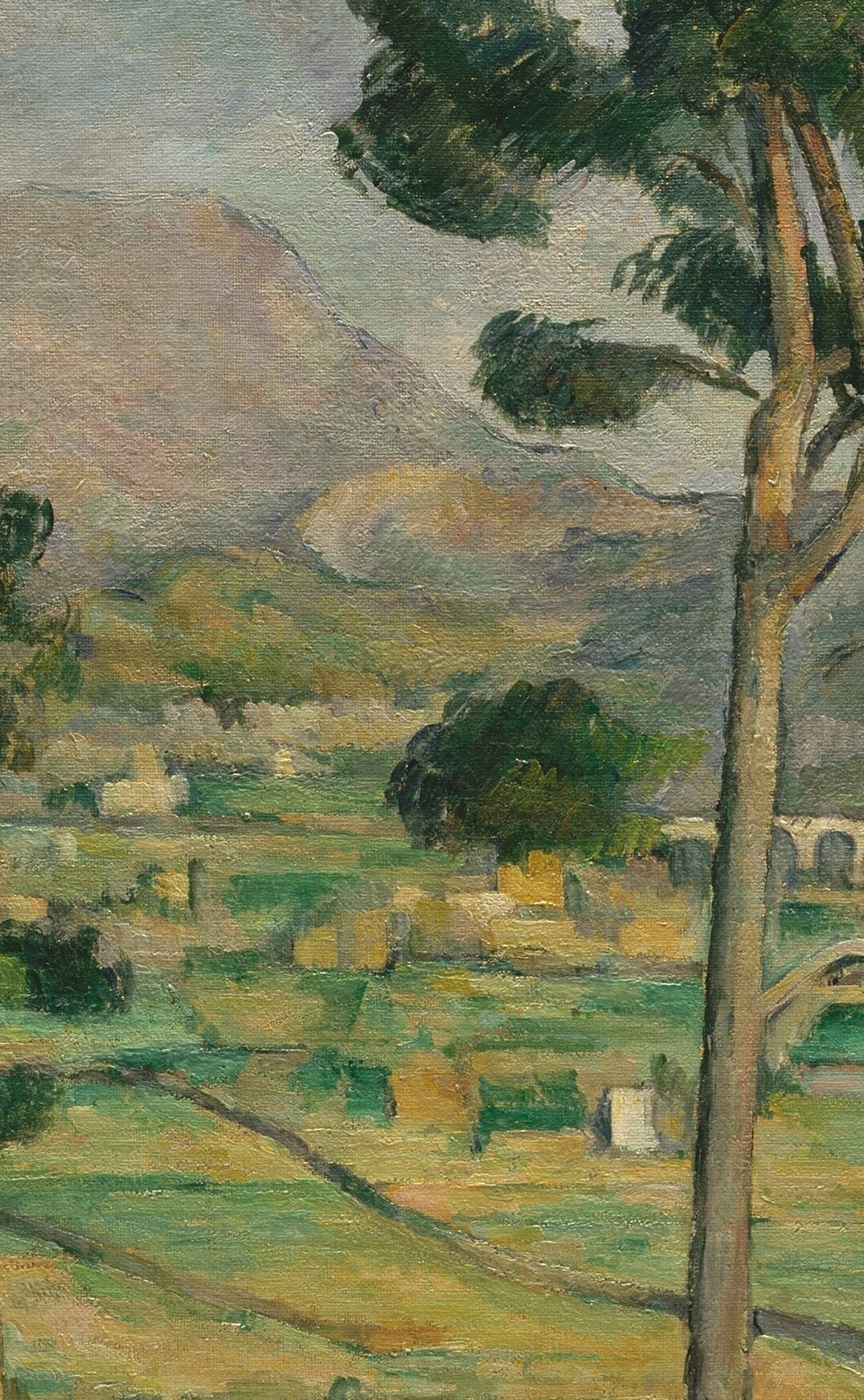
Mont Sainte-Victoire and the Viaduct of the Arc River Valley by Paul Cézanne
View the artwork: Mont Sainte-Victoire and the Viaduct of the Arc River Valley →
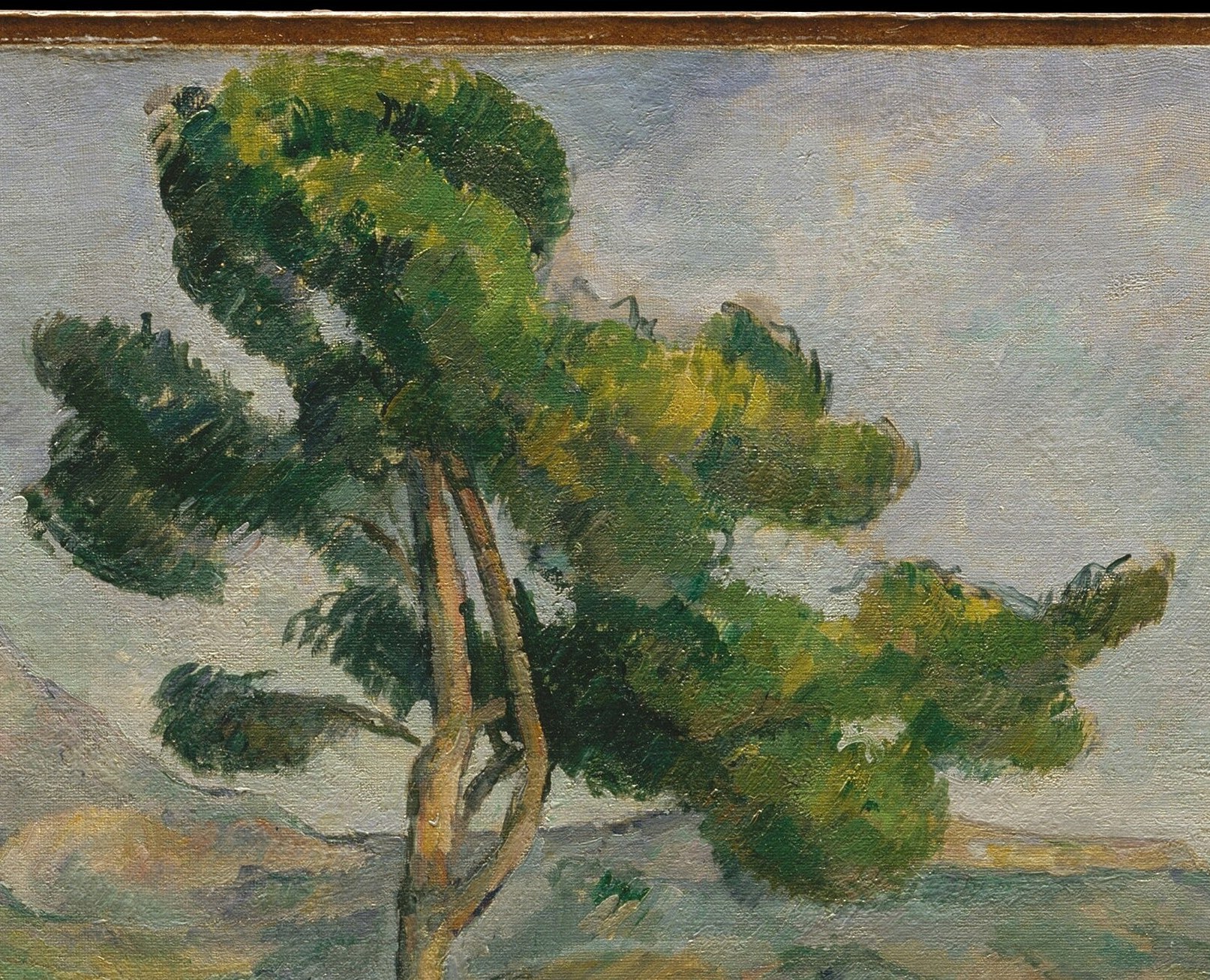
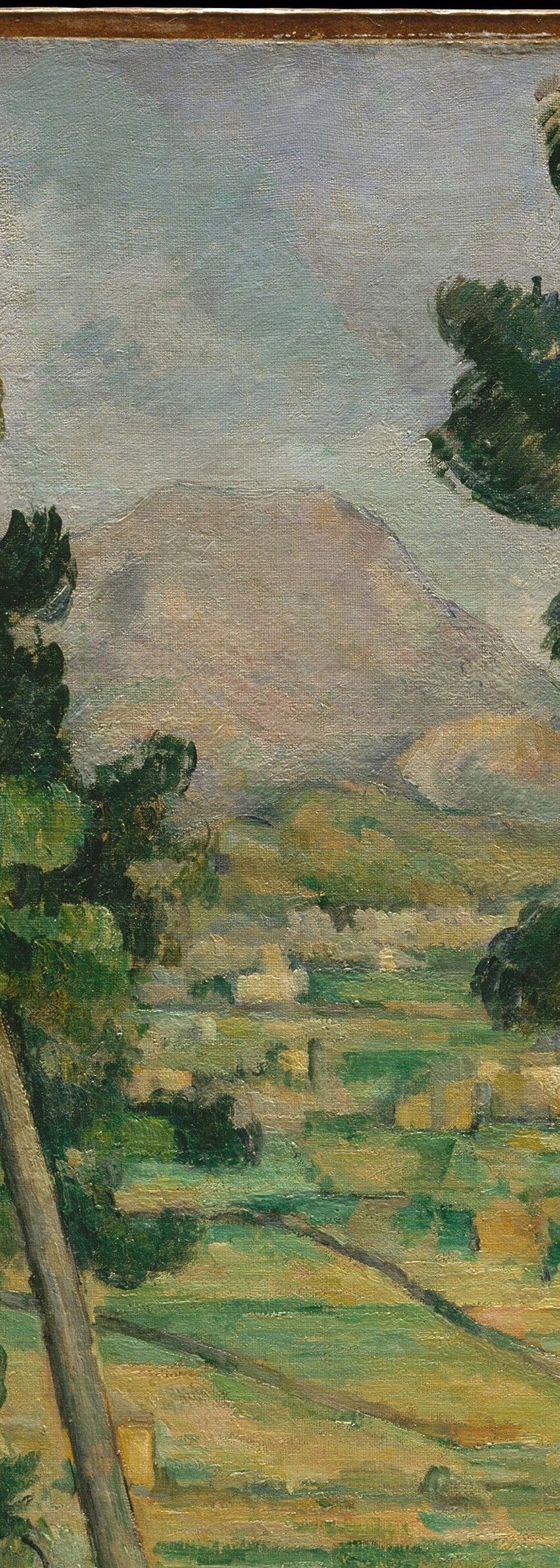
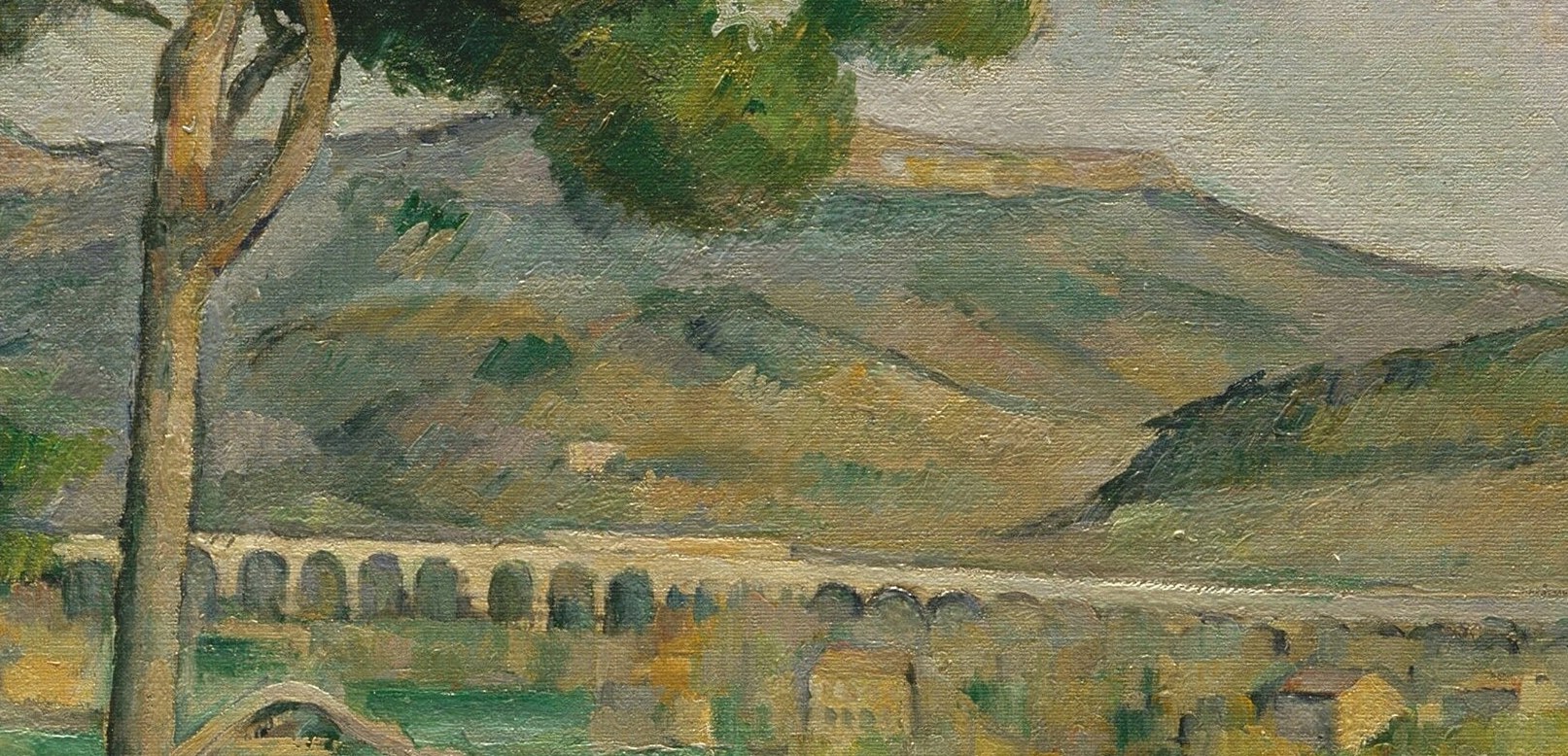
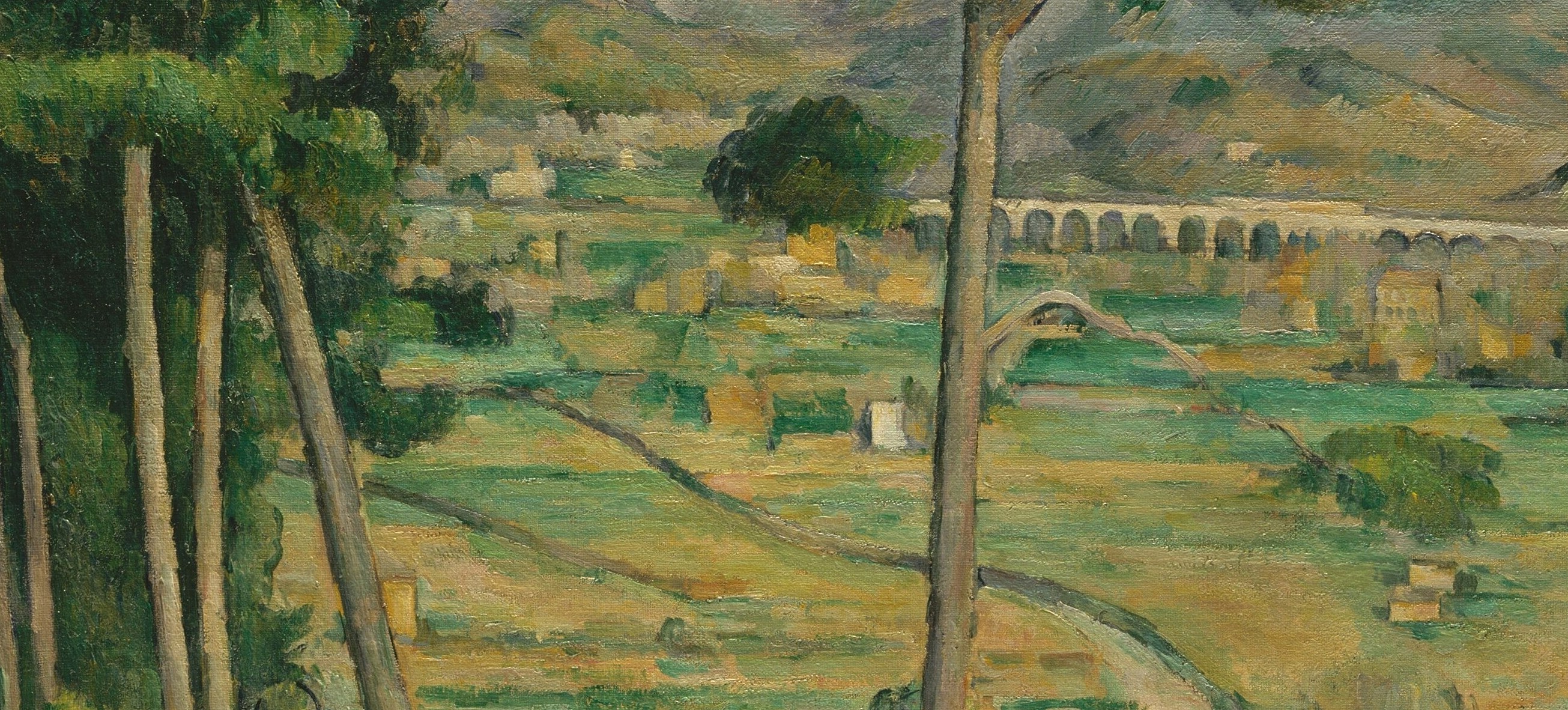
Mont Sainte-Victoire and the Viaduct of the Arc River Valley, painted by Paul Cézanne between 1882 and 1885, entered the Metropolitan Museum of Art not through a quiet gallery sale but through a saga of wartime panic and a secret apartment hideaway.
Look at the painting itself. The towering pine on the left frames the mountain like a curtain pulled back. The stone viaduct's repeating arches cut a perfectly horizontal line across the middle distance, a mark of human engineering in a landscape Cézanne is busy dissolving into flat patches of green and ochre. His brushwork turns the valley floor into an abstract mosaic, each stroke a distinct plane that seems to build the world rather than merely describe it.
The painting once belonged to Henry and Louisine Havemeyer, the great American sugar-refining patrons who amassed one of the most significant collections of 19th-century European art. When Louisine died in 1929, the bulk of the collection was bequeathed to the Met, but her children retained a number of masterpieces, including this Cézanne. Two decades later, during the Second World War, with the fate of European art uncertain and the family anxious about holding such a recognizable asset, they hid the painting in an empty apartment on East 66th Street, wiring it to the ceiling among dangling ropes and bare walls. It sat there, motionless, through the war.
Cézanne could not have imagined this journey for his quiet view of his hometown. The painting survived the secrecy and eventually made its way to the museum as intended. Next time you pass through the Met's 19th-century galleries, look for it: a landscape that kept a very dangerous secret.
#arthistory #cezanne #metmuseum
Details
Transcript
It was 1942. A priceless collection sat hidden in a bare New York flat. Louisine Havemeyer had willed it all to the Met in 1929. But her children kept many treasures back. Now look deep into this peaceful French landscape. As the Nazis swept Europe, the family panicked. This painting was too famous to sell or ship. They wired it to the ceiling of an empty apartment on East 66th Street. The ropes held. The painting survived. And the war finally ended. After her death, it crossed Central Park to the Met, the viaduct as solid now as ever.