Artwork
Mont Sainte-Victoire and the Viaduct of the Arc River Valley
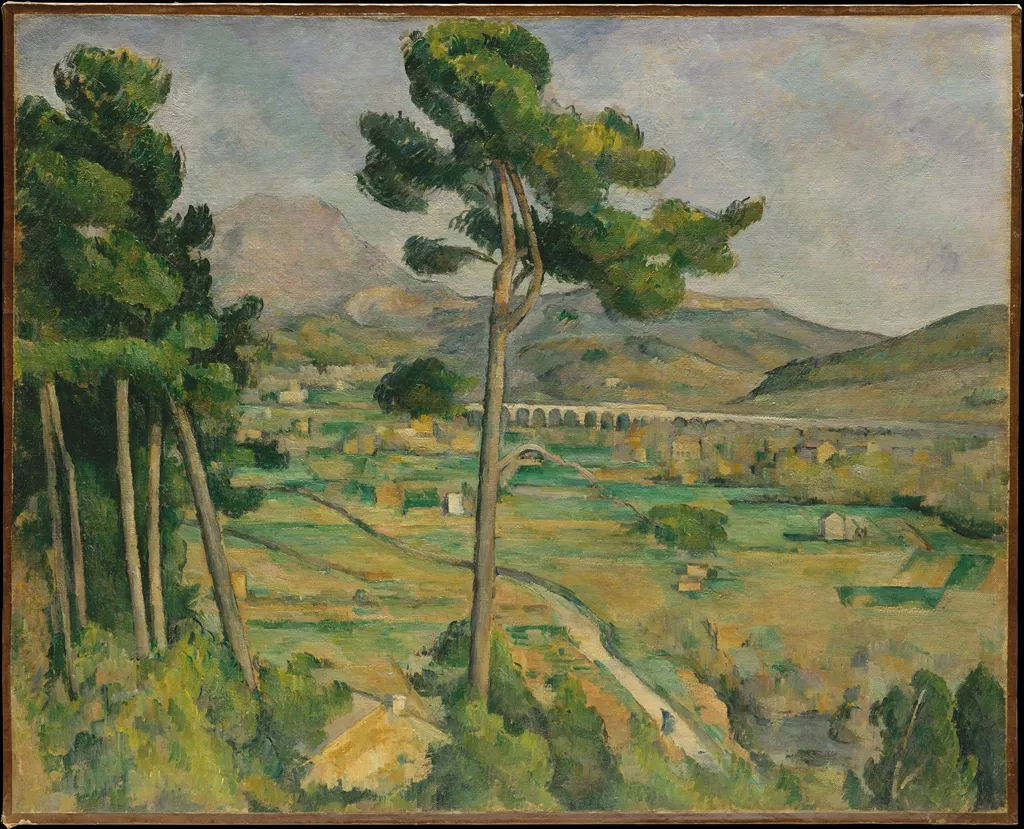
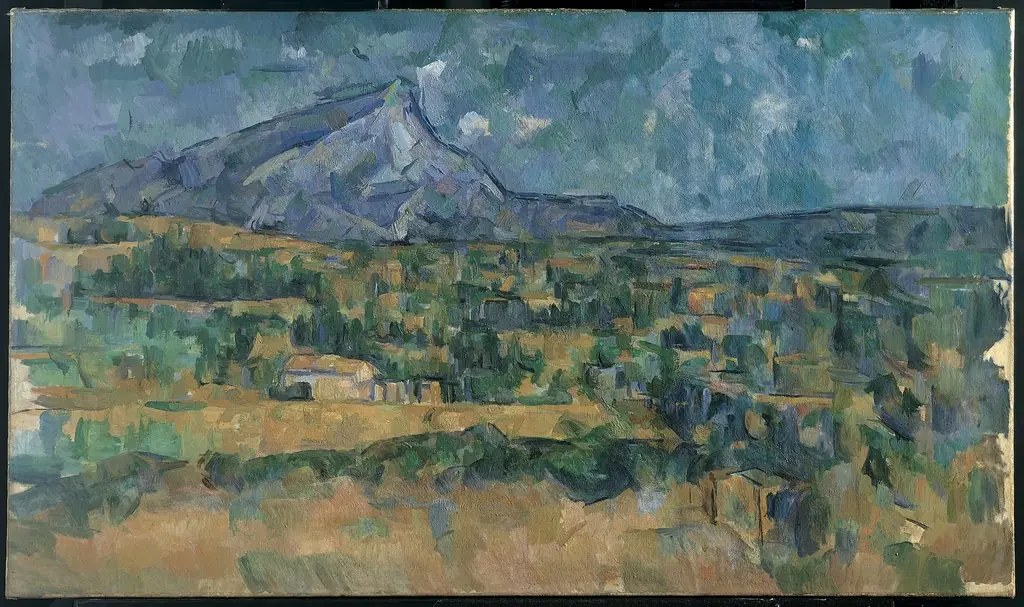
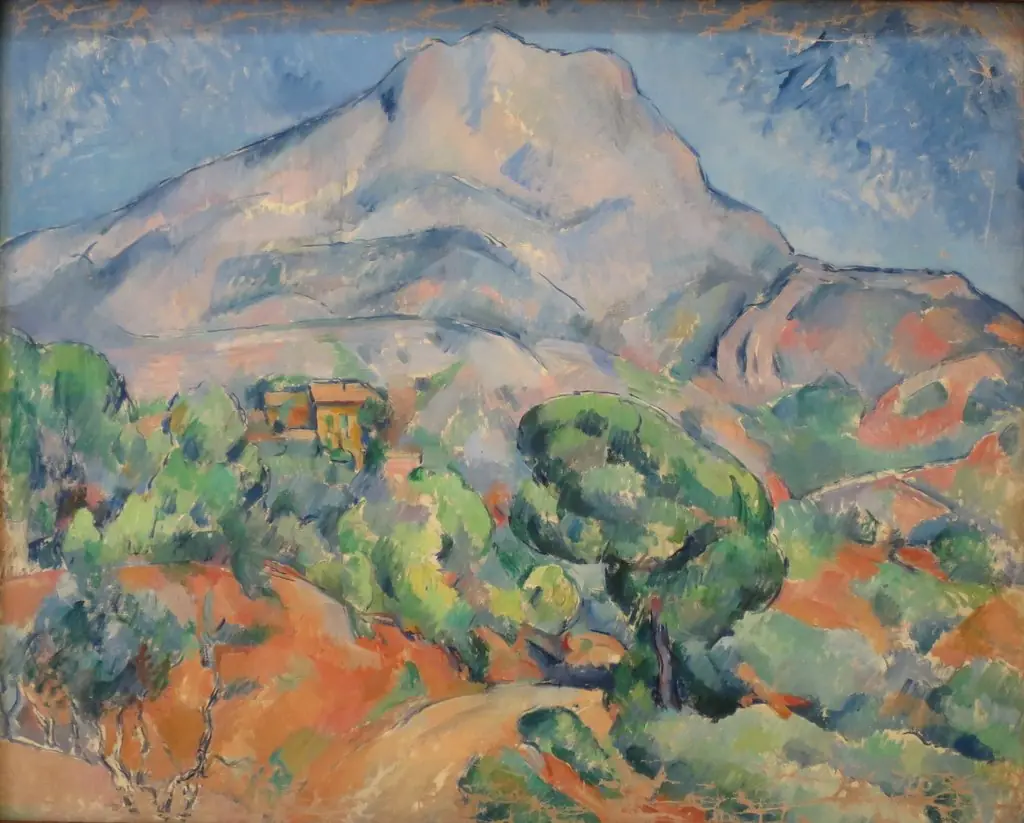
Mont Sainte-Victoire and the Viaduct of the Arc River Valley is an oil painting by the Post-Impressionist artist Paul Cézanne. It dates from 1892 and is held in the collection of the Metropolitan Museum of Art.
About this work
Subject & Meaning
In the distance the town of Aix-en-Provence is visible, anchoring the scene in Cézanne's native landscape.
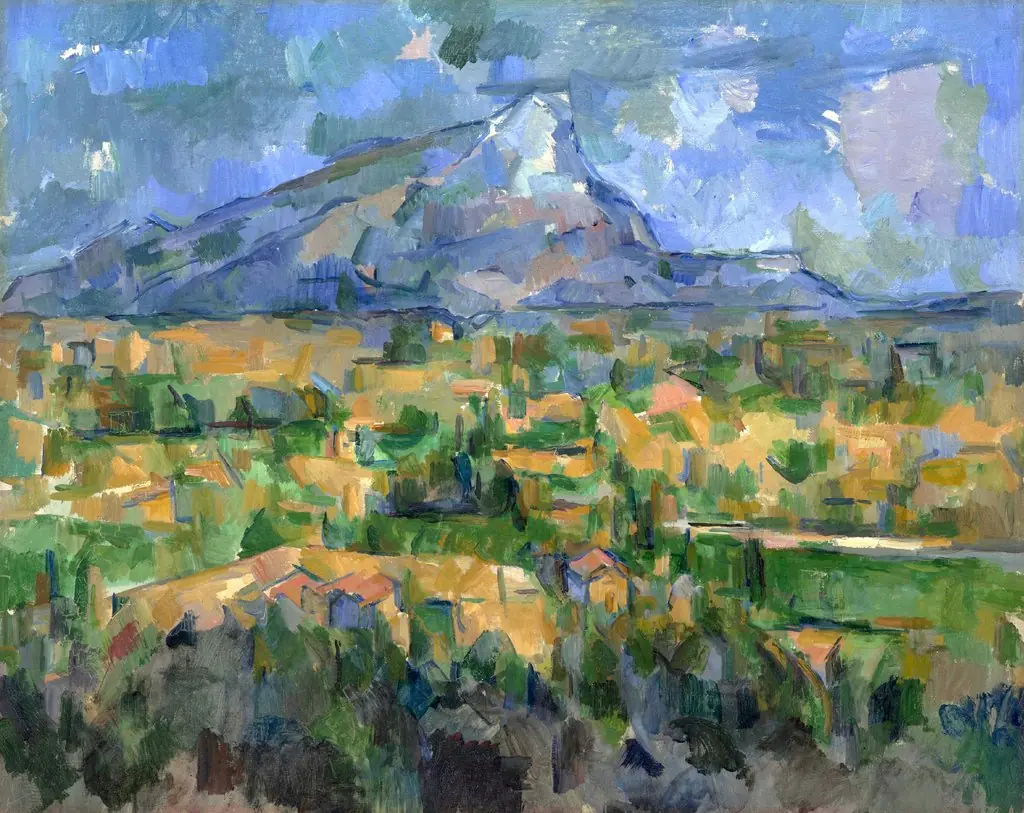
The painting centers on Mont Sainte-Victoire, the limestone massif that dominates the Aix-en-Provence horizon, while the Arc River valley stretches below and the Aix–Marseille railway viaduct crosses near the centre-right of the composition. In the distance the town of Aix-en-Provence is visible, anchoring the scene in Cézanne's native landscape. The work reflects the artist's 1878 letter to Émile Zola, in which he hailed the view from the train as a "beau motif," and belongs to his sustained series devoted to the mountain.
By juxtaposing the enduring massif with the modern railway bridge, Cézanne records both the timeless natural site and the contemporary infrastructure transforming the Provençal countryside.
Technique & Style
The work is an oil painting on canvas, a typical support for Cézanne's mature landscapes. Its handling involves building up layers of paint to create a series of horizontal planes that lead the eye into the depth of the scene. Stylistically, it belongs to Cézanne's later period, in which he sought to make Impressionism solid and durable by structuring nature with geometric, almost architectural forms, while retaining a luminous, atmospheric quality.
The painting's modest dimensions (approximately 65.5 × 81.7 cm) and its horizontal format emphasize the sweeping vista of Mont Sainte-Victoire, the viaduct, and the Arc River valley.
History & Provenance
Paul Cézanne created Mont Sainte-Victoire and the Viaduct of the Arc River Valley in 1892, during his mature period. The work was inspired by views of the railway bridge crossing the Arc River Valley, which Cézanne first praised as a "beautiful motif" in an 1878 letter to Émile Zola. The painting passed through the hands of the dealer Ambroise Vollard before entering the collection of Henry and Louisine Havemeyer.
Following Henry Havemeyer's death in 1907, ownership transferred to his wife, Louisine. Upon her death in 1929, the painting was bequeathed to the Metropolitan Museum of Art in New York as part of the Havemeyer collection. The available sources do not list a specific accession number or detailed exhibition history.
Legacy
Recognized as one of Cézanne's celebrated works, this painting is an example of his mature period, in which he sought to render Impressionism with the solidity of museum art. The work belongs to the enduring Mont Sainte-Victoire series, inspired by views from the Aix–Marseille railway line. As an exploration of depth through horizontal planes, it contributed to the trajectory of modern landscape painting.
Its significance is underscored by its provenance within the celebrated Havemeyer collection before entering the Metropolitan Museum of Art in 1929, ensuring its continued study as a link between Impressionism and the structural approaches that would define later modernism.
Overview
Mont Sainte-Victoire and the Viaduct of the Arc River Valley is an oil painting by French artist Paul Cézanne, created between 1882 and 1885. This landscape work captures a view of the Montagne Sainte-Victoire, a prominent peak near his home, alongside the Arc River valley. The composition offers a perspective on the natural environment surrounding Aix-en-Provence, a region Cézanne frequently depicted throughout his career.
Own this work as a print
Artist & collection

Artist
Paul Cézanne ( say-ZAN, UK also siz-AN, US also say-ZAHN; French: ; Occitan: Pau Cesana; 19 January 1839 – 22 October 1906) was a French Post-Impressionist painter whose work introduced new modes of representation,…