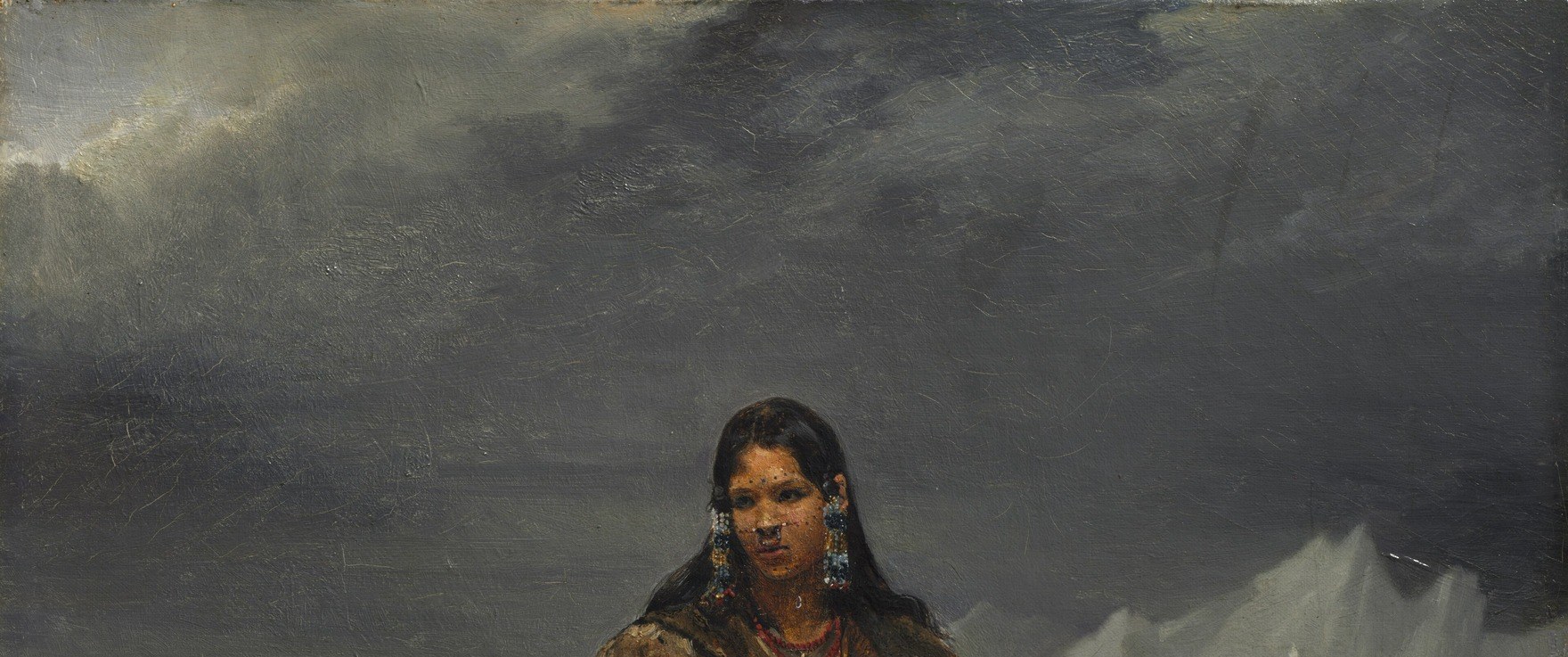
A Woman from the Land of Eskimos by Léon Cogniet
Léon Cogniet's 'A Woman from the Land of Eskimos' (1826) is often a painting people scroll past, mistaking it for a simple ethnographic study. Look a moment longer, and a much sterner story emerges from the shadows of this Cleveland Museum of Art canvas.
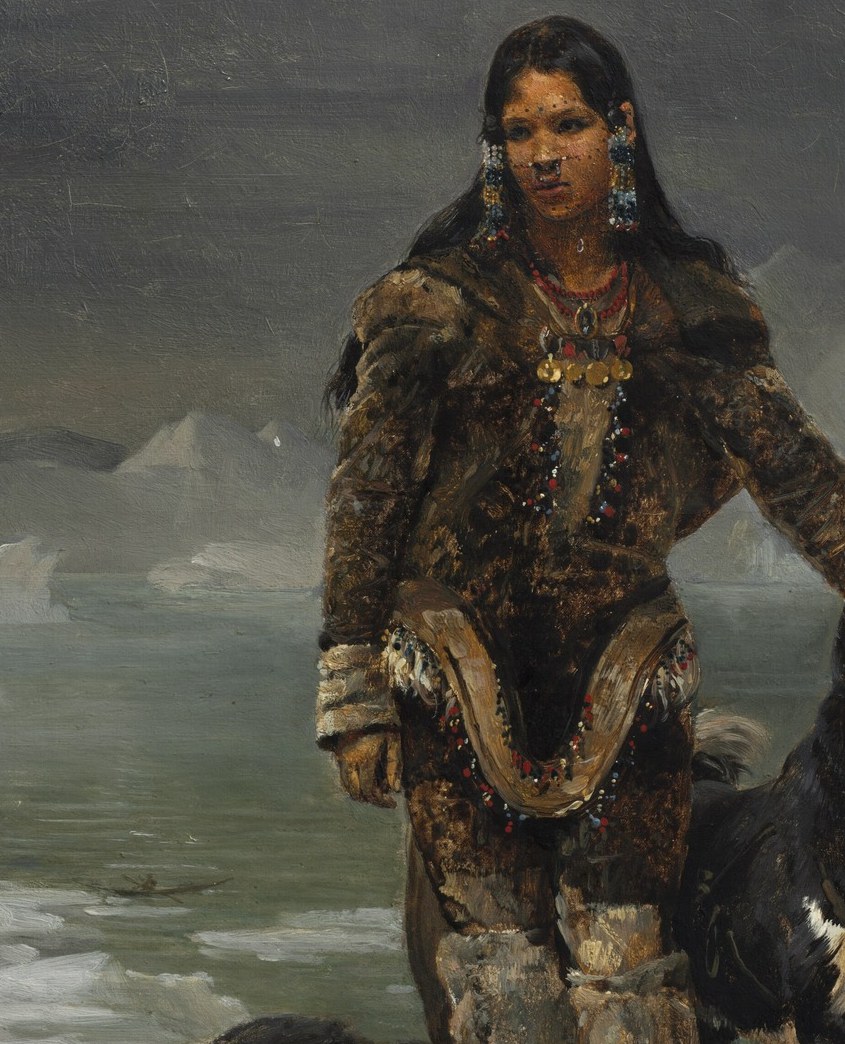
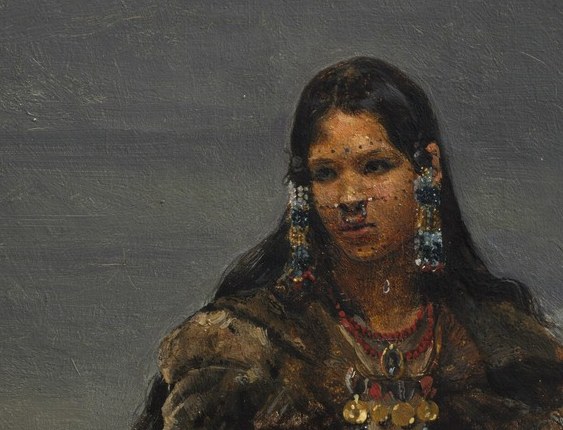
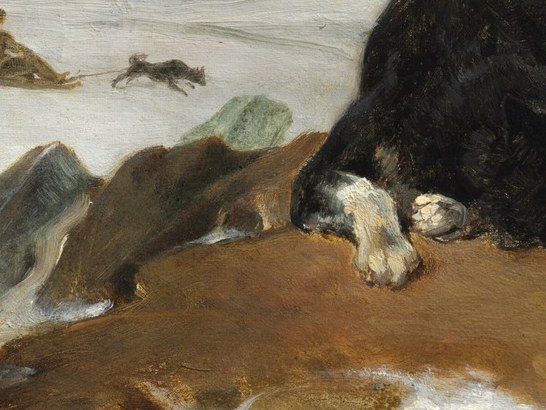
Find the woman's face first. Her expression is direct, composed, and utterly unsentimental. She holds a dog on a leash, her grip suggesting active mastery, not passive subjecthood. But the painting's most startling detail lies almost swallowed by the dark rocks at her feet: a human skull, half-hidden in the wet stones. It is a quiet memento mori, a reminder that this is not a romantic allegory but a document of real survival on the edge of the Arctic.
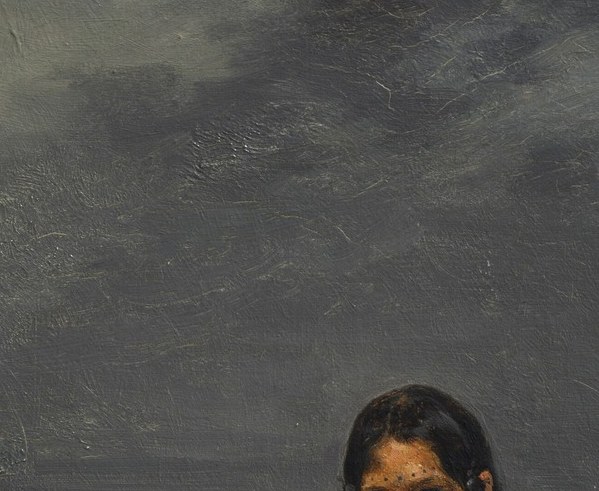
Cogniet was a French academic painter and a celebrated teacher, yet this work is unusually raw. He uses rough, agitated brushwork in the sky to create a sense of Romantic drama, but the ethnographic specifics of her beaded coat and the skin tent on the right ground the picture in lived reality. Even the tiny, barely visible figure rowing in the far background reinforces the idea: this is a place of ongoing human activity and community, not an empty wilderness.
It is a painting that rewards slow looking. The longer you stay with the woman's steady gaze, the more the title feels like an outsider's label, and the more the image itself insists on something truer.
Details
Transcript
Everyone sees a woman in a fur coat on a rocky shore. Her expression is direct, unsentimental. She is not a curiosity. The painter, Léon Cogniet, titled this in 1826. That name framed her as an exotic 'other'. The picture tells a harder truth. Look down. In the shadow by her feet, a human skull. The setting is not an idea of the Arctic. It is a place of life and death. And far back on the water, almost invisible, someone is rowing. A community endures here. This is a portrait of resilience.