Winter at Nordstrand by Edvard Munch
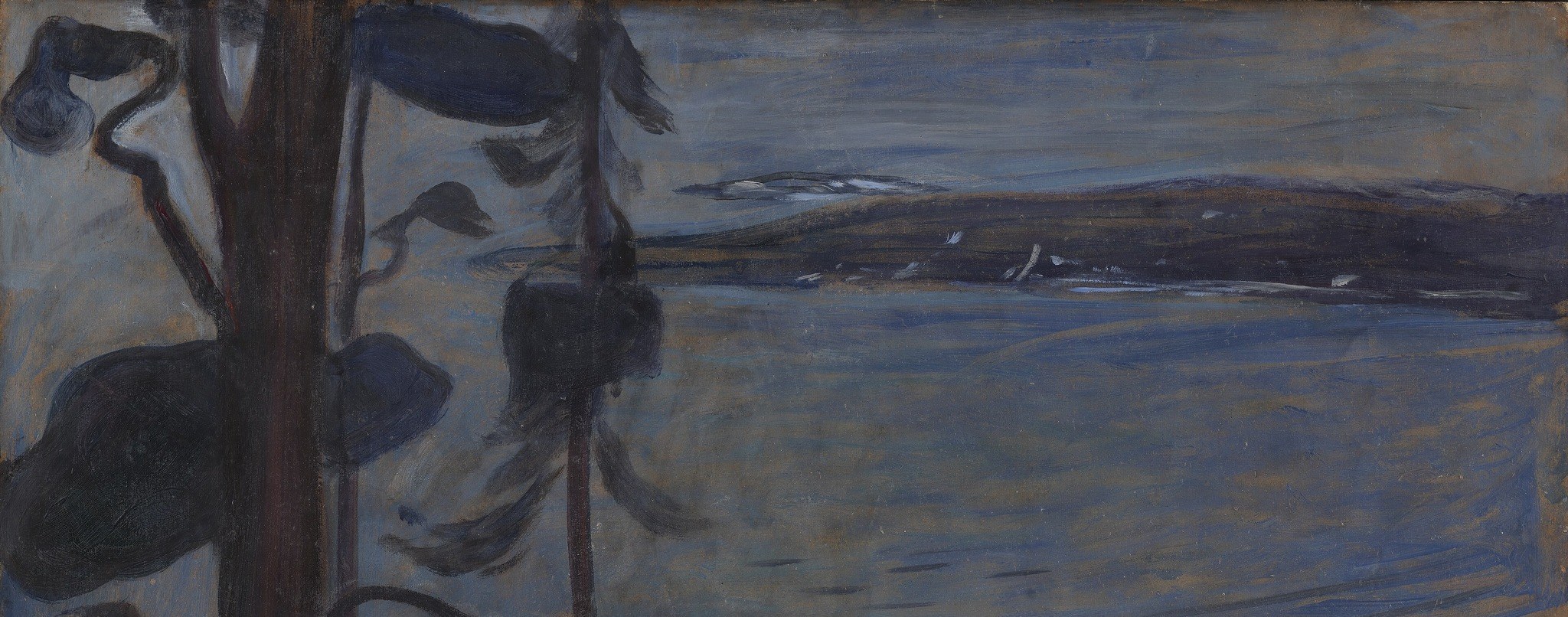
Edvard Munch's "Winter at Nordstrand," painted in 1900, captures a stark, snow-covered scene that resonates with the artist's deeply personal exploration of emotional landscapes. Housed at the Statens Museum for Kunst, this oil painting offers a quiet reflection on isolation and the human condition.
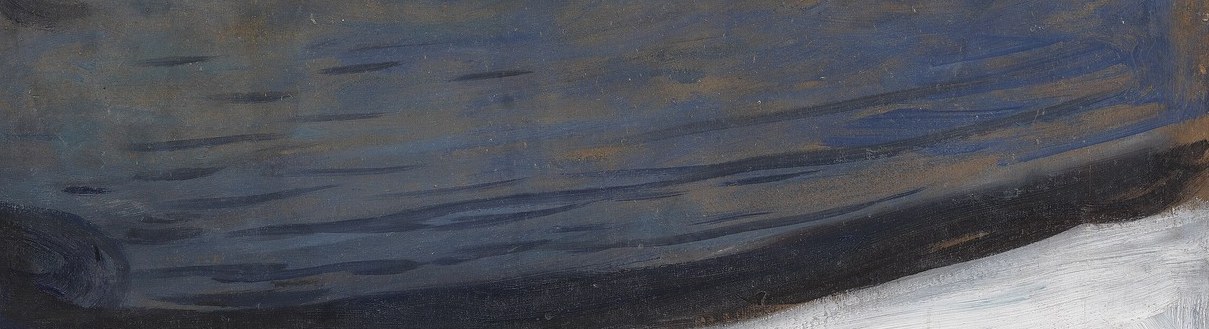
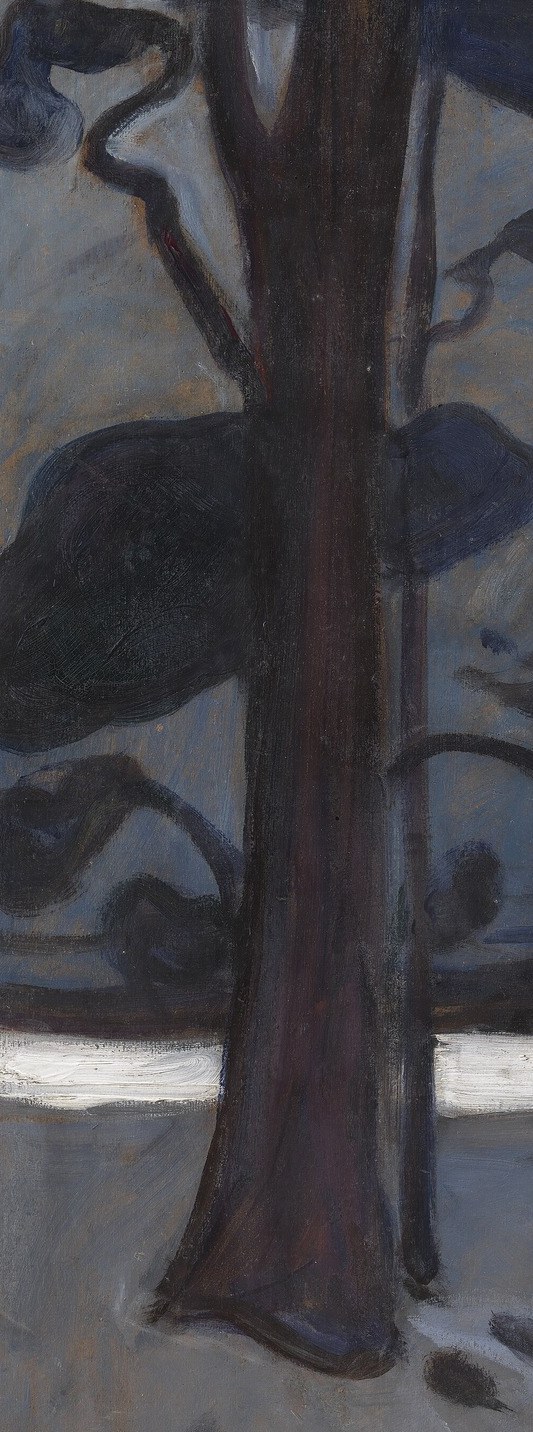
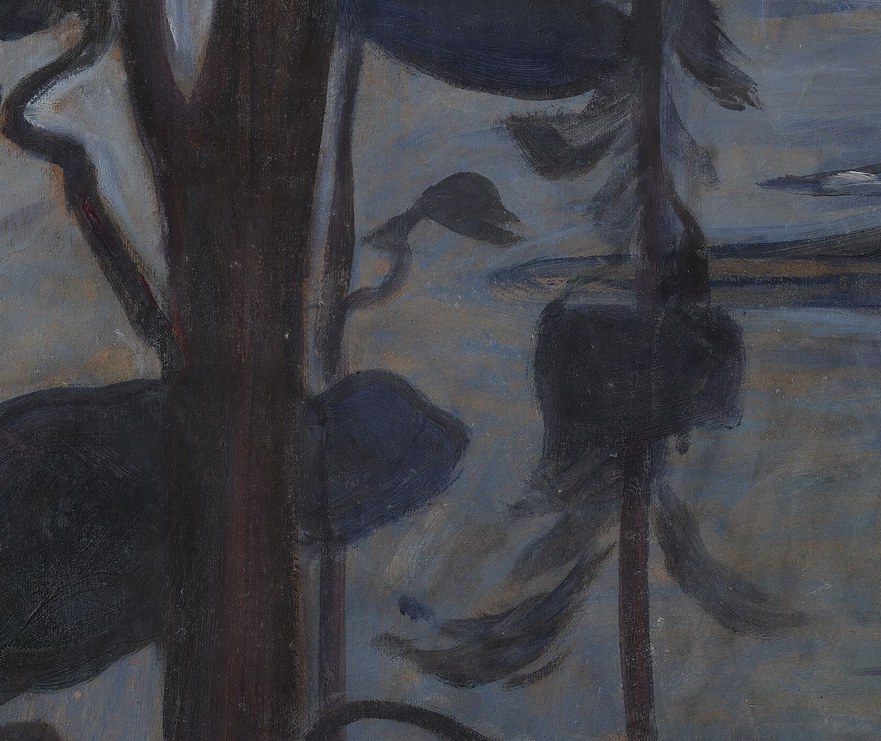
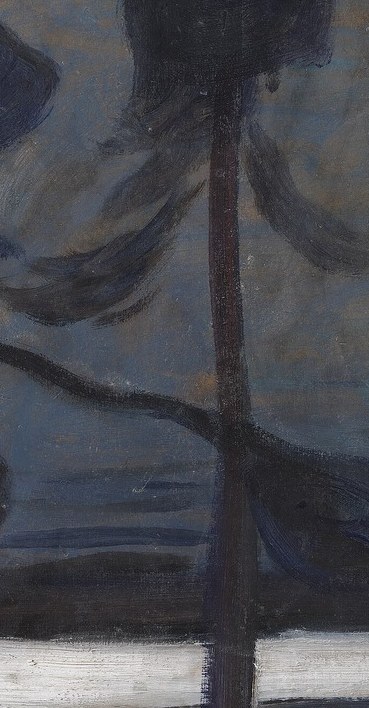
Notice the robust, textured brushwork on the central tree trunk and the delicate, almost skeletal branches against the muted sky. Munch’s expressive technique, using thick impasto and a restricted palette of cool tones, emphasizes atmosphere and emotional depth over strict realism. The distant, dark water of the Oslofjord grounds the scene in a specific, yet universally felt, winter desolation.
Munch, a Norwegian painter, experienced significant personal hardships, including illness and loss, which profoundly influenced his art. He often used symbolic landscapes and solitary figures to convey psychological states. "Winter at Nordstrand" embodies his Post-Impressionist approach, translating internal feelings into external forms.
The painting’s quiet intensity invites us to contemplate the beauty and starkness of winter, and perhaps, our own moments of solitude.
Details
Transcript
This stark landscape, Winter at Nordstrand, is by Edvard Munch. Munch painted it in 1900, near the Oslofjord in Norway. Look at the thick, textured paint on this dominating tree trunk. His distinctive brushwork conveys cold atmosphere and emotional states. Munch experienced profound personal loss throughout his life. This solitary tree became a recurring symbol of isolation for him.