The Meeting of David and Abigail by Rubens, Peter Paul, Sir
Peter Paul Rubens painted "The Meeting of David and Abigail" around 1630, and the entire drama plays out in oil on a single panel the size of a large dinner tray. The biblical story is severe: Abigail's husband, the wealthy fool Nabal, had insulted the future king David, and David was marching with four hundred swords to wipe out every male in the household. Abigail rode out alone to meet an army.
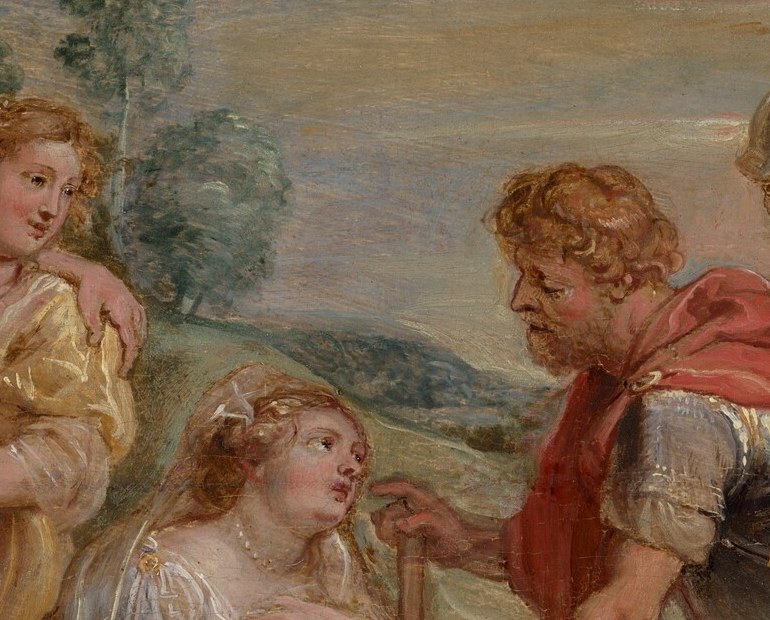
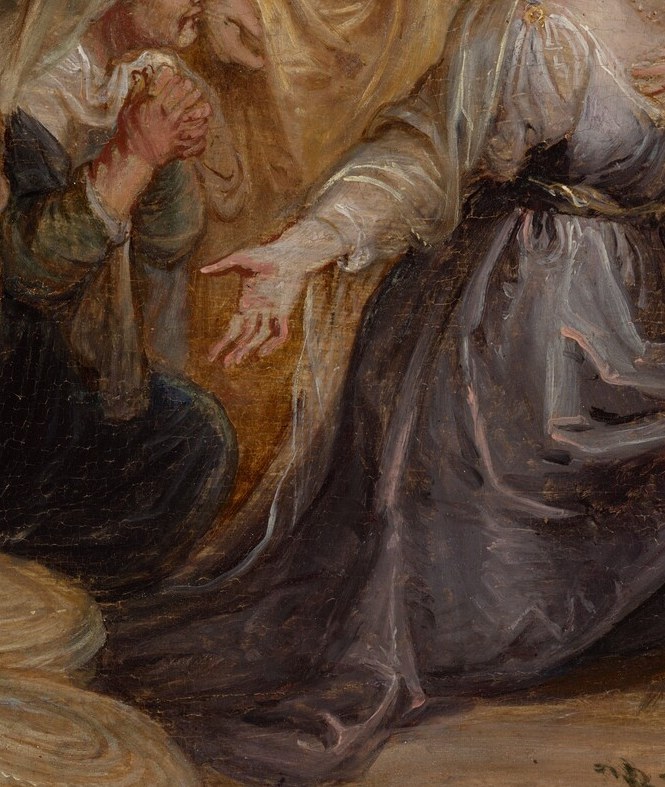
Look at her face. Rubens tilts it upward toward David, and her expression holds the whole suspense of the story. She is not weeping or theatrical. She is dignified, urgent, entirely present. Now glance to her left, among the servants carrying the provisions. A small child stands tucked into the group, a reminder of what Nabal's household actually contained, and what David's wrath would have destroyed.
Rubens painted this at the height of his powers, and the technique is as direct as the story. The crimson of Abigail's gown is laid on with visible, rapid brushwork, called impasto, where the paint sits thickly on the surface to catch light. The artist's hand moves with the same energy as the narrative, and the luminous sky opening behind David reads almost like editorial commentary: the man who will be king is already standing in the light.
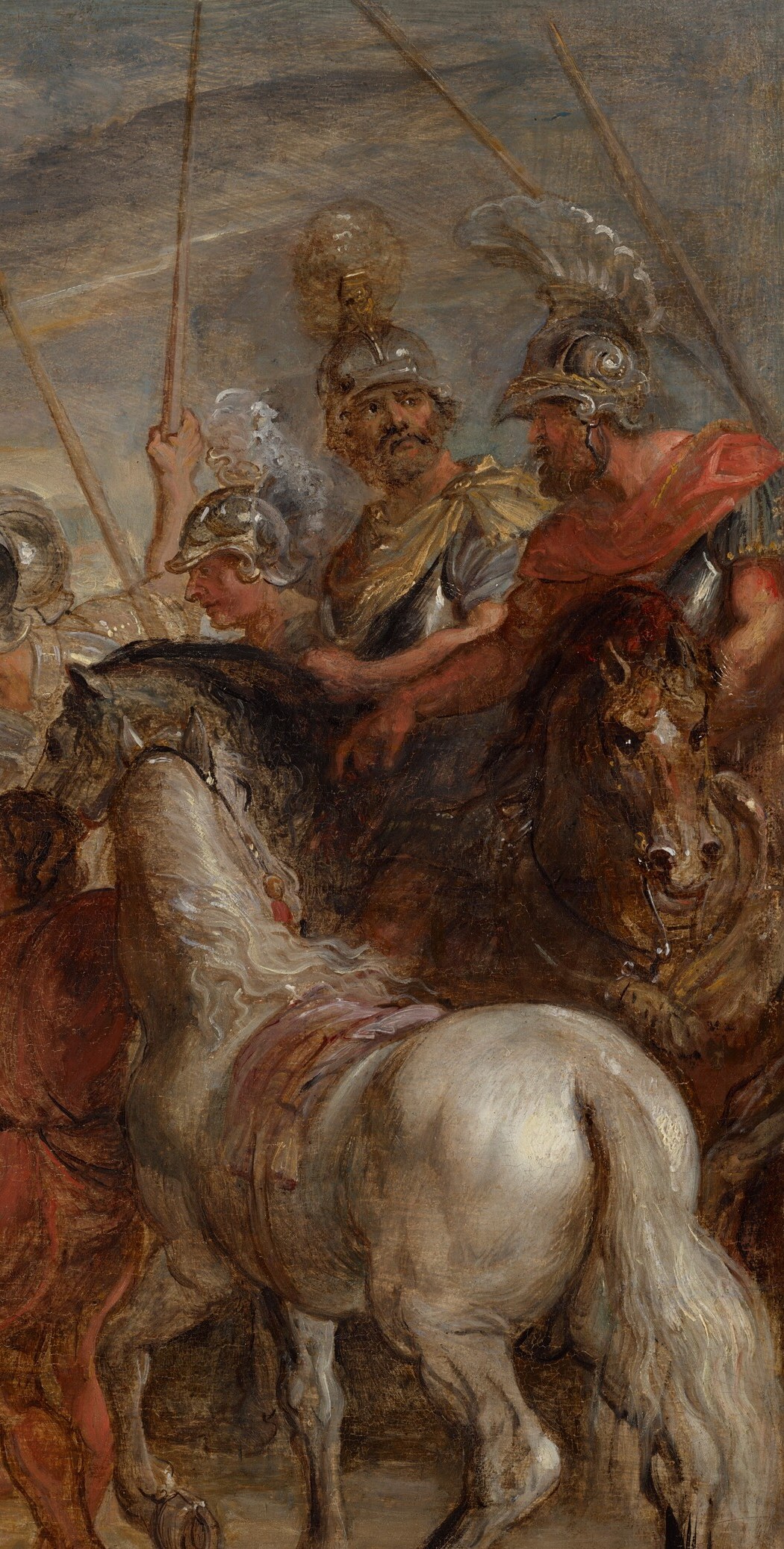
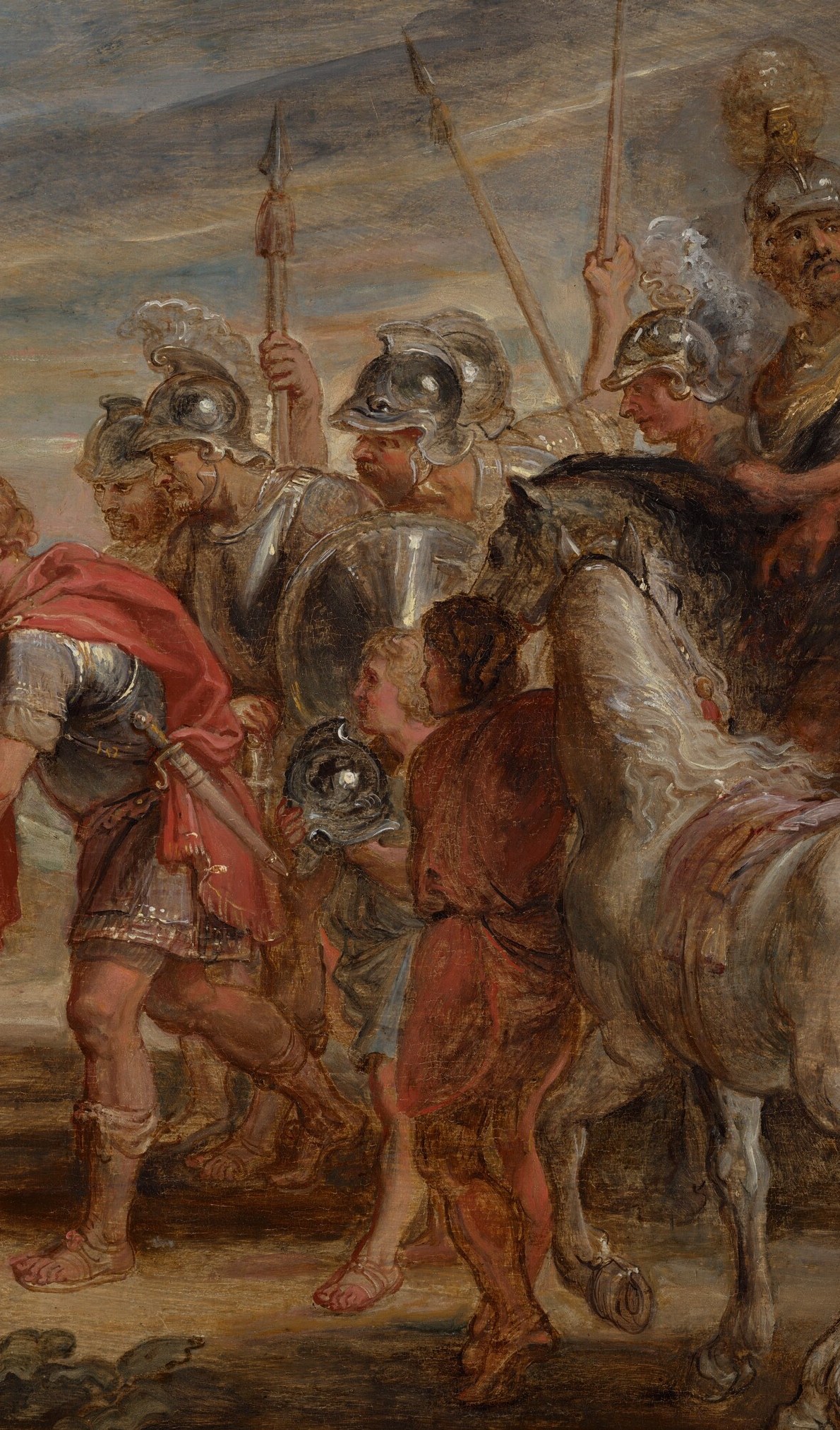
The painting lives in a quieter rank among Rubens's works, but its moral design is masterful. Every figure, every gift on the ground, every spear on the right margin serves one question: will he or won't he? Two faces, one decision, and a woman who talked a king out of bloodshed.
Details
Transcript
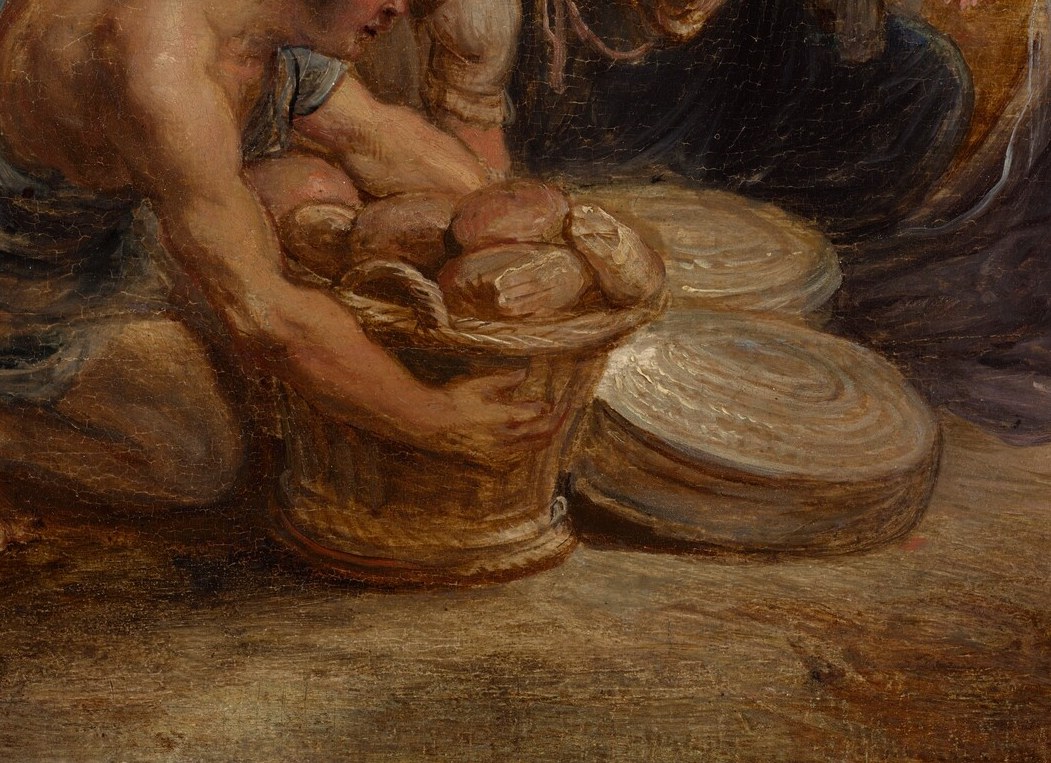
Four hundred men, armed for revenge. David was coming to destroy every man in Nabal's household. Then she stepped into the path. Abigail brought bread, wine, grain, everything she had. Her face asked what her gifts could only promise: mercy. A child hides among the servants, waiting. Rubens painted this with furious speed, thick, wet strokes. He gave the sky light behind David. The outcome was never in doubt.