The Despair of Cephalus by Luini, Bernardino
Bernardino Luini's fresco, *The Despair of Cephalus*, painted around 1520-1522, is a Renaissance work now held in a museum setting. Its true power lies in what it suggests rather than what it explicitly shows, inviting viewers to piece together a narrative from subtle clues.
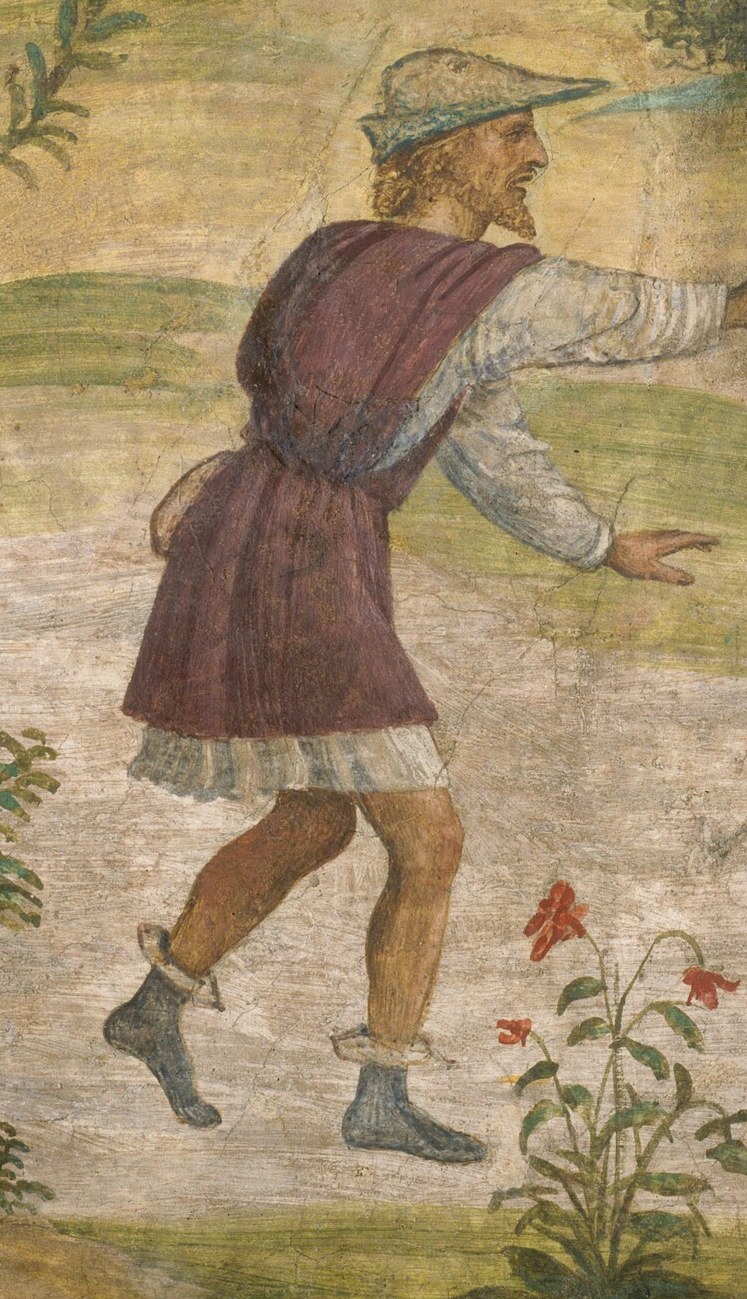
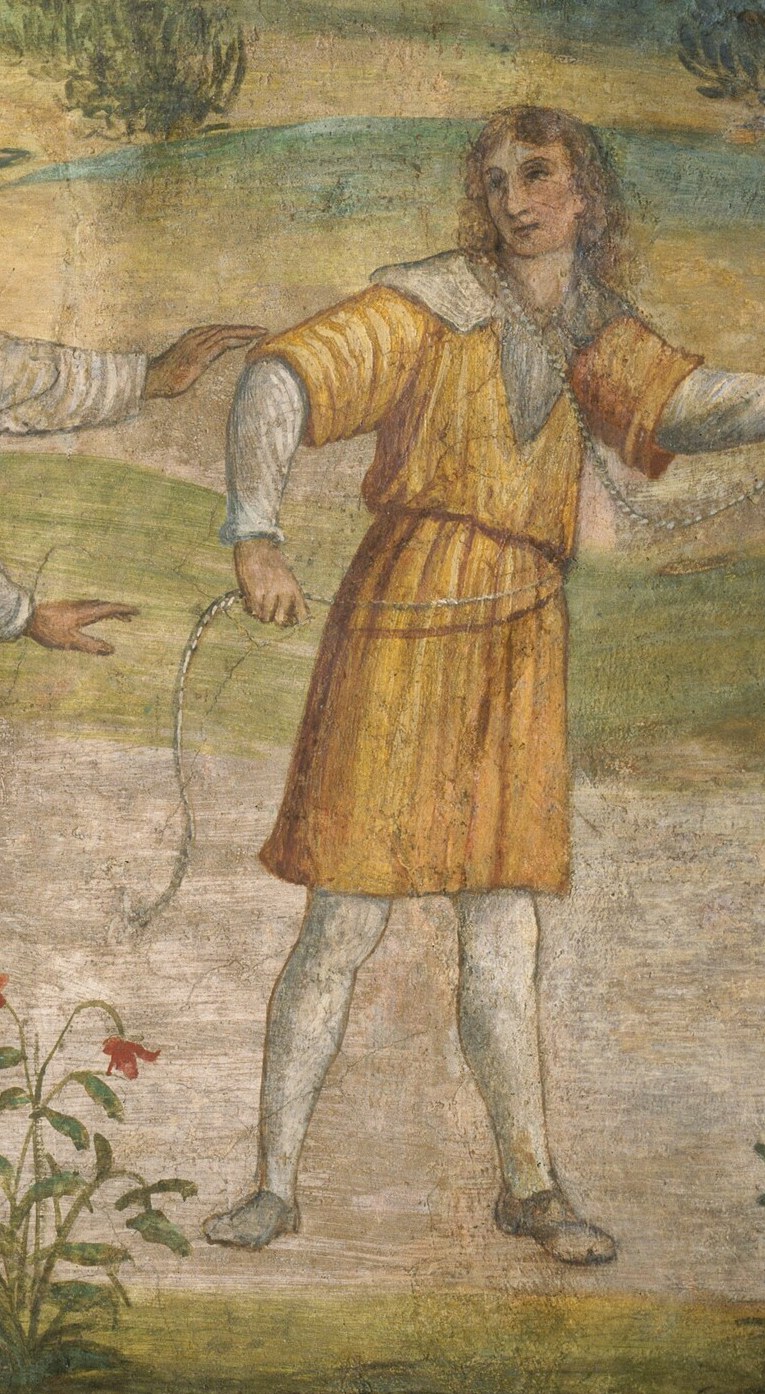
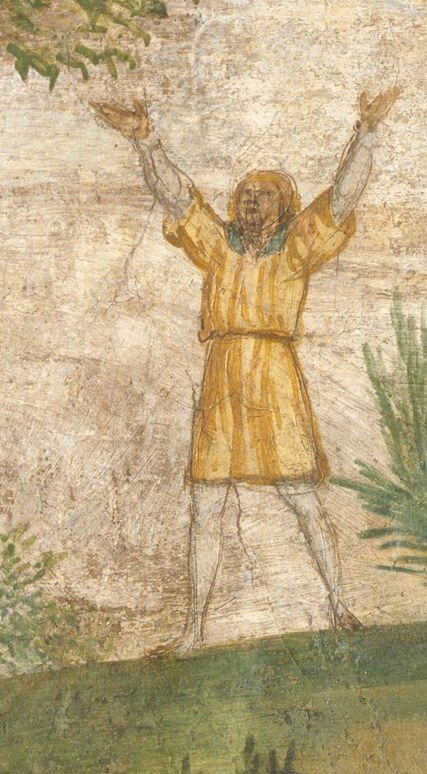
Look closely at the figures: the man in red reaching out, the figure in yellow with raised arms, and the man in yellow holding a leash. The scene is filled with implied emotion and tension, but the specific classical story is left to the imagination.
Luini's technique, applying pigments to wet plaster, gives the colors a vibrant, integral quality. His Lombard style balances graceful figures with a detailed, atmospheric landscape. The title, *The Despair of Cephalus*, points to a classical myth, but the most crucial part of the story, alluded to by the leash, remains hidden.
The painting's narrative depends on a missing detail, prompting us to consider what lies just beyond our sight. What do you imagine is at the other end of that leash?
Details
Transcript
This painting from around 1520 looks like a classical scene. A man in red reaches out to a figure in yellow. His expression suggests concern, perhaps even despair. Yet, he holds a thin leash that disappears below the frame. The painting is called 'The Despair of Cephalus'. This implies a missing element, hidden outside the frame.