The Laundress by Jean-Baptiste-Siméon Chardin
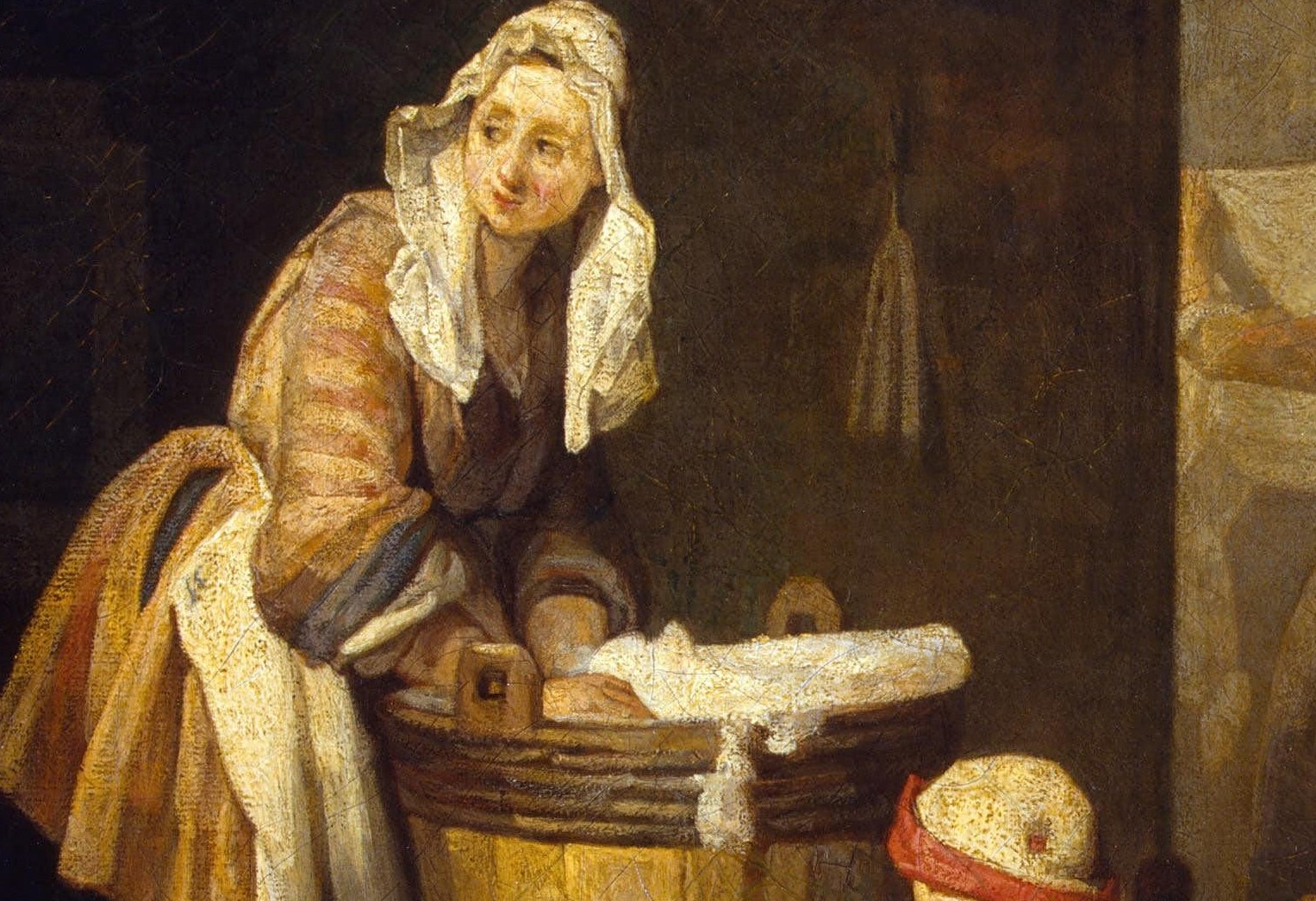
Chardin's 'The Laundress' (La Blanchisseuse) hangs today in the Hermitage, but at the 1737 Salon it was a quiet detonation. The French Academy maintained a strict hierarchy of genres: history paintings and grand portraits were noble; a woman elbow-deep in a washtub was not. By applying the same meticulous, brick-by-brick construction to a kitchen scene that others reserved for gods and kings, Chardin broke the rules without raising his voice.
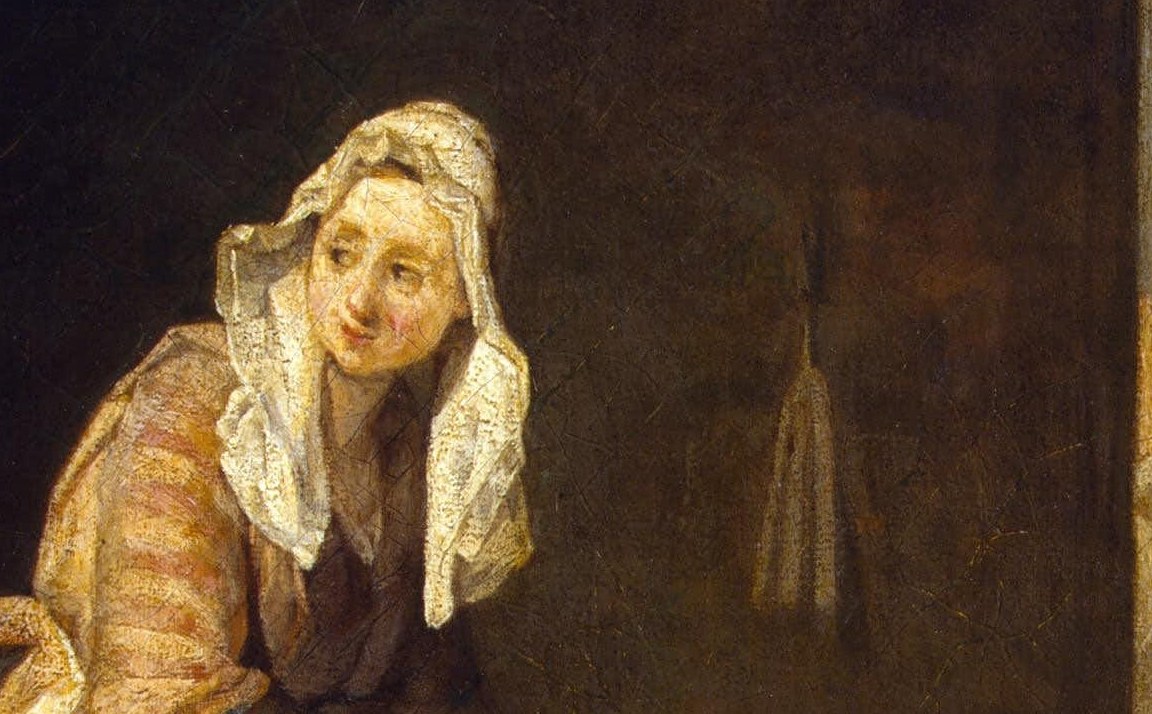
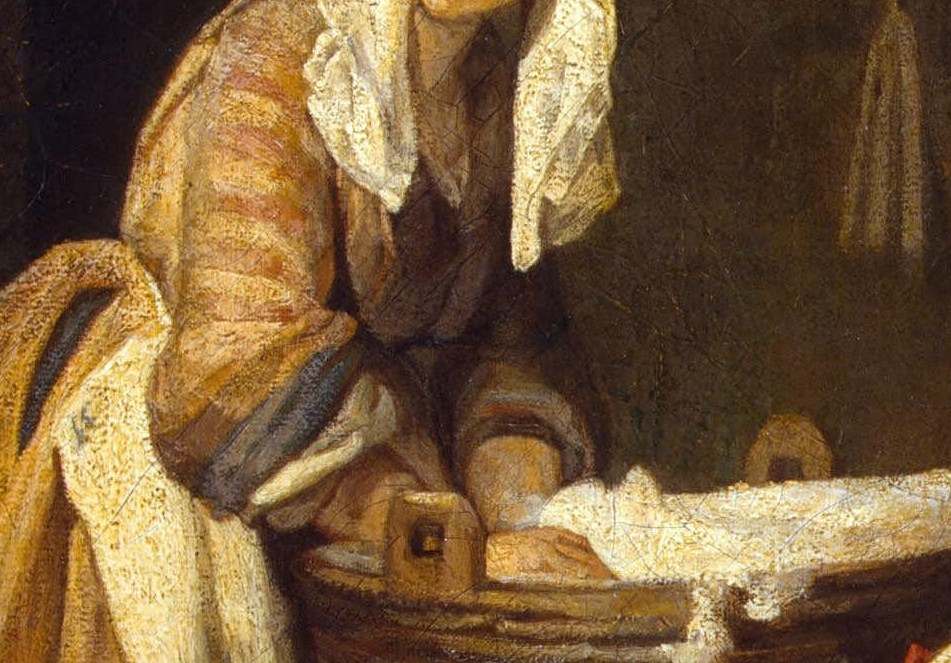
Look at her face. She is not looking at us, not pausing for a pretty picture. She is absorbed. Then move your eye to the wet linen draped over the tub, pure white sliding into silvery gray, painted in a way that makes you feel the dampness. Chardin’s brushwork here is granular and patient, building up the texture of the cloth until it almost appears to be breathing.
Critics of the time were unsettled. Denis Diderot, who adored Chardin, would later write that his paintings asked you to stop, look, and almost touch the surface. The 'scandal' was subtle but real: by treating a laundress with absolute seriousness, Chardin elevated the everyday into something worth contemplating, and that shifted who art was for and what it could be about.
He painted at least three versions of this subject, returning to it across decades. That repetition alone tells you he found something inexhaustible in the steam of the laundry water and the silence of a shared room.
Details

Transcript
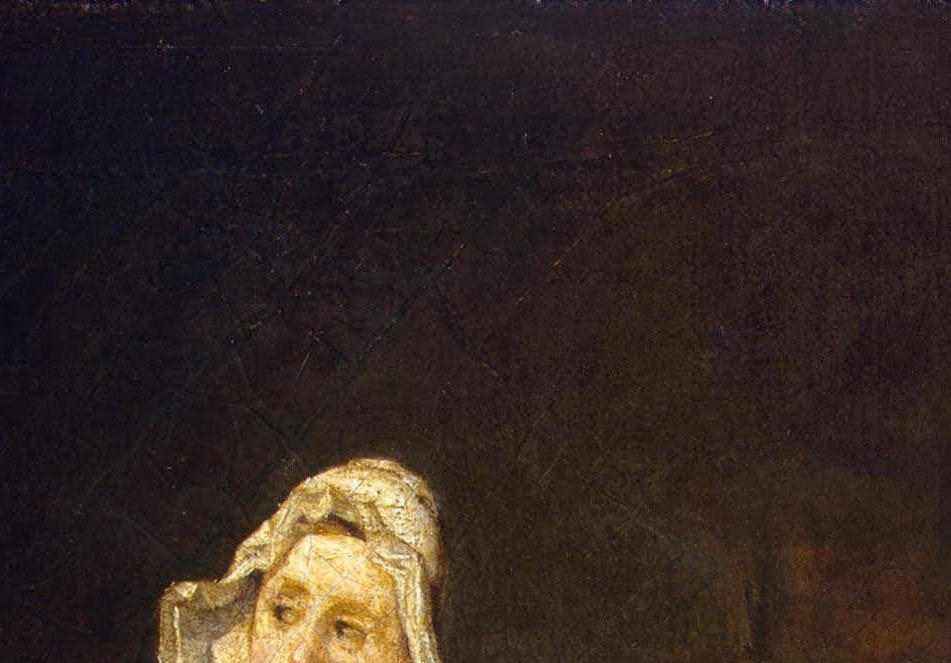
In 1730s Paris, this was almost dangerous. Look at the light on her cap. Chardin paints wet linen with the reverence reserved for saints. Critics complained: it was too absorbing. Too real. She is not performing for us. She is lost in her work. The Academy ranked everyday scenes dead last. Chardin didn't care. His quiet provocation redefined what French painting could be.