Adoration of the Shepherds by Andrea Mantegna
View the artwork: Adoration of the Shepherds →
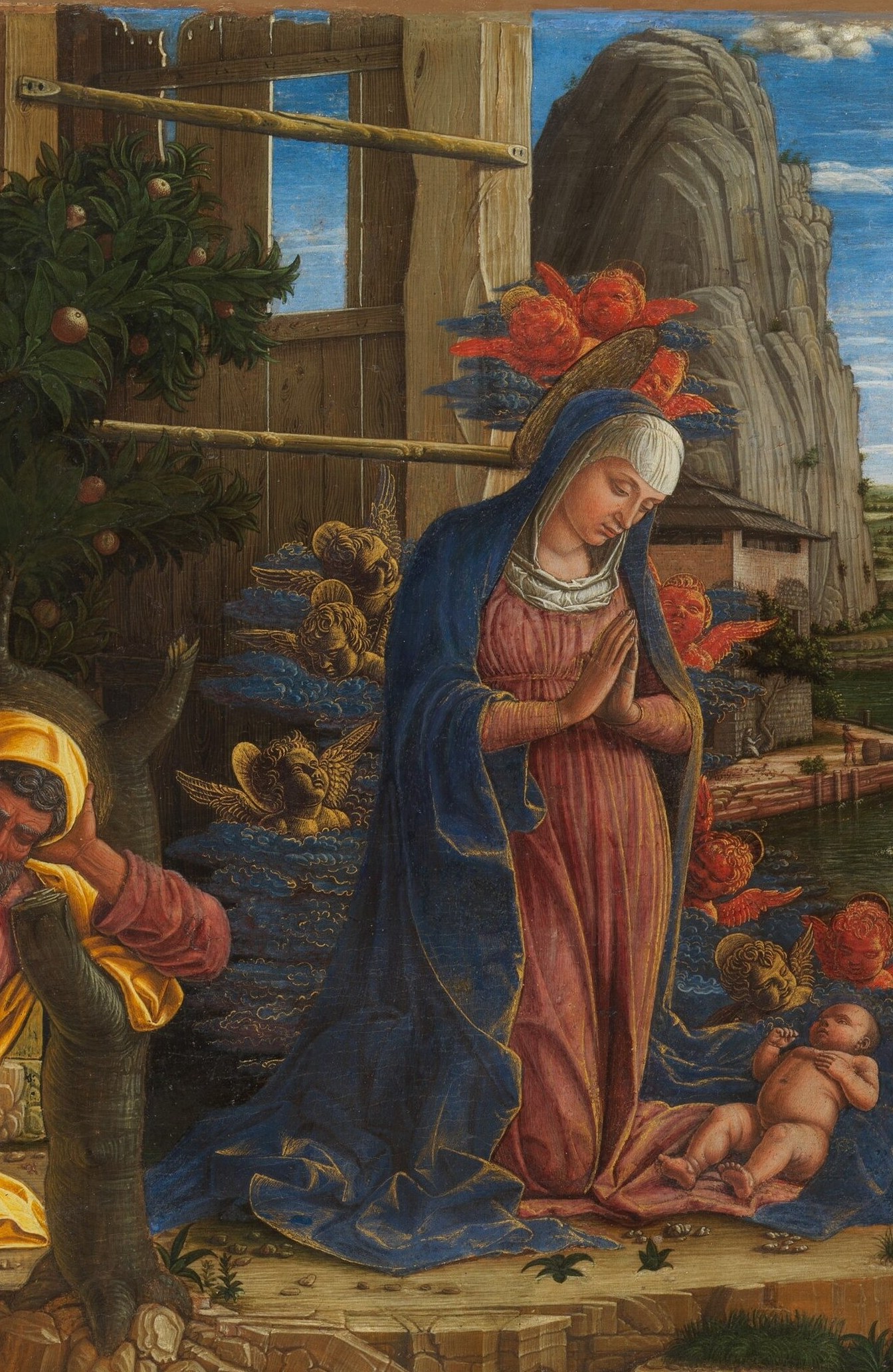
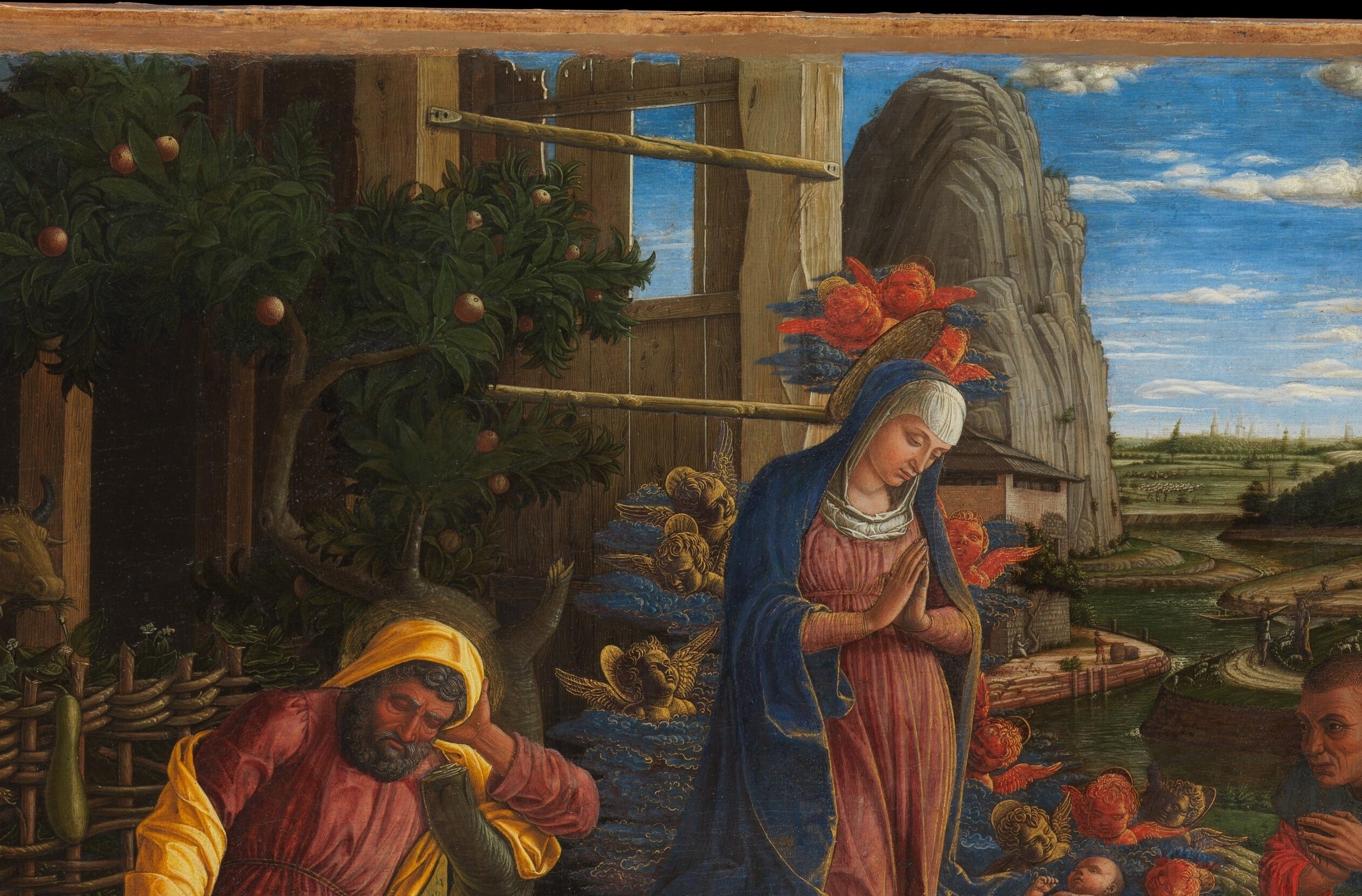
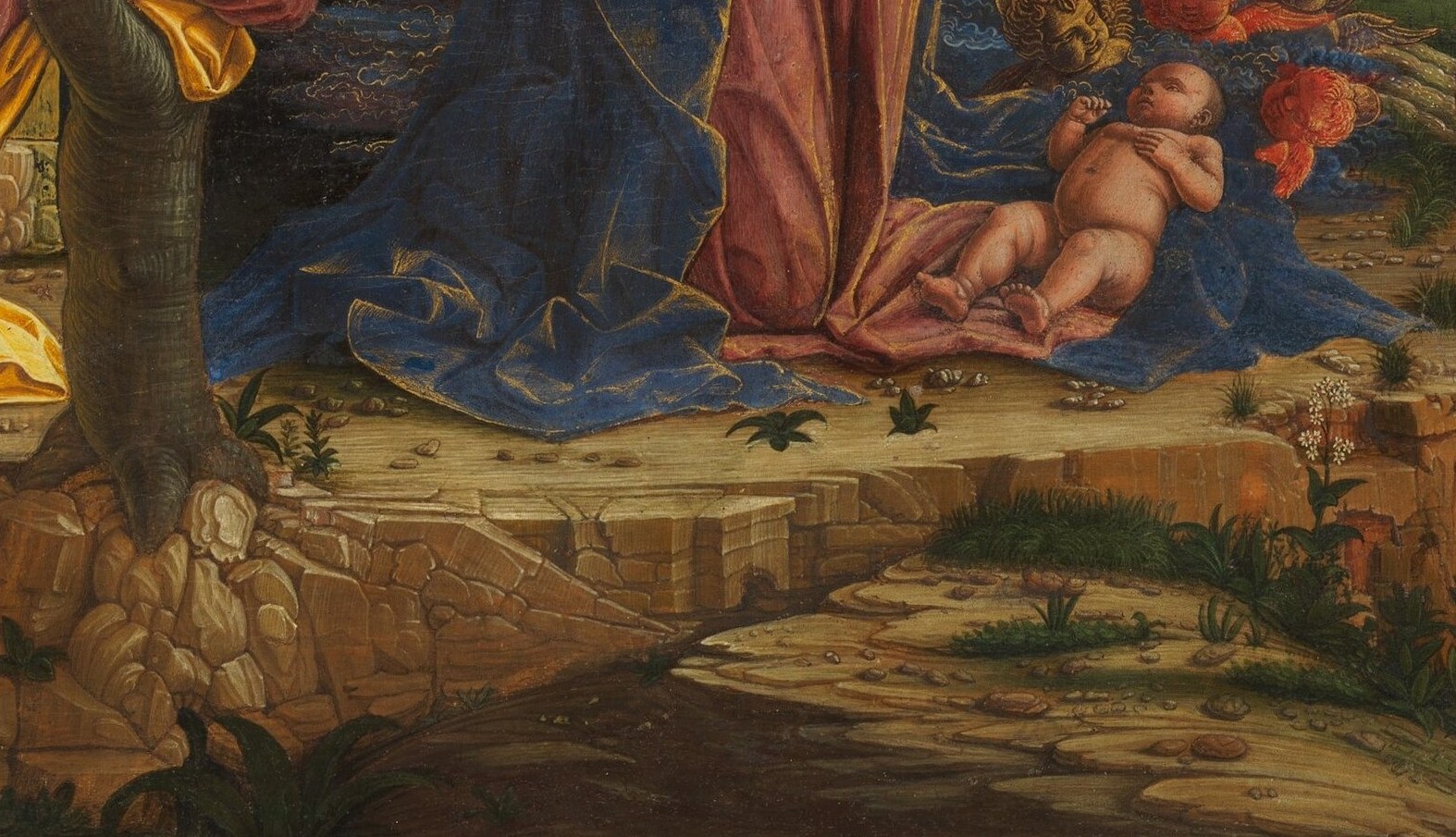
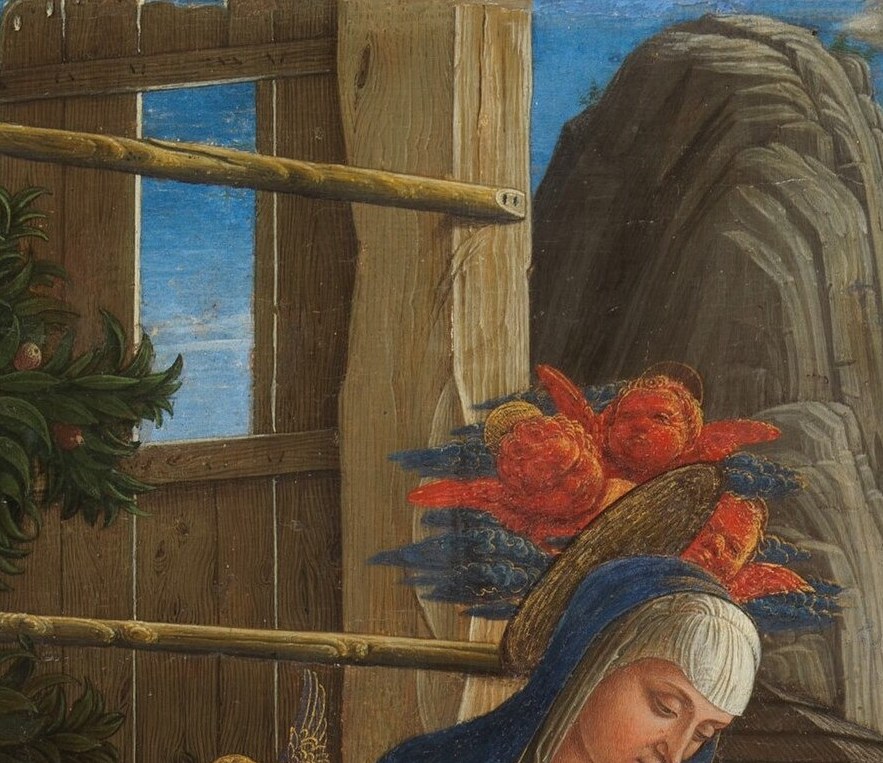
This is Andrea Mantegna's 'The Adoration of the Shepherds', painted around 1450 in tempera on panel. On its face it is a quiet devotional scene: the Virgin Mary in her signature blue mantle, made from crushed lapis lazuli, kneeling before the newborn Christ outside a rocky stable. Two shepherds have arrived to witness the event. But this painting's true story might be even stranger than the miracle it depicts.
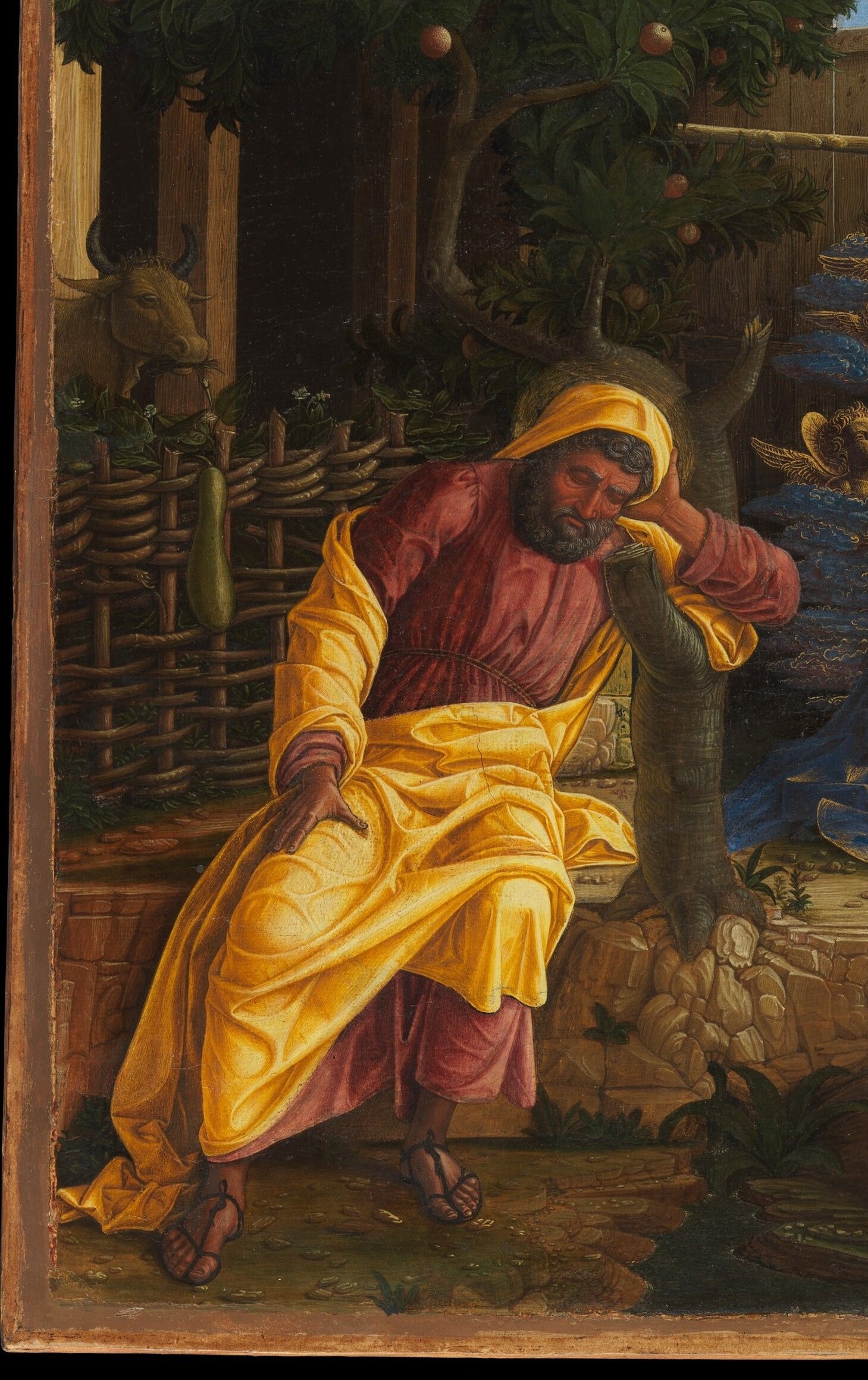
Look closely at the hands of the two shepherds. The one in the luminous yellow robe clasps his fingers in tight prayer, his weathered face a study of human awe. The standing shepherd at right keeps his hands open, his expression more analytical, as if he is still processing what he is seeing. Behind them, a bare, dead tree rises against the rock face. In nativity iconography, a leafless tree like this one carries a specific meaning: it is the dying tree of the old covenant, which the child below has been born to renew. A small theological argument hiding in the corner of a masterpiece.
In 1969, four armed men broke into the Oratory of the Pure in Gonars, Italy, and stole this painting at gunpoint. They rolled the panel up and fled on motorcycles. The tempera painting, which had survived over five hundred years, was treated like a canvas poster. It vanished into the art crime underworld and remained missing for 94 years. Authorities had given up. Then, in 2003, a tip led police to a private apartment where the painting had been hidden behind a bed the entire time.
It was restored and returned to public view, but the idea of it sitting there, rolled up in a dark apartment while decades passed outside, adds something almost mythical to a painting that was already about quiet endurance in a harsh, stony landscape.
#arthistory #andreamantegna #artcrime
Details
Transcript
A quiet night in Bethlehem, painted in tempera around 1450. Mary kneels. Her mantle's blue was made from crushed lapis lazuli. A shepherd in blazing yellow surrenders to the sight. His hands are clasped tight. The other shepherd simply stares. Behind them, a dead tree. The old covenant about to be renewed. In 1969, four men broke into a chapel and took this painting at gunpoint. They rolled the tempera panel up like a carpet and rode off on motorcycles. It was missing for 94 years. It resurfaced in a private home, hidden behind a bed.