Artwork
Adoration of the Shepherds
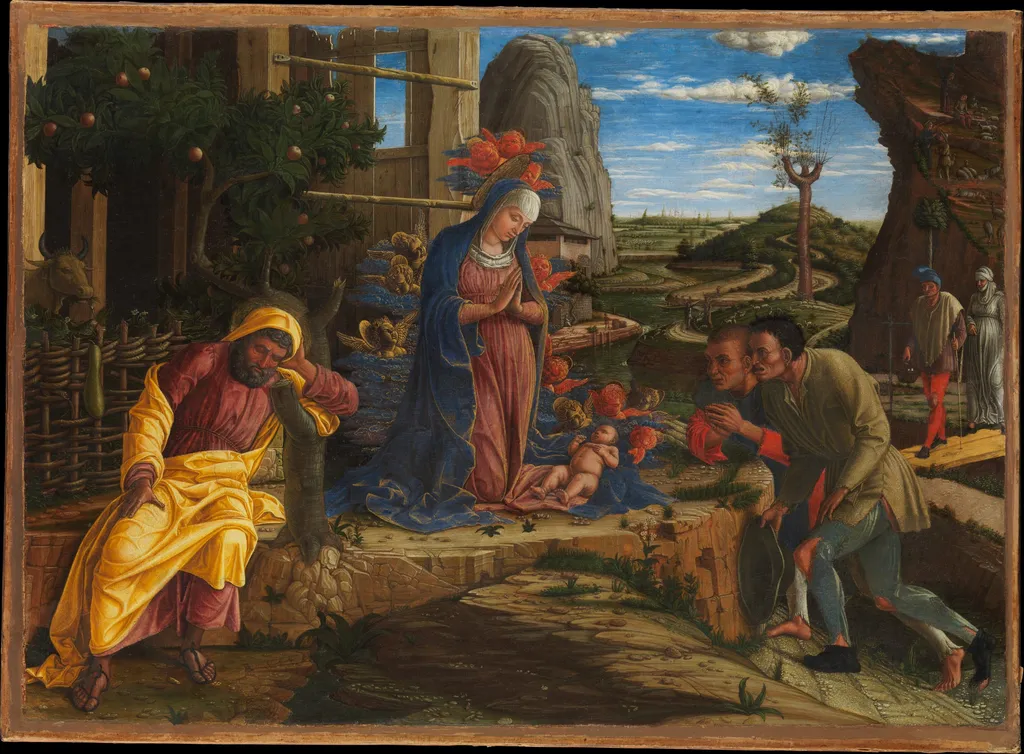
Adoration of the Shepherds is a tempera painting by the Early Renaissance artist Andrea Mantegna. It dates from 1450 and is held in the collection of the Metropolitan Museum of Art.
About this work
Subject & Meaning
The painting depicts the Christian Nativity, focusing on the moment when shepherds arrive to honor the Christ Child.
The painting depicts the Christian Nativity, focusing on the moment when shepherds arrive to honor the Christ Child. Mary kneels centrally in adoration, surrounded by cherubs, with Joseph asleep nearby, a detail interpreted as underscoring his role as guardian rather than divine father. A single fruitful branch on a blasted tree symbolizes the renewal of nature through Christ's incarnation, while a gourd hanging from a fence signifies resurrection and pilgrimage.
A large, pruned tree in the background, resembling the Calvary Cross, foreshadows the Passion. The ox, a traditional witness of the Nativity, and the enclosed garden to the left, an hortus conclusus referencing Mary's virginity, reinforce the theological narrative of Incarnation and Redemption.
Technique & Style
The Adoration of the Shepherds is executed in tempera on a wooden panel that was later transferred to canvas. The work measures 40 × 55.6 cm and retains its original tempera medium despite the support change; a narrow strip on the right edge was lost in the transfer. The composition places the Virgin centrally, adoring the infant Christ shown in three-quarter view, surrounded by cherubs and set against a landscape framed by steep mountains and symbolic flora.
The shepherds are rendered with pronounced wrinkles and realistic detail, reflecting Northern European influence, while the perspective contains minor inconsistencies typical of Mantegna's early period.
History & Provenance
Andrea Mantegna's Adoration of the Shepherds is dated to circa 1450–1451, reflecting his early career. The work was likely commissioned within the Este court, though some scholarship suggests a slightly later date based on stylistic comparisons. Originally executed on a panel, the painting was transferred to canvas in Paris in 1924, a process that resulted in the loss of a small section on the right edge and the disappearance of an ass on the left.
Possibly documented in a 1586 inventory of Margherita Gonzaga d'Este as a "Nativity Scene of Andrea Mantegna," the work entered the collection of Cardinal Pietro Aldobrandini by 1603. It subsequently passed through the Aldobrandini, Pamphili, and Borghese families before being sold in London in 1792. After changing hands among dealers and collectors including William Buchanan, Richard Payne Knight, and Joseph Duveen, it was acquired by Clarence Mackay and donated anonymously to the Metropolitan Museum of Art in New York, where it has been held since 1932.
Context
Scholars consider the Adoration of the Shepherds (c. 1450–1451) a pivotal early work that bridges Mantegna's mastery of perspective with Northern European influences. Detailed analysis highlights its innovative three-quarter view of the Christ Child, the symbolic tree, and the meticulous rendering of the shepherds, traits linked to Flemish models. Provenance research traces the painting from a probable Este commission, through Este and later Aldobrandini ownership, to its 1792 sale and eventual acquisition by the Metropolitan Museum of Art in 1932.
Comparative studies situate the piece within the broader trajectory of Renaissance devotional imagery, emphasizing its role in the evolution of sacred narrative painting.
Legacy
The work's legacy includes its influence on the illumination of manuscripts and its role in demonstrating Mantegna's early synthesis of Italian and Northern European styles. Scholars note that the painting's meticulous attention to detail on a small scale served as a model for the miniaturist Girolamo da Cremona, who trained in Padua around the 1450s. The composition is frequently cited as a virtuoso response to the work of Rogier van der Weyden, reflecting the impact of Flemish masters on the artist.
Its "grotesque" realism in depicting the shepherds, attributed to Northern European examples, has been consistently remarked upon. Its passage through major collections, from the Aldobrandini to the Metropolitan Museum of Art, underscores its enduring status as a significant early masterpiece of the Italian Renaissance.
Overview
Andrea Mantegna's Adoration of the Shepherds, created around 1450-1451, is a tempera painting from the Northern Italian Renaissance. It portrays a tranquil devotional scene, focusing on the newborn Christ surrounded by the Virgin Mary and attending shepherds. The work's muted color scheme and precise execution contribute to its overall sense of quiet reverence, reflecting the artistic sensibilities of its era.
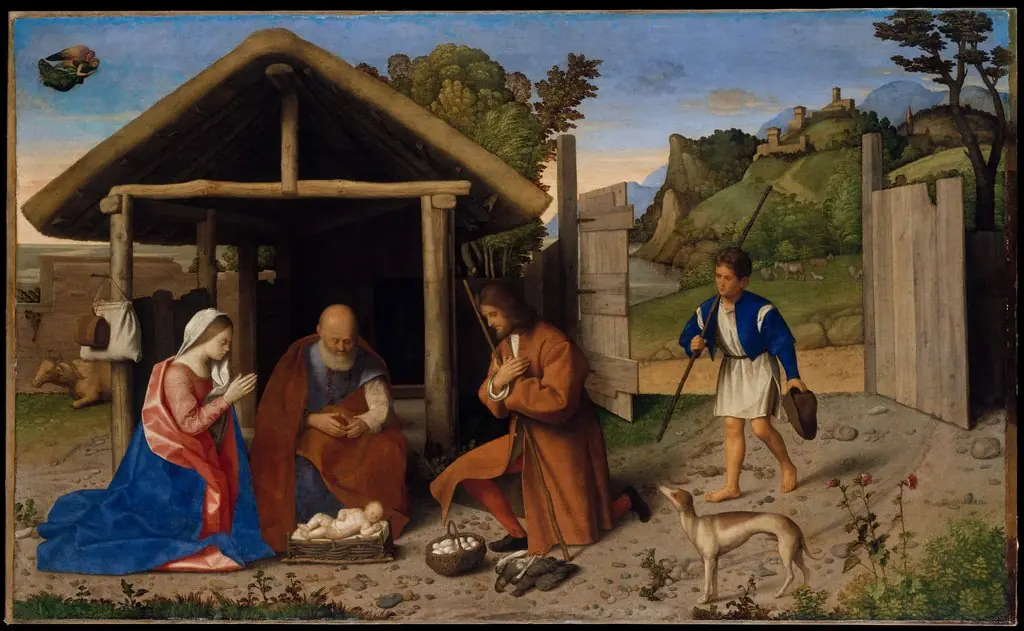
Own this work as a print
Artist & collection
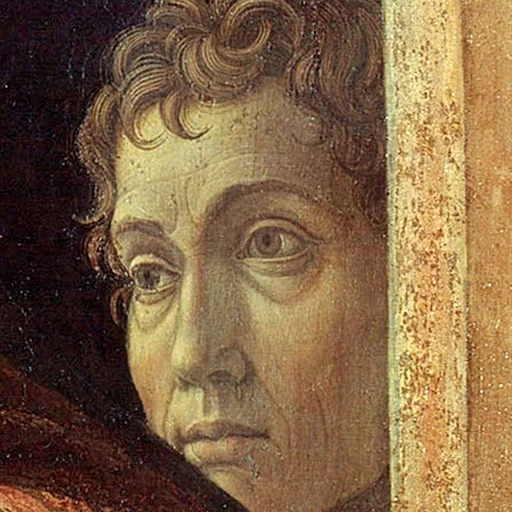
Artist
Andrea Mantegna (UK: US:; Italian:; c. 1431 – September 13, 1506) was an Italian Renaissance painter, a student of Roman archaeology, and the son-in-law of Jacopo Bellini. Like other artists of the time, Mantegna…

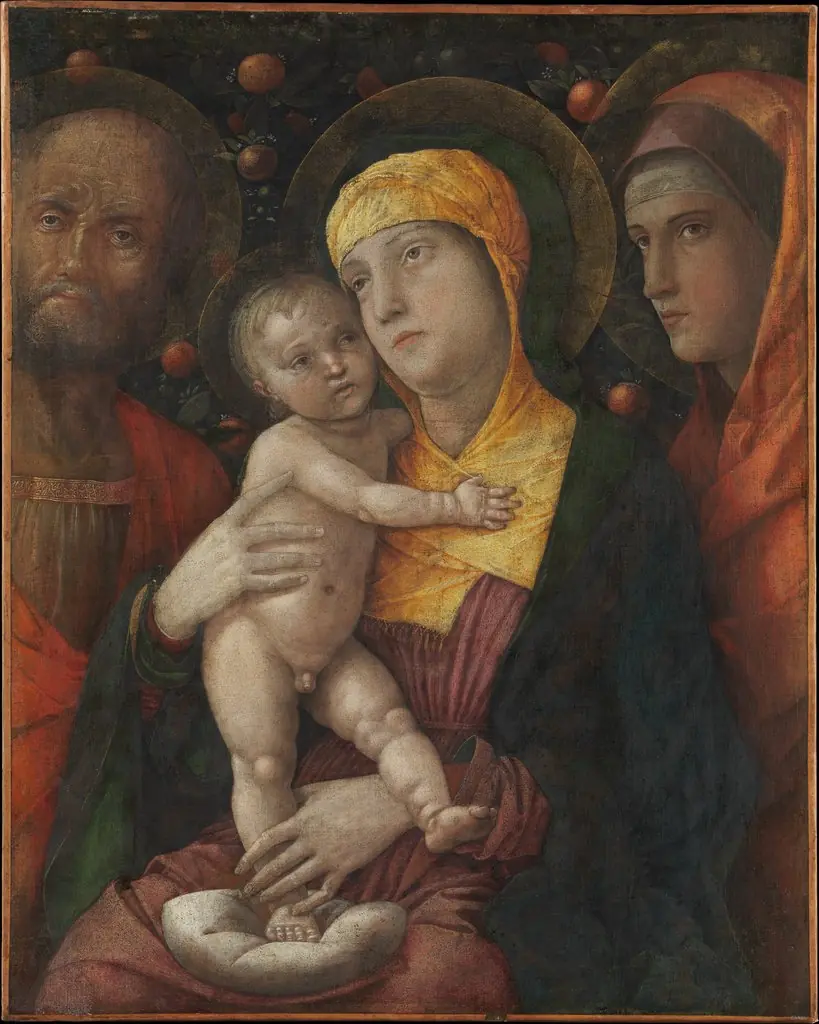
- The Adoration of the Shepherds
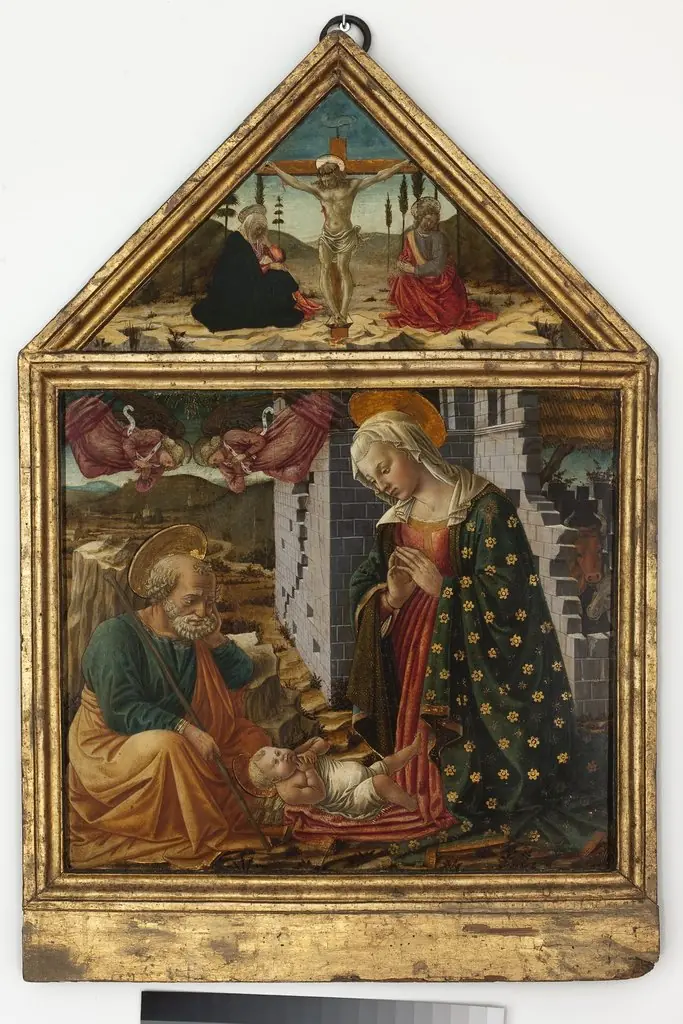 Adoration of Child Jesus and Crucifixion
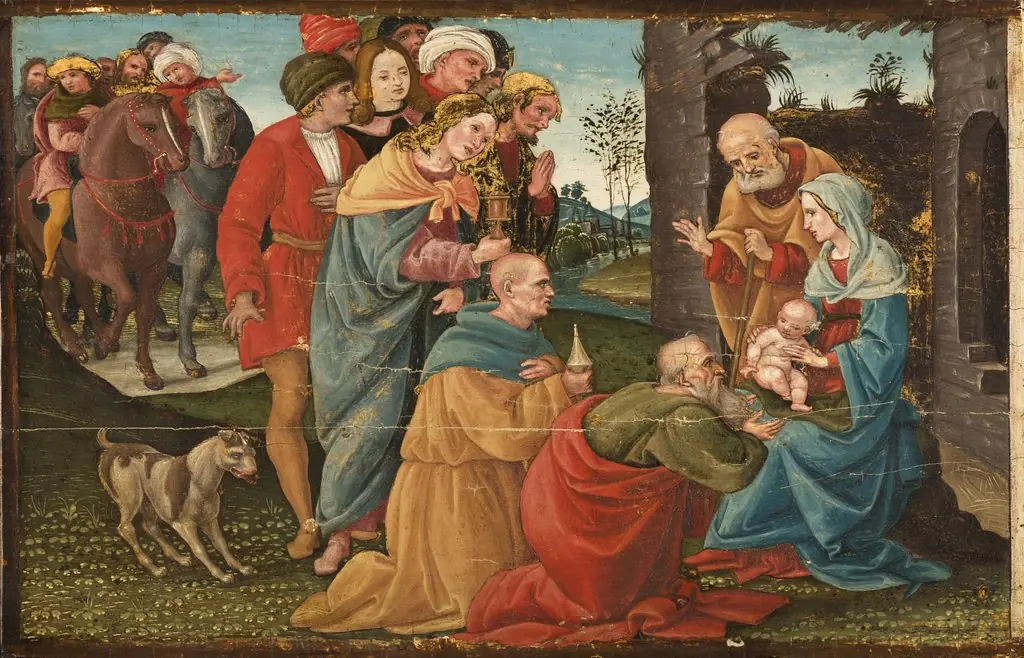 The Adoration of the Magi
 The Adoration of the Kings
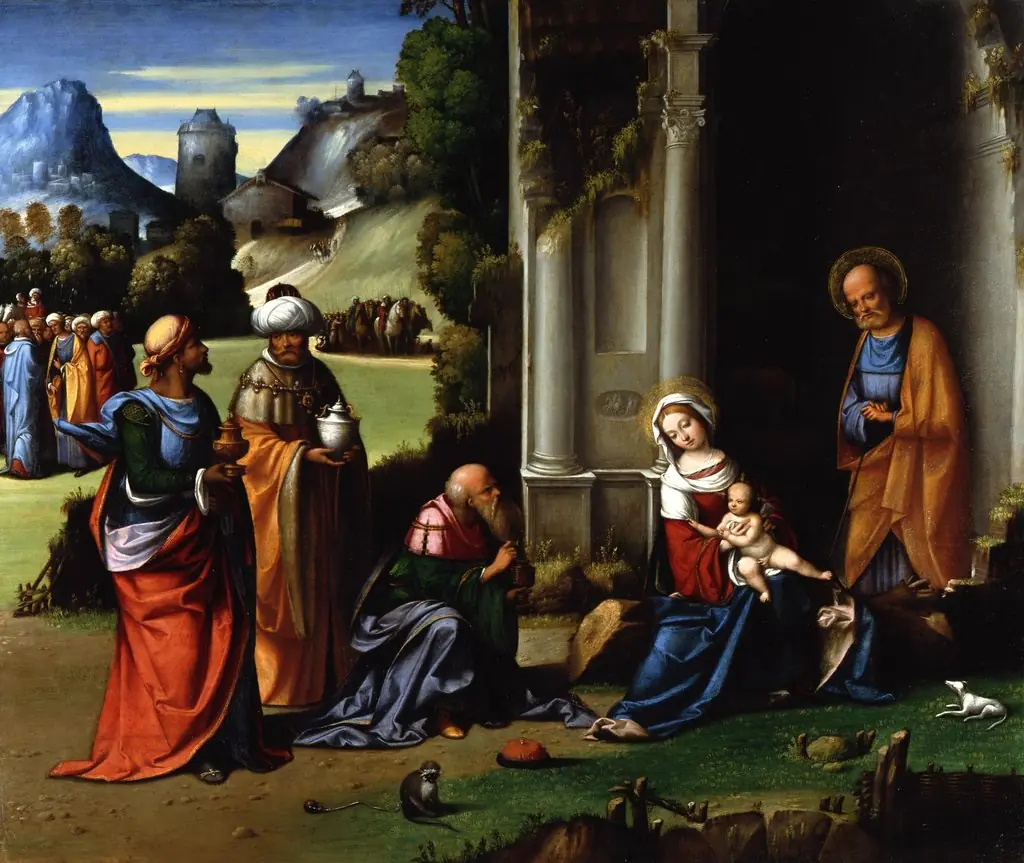 The Adoration of the Magi
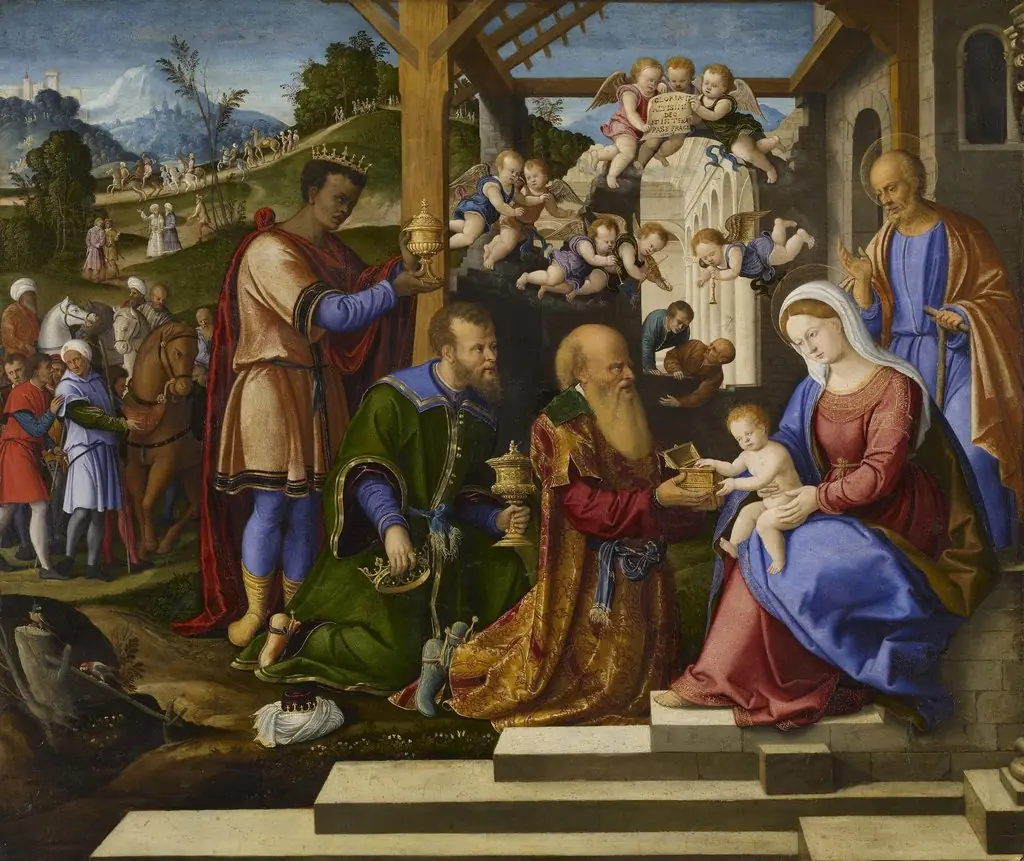 The Adoration of the Three Kings
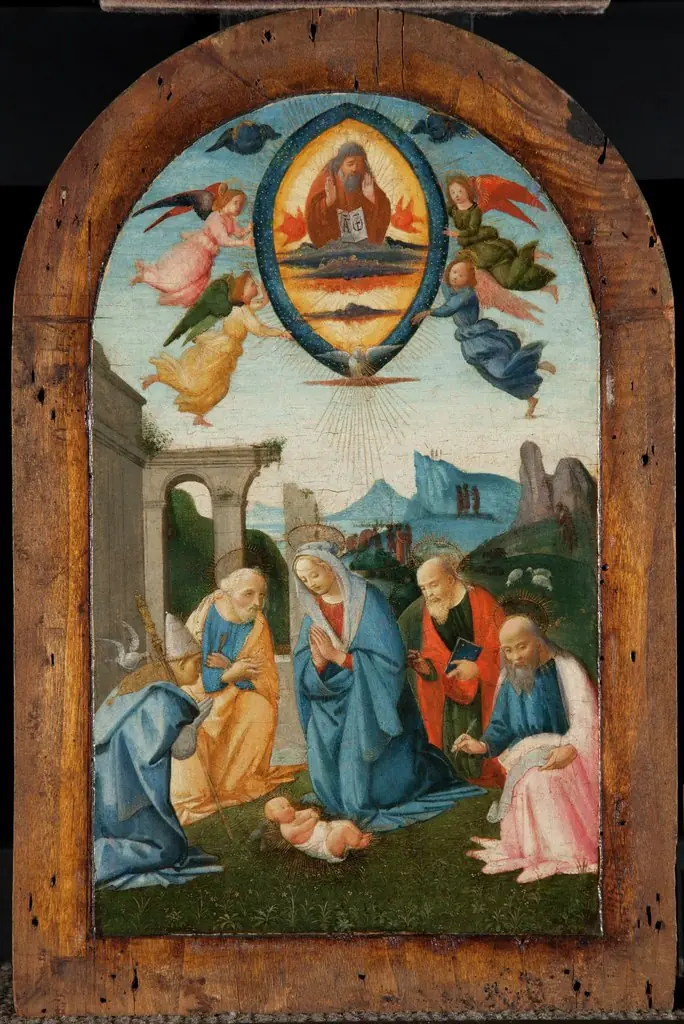 The Madonna and Four Saints Adoring the Infant Jesus
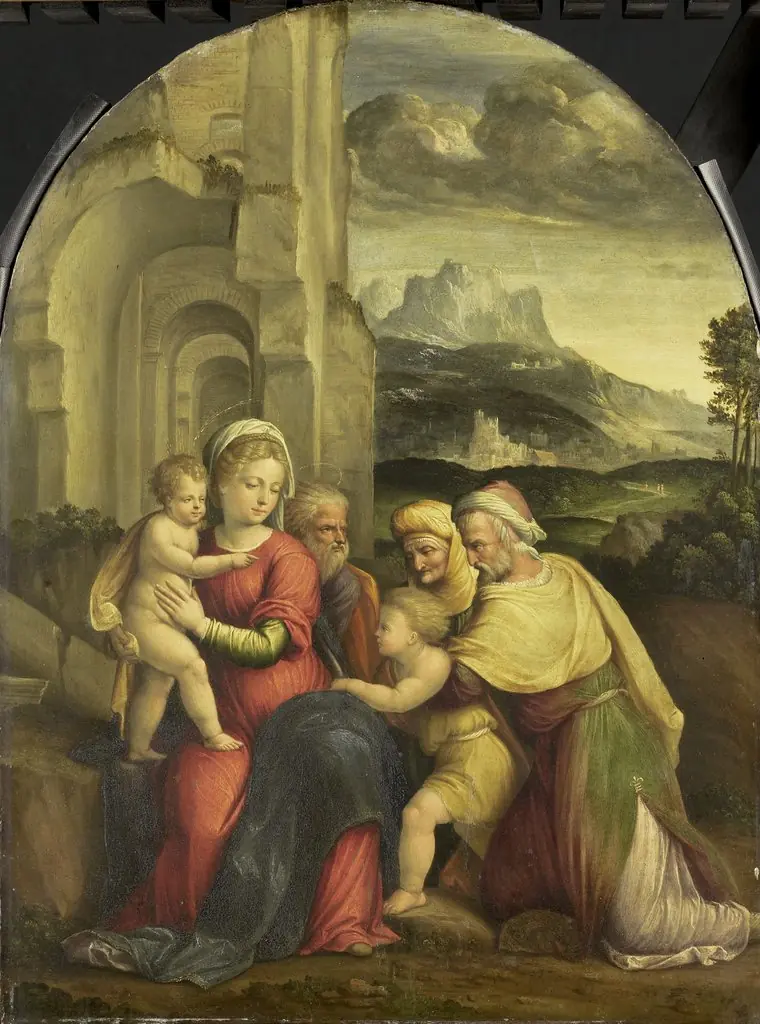 Holy Family
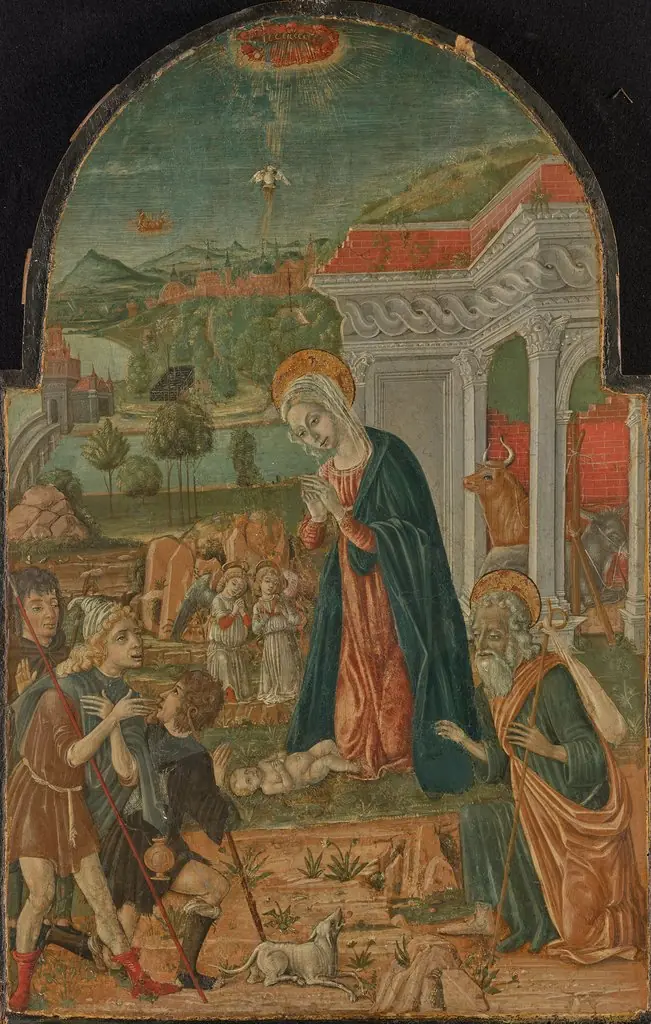 The adoration of the Shepherds
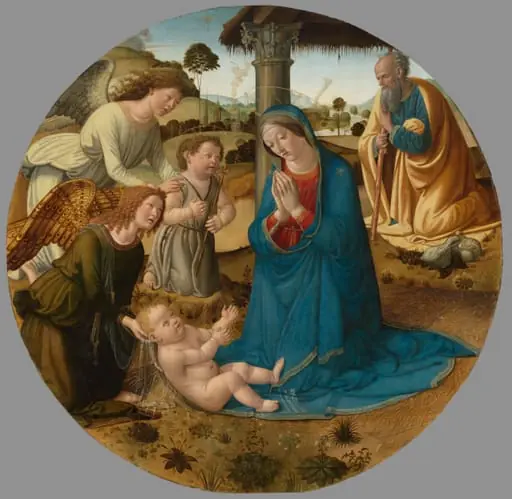 De aanbidding van het Christuskind
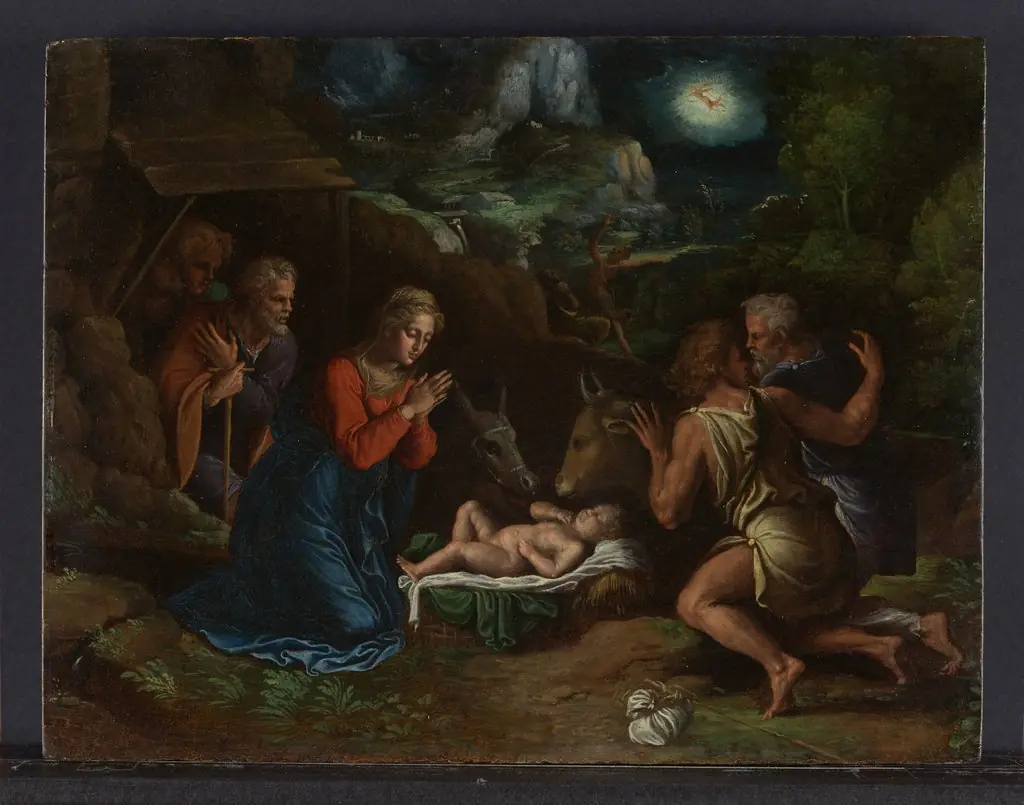 The Adoration of the Shepherds
 Rest on the Flight into Egypt