Portrait of a Woman, Possibly Madame Claude Lambert de Thorigny (Marie Marguerite Bontemps, 1668–1701) by Nicolas de Largillière
Nicolas de Largillière’s 1698 “Portrait of a Woman, Possibly Madame Claude Lambert de Thorigny,” now at the Metropolitan Museum of Art, is a masterclass in coded self-presentation. Every object in it was chosen to communicate something specific about the sitter’s identity to a viewer who knew how to read the language of symbols.
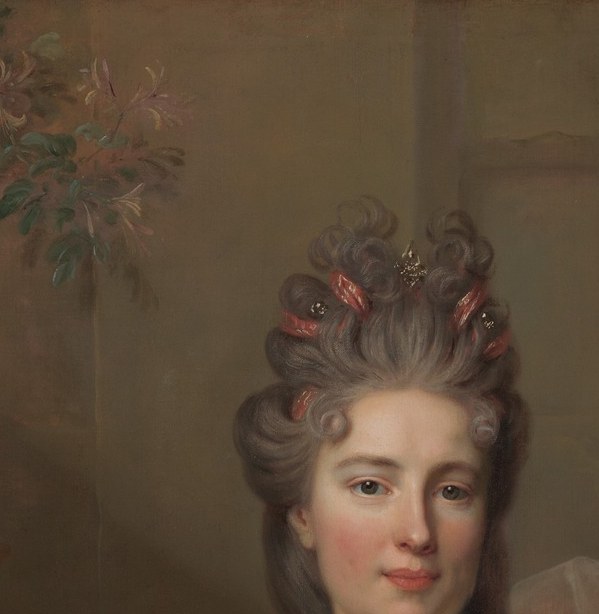
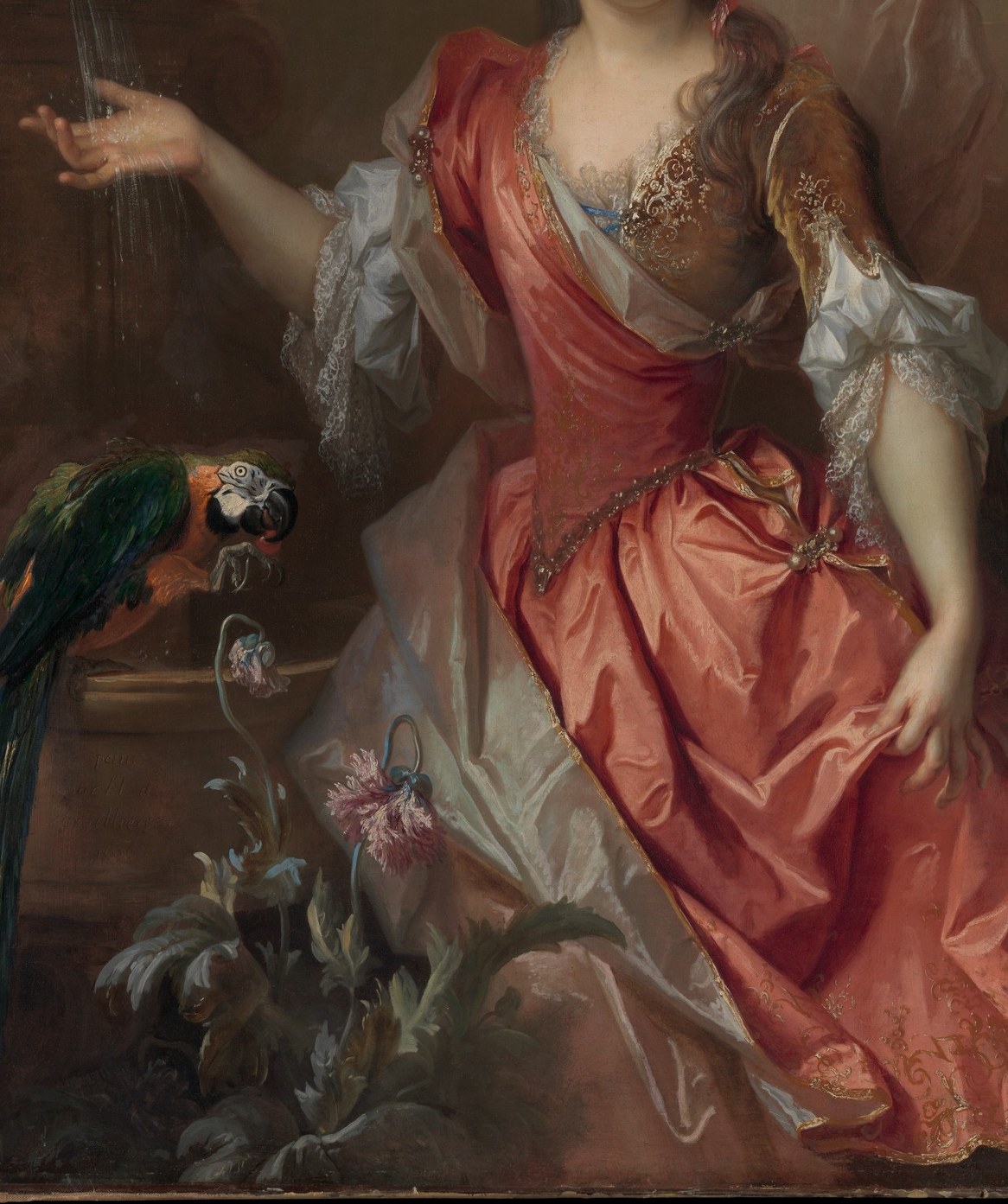
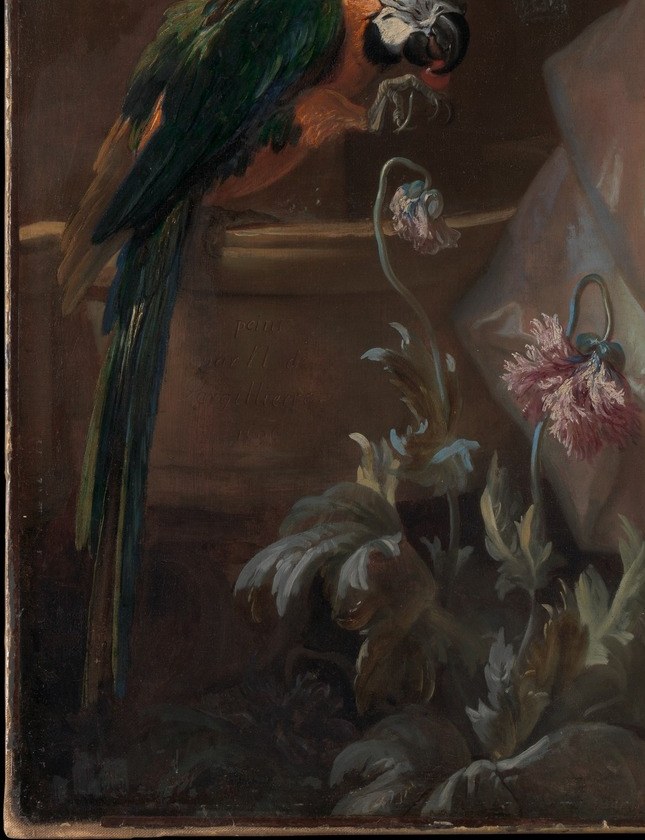
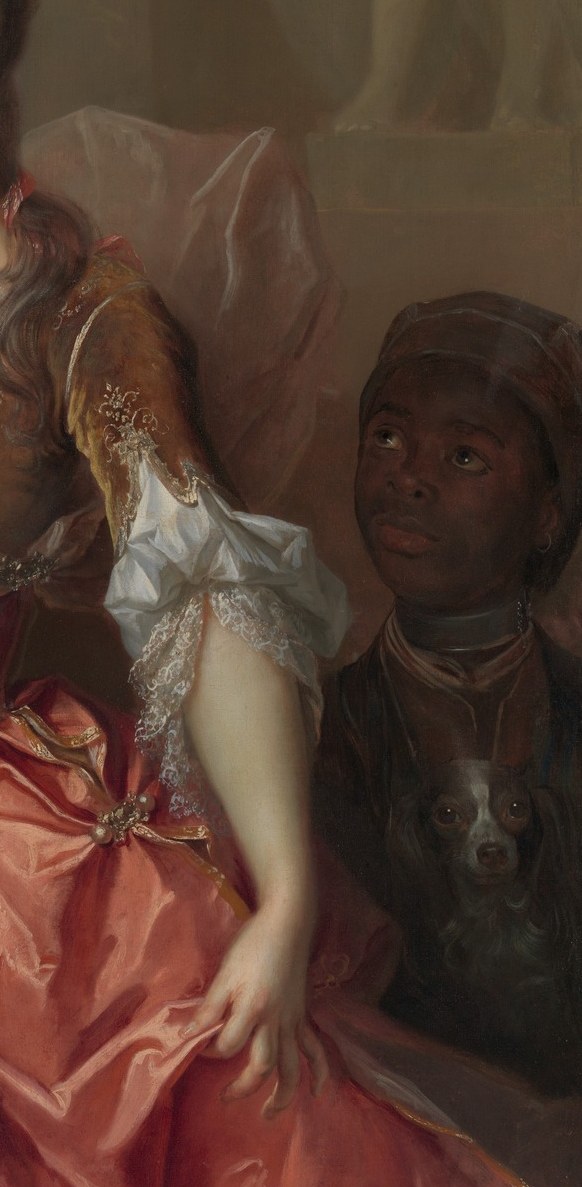
Look first at the towering lace headdress, a fontange, the unmistakable fashion of the 1690s French court, which pins her precisely in time and place. The macaw, a spectacularly expensive import from the Americas, advertises not just wealth but a stake in the colonial trade networks that defined Louis XIV’s economy. The letter in her hand signals female literacy and social connection, while the blue gemstone at her throat, possibly inherited, anchors her in a family lineage. Even the young attendant, a figure whose presence reflects a painful historical reality, was read at the time as a status symbol within elite households.
Largillière was the leading portraitist of the Parisian bourgeoisie during this period, and his genius lay in rendering surfaces, the sheen of crimson silk, the individual strokes of gold embroidery, the luminous white satin, with an illusionism that made the status they represented feel tangible. The sitter is believed to be Marie Marguerite Bontemps, wife of a powerful financial official, and the portrait reads as an argument for her place in a world she joined by marriage. What object in the painting most convinces you of who she wanted to be?
#arthistory #frenchbaroque #largilliere
Details
Transcript
First, the headdress. It has a name: the fontange. A fashion born at Versailles, worn only in the 1690s. The macaw. A live jewel imported from the Americas. It signals wealth, but specifically wealth from colonial trade. The letter in her lap. A sign of literacy and social connection. The blue gemstone at her throat may be a family heirloom. Together they spell a single word: arriviste. She is displaying a newly built world.