Osage Chief with Two Warriors by Catlin, George
George Catlin's "Osage Chief with Two Warriors," painted around 1861, is an oil-on-card portrait at the Smithsonian American Art Museum, documenting Native American life. Catlin, a lawyer turned traveling painter, dedicated himself to capturing the cultures of Plains tribes.
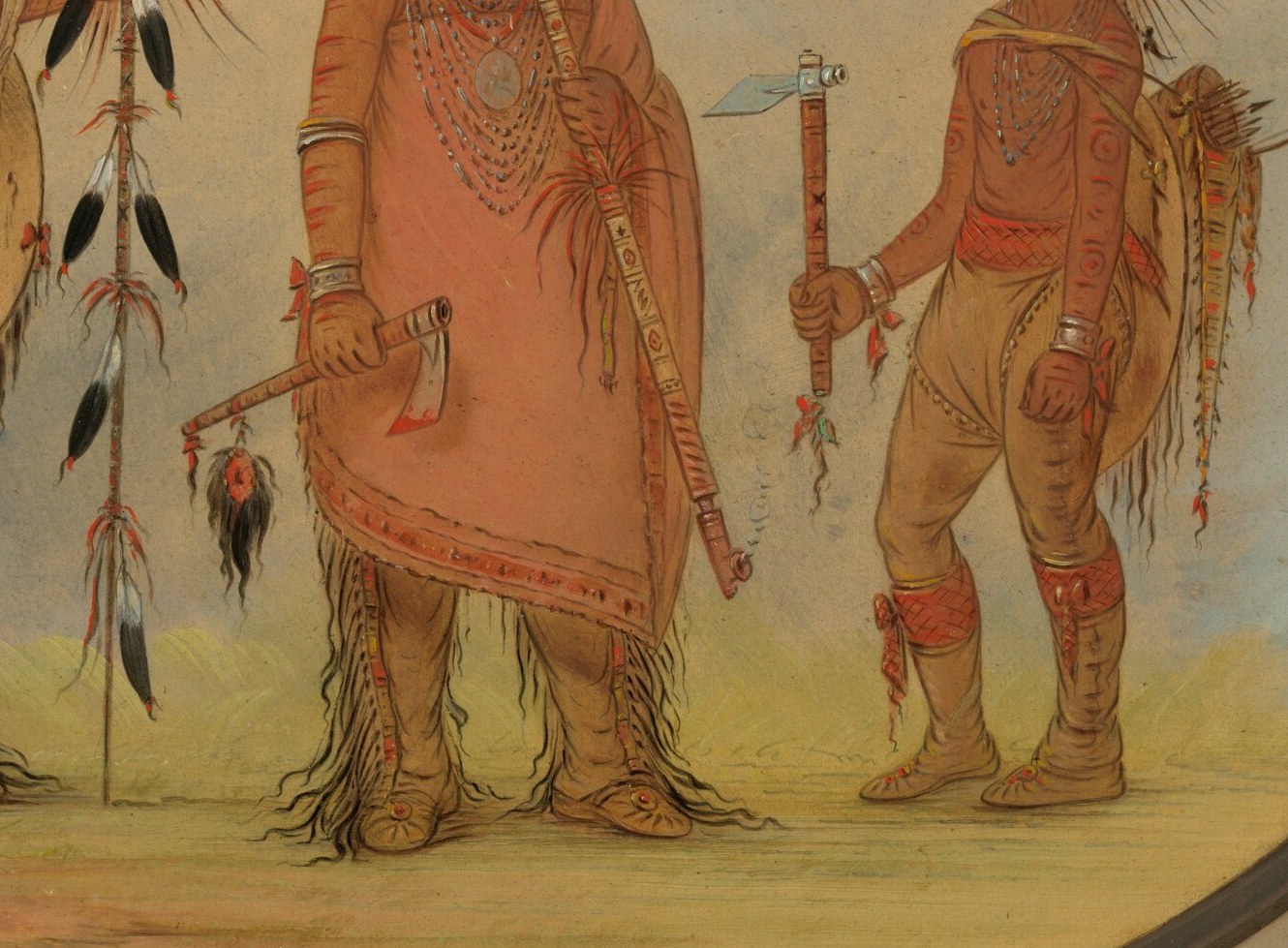
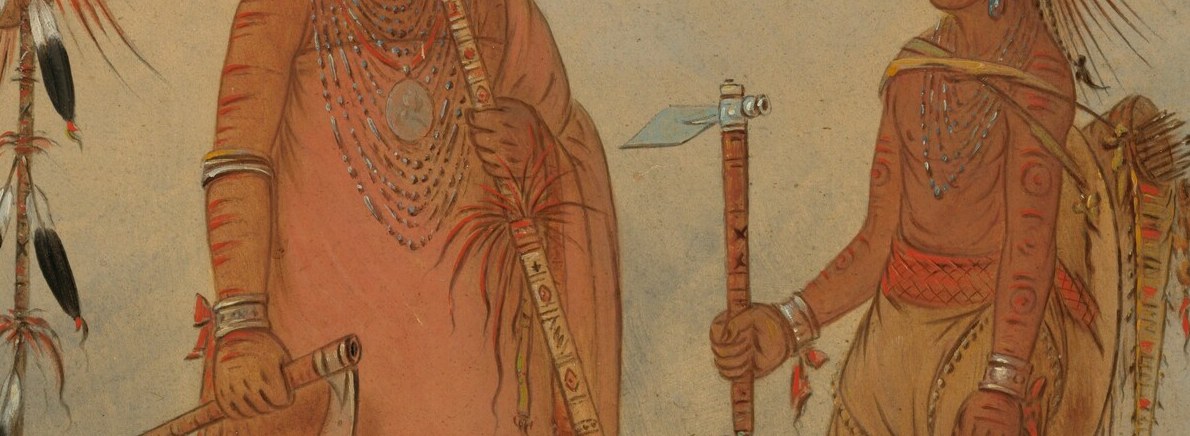
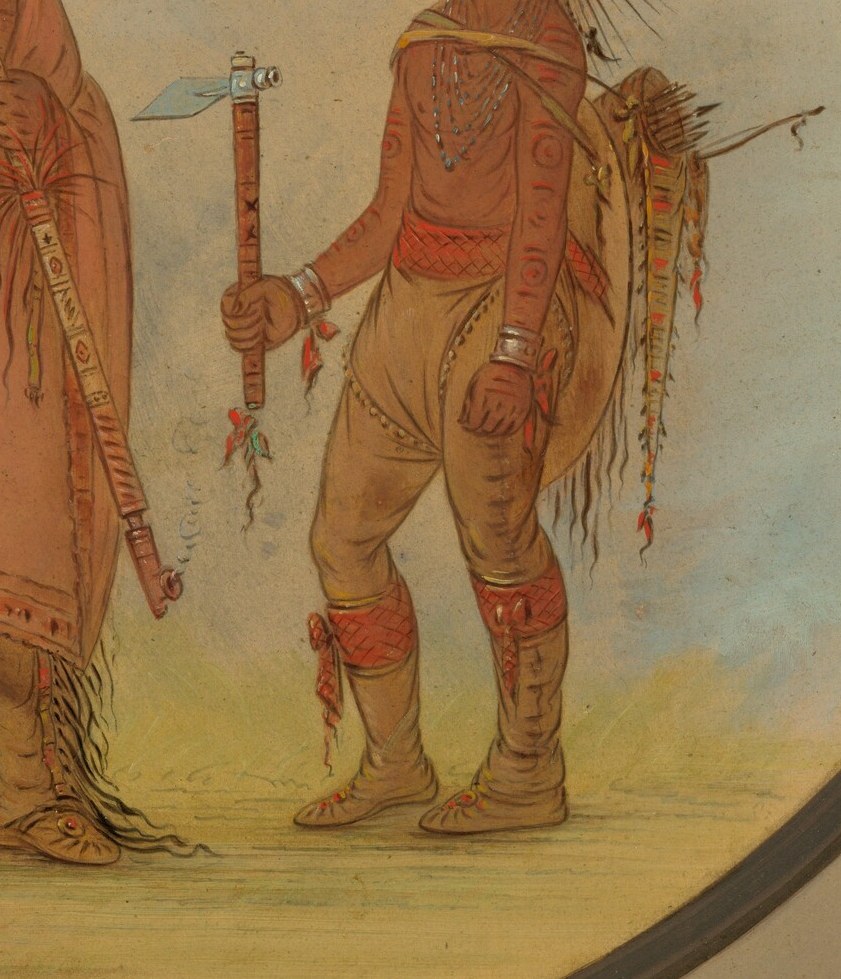
Notice the detailed feathered headdresses and ornate necklaces. These elements are not merely decorative but signify leadership, spiritual importance, and the rich cultural heritage of the Osage people. The shield's intricate patterns also hint at deeper symbolic meanings.
Catlin spent the 1830s immersed in the American West, creating both artistic and ethnographic records for audiences back east. This particular work, while echoing his earlier studies, was completed decades later, showing his lifelong commitment to the subject.
What do these details tell us about the figures and their world?
Details

Transcript
This painter traveled the American frontier in the 1830s. He documented the lives of Plains Indians. The chief's feathered headdress signifies leadership. Intricate beadwork on the necklaces shows cultural richness. Look closely at the decoration on his shield. These are not just portraits, but ethnographic documents.