Moonrise by Henri Harpignies
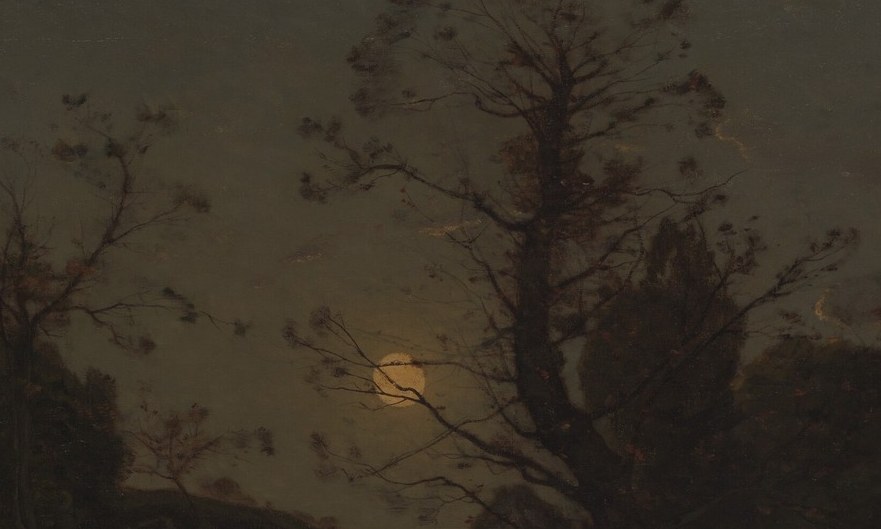
Moonrise (1893) by Henri Harpignies is a painting about a single fragile minute. The moment night fully takes over from day.
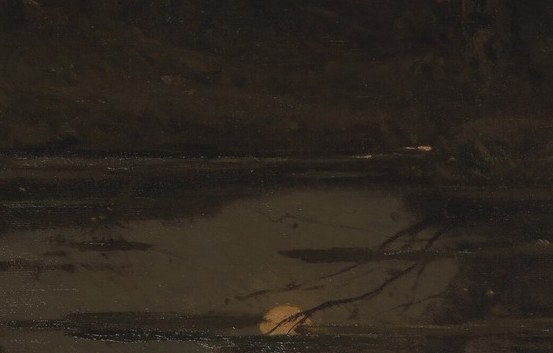
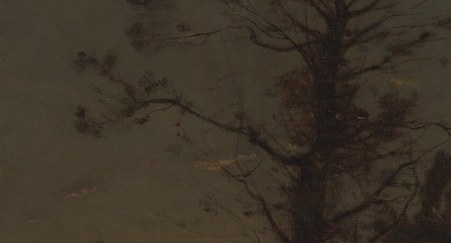
The eighty-year-old painter stands on a dark bank, looking across still water toward a treeline. A pale disc of moon has just cleared the horizon. But look above it: a narrow strip of sky still glows with the last warmth of dusk. That sliver, almost gone, is the real subject. Harpignies frames the moon inside an open gap in the canopy, a deliberate aperture cut into the darkness, so the eye moves between the fading day above and the cold reflection below.
Harpignies was among the last of the Barbizon school, that group of French painters who insisted on working outdoors, in front of the thing itself. By 1893, when he painted this, Impressionism had already peaked and moved on. But Harpignies kept the Barbizon faith: no sentiment, no story, just the discipline of looking long enough at what the light is actually doing. He lived to be ninety-seven and never stopped.
This painting is held at The Metropolitan Museum of Art. What do you notice first: the moon or the vanishing strip of daylight above it?
Details


Transcript
1893. An old man stands by a French river at twilight. He is not painting the night. He is painting the arrival of night. Above the treeline, one last band of daylight is being pulled away. The moon rises into an open gap he carved from the trees. He was eighty when he painted this. The Barbizon men said look, and keep looking. Now the moon answers him across the water.