An Osage Indian Pursuing a Camanchee by Catlin, George
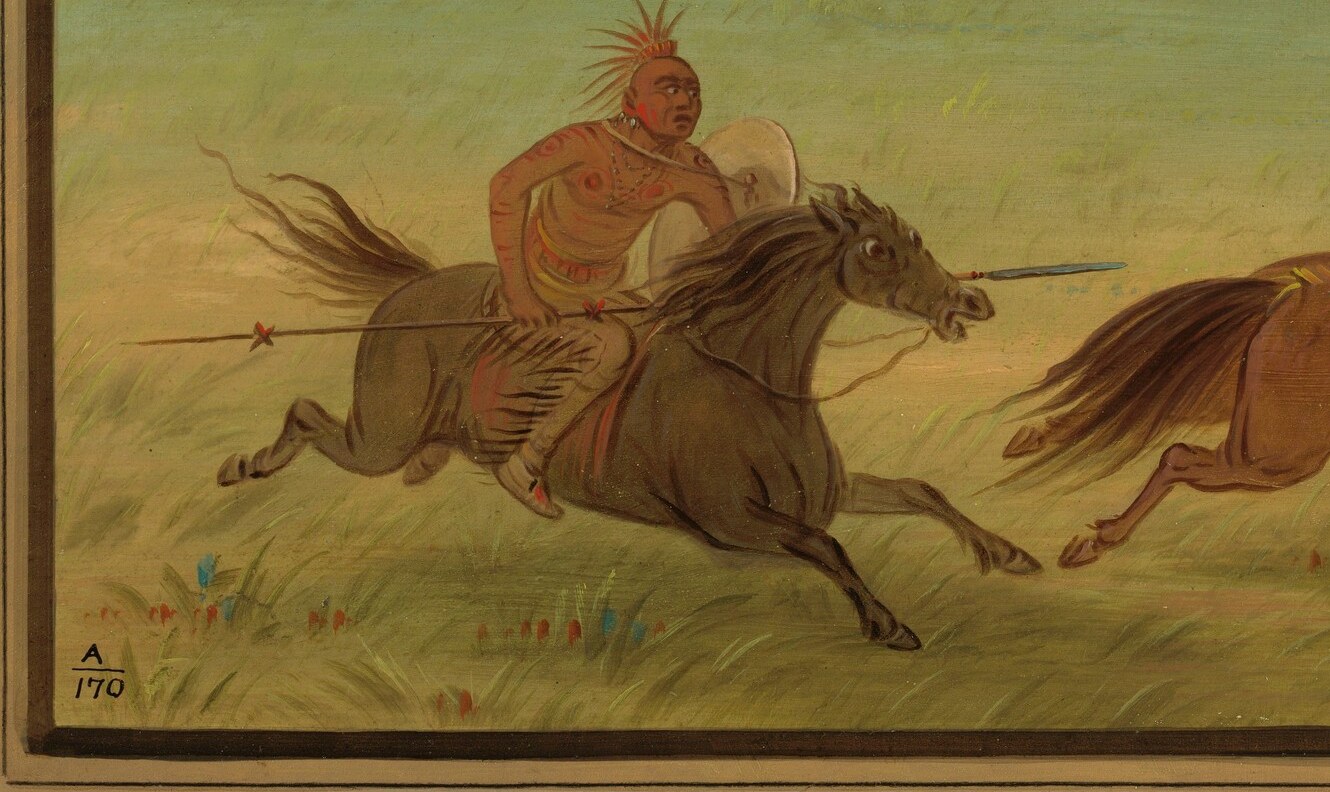
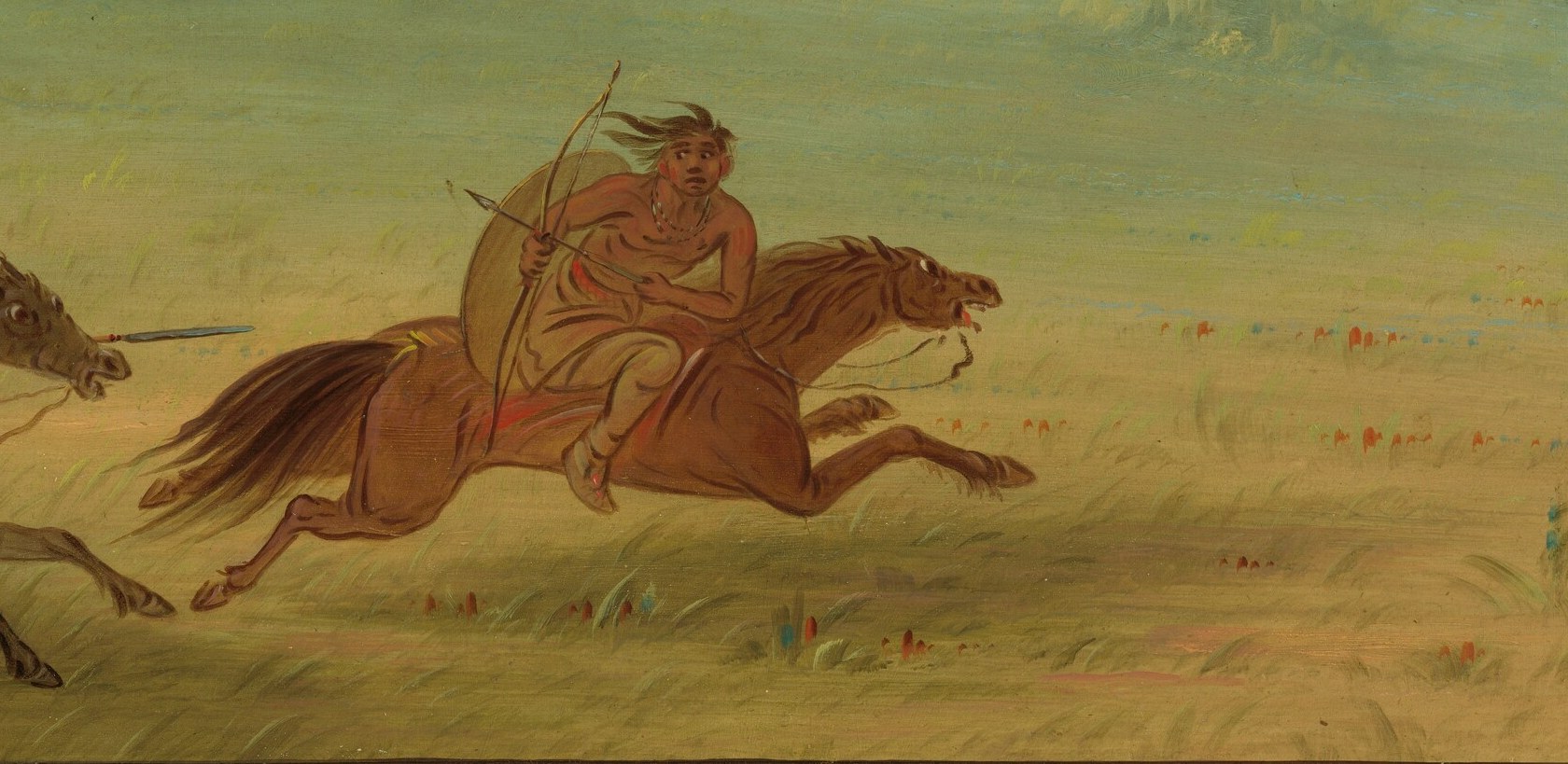
George Catlin's "An Osage Indian Pursuing a Camanchee," painted in 1865, offers a dramatic glimpse into life on the American frontier. Housed in a major collection, this oil on card captures a moment of intense interaction between two Native American tribes.
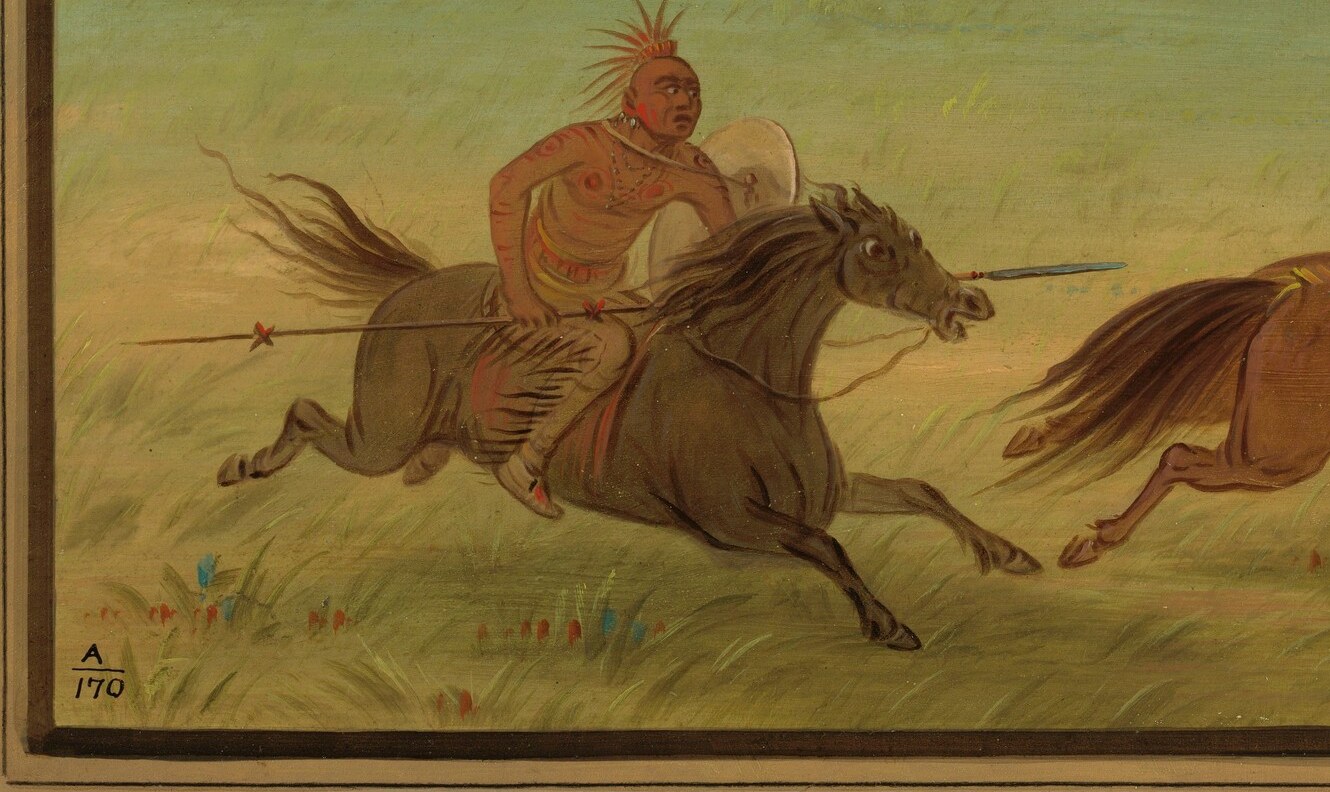
The painting depicts an Osage warrior in pursuit of a Camanchee rider. Look closely at the distinct weaponry: the Osage brandishes a spear, while the Camanchee is armed with a bow and a quiver full of arrows, suggesting a dynamic encounter across the vast plains.
Catlin, an American lawyer turned artist, made five expeditions to the American West in the 1830s. He meticulously documented the lives of Plains Indians through his portraits and genre scenes. His works were often published in early lithographic books, providing Eastern audiences with their first visual impressions of Indigenous peoples and the frontier. Catlin's unique role combined artistic practice with ethnographic reportage.
This painting is more than just a depiction; it's a historical record, reflecting a specific time and place. What does this scene tell us about life in the American West during the mid-nineteenth century?
Details
Transcript
In the 1830s, this painter traveled the American West. He recorded scenes of Plains Indian life, like this chase. An Osage warrior pursues a Camanchee rider across the plains. The Osage rider wields a spear, ready for the encounter. The Camanchee carries a bow and quiver of arrows, prepared. These images helped Eastern audiences imagine the frontier. His detailed work bridged art and ethnographic reporting.