Self-portrait with the Portrait of his Wife, Margaretha van Rees, and their Daughter Maria by Adriaen van der Werff
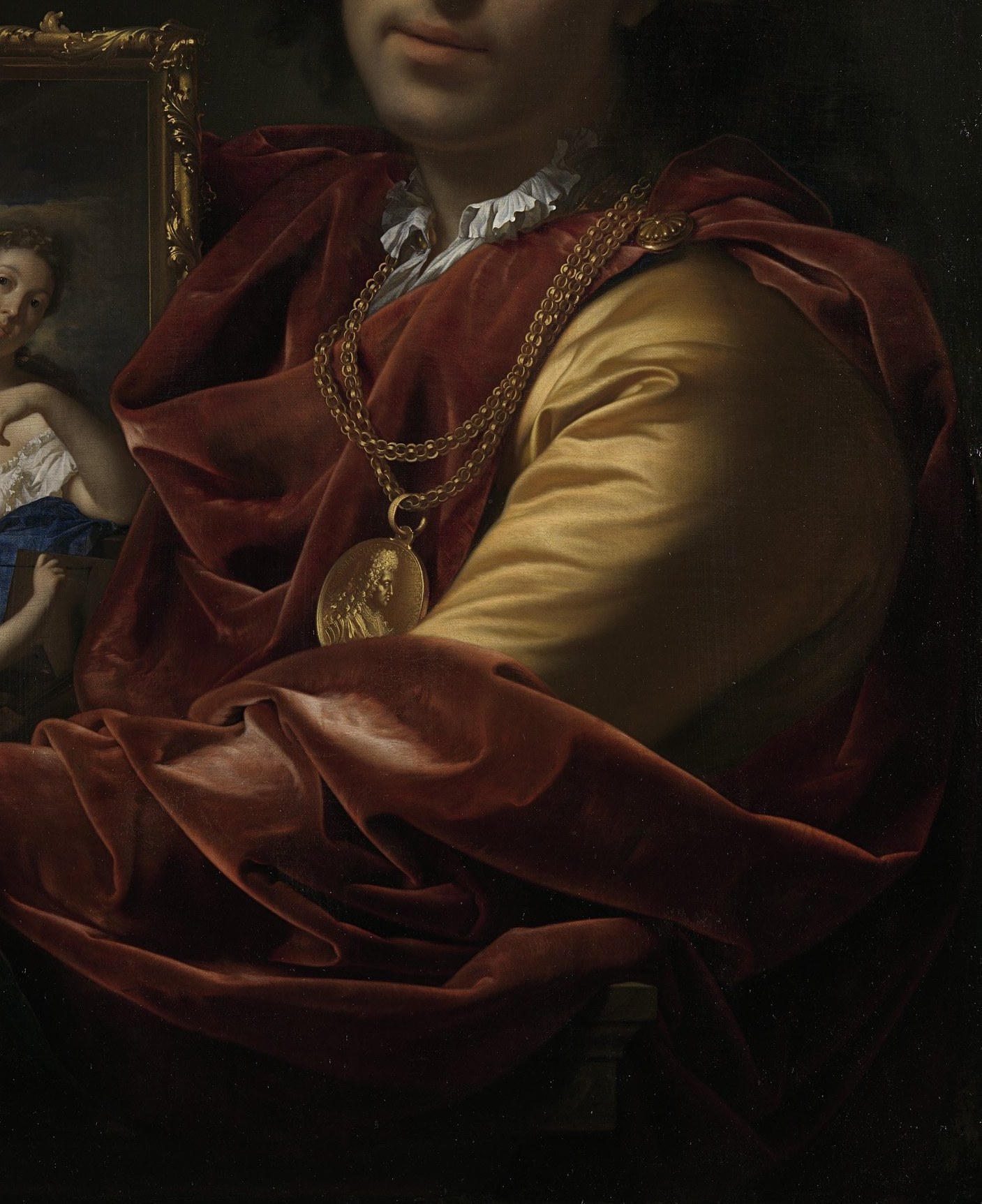
Adriaen van der Werff's "Self-portrait with the Portrait of his Wife, Margaretha van Rees, and their Daughter Maria," painted in 1699, is more than just a family portrait; it's a strategic advertisement for his artistic prowess and elevated social standing. Housed at the Rijksmuseum, this work showcases the artist's ambition.
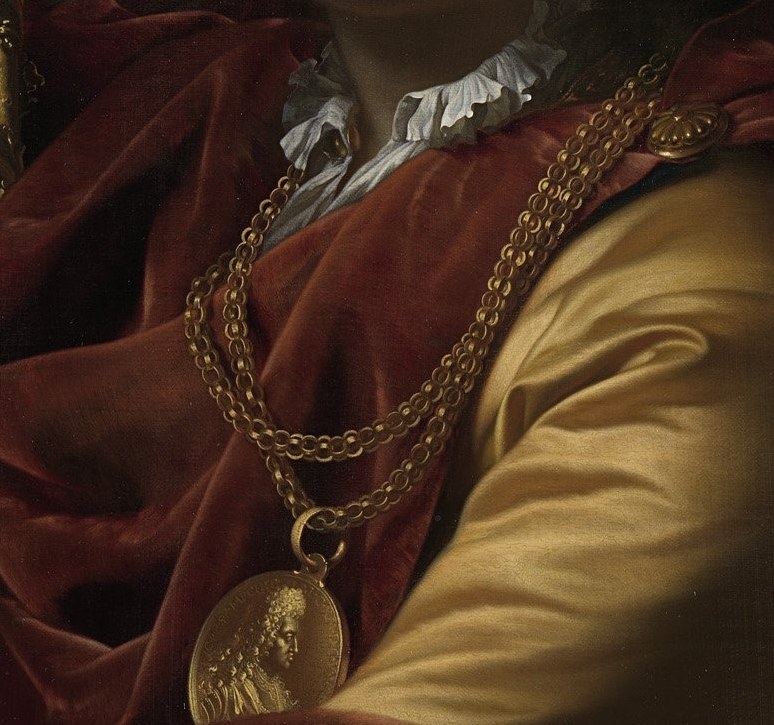
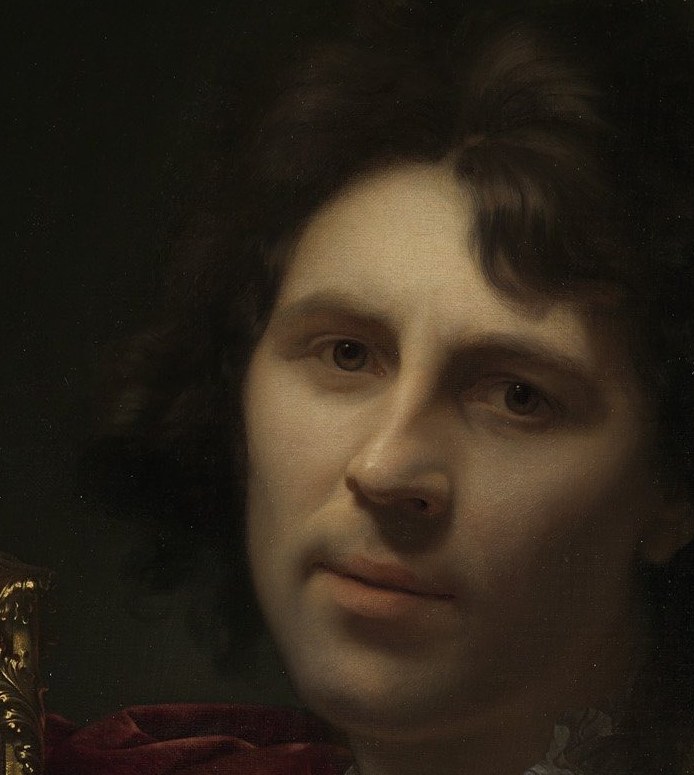
Notice the rich red velvet of his robe and the golden chain draped around his neck, both clear indicators of his success and wealth. The focused light on these elements, along with his confident gaze, underscores his position as a respected artist.
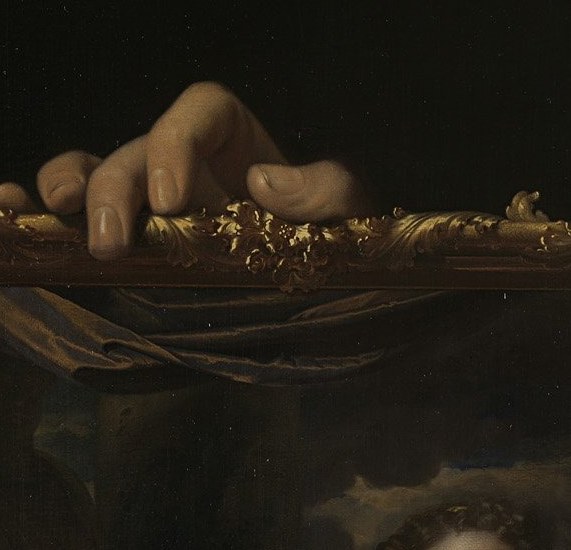
Van der Werff was a highly sought-after painter in the late 17th and early 18th centuries, even receiving commissions from powerful families like the Medicis. By including the miniature portrait of his wife and daughter, he demonstrates his ability to render both grand figures and intimate domestic scenes with meticulous detail.
This painting offers a fascinating glimpse into how artists marketed themselves in a competitive era. What details do you think were most important for attracting new patrons?
Details
Transcript
This painter crafted his self-portrait as an advertisement. His opulent red robe signals his wealth and status. A prominent golden chain shows his professional achievement. He painted for aristocratic patrons, even the Medici family. His left hand presents a detailed portrait of his family. It highlights his skill in capturing intimate affection.