The Surrender of Brea by Diego Velázquez
This is The Surrender of Breda, painted by Diego Velázquez in 1634, and it hangs in the Museo del Prado in Madrid. It depicts a single, true moment from the Eighty Years' War, but every detail is a deliberate political argument. Velázquez had traveled to Italy with the Spanish general Ambrogio Spinola, who told him exactly how the surrender of the Dutch city had really happened.
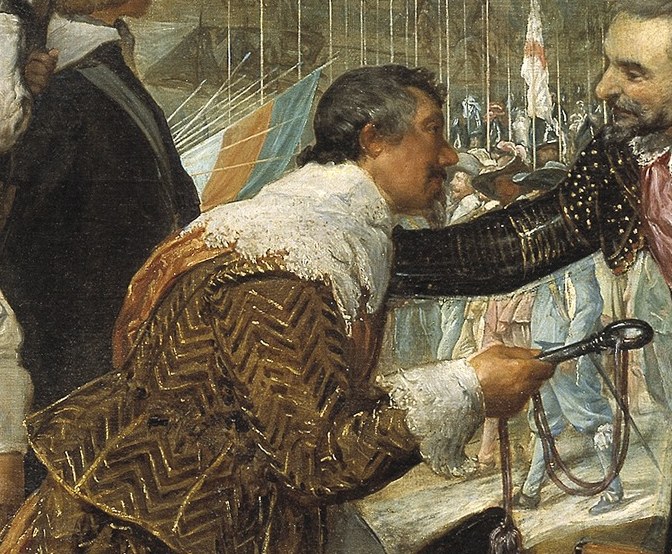
Look at the center. The Dutch commander, Justinus van Nassau, extends the key of the city. His body is beginning to bow. But Spinola's right hand lands on his shoulder and stops him. The victor refuses to let the defeated man kneel. Spinola's face, which Velázquez painted from personal memory, is not triumphant; it is gracious. This single gesture reverses the entire emotional logic of a surrender painting.
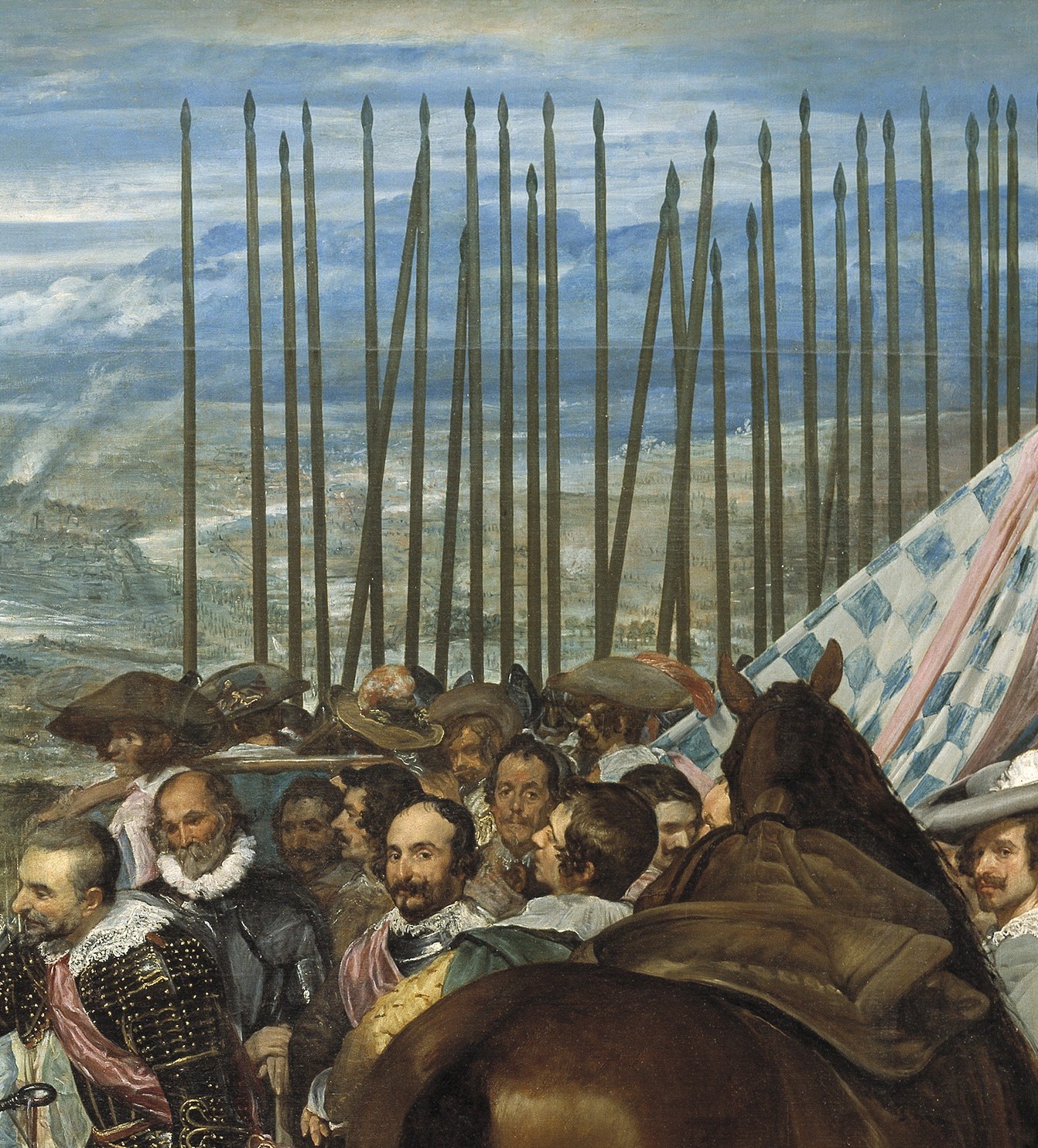
Now look behind them at the Spanish lances. The painting's popular name is Las Lanzas because of these. They are not scattered weapons; they are a near-parallel vertical grid, a visual wall of discipline that contrasts with the looser Dutch pikestaffs on the left. Velázquez made national identity visible through geometry: Spanish order, Dutch informality, all in the angle of a stick.
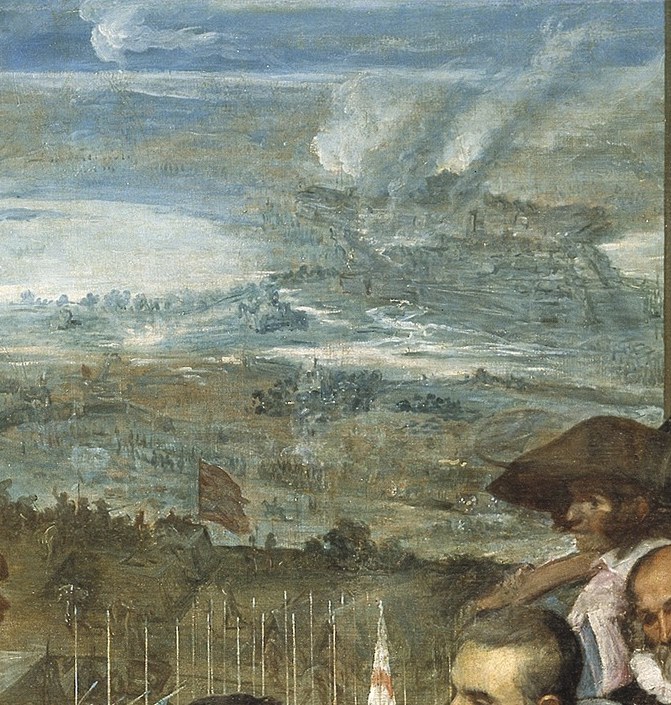
The city of Breda still burns in the distance, smoke rising through a hazy sky. The ceremony of civility is staged directly in front of that destruction. Velázquez doesn't hide the cost of the siege; he frames the human mercy against it. That is what makes the painting so startling, and why one critic called it the most Spanish of all pictures.
Details
Transcript
This is the surrender of a city. The Dutch commander offers the key. But the Spanish general will not let him bow. His hand stops the surrender. He calls him friend. Behind them, a wall of Spanish lances. The painting is known as Las Lanzas because of them. Every upright spear is a pixel of pure military order. Velázquez painted this not from a battle, but from a story his general told him.