Mérode Altarpiece by http://www.wikidata.org/.well-known/genid/f1664f0be42080933843168150f70f32
The Mérode Altarpiece, an oil on oak panel triptych from the workshop of Robert Campin, hangs in The Cloisters in New York. Painted around 1427, it is one of the founding works of Early Netherlandish painting, bridging the medieval world and the meticulous realism that would define modern Western art. It looks like a domestic scene in 1420s Flanders until you notice where the rules of physics have broken down.
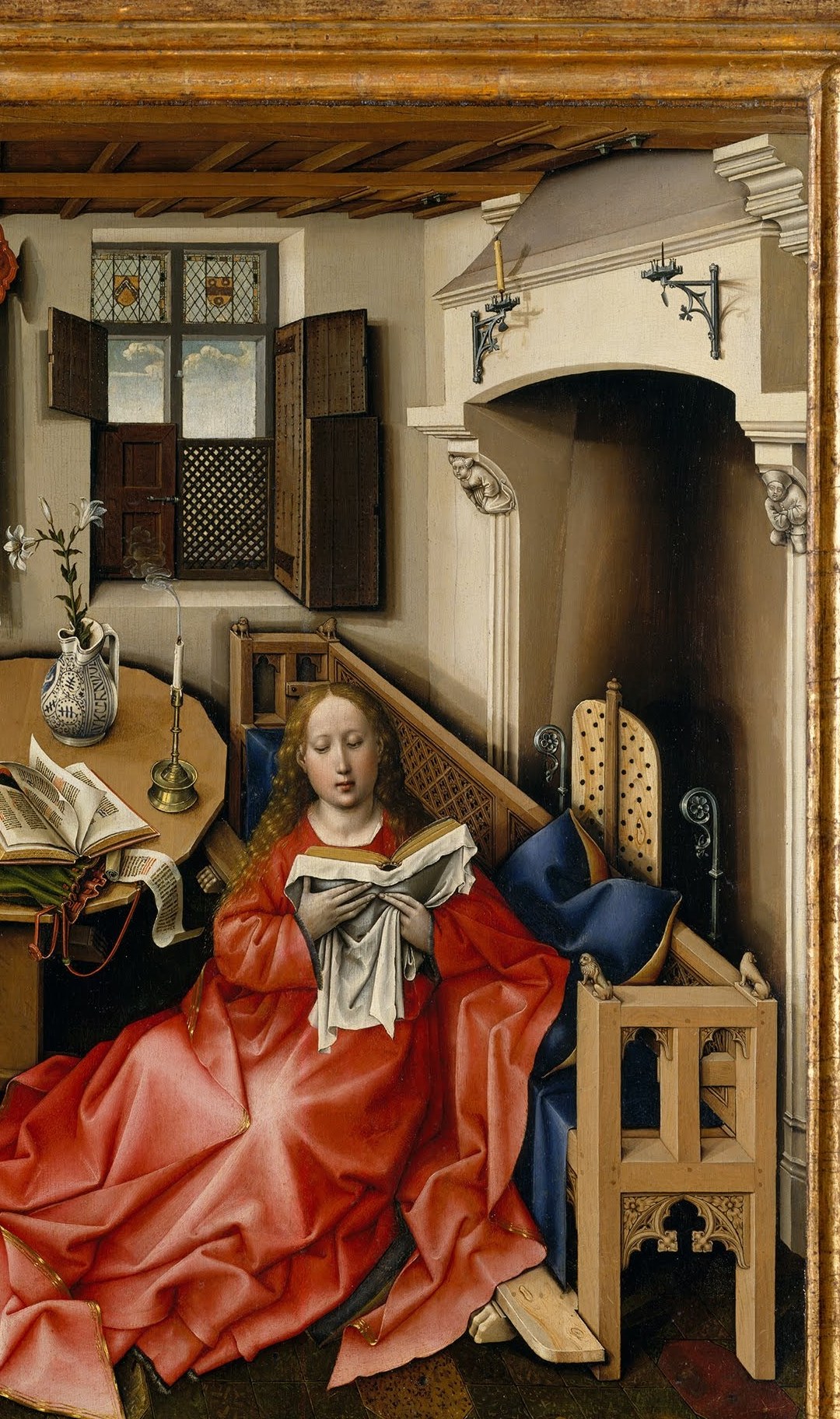
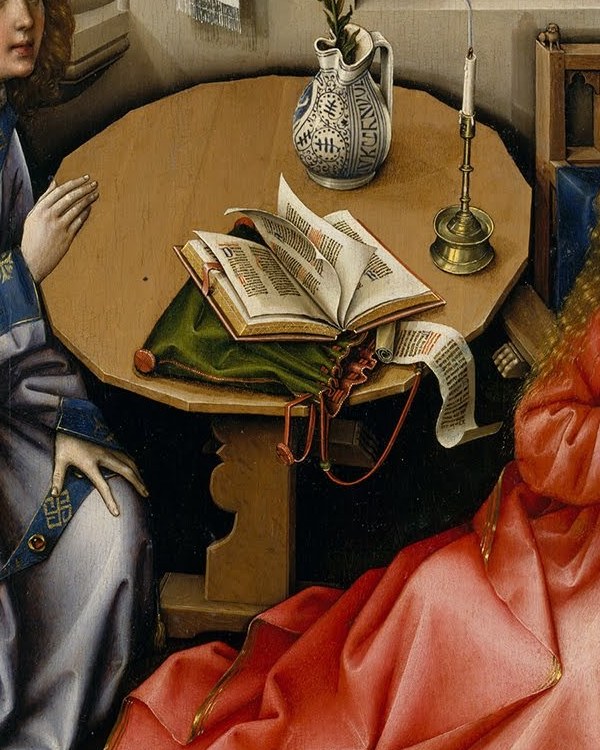
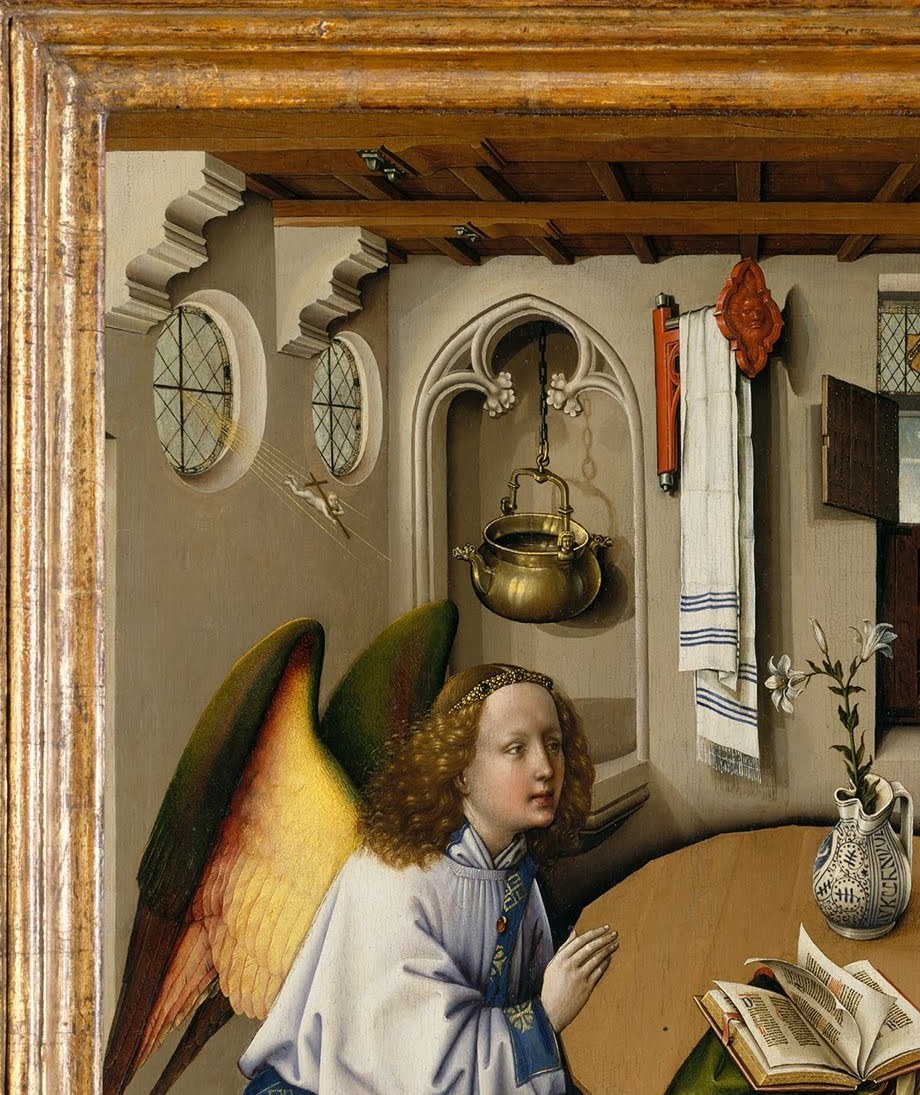
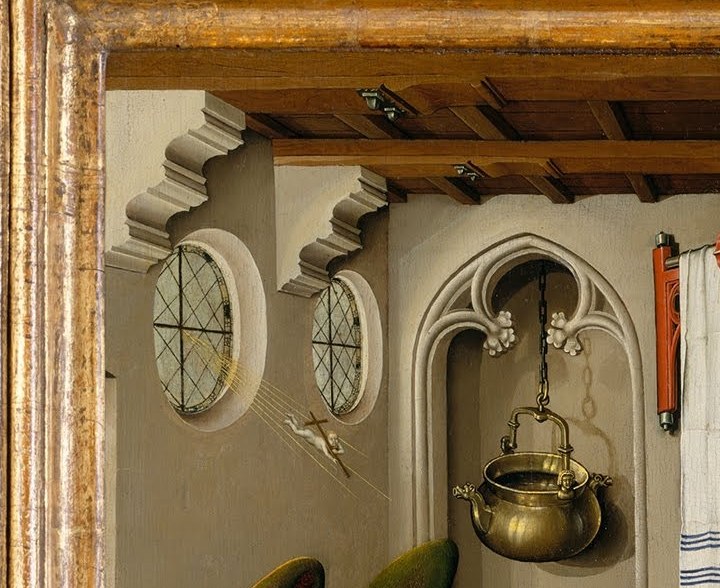
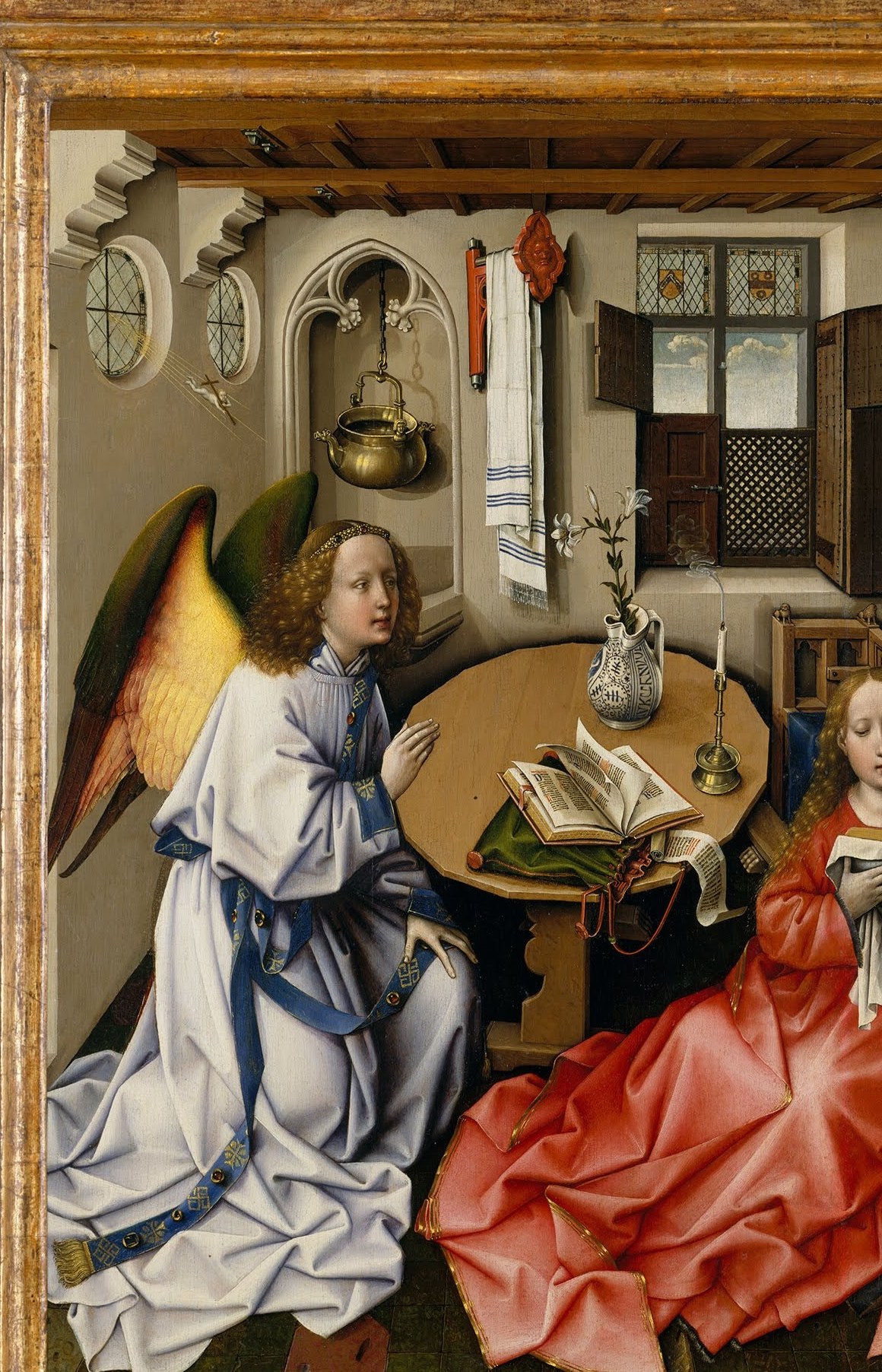
First, find the extinguished candle on the central table. The wick still smokes. Then follow the diagonal rays of light entering from the left window. They do not scatter or illuminate the room. Instead, they carry a tiny infant Christ child sliding down the beam, a miniature cross balanced on his shoulder. The Holy Spirit as physics, the Incarnation as literal descent. You are meant to miss it on first glance.
The three panels read like an argument. On the left, the donors kneel in a garden, separated from the holy room by an ajar door. In the center, Mary has been interrupted mid-read from a book scholars identify as probably opened to Isaiah 7:14, the prophecy of a virgin birth. On the right, Saint Joseph works a carpenter's bench, unaware. Among his tools are wooden mousetraps, a reference to a patristic idea that the Cross was God's trap to catch the Devil.
Every object in this painting is doing theological work. The lily is purity. The cold wick insists that divine light supersedes the ordinary. Even the street visible through Joseph's window is a real slice of 1420s Liège, a time capsule inserted into a miracle. The painting doesn't separate the sacred from the everyday. It insists the everyday was always the point.
Details
Transcript
This Flemish home has been interrupted by the holy. Mary looks up from her book. A verse is being fulfilled. A candle on her table has just been snuffed out. The divine light replaced the ordinary. And look closer at that light. A tiny infant carrying a cross rides the rays into the room. The painter hid the Incarnation where no one would think to look.