Catherine Brass Yates (Mrs. Richard Yates) by Stuart, Gilbert
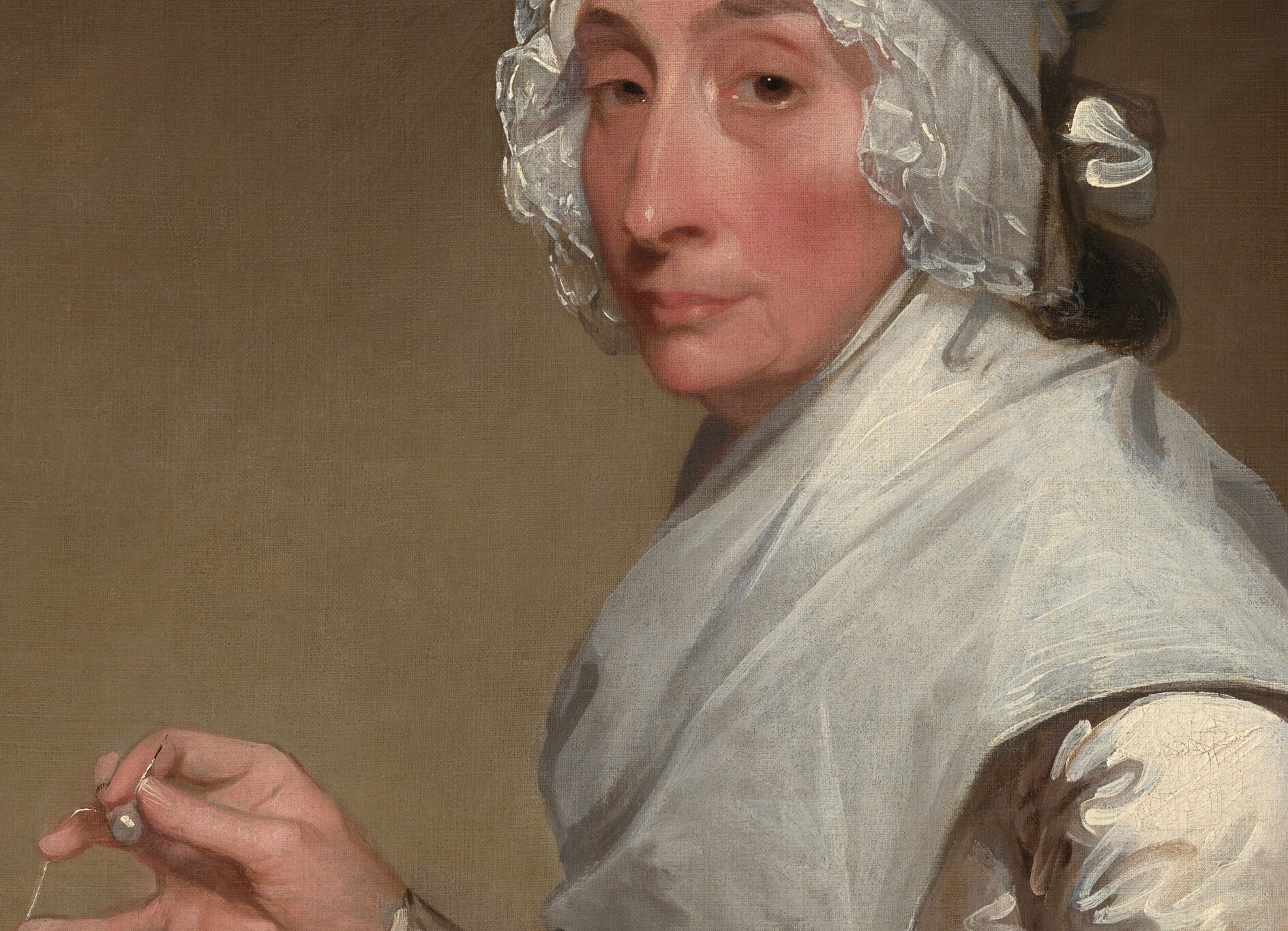
Gilbert Stuart painted this portrait of Catherine Brass Yates in 1794, shortly after arriving in Philadelphia and just before he began the famous sittings with George Washington that would define his career, and eventually undo his finances. The painting hangs today in the National Gallery of Art as a pristine record of Federal-era selfhood.
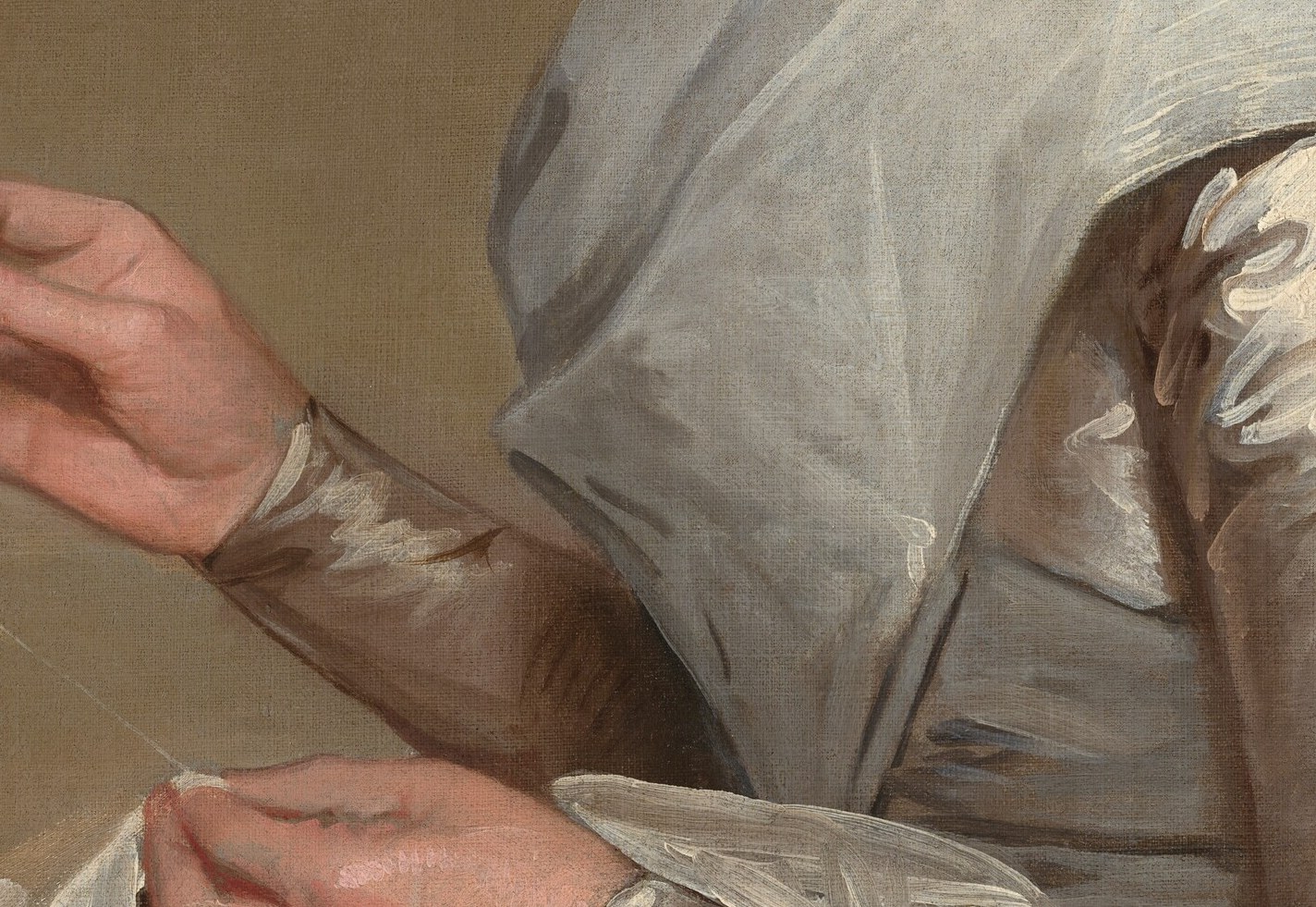
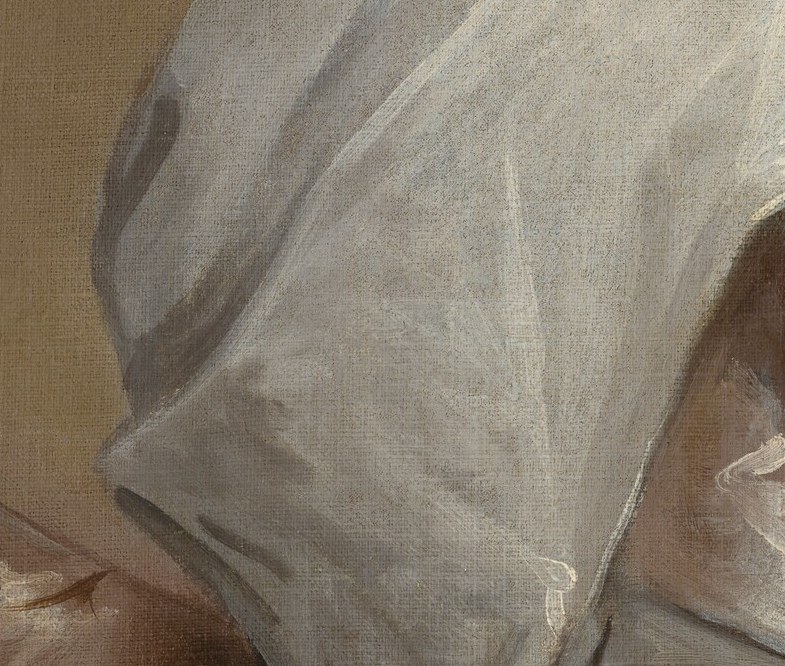
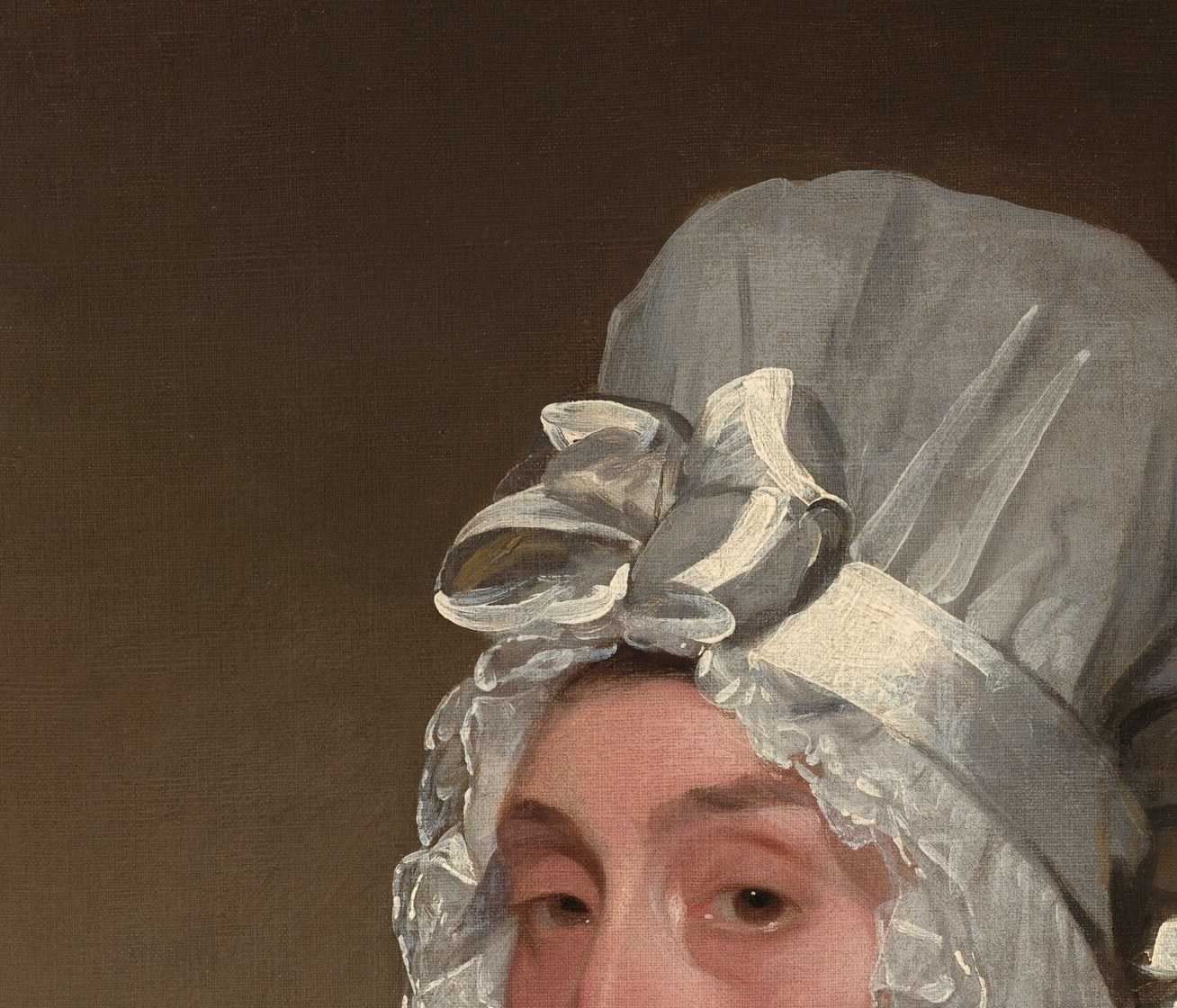
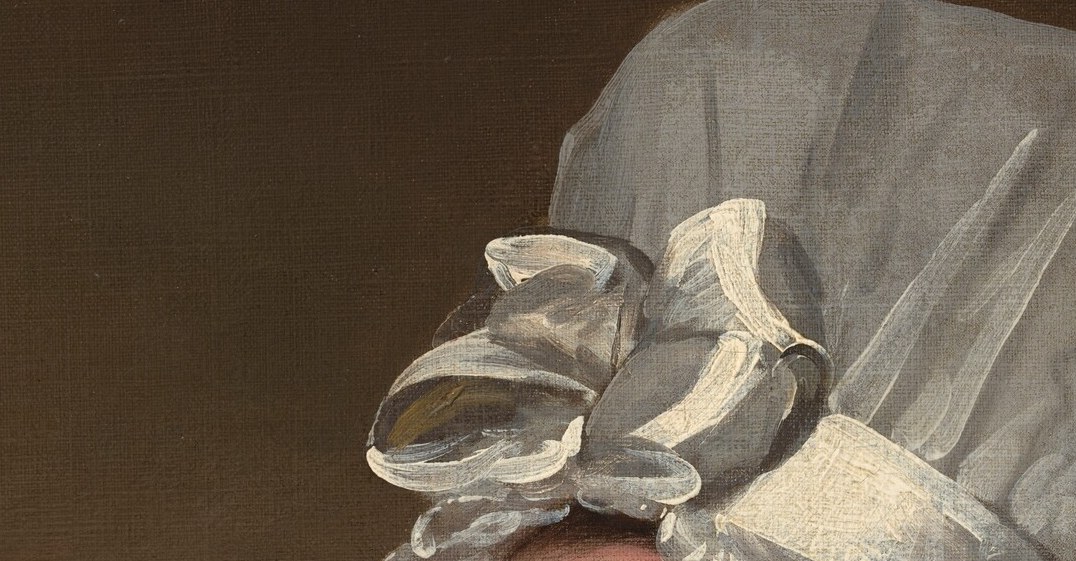
Stuart's control of white-on-white is the first thing to notice. The sitter's mob cap, fichu, and muslin bodice are rendered in at least three differentiated shades of white, relying entirely on tonal variation and texture rather than color contrast. The red damask chair supplies the only saturated note, and it reads immediately as a status marker: this is a merchant-class household, comfortable but not ostentatious.
Catherine Yates was the wife of Richard Yates, a New York merchant. She chose to be painted actively occupied with needlework, a deliberate signal of domestic industry, a quality the early Republic elevated as the highest female civic virtue. Stuart reserved his most careful modeling for faces and hands, and her level gaze projects a psychological self-possession rare in portraits of women at the time.
Stuart charged around sixty dollars for a head-and-shoulders likeness, far below the London prices he had left behind. He was chronically in debt, and within a few years he began painting and selling unauthorized replicas of his Washington portraits to stay afloat, a practice that brought him income but no lasting security. The composed woman in the white dress sat for him during the calm before that particular storm.
Details
Transcript
Philadelphia, 1794. A merchant's wife sits for a portrait. Her dress is white muslin, the neoclassical silhouette of the new republic. But look at her hands. She is sewing. Domestic industry, the era's highest female virtue, displayed as proudly as any jewel. Gilbert Stuart charged sixty dollars for a likeness like this one. He was a terrible businessman, and he knew it. Commissions were his only income. Just months later, he would paint George Washington, and begin the portrait that ruined him.