Woman with a Water Jug by Johannes Vermeer
View the artwork: Woman with a Water Jug →
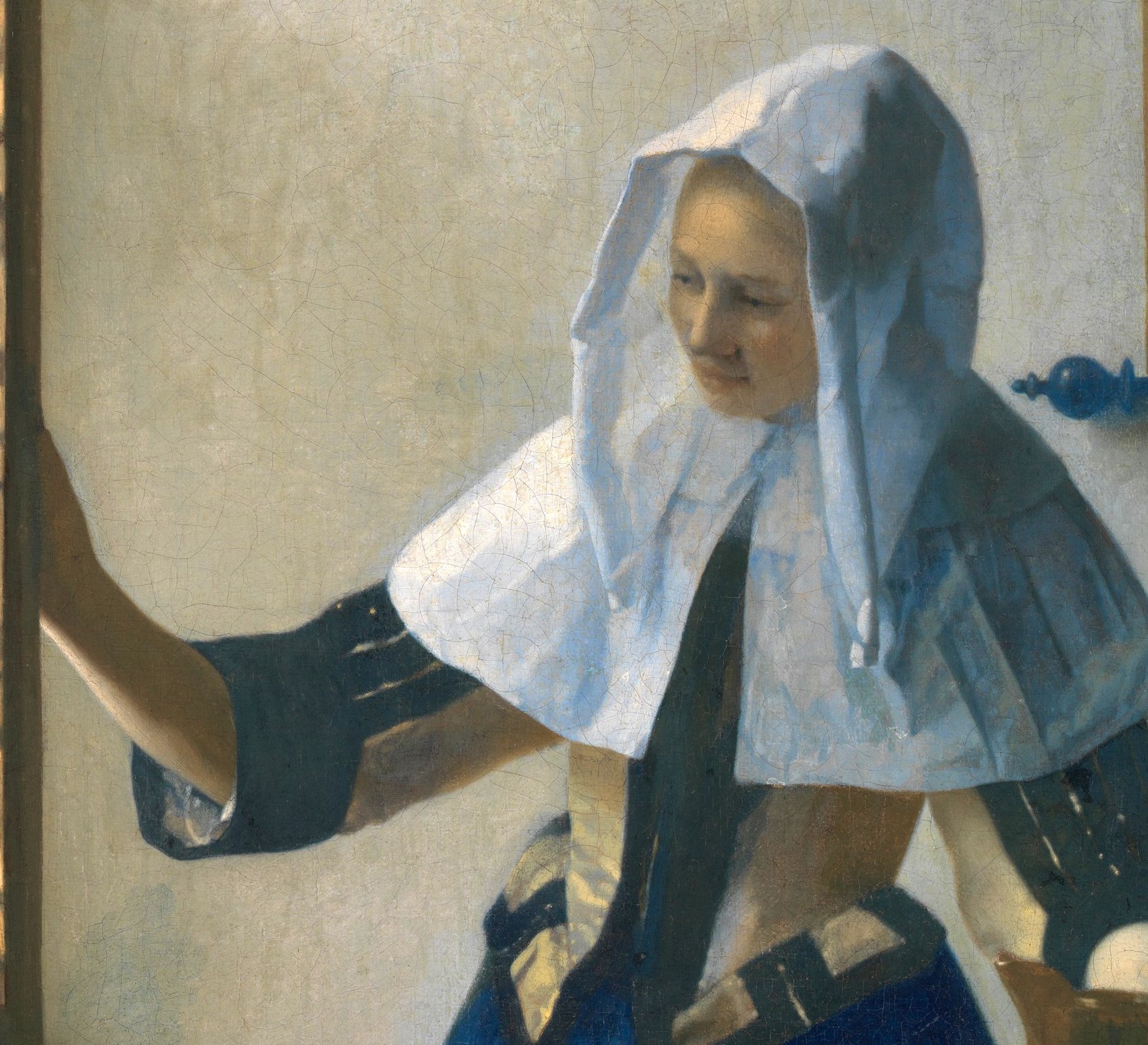
Johannes Vermeer's 'Woman with a Water Jug' hangs at the Metropolitan Museum of Art. Painted around 1660-62, this small work, only 45 by 40 centimeters, captures a single quiet instant in a Delft interior. She is mistress of a silence that has lasted three hundred and fifty years.
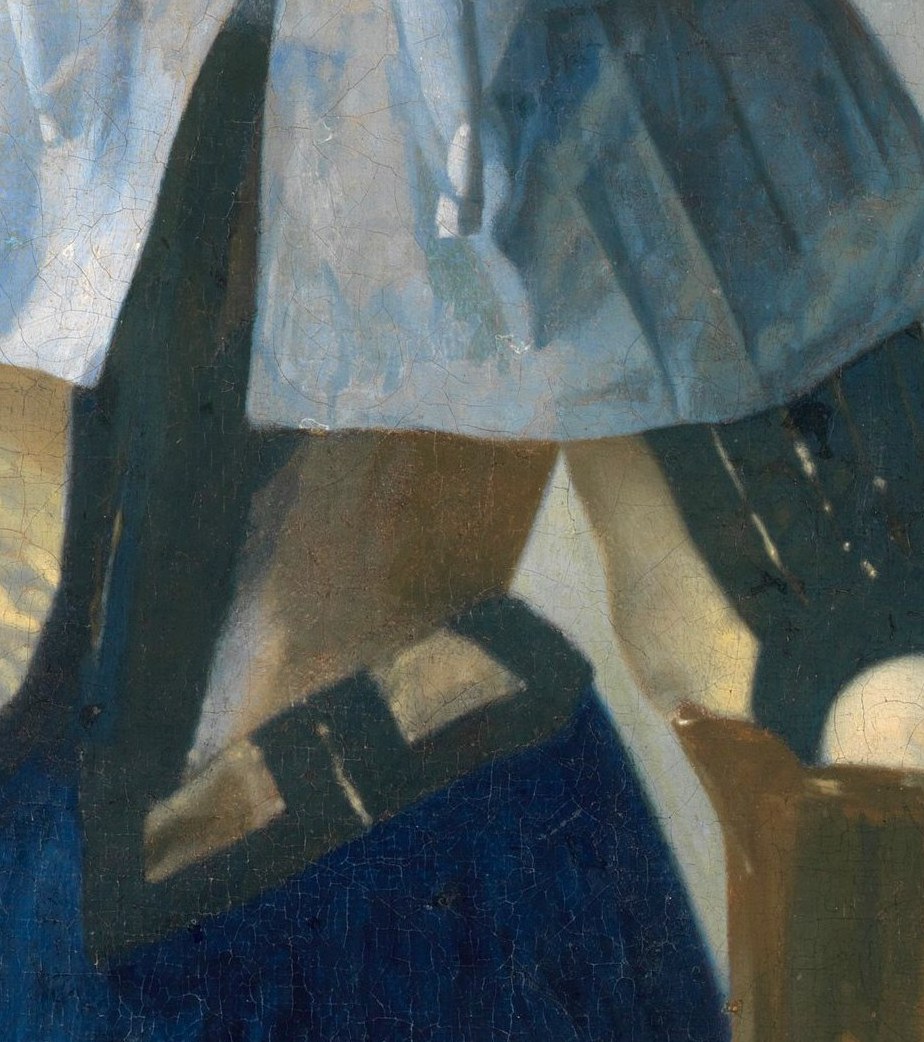
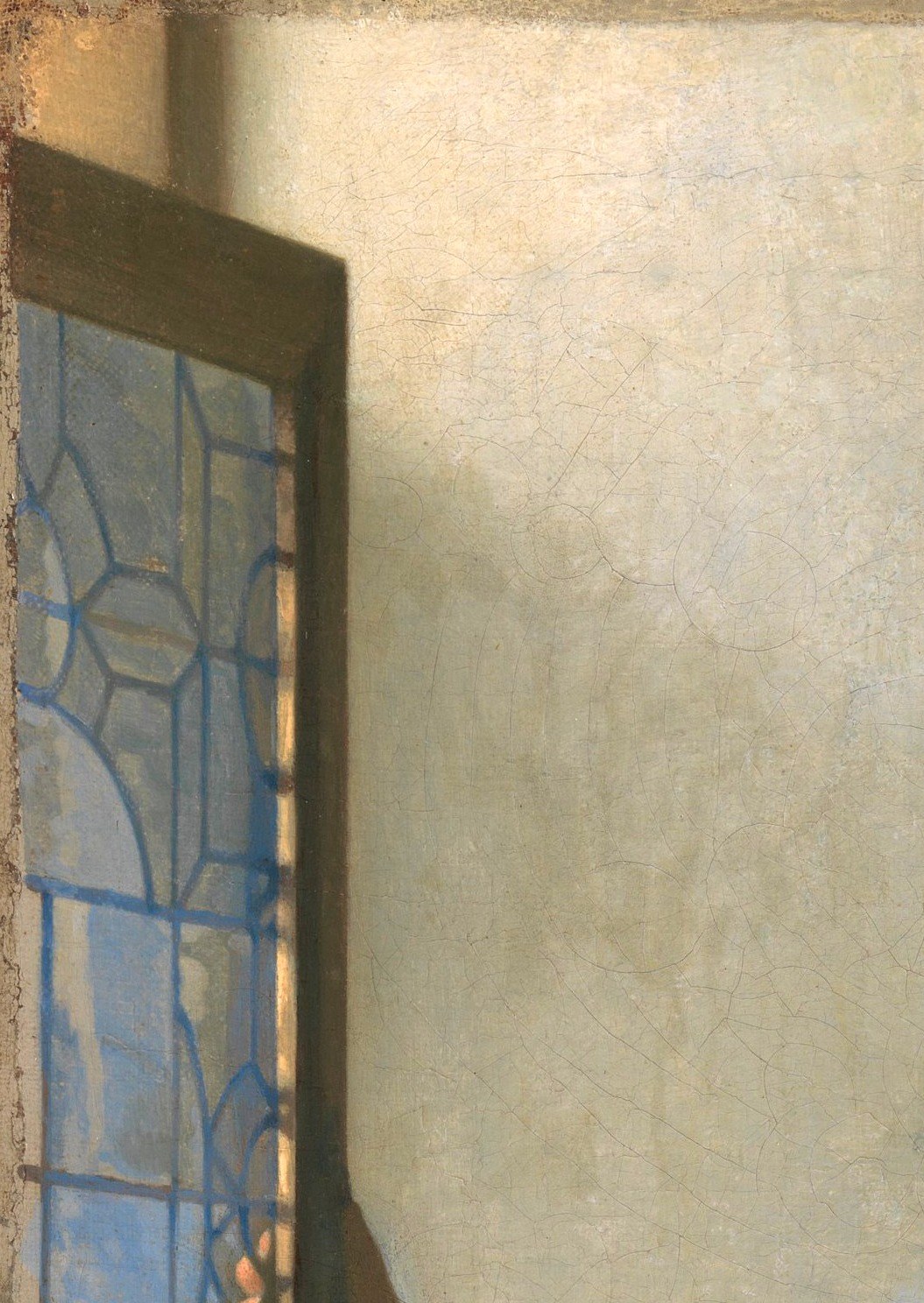
Look first at the light pooling through the open window on the left. It is not a beam you can see the source of; it is simply a change in the air, a glow that lifts the white linen of her cap and cools on the pewter basin. Vermeer's north light is famous for good reason. Follow it to her face: her eyes are downcast, and she will not acknowledge you. The artist built an entire career on women caught inside their own thoughts, and this refusal of contact is the center of the painting's power.
Vermeer worked achingly slowly, using pigments so costly, the ultramarine blue in her jacket came from lapis lazuli, that his death at forty-three left his family with debts. His modest fame vanished for two centuries. He was barely a footnote in the major Dutch art chronicles, and this painting, like the woman inside it, simply waited. It now sits a short walk from Central Park, still holding the same suspended breath he set down in a small room in Delft.
When you stand before it, the map on the back wall reminds you that this intimate domestic world existed inside a Dutch Republic whose ships touched every continent. But the jug stays tilted, the water unpoured, and the woman does not look up.
#arthistory #vermeer #dutchgoldenage
Details

Transcript
You are not really meant to be here. Her eyes never meet the viewer's. Vermeer died at 43. His wife was left deep in debt. The morning light he painted still holds her. She has just opened the window. Everything that ever happened in this room waited for his brush.