Flowers in a Rococo Vase by Cezanne, Paul
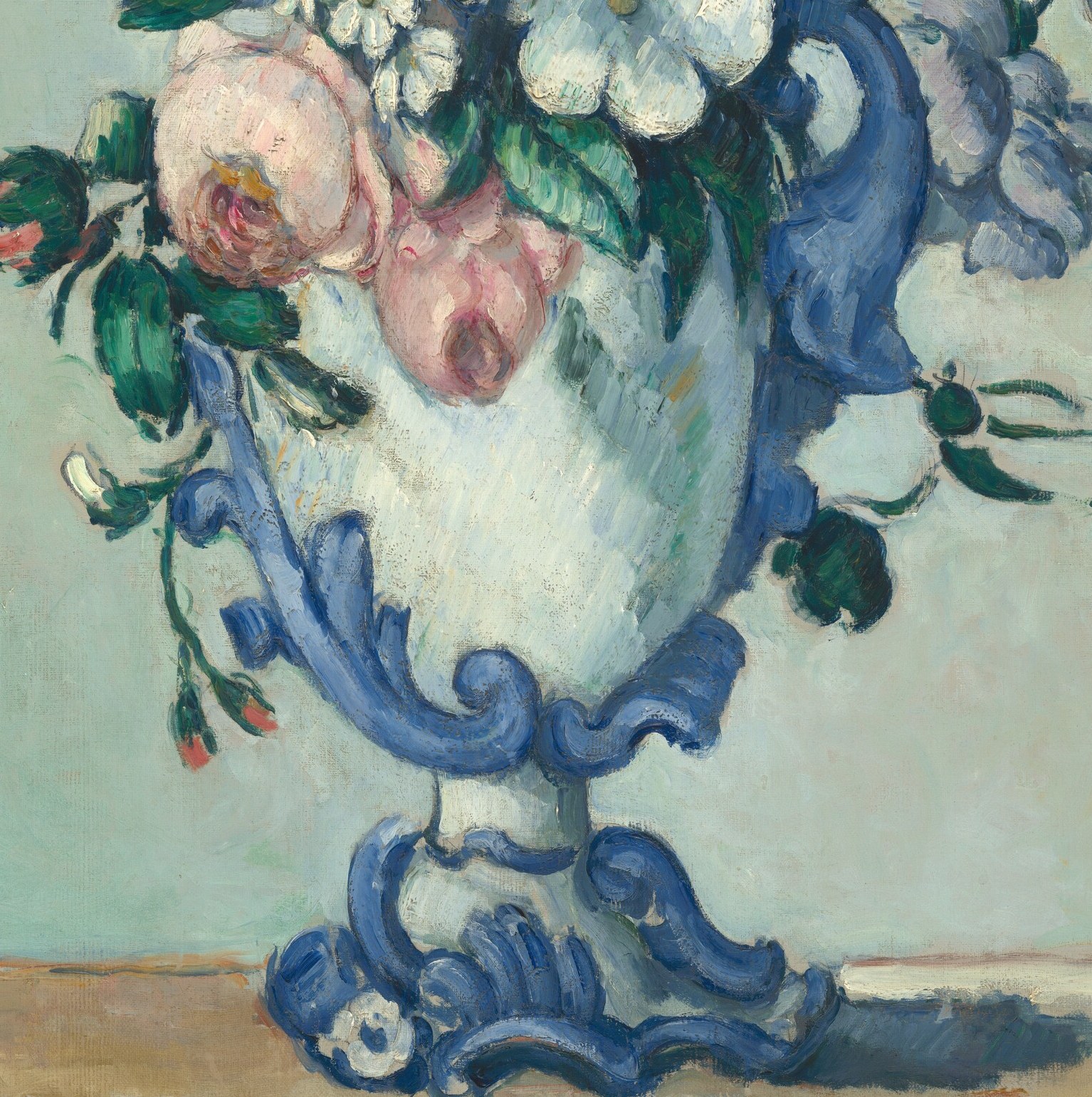
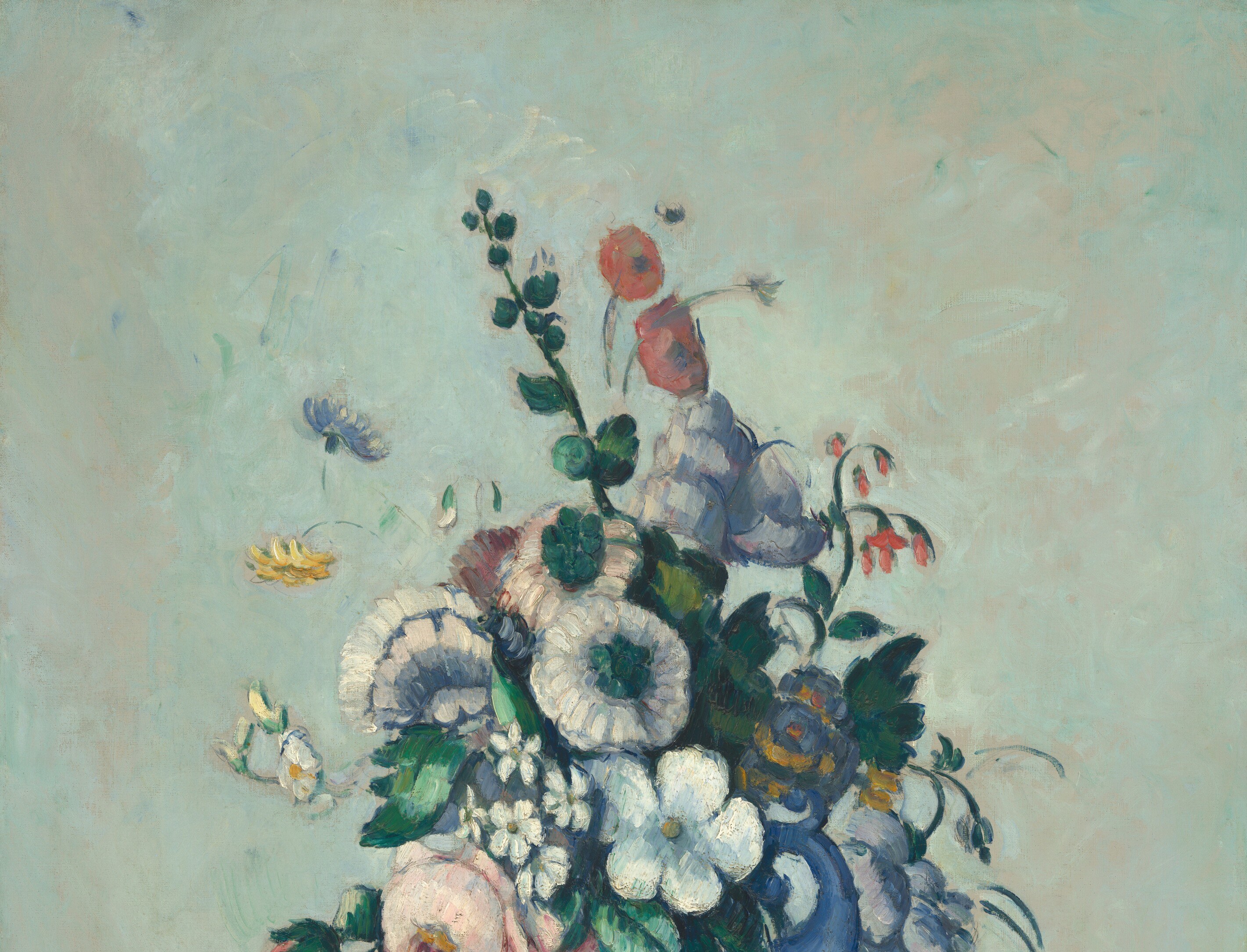
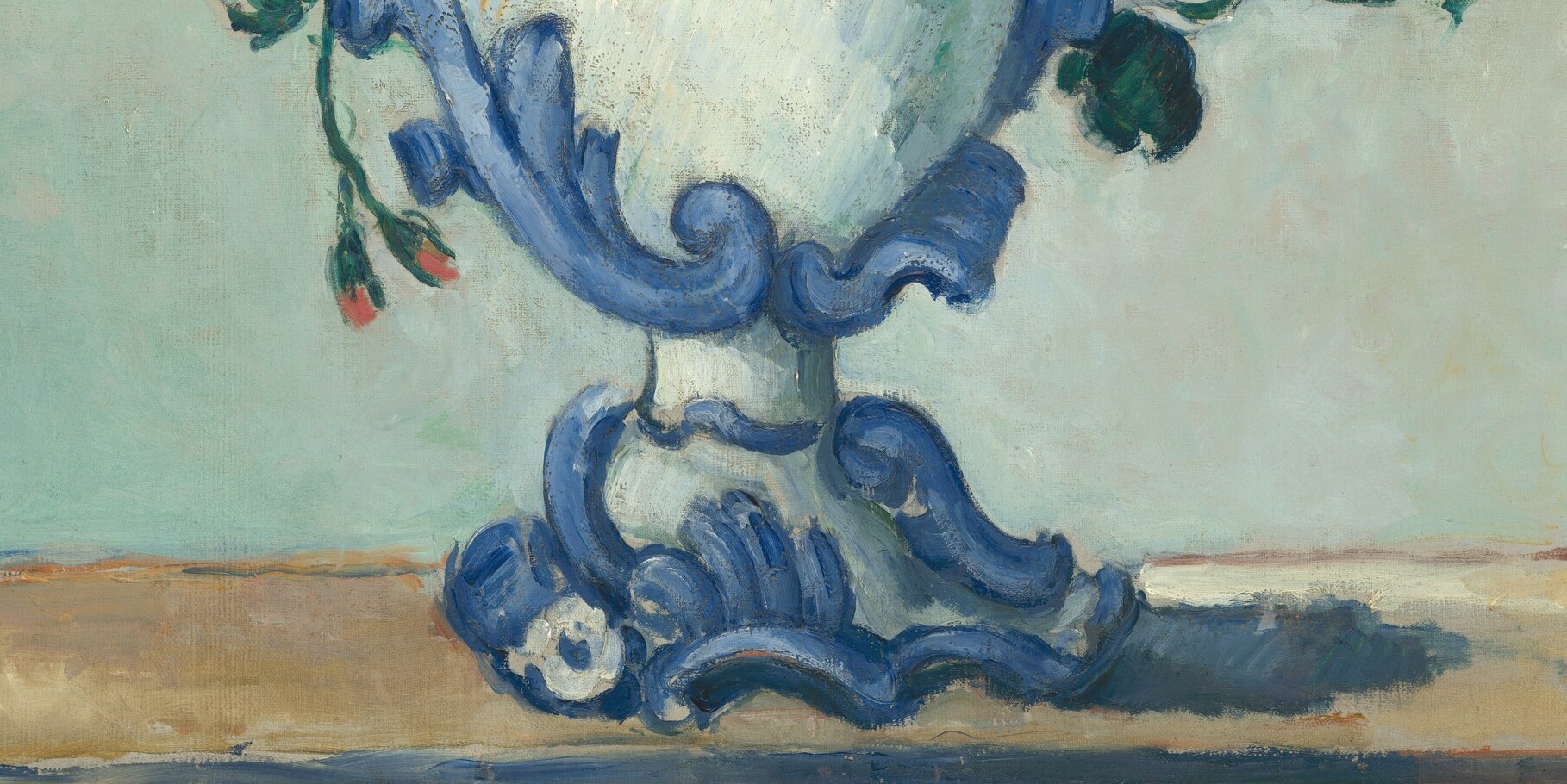
In Paul Cézanne's "Flowers in a Rococo Vase," painted around 1876, the artist begins to experiment with a revolutionary technique: building form through color modulation alone, rather than traditional outlines or chiaroscuro.
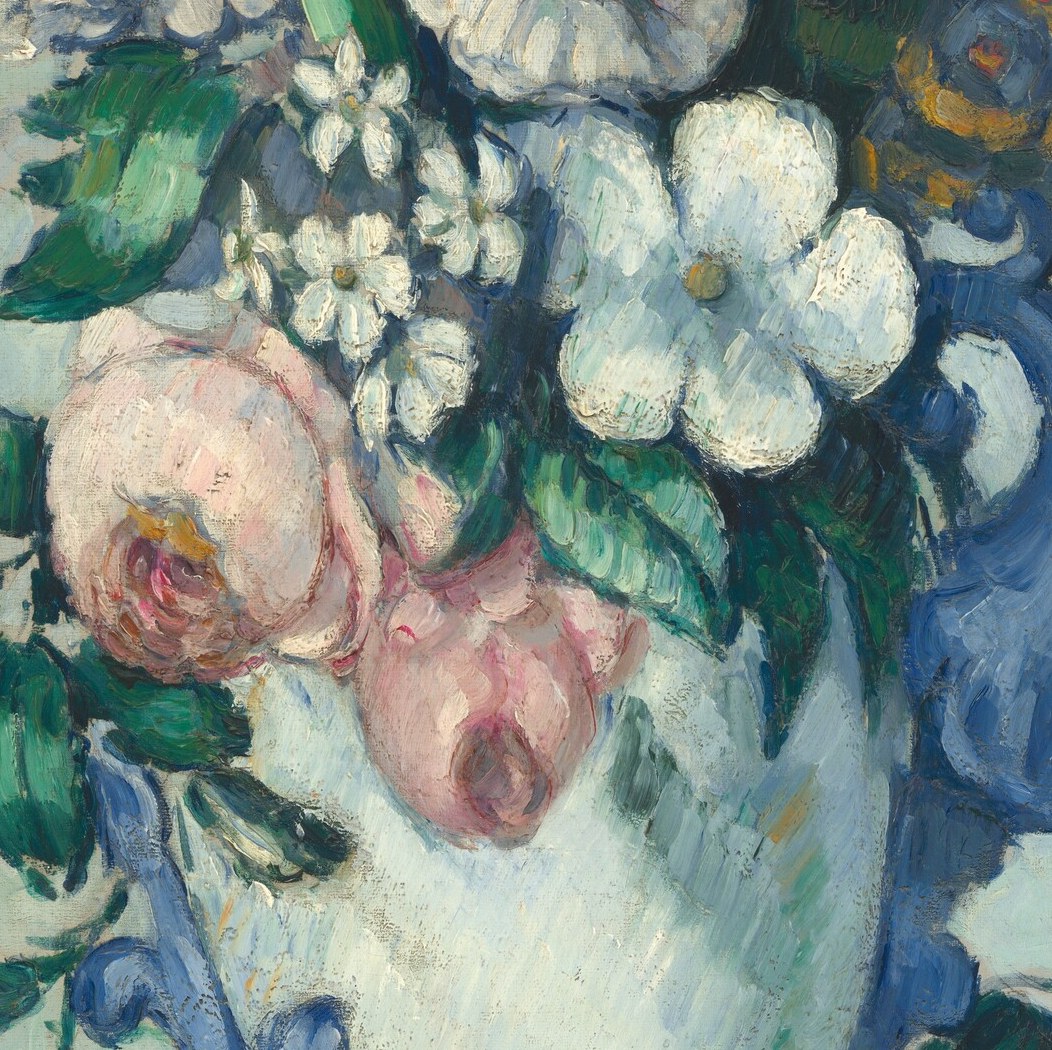
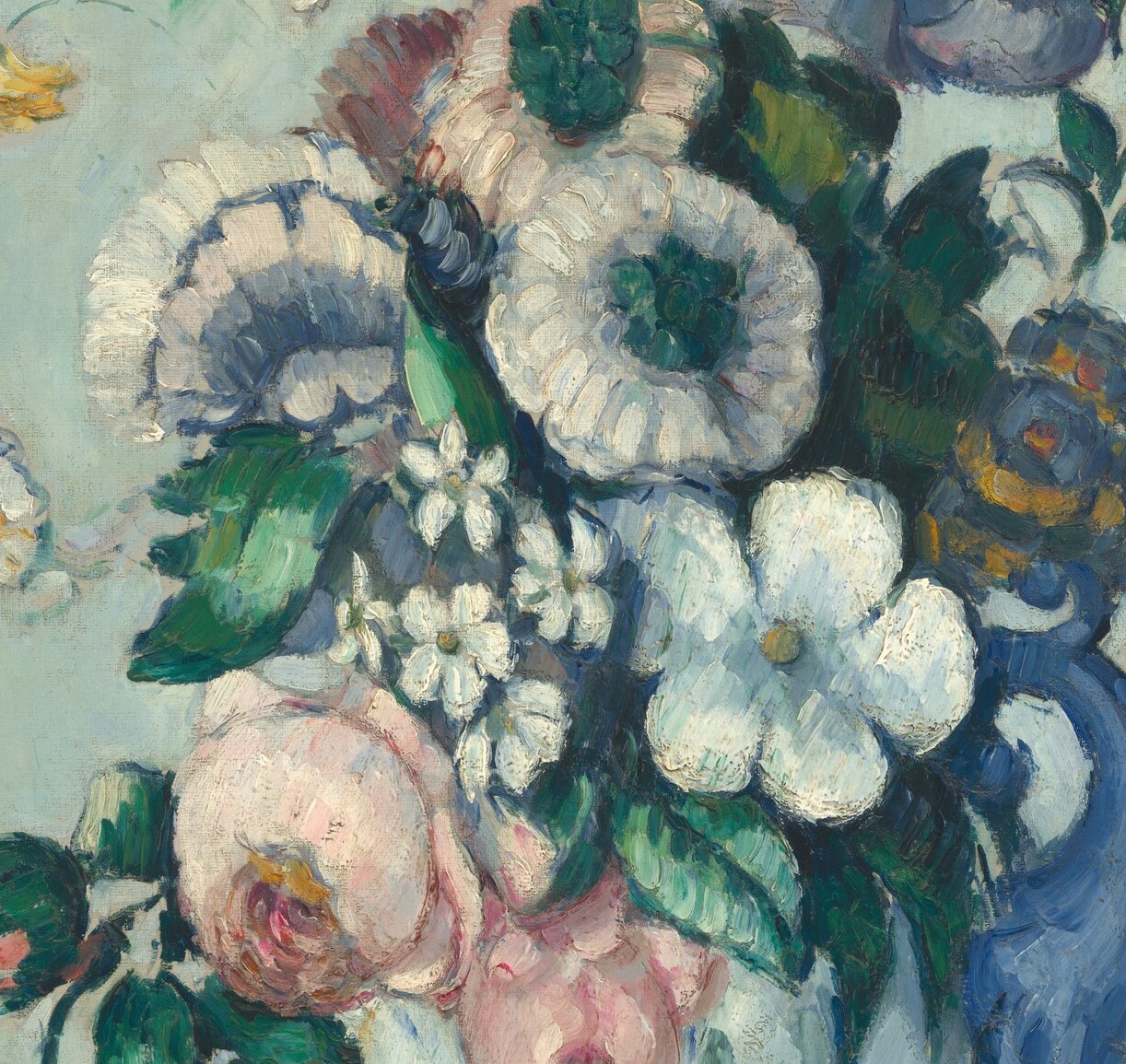
Look closely at the bouquet. Notice how the deepest red blooms appear to recede, while the bright, creamy petals of the large peony leap forward. Cézanne uses warm and cool tones, light and dark hues, to create the illusion of three-dimensional depth and volume.
This early still life, created after Cézanne moved from Paris to the French countryside, shows his evolving artistic language. He repeatedly studied everyday objects like these flowers, using them to explore fundamental questions of perception and representation.
How do your eyes perceive the depth in this vibrant arrangement?
Details
Transcript
This painter explored new ways to build forms. Look at these rich, dark red blooms. He uses the darkest colors for the deepest shadows. Now see the cream peony, a bright focal point. The lightest hues define where the flower catches the light. Cézanne builds the whole shape through color temperature, not line.