Saint Helena by Cima da Conegliano
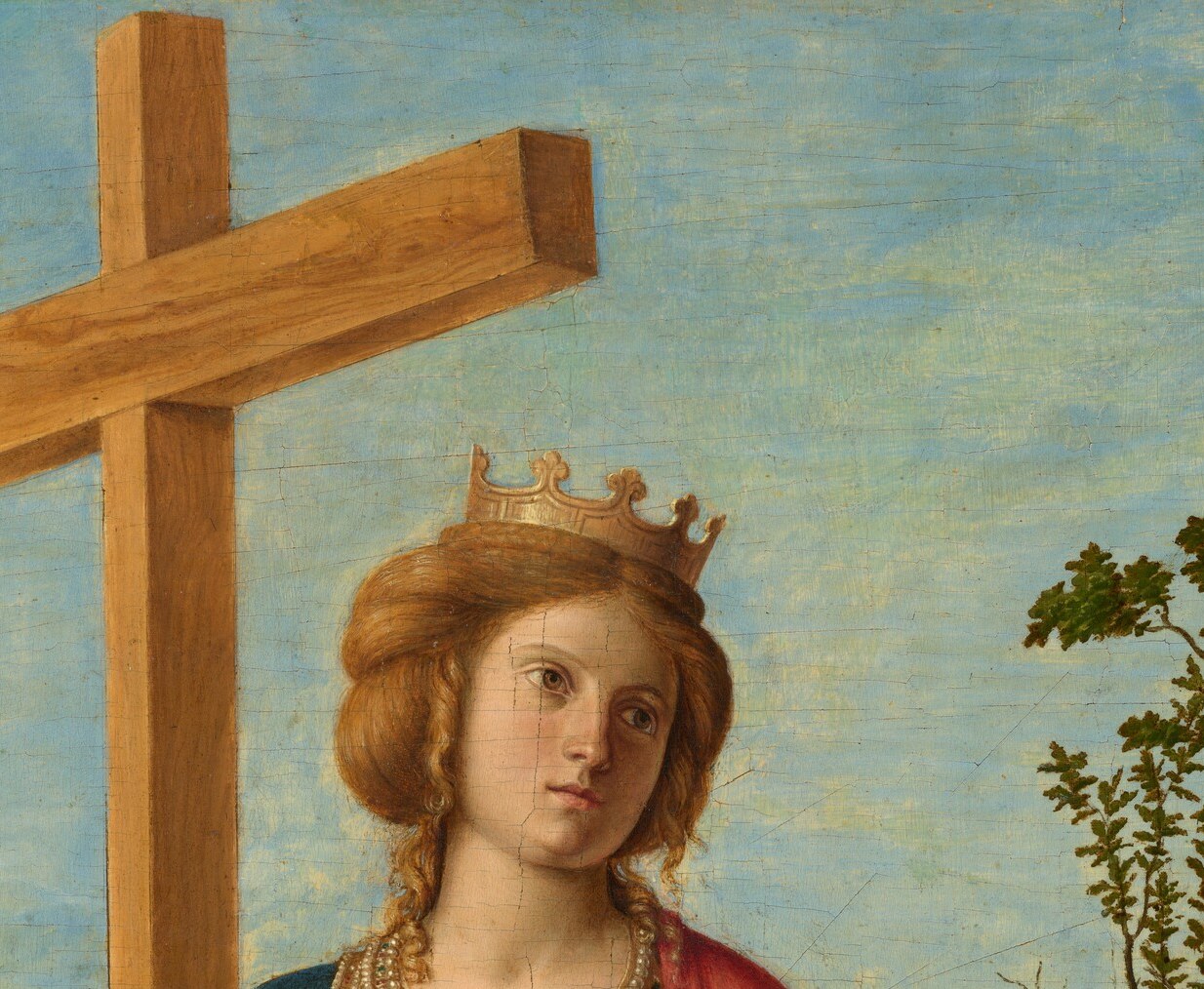
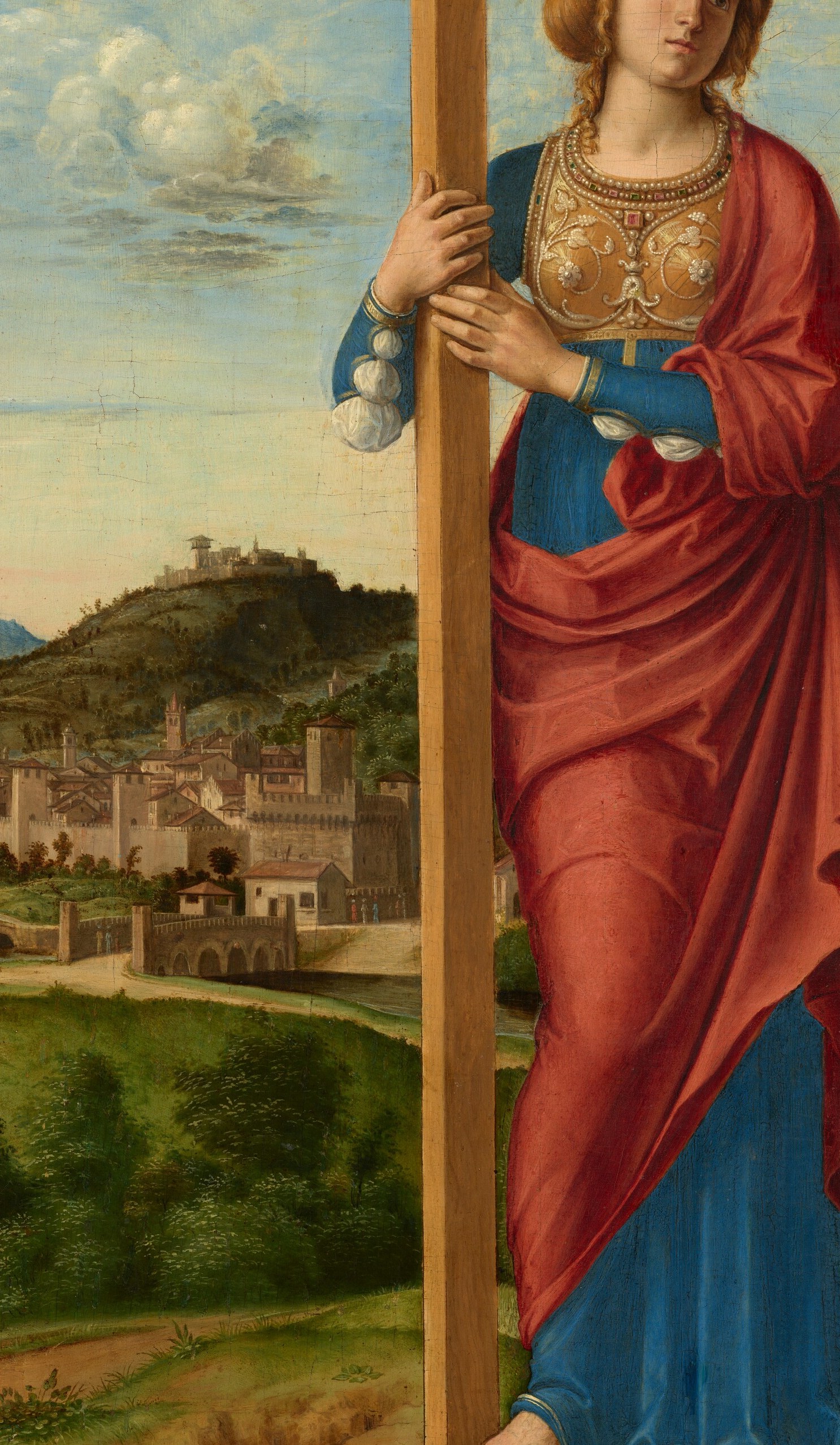
Saint Helena, painted by Cima da Conegliano around 1495, shows the mother of Emperor Constantine holding the True Cross she is said to have discovered in Jerusalem at the age of eighty. The painting is small, quiet, and devotional, an altarpiece for someone who wanted to live with this saint, not admire her from a distance.
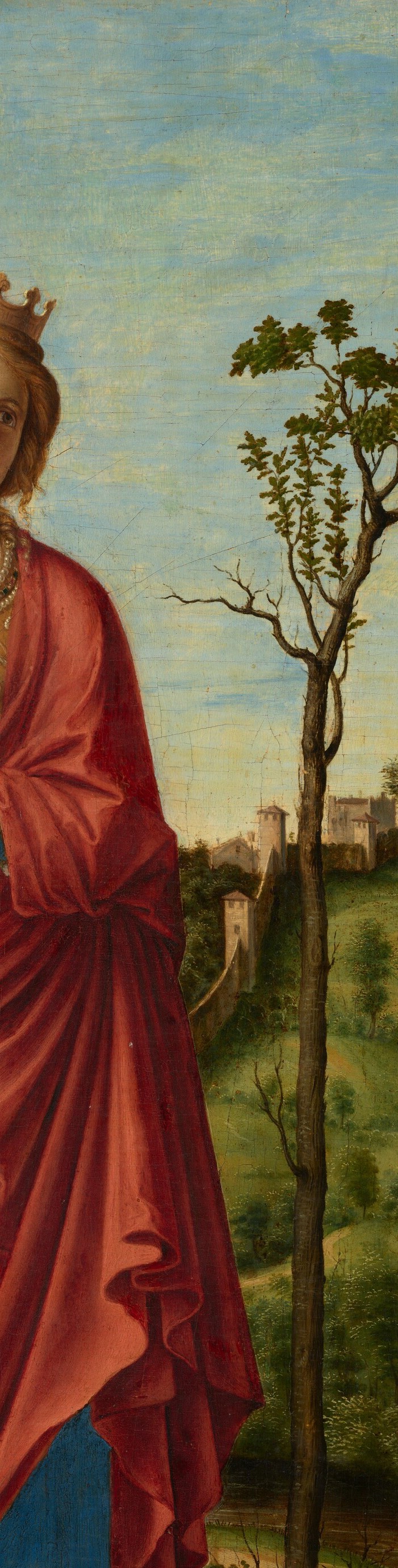
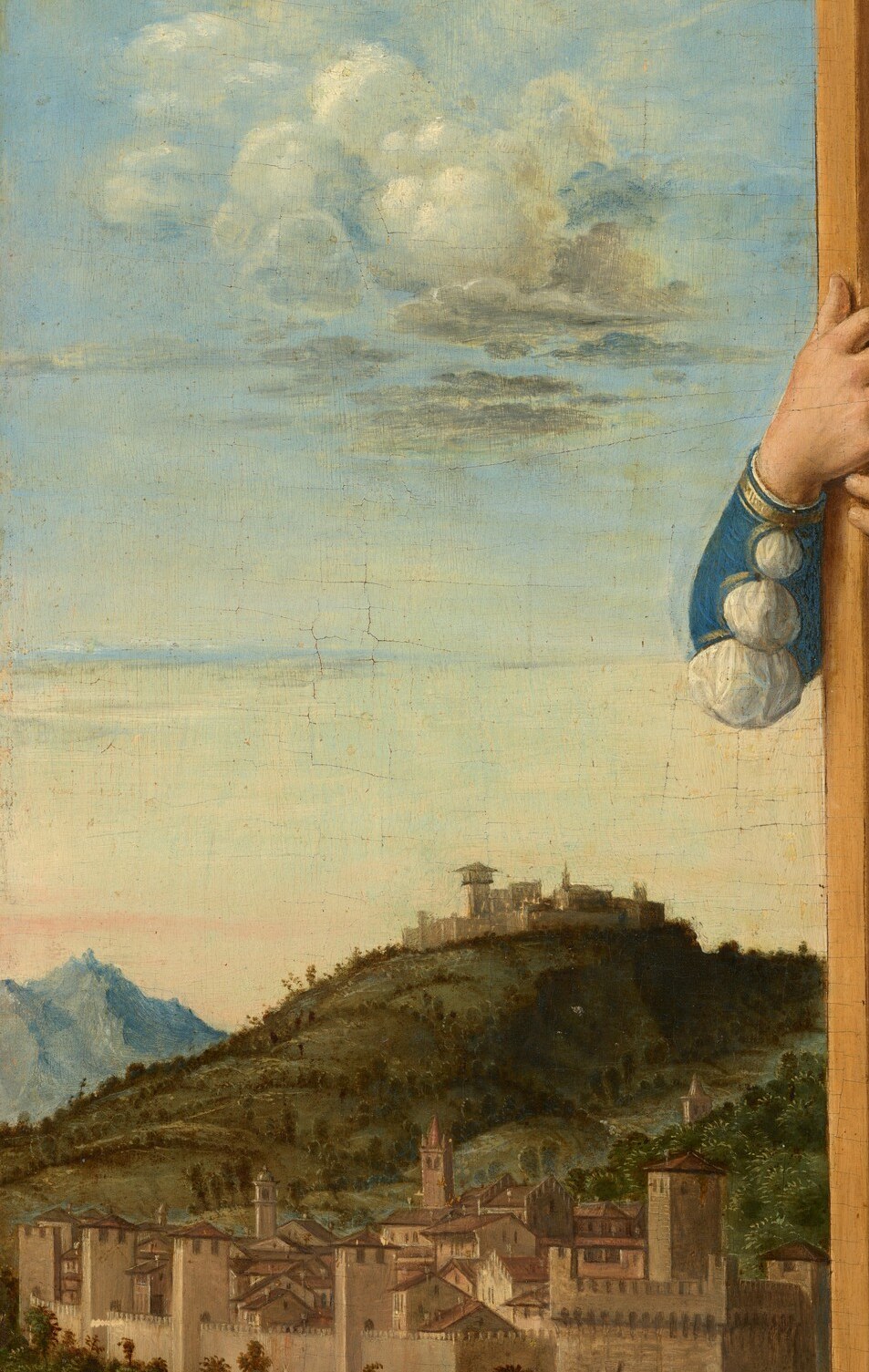
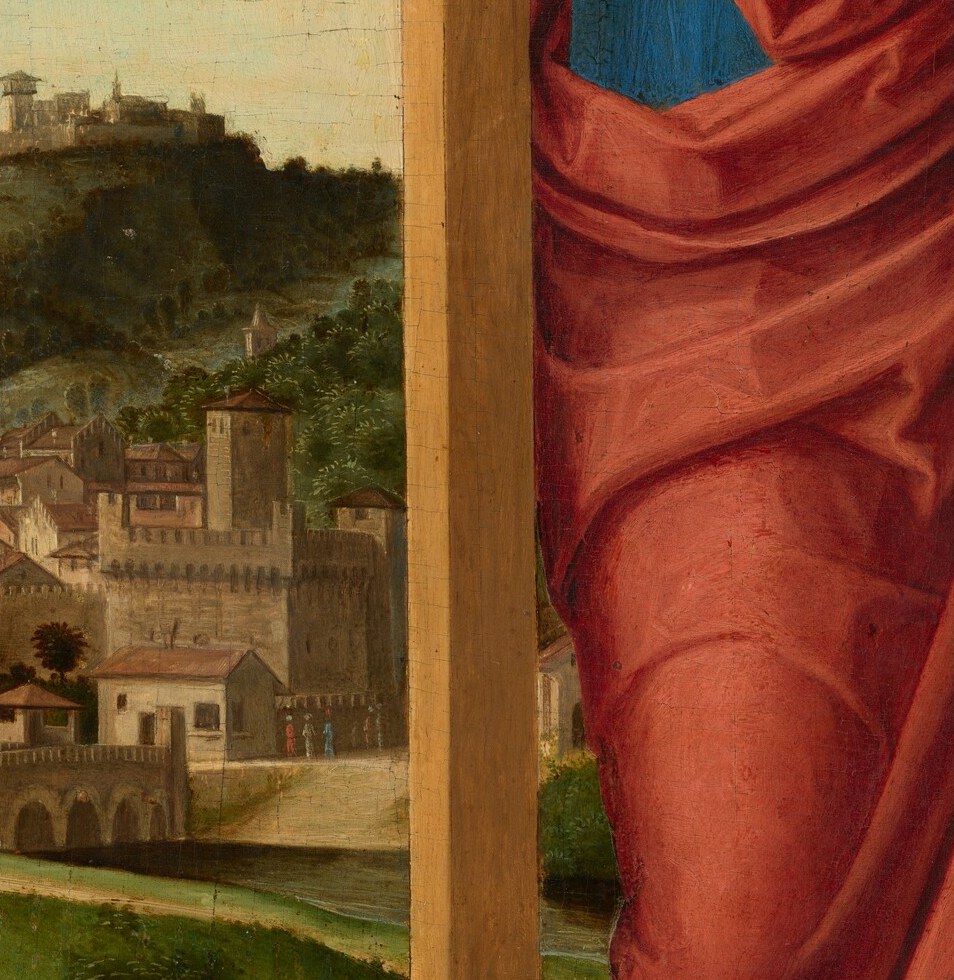
Look first at her face. Cima gives Helena the same expression he gave almost every holy figure: rounded cheeks, eyes half-closed in thought, a stillness that feels earned rather than performed. Then look at the cross. It cuts straight up through the center of the panel, dividing the landscape behind her. On the left, a walled hill town. On the right, a solitary tree. The world is balanced, and she stands inside that balance.
Cima worked in the Veneto in the 1490s, when Venice was rich and hungry for religious images. He never left home, the hills you see behind Helena are the ones he looked at his whole life. He painted the same soft, luminous calm over and over, refining it slightly each time. He was not a star in his own day. He was someone people hired when they wanted a painting that would not shout.
The Helena legend mattered because it gave the Roman Empire a Christian origin story: not just Constantine's vision at the Milvian Bridge, but his mother's pilgrimage, her digging in the dirt, her finding the wood. Cima paints her after all of that. The journey is behind her. She is home, and so is he.
Details
Transcript
Around the year 327, an old woman set out for Jerusalem. She was eighty years old. The mother of an emperor. According to legend, she found the very cross of the crucifixion. This painter gives her the face of someone who has made peace. Cima da Conegliano painted the same quiet hills his whole life. He placed an empress in his own backyard, and she belongs there. Her right hand holds the cross. Her left hand rests at her side.