Winter Landscape by Jacob van Ruisdael
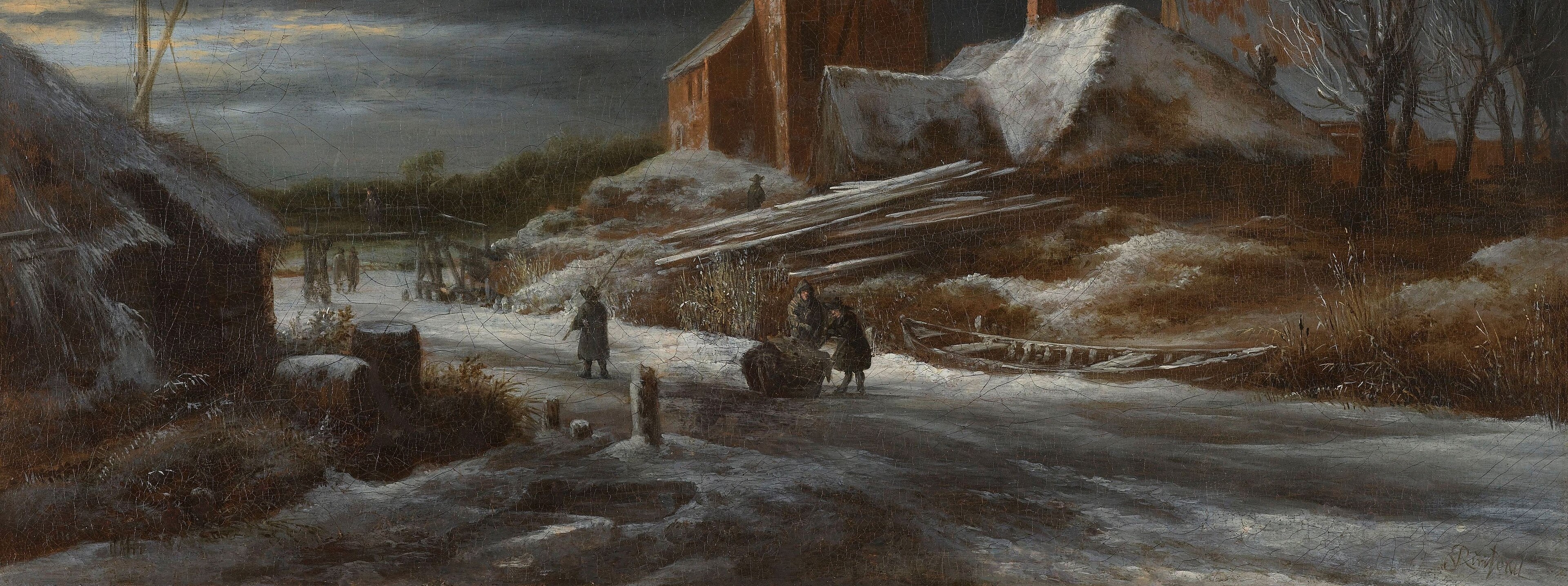
Jacob van Ruisdael's Winter Landscape, painted in oil in 1665, is a testament to the Dutch Golden Age master's ability to elevate humble scenes to profound art. Now held at the Rijksmuseum, this painting, though seemingly simple, reveals the quiet dignity of rural life during a harsh season.
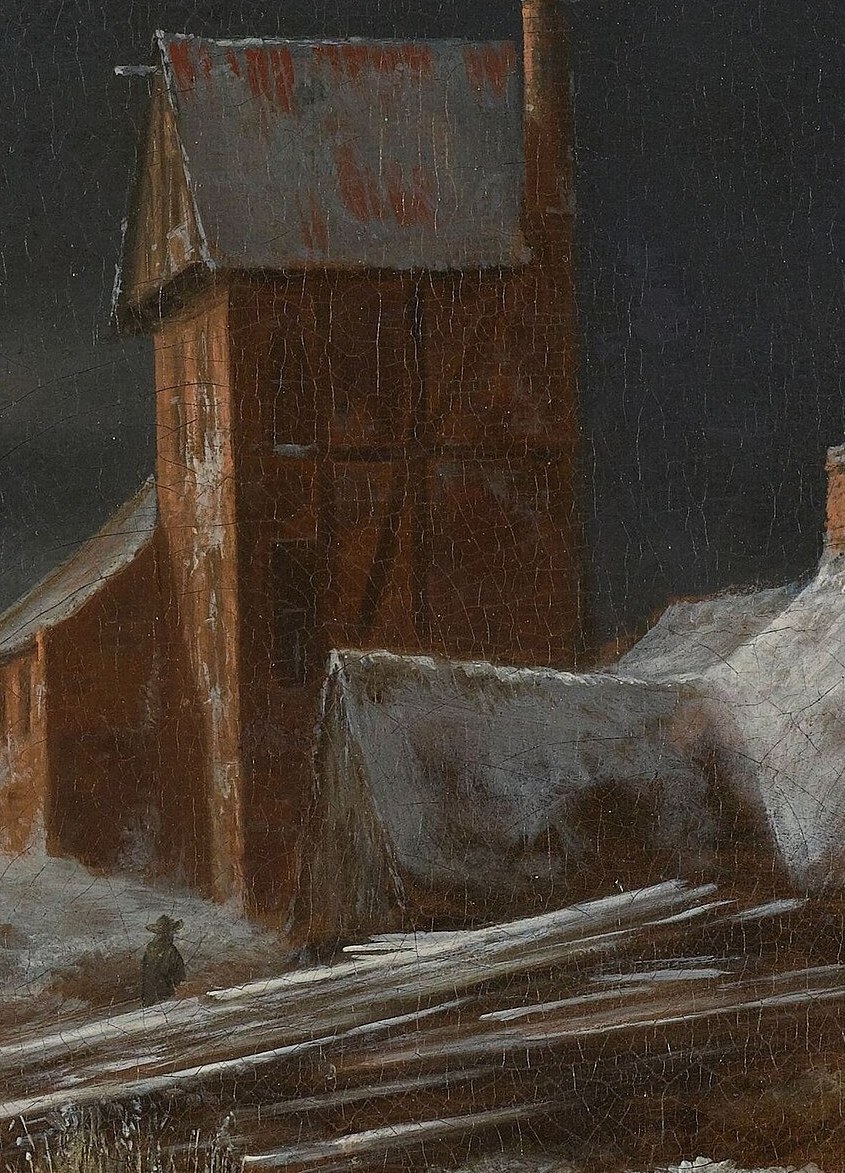
Observe the subtle details: the thin wisp of smoke from the central building's chimney, the figures traversing the snowy path, and the stark bare trees that capture the essence of winter. These elements, rendered with Ruisdael's characteristic impasto technique, bring the landscape to life, inviting reflection on resilience.
Ruisdael is widely considered the pre-eminent landscape painter of his era. Though this work's early provenance isn't extensively documented, its acquisition by the Rijksmuseum in the early 20th century highlights its recognized artistic and historical value, securing its place as a significant piece of Dutch art.
What details in this quiet scene capture your attention the most?
Details
Transcript
This quiet winter scene, painted in 1665, looks humble. It shows ordinary life, with smoke rising from a simple house. A figure pulls a sled, a common sight in a Dutch winter. Yet, this painter is the Dutch Golden Age's greatest landscape artist. His works now command high prices, often millions of dollars. The Rijksmuseum acquired this one, ensuring its enduring public value.