Forest in the Morning Light by Durand, Asher Brown
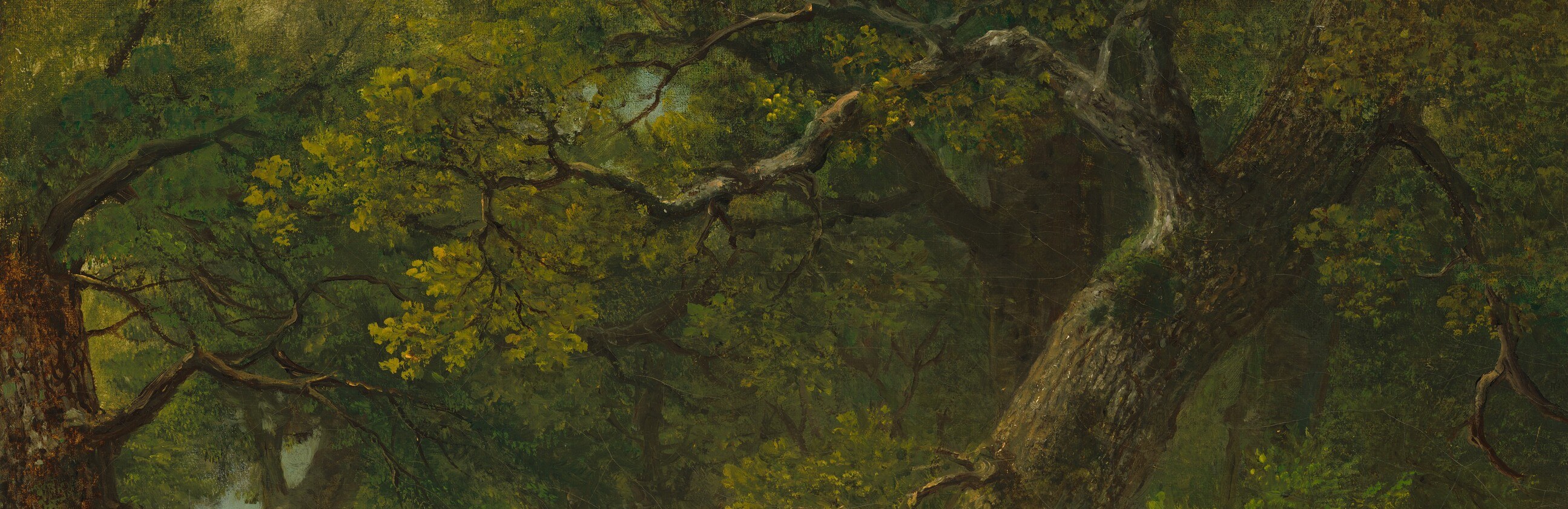
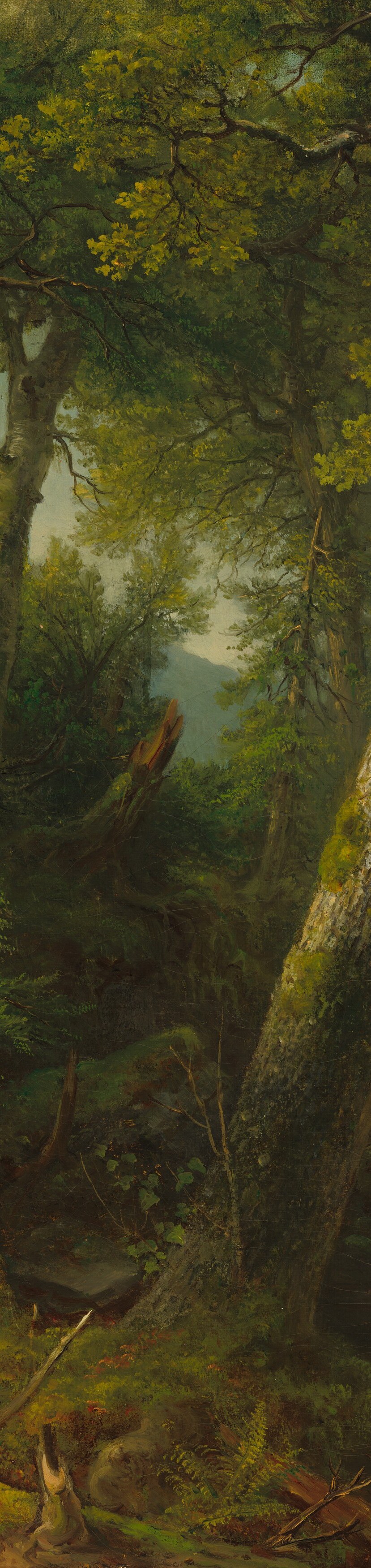
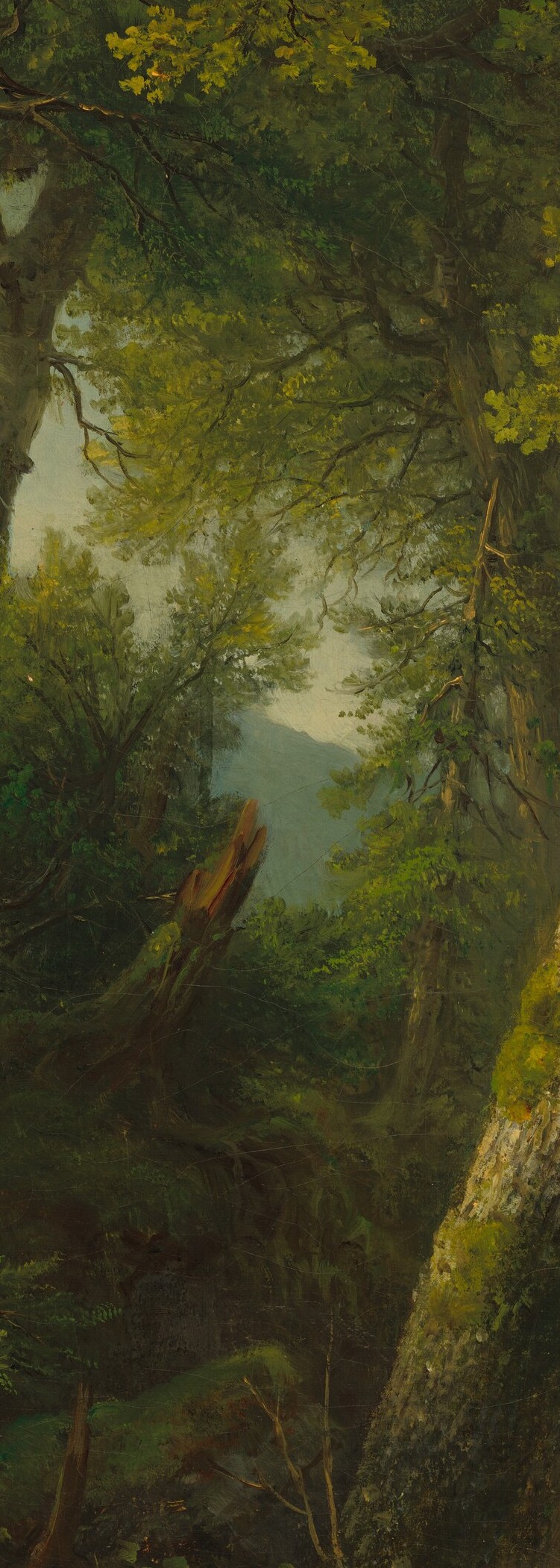
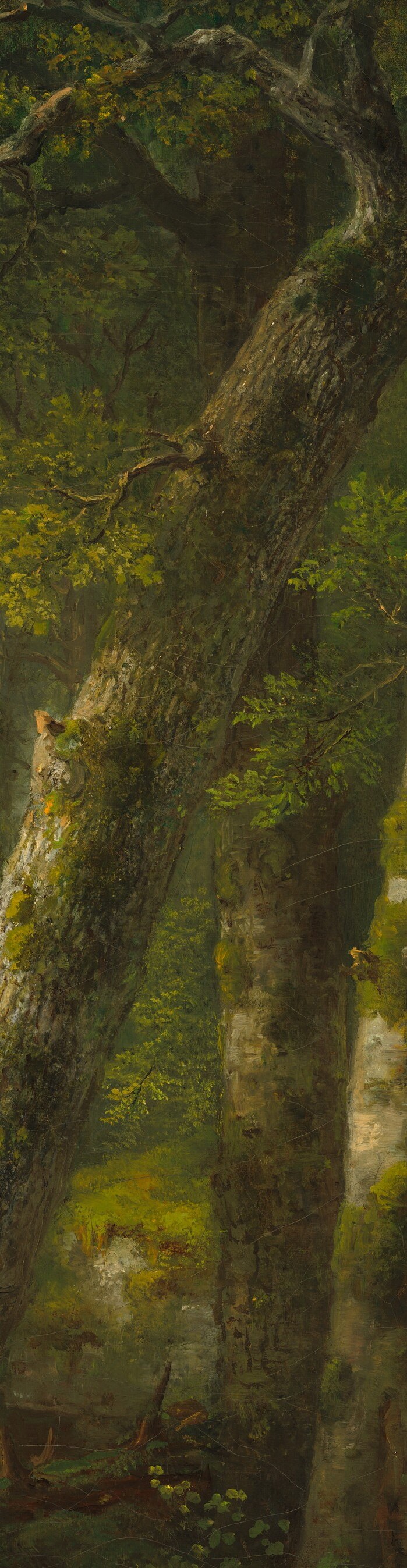
Asher Brown Durand’s “Forest in the Morning Light,” painted around 1855, is a masterwork of the Hudson River School, now held at the National Gallery of Art in Washington. On its surface, it is a meditation on the divine found in the American wilderness, a sanctuary where morning light filters through a dense canopy onto a moss-covered floor. There are no figures, no narrative, only the quiet, overwhelming presence of nature itself.
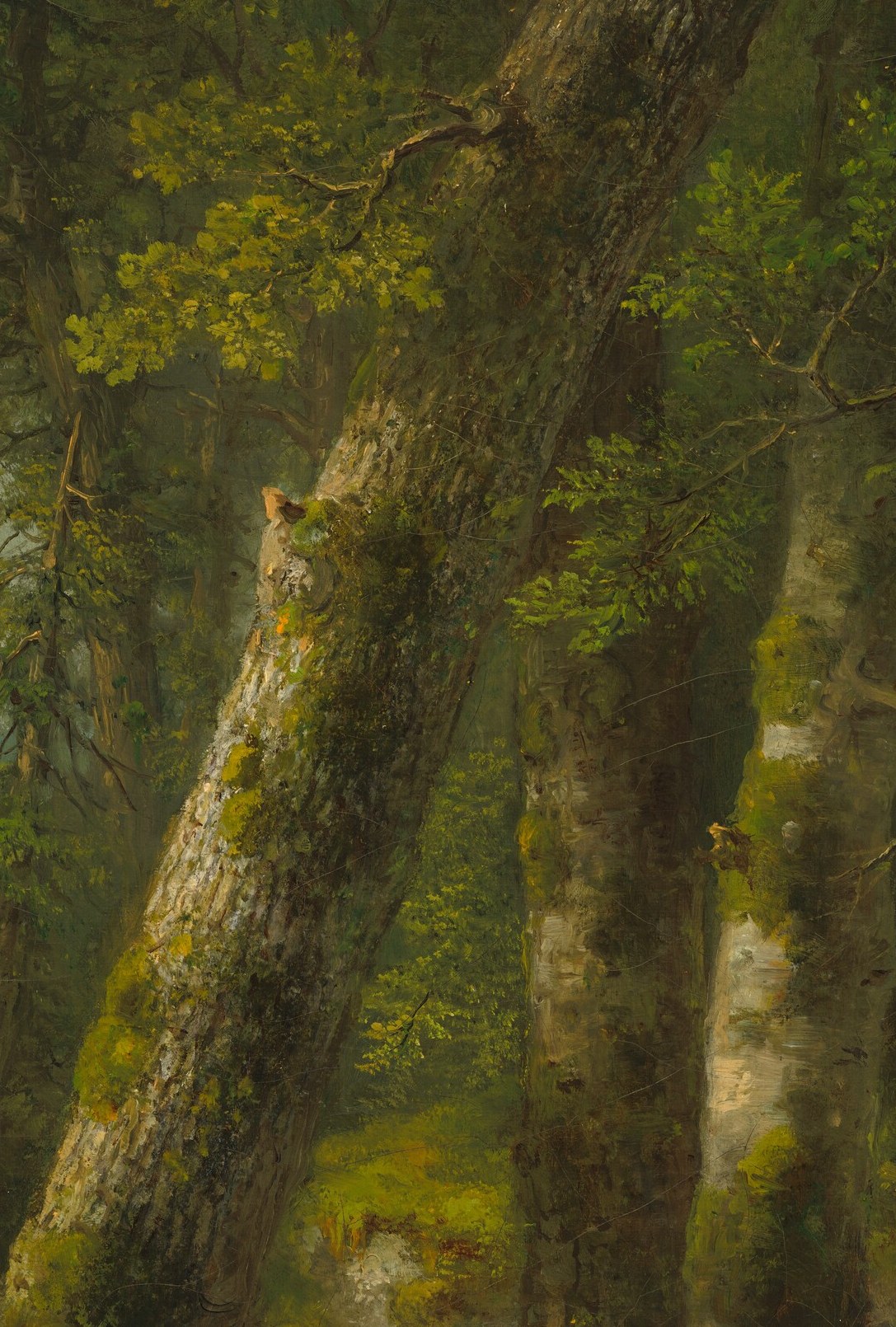
What to look at: the painting is built around a massive central tree trunk that acts as a compositional spine, dividing the canvas between deep shadow on the left and a luminous glade on the right. Look closely at the bark on that trunk. The fissures, the moss, the ridges are rendered with a near-botanical fidelity that was almost impossible to achieve with the naked eye alone, leading us to the painting’s secret.
The history: Durand was a leading figure of the Hudson River School, a movement that believed God was best observed not through scripture, but through the direct study of nature. He personally instructed young artists to reject the old master’s way and paint only what they saw. But by the 1850s, Durand had quietly begun using a new tool to see better: the daguerreotype. Art historians have since linked the hyper-specific detail in his late work to photographic studies he projected directly onto the canvas. He never wrote publicly about this process. To his followers, the camera was a machine, a potential corruption of the artist's spiritual hand.
The silence worked. The paintings were celebrated for their truth to God’s creation, and the hidden mechanical eye that helped create them remained a secret between the painter and his darkroom. It leaves us to wonder: does knowing a machine helped build this vision of the divine change how we see it?
Details
Transcript
This forest feels like an untouched sanctuary. Morning light breaks through, almost holy. The painter believed nature was a direct path to God. But to paint light like this, he relied on a secret. A new invention from France had just landed: the photograph. Look at the bark. The detail is microscopic. Durand studied nature by projecting daguerreotypes onto the canvas. He told no one. It was a mechanical cheat in a spiritual art.