Officers and other Civic Guardsmen of the V District in Amsterdam under the command of Captain Cornelis de Graeff and Lieutenant Hendrick Lauwrensz by Jacob Adriaensz Backer
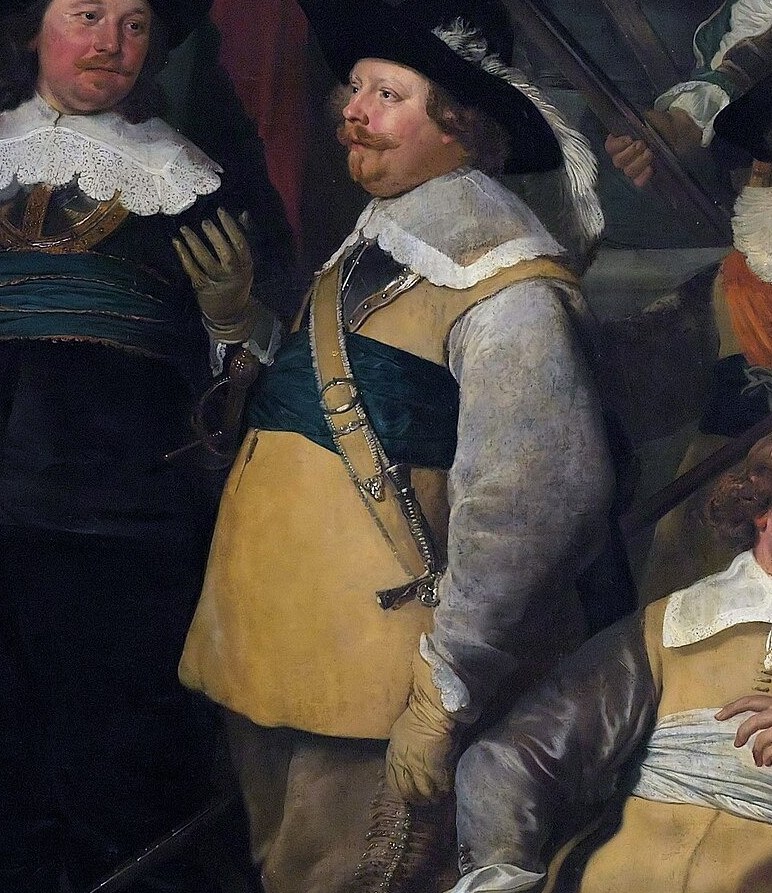
Jacob Adriaensz Backer's "Officers and other Civic Guardsmen of the V District in Amsterdam under the command of Captain Cornelis de Graeff and Lieutenant Hendrick Lauwrensz," painted in 1642, captures a vital part of Dutch Golden Age society: the Schutterij, or civic guard militia. These companies were crucial for city defense and maintaining public order, often commissioning grand group portraits like this one to showcase their status and collective identity.
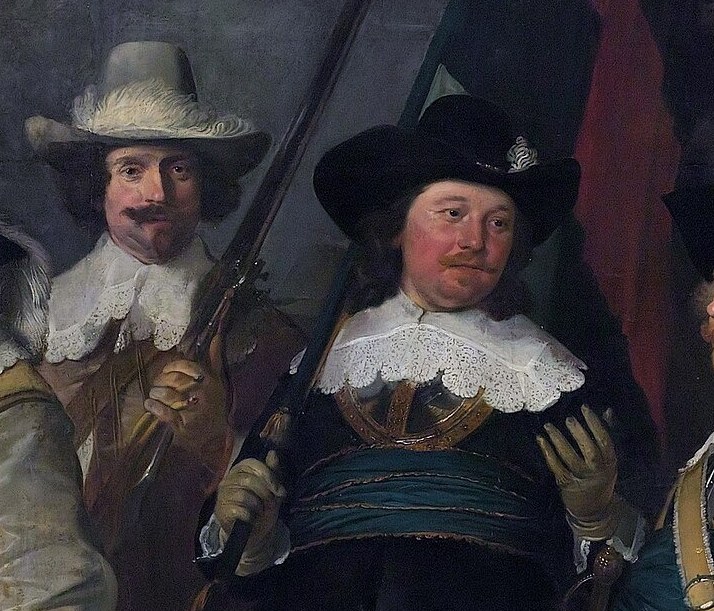
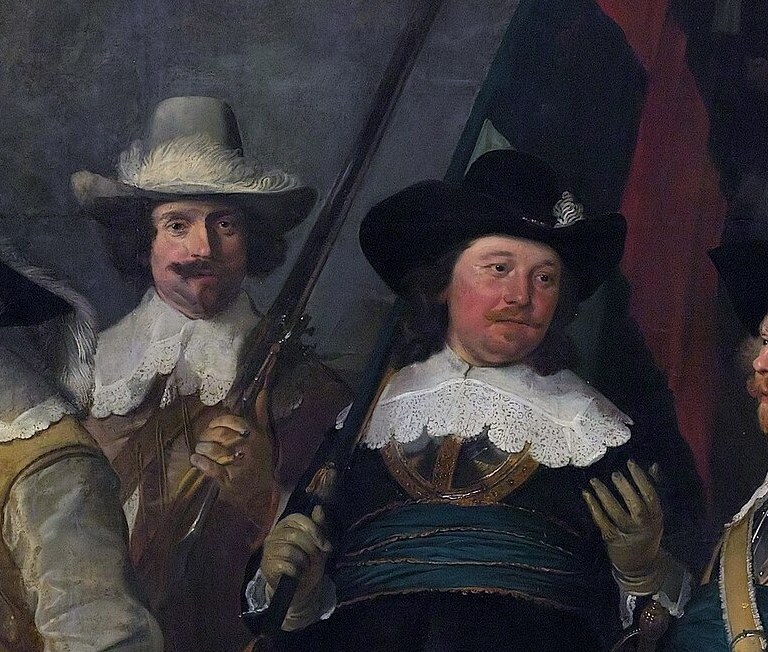
This painting is more than just a military portrait; it's a window into the varied roles within the guard. While Captain Cornelis de Graeff and Lieutenant Hendrick Lauwrensz lead, the composition includes figures of differing ranks and responsibilities. Look closely for the man on the far left holding a small book; his less ornate clothing and the book itself suggest a role distinct from the sword-wielding officers.
Backer, a prolific painter in his short career, used strong contrasts of light and muted colors to emphasize the figures. Works like this provided a visual record of civic institutions and continue to offer insights into 17th-century Dutch life, fashion, and social structures.
What other subtle details do you notice that tell a story about these men?
Details
Transcript
This 1642 portrait shows Amsterdam's civic guard. Captain Cornelis de Graeff commanded this company. His lieutenant, Hendrick Lauwrensz, stands proudly beside him. Look closely at the man in the dark hat. He holds a small book, perhaps a roster or orders. His plain attire suggests a clerk, not an officer. Many different roles served to keep the city safe.