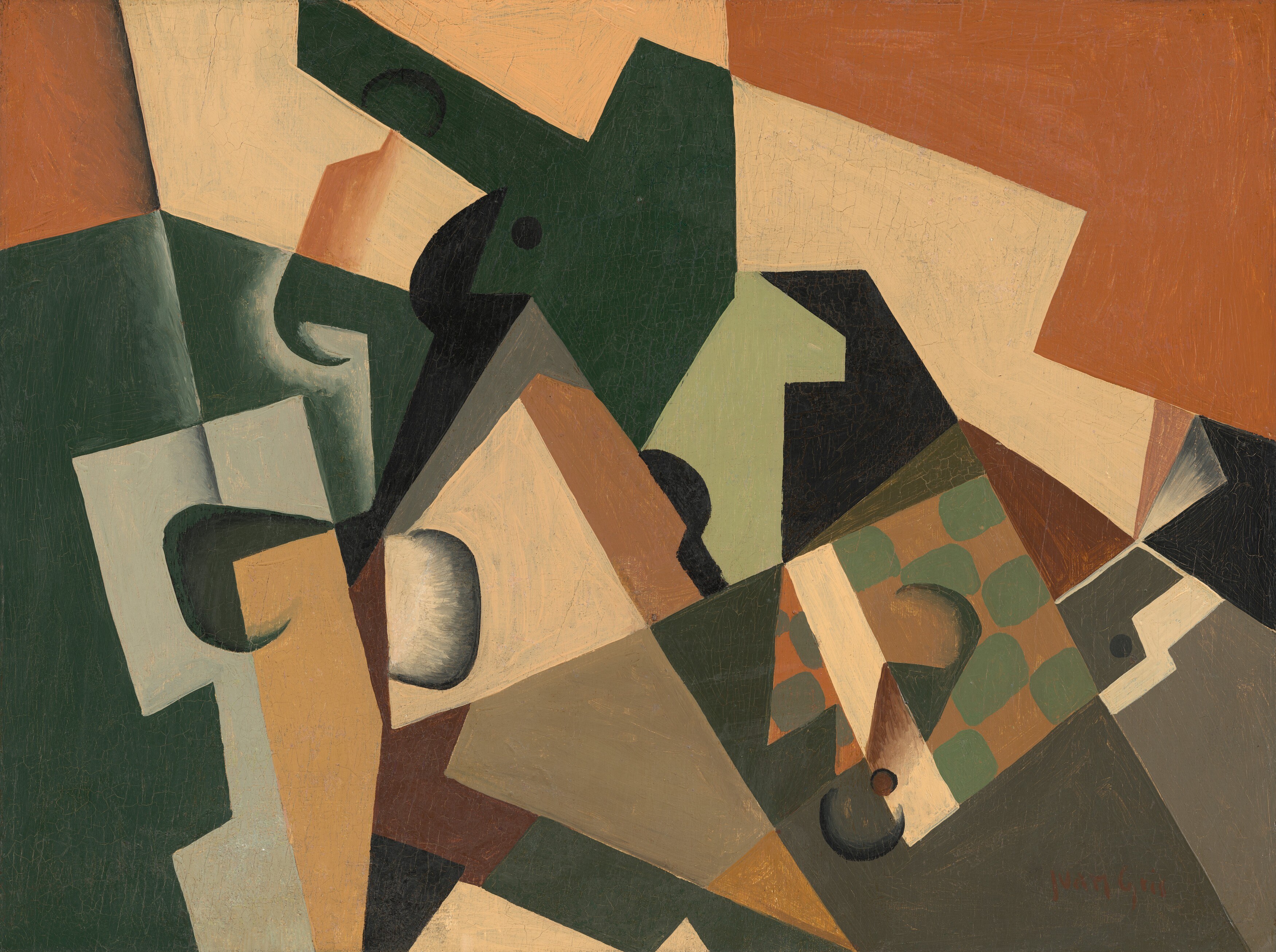
Glass and Checkerboard by Gris, Juan
Juan Gris's *Glass and Checkerboard*, painted around 1917, is a fascinating example of Analytic Cubism, an artistic movement that deconstructed everyday objects into fragmented, geometric planes.
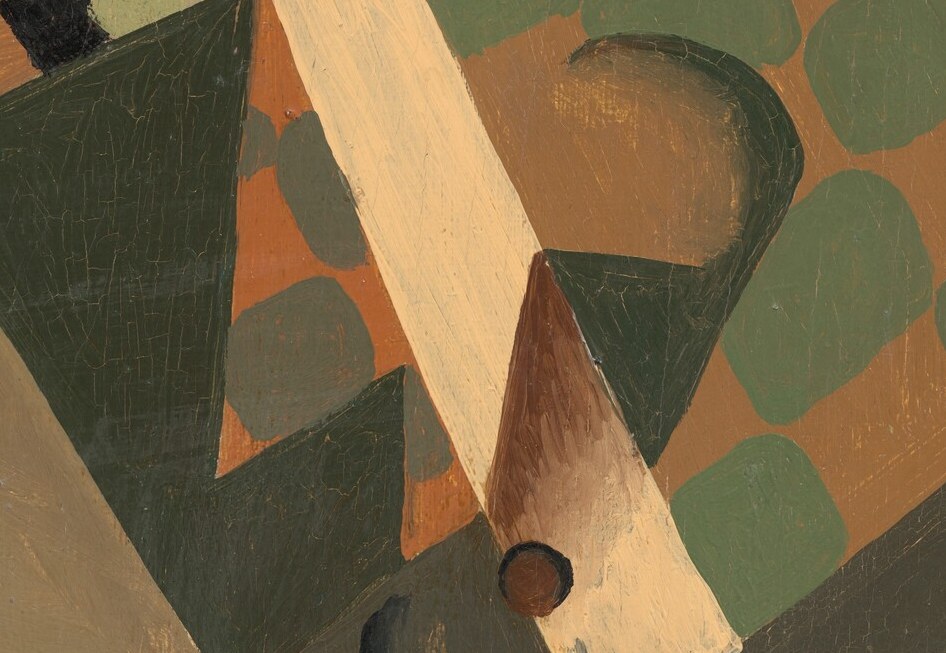
Take a moment to absorb the muted color palette and the interplay of light and shadow. Can you discern the implied forms of a drinking glass and a checkerboard within the abstract composition? The painting invites your eye to reconstruct these familiar objects.
Gris, born José Victoriano González-Pérez in Madrid, adopted his pseudonym and became a central figure in Cubism in Paris. This oil on wood painting was created during his mature period, showcasing his distinctive balance of intellectual rigor and a softer handling of color.
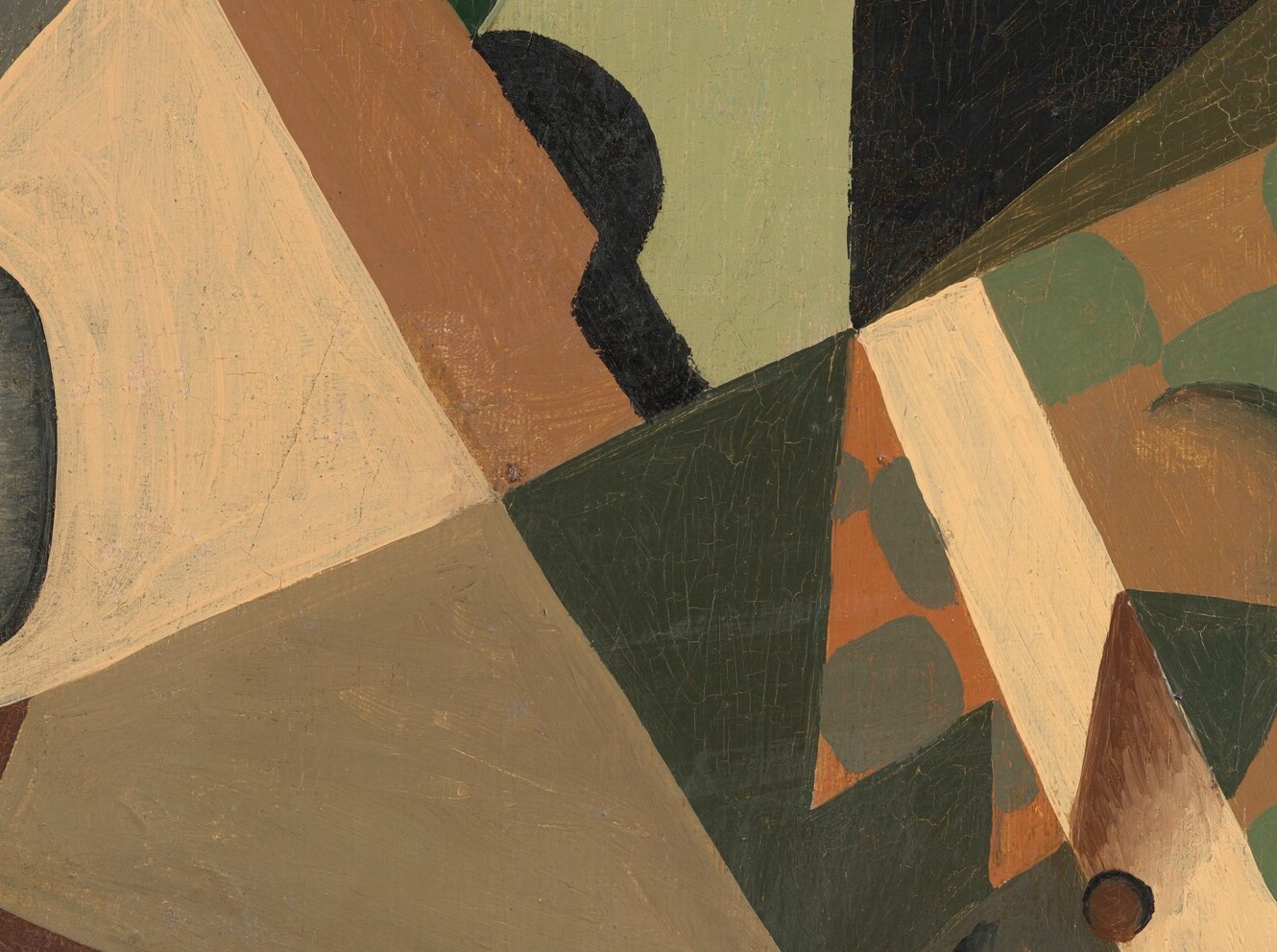
Notice the subtle texture of the oil on wood, especially in the checkerboard area. And finally, look for the faint inscription in the lower right, where Juan Gris signed his name. What do you find most compelling in this abstract work?
Details
Transcript
This painting deconstructs familiar objects. It's an example of Analytic Cubism, from around 1917. The muted colors invite you to reconstruct the forms. Can you see the subtle texture of the oil on wood? Look closely in the lower right. The artist, Juan Gris, signed his name here.