Black-Backed Three-Toed Woodpecker by Kidd, Joseph Bartholomew
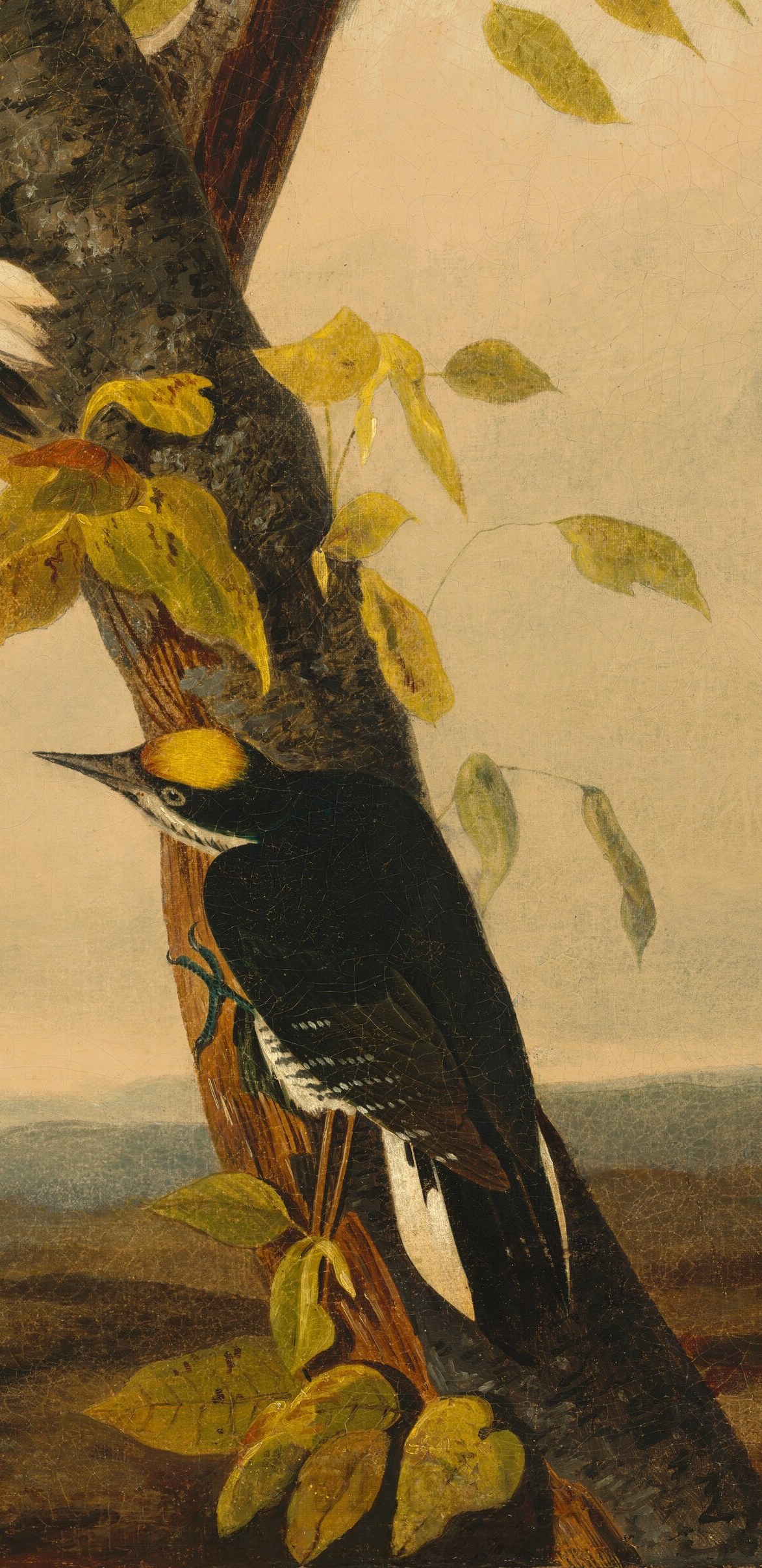
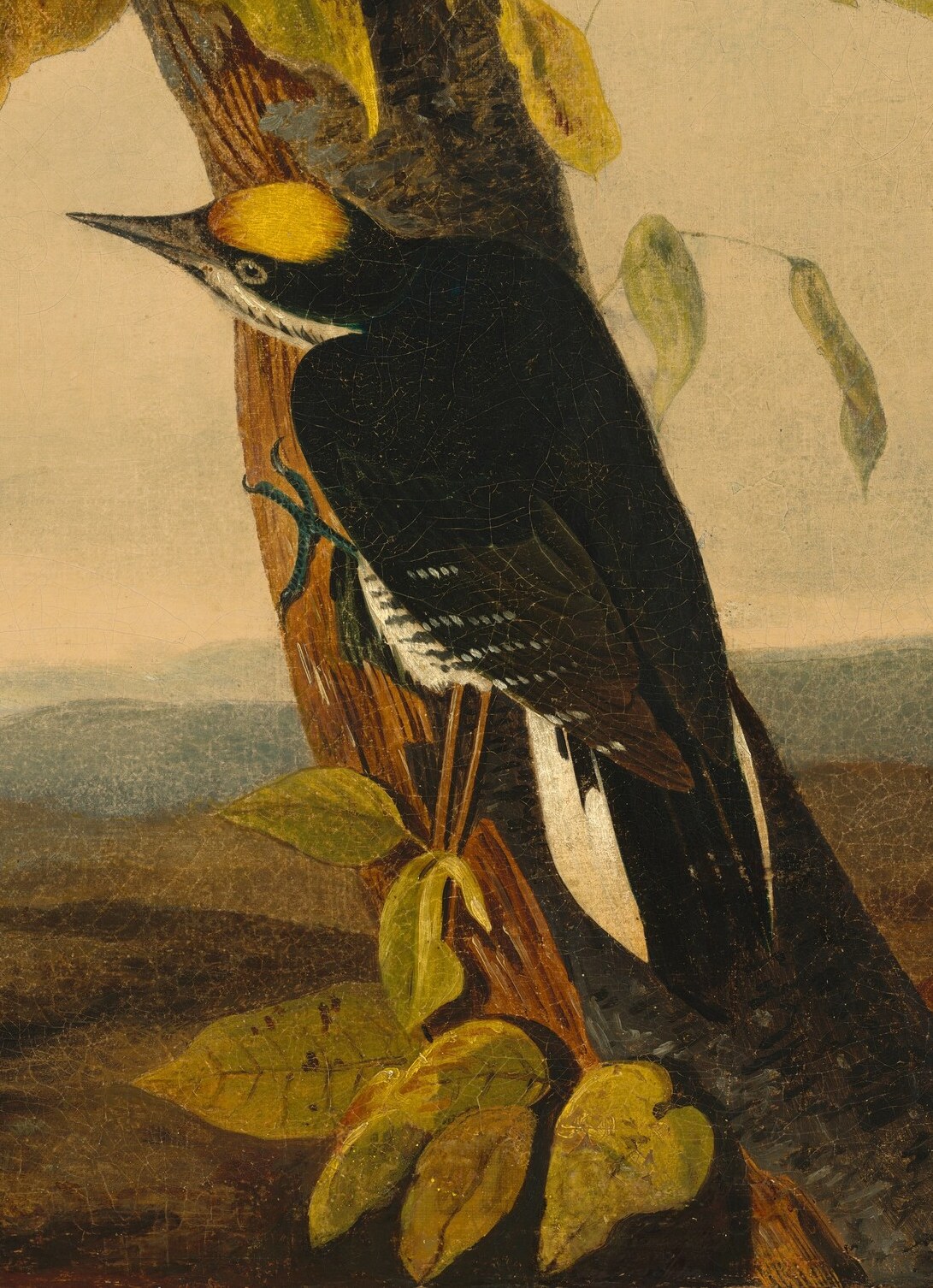
This striking work, "Black-Backed Three-Toed Woodpecker" by Joseph Bartholomew Kidd, painted around 1832, is more than just a beautiful depiction of nature; it serves as a detailed scientific study. Kidd, an artist of the early 19th century, meticulously rendered this specific species, reflecting a growing interest in wildlife documentation.
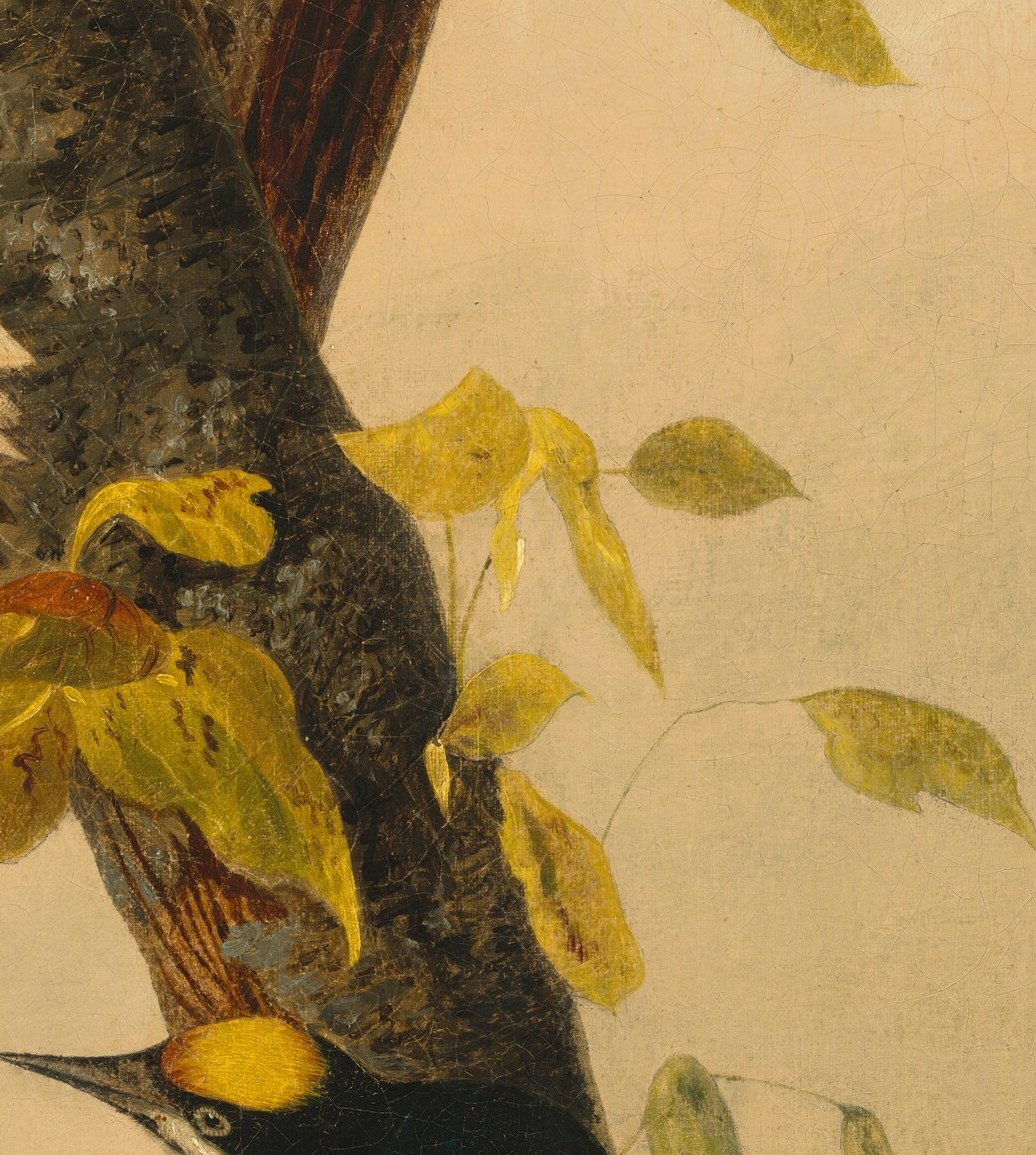
Look closely at the woodpecker's distinctive features: its bright yellow crown, the intricate speckling on its chest, and its powerful claws gripping the pine bark. Every detail, from the sharp beak to the subtle textures of the tree, emphasizes the bird's adaptation to its arboreal world.
Created during a period when artists increasingly turned to wildlife, Kidd combined delicate pencil underdrawing with oil washes to achieve both fine detail and atmospheric quality. This piece exemplifies the era's blend of scientific illustration with observational aesthetics, capturing a moment of stillness and focus.
What do you notice first about this carefully observed creature?
Details

Transcript
This painting isn't just a bird. It's a scientific record. It shows a black-backed three-toed woodpecker. The artist, Joseph Bartholomew Kidd, painted it circa 1832. Notice its sharp claws, adapted for gripping bark. The detailed plumage and bright yellow crown are precisely rendered. Kidd captured the bird in its natural arboreal habitat.