Gentlemen's Still Life by Inman, John O'Brien
John O'Brien Inman's "Gentlemen's Still Life," painted in 1871, is a fascinating study in texture and realism, now housed in a private collection. The artist masterfully creates the illusion of diverse materials, making each object feel tangible.
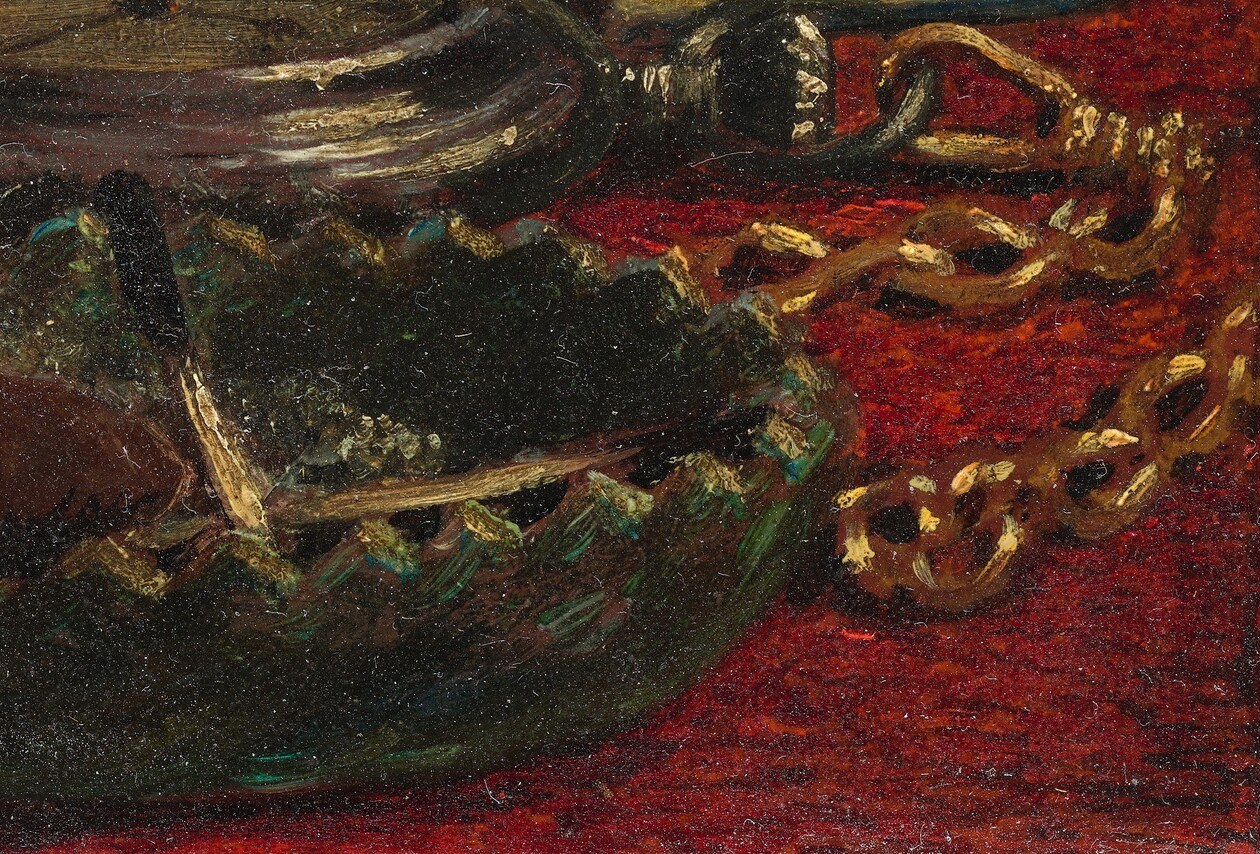
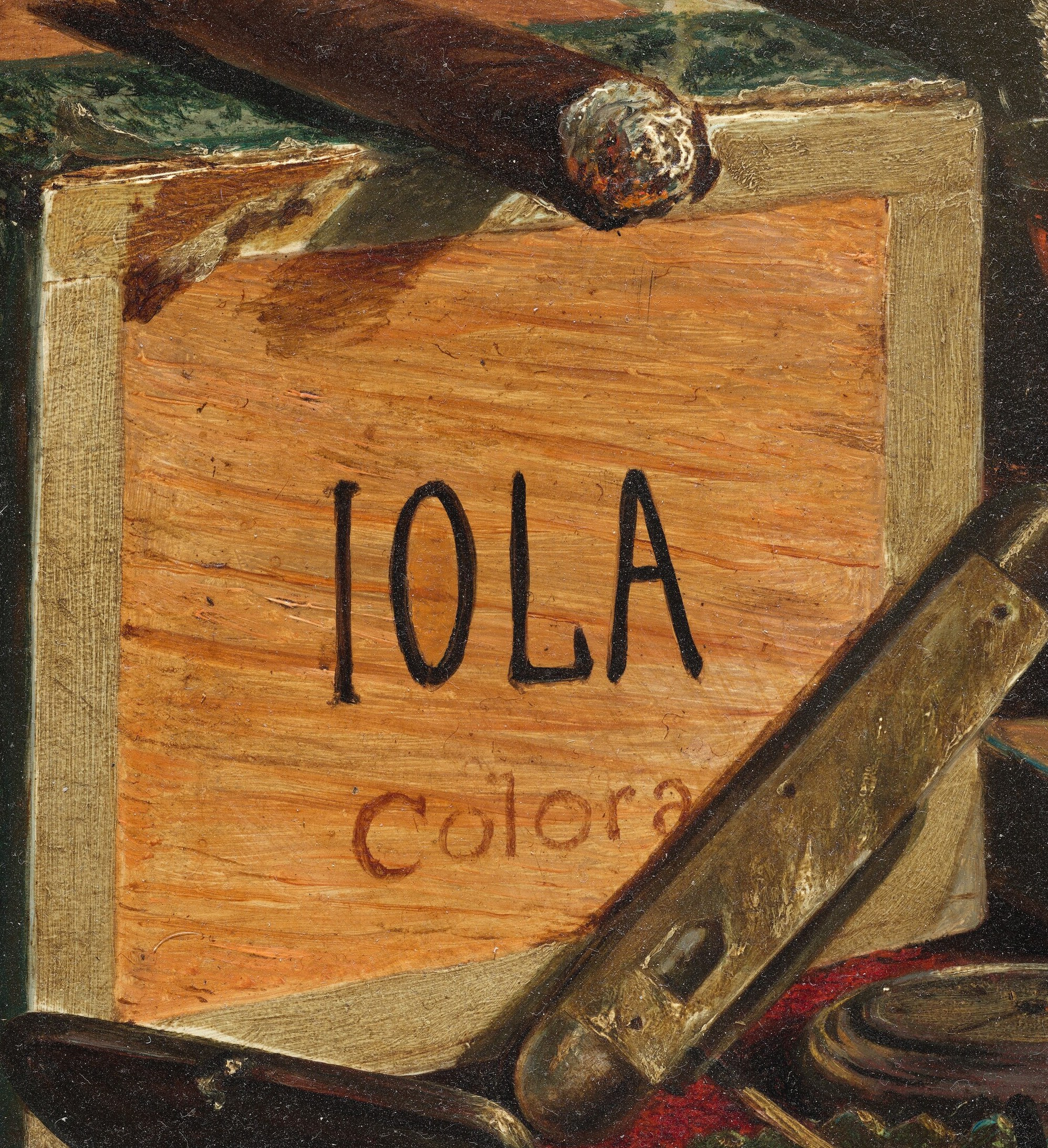
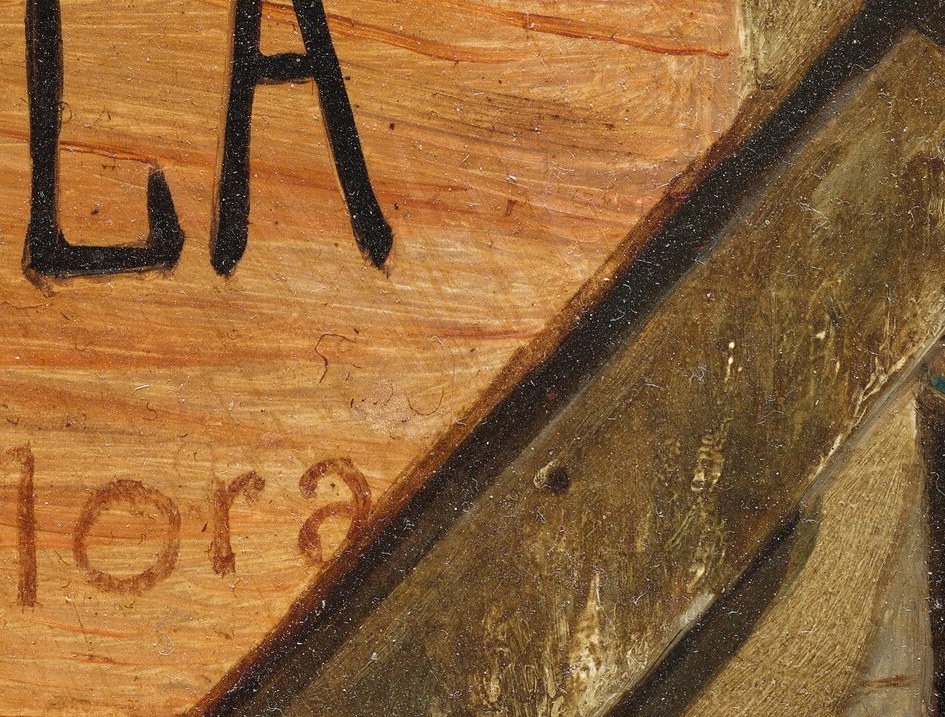
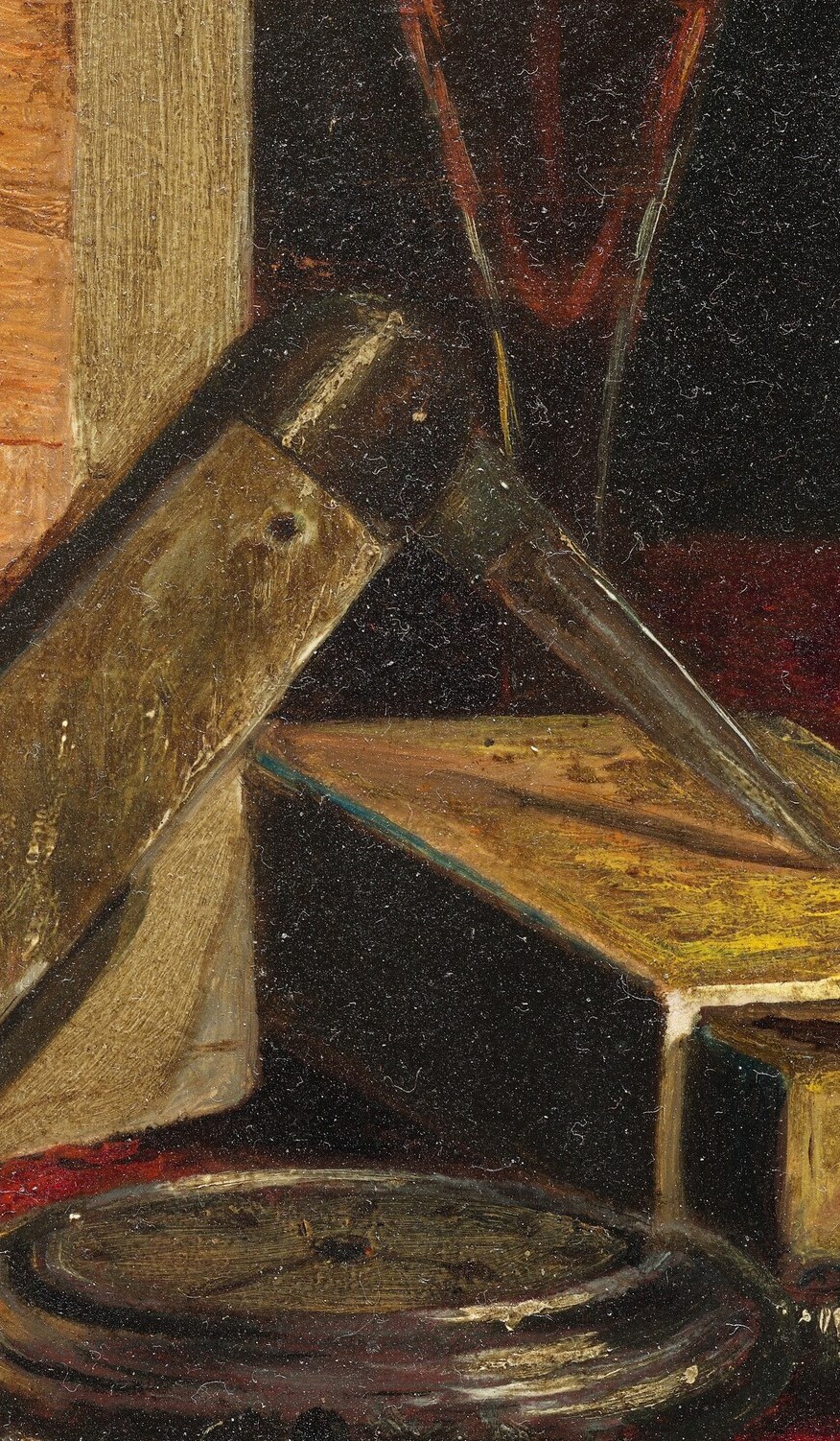
Observe how Inman uses loose brushstrokes to depict the soft folds of the red cloth, then shifts to a smoother application for the polished wooden box. The glint of light on the metal scissors and the transparent quality of the wine glass are testament to his skill.
Inman's technique, characterized by attention to everyday objects and their physical presence, aligns with the Realist movement of the 19th century. He brings common items to life, allowing their forms and textures to emerge from a subdued background.
It makes you wonder, what stories do these silent objects tell?
Details
Transcript
This painter, John O'Brien Inman, was a master of textures. See the soft, rumpled red cloth, painted with loose strokes. Next, the smooth grain of the wooden box, painted in contrast. Notice the glint of metal on the open scissors. And the reflective surface of the wine glass, capturing light. Every object feels real, from paint alone.