Self-Portrait by William Orpen
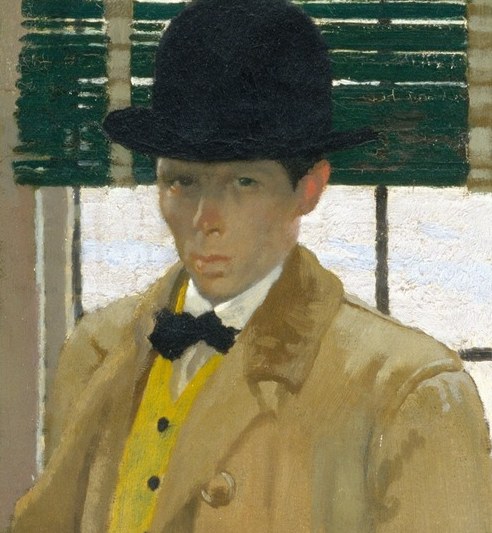
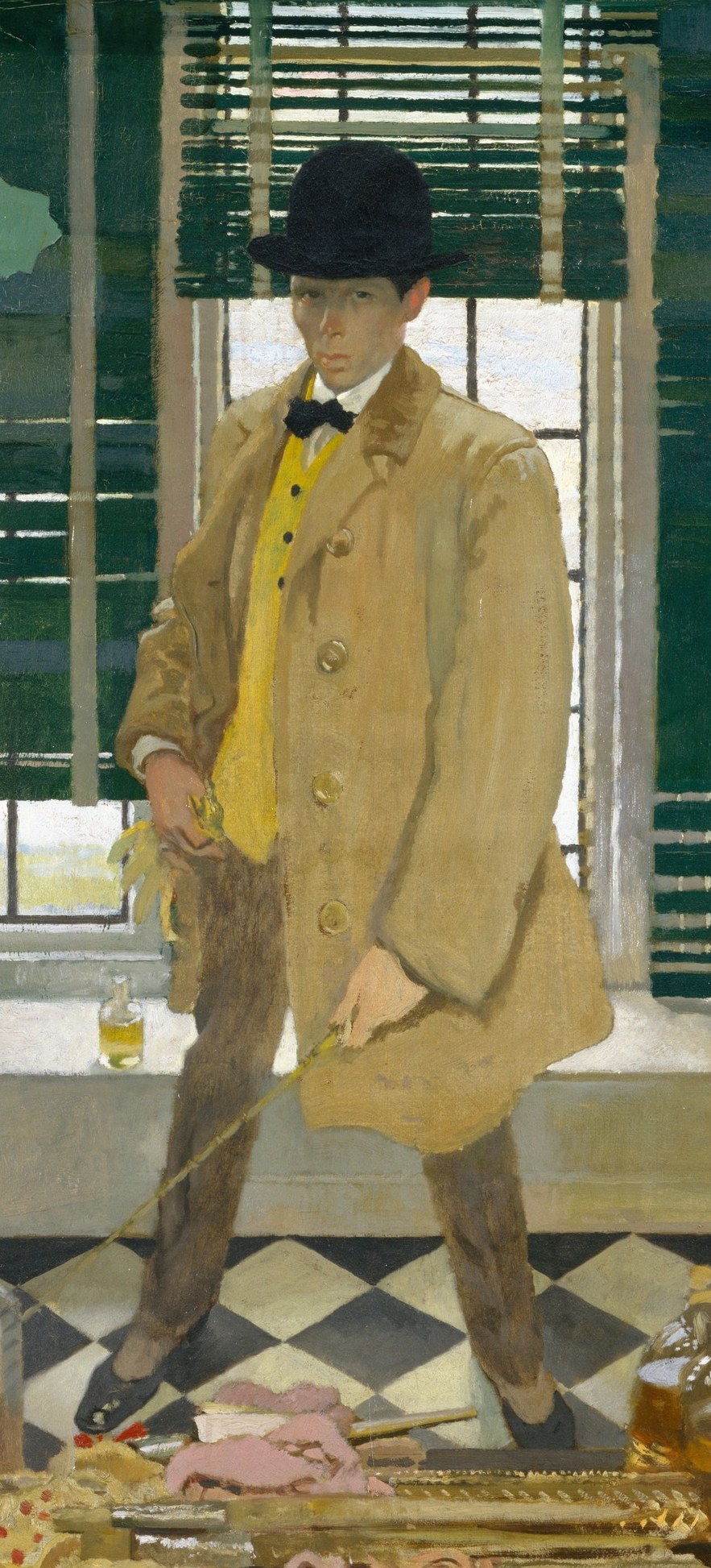
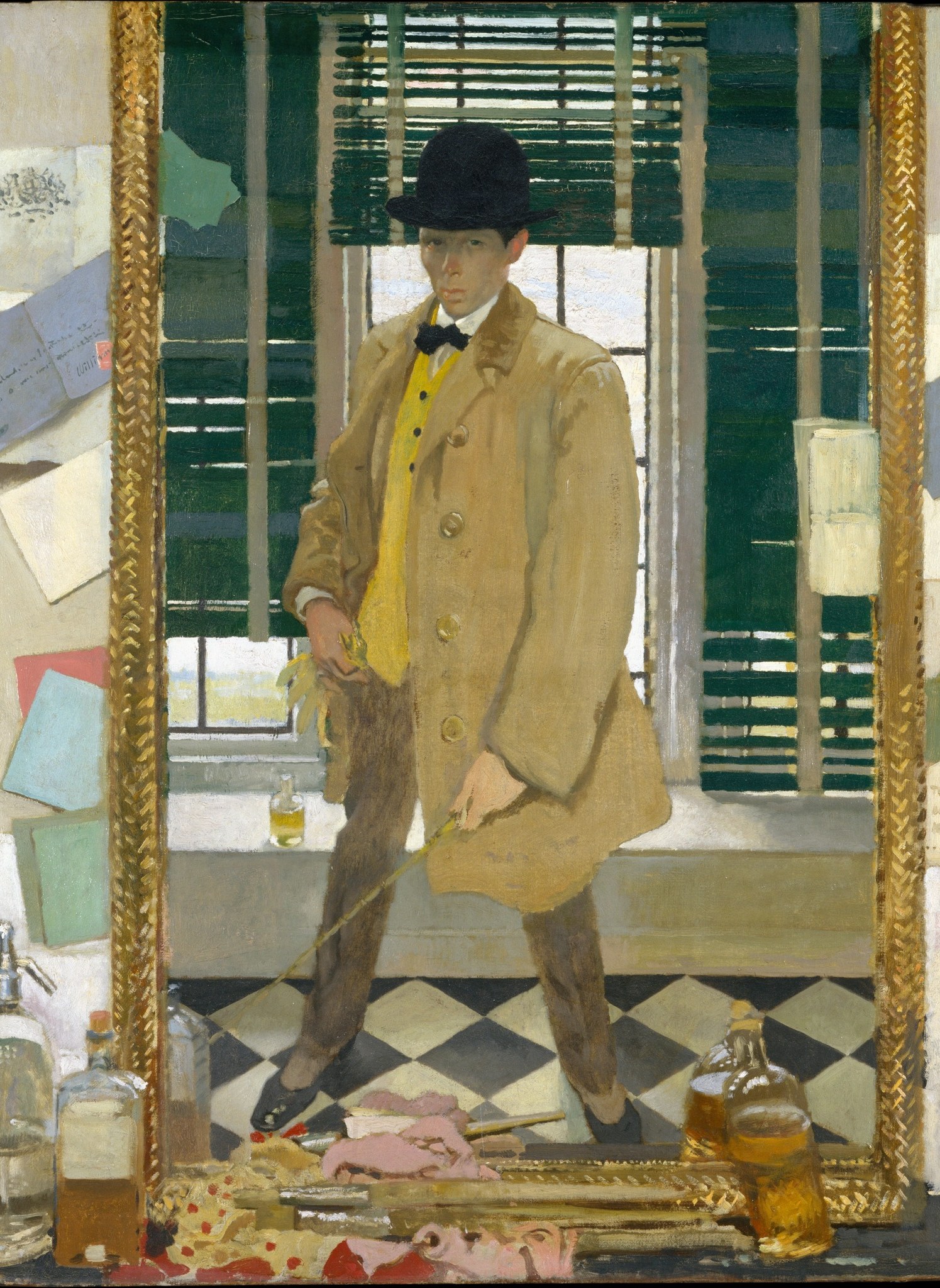
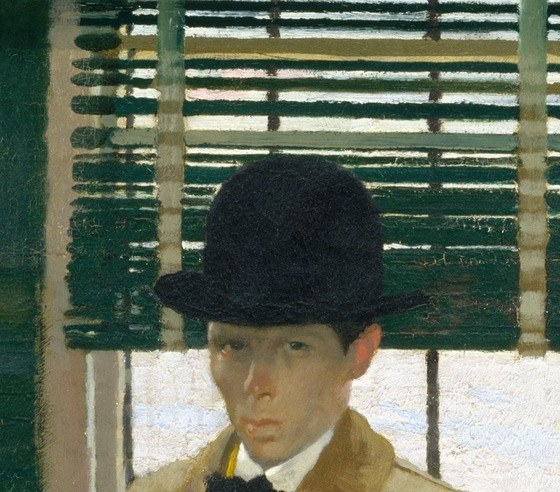
This is William Orpen's Self-Portrait, painted around 1910 and now in the collection of the Metropolitan Museum of Art. It captures the artist at the very peak of his Edwardian success: the most fashionable and highly paid portrait painter in London, a man who moved easily through high society. He shows himself here not as a working painter but as a gentleman of leisure, dressed for the city in a top hat and yellow scarf, a walking cane held loosely in his left hand.
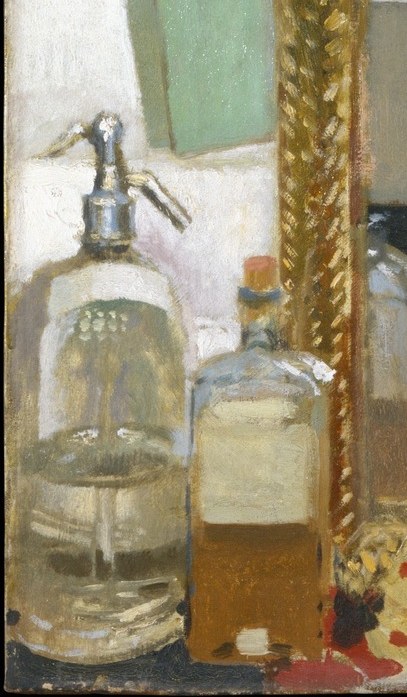
Notice the deliberate performance of the pose. The harlequin floor, the gilt frame that surrounds him like a picture within a picture, the studio props scattered across the foreground table: everything is a stage set. But look at his face. The expression is steady and unrevealing, perhaps even a little wary. Orpen was a master of psychological portraiture, and here he turns that clinical eye on himself without offering any easy answers about what he finds.
Four years after this was painted, the First World War began, and Orpen was sent to France as an official war artist. He stayed longer at the front than any of his peers, producing more than one hundred works documenting the lives of ordinary soldiers, the dead on the battlefields, and the generals who commanded them. The experience devastated him. His health collapsed, his marriage failed, and his reputation suffered when he refused to paint war as a heroic enterprise. After his early death in 1931, this confident, guarded young man in the silk scarf came to feel like a portrait from another life entirely.
It is impossible to look at this painting now without seeing a before. What do you think he is thinking as he meets your eye from the far side of the coming century?
Details
Transcript
He stands like a gentleman about to leave for dinner. Top hat, yellow scarf, walking cane. Every inch the social performer. But his eyes hold steady. He gives nothing away. This was painted in 1910. Orpen was the most sought-after portraitist in London. Four years later, he was sent to the Western Front as a war artist. He never came back whole. This painting is a ghost of a man who hadn't yet seen the mud.