Bella and Hanna. The Eldest Daughters of M. L. Nathanson by Christoffer Wilhelm Eckersberg
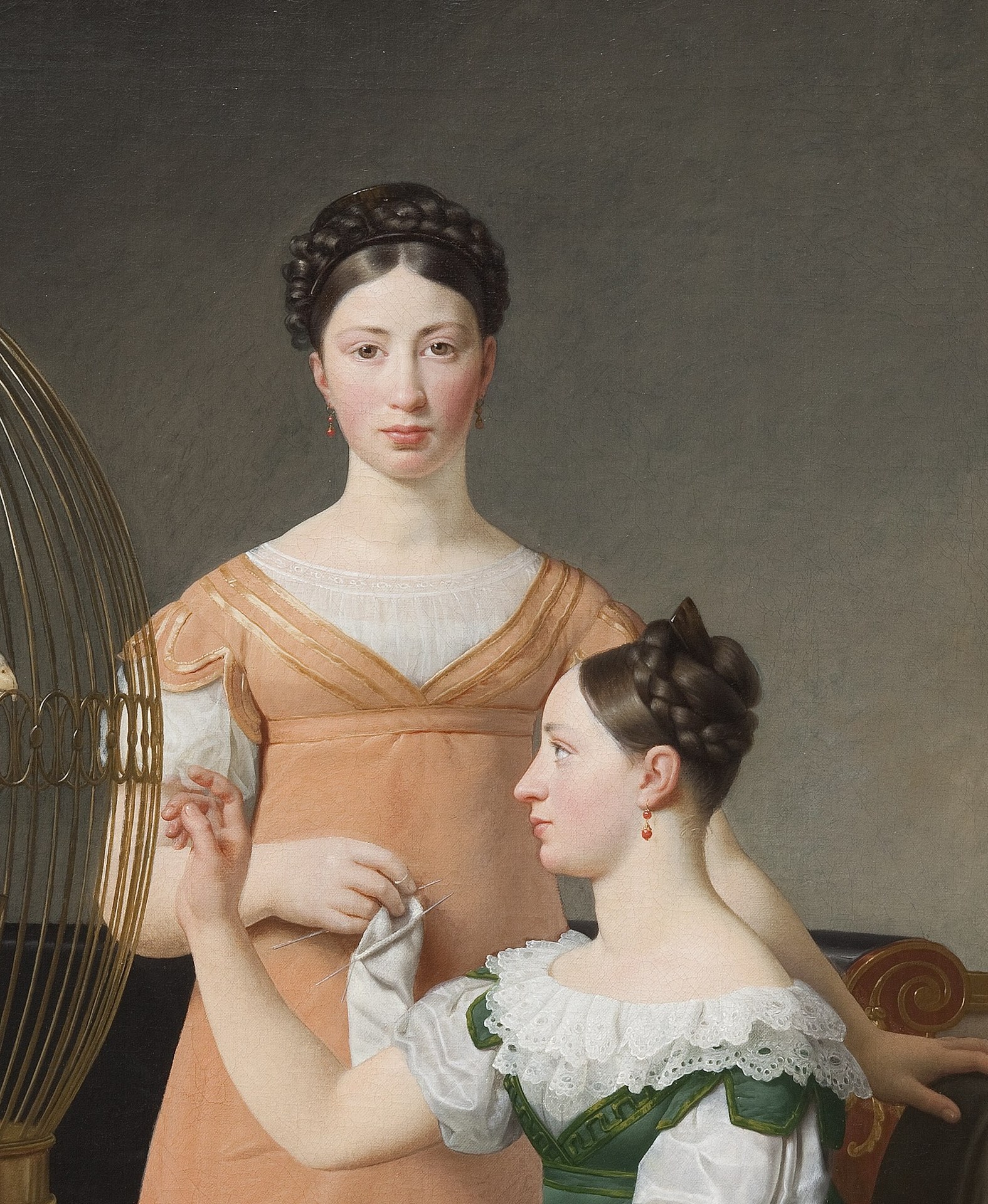
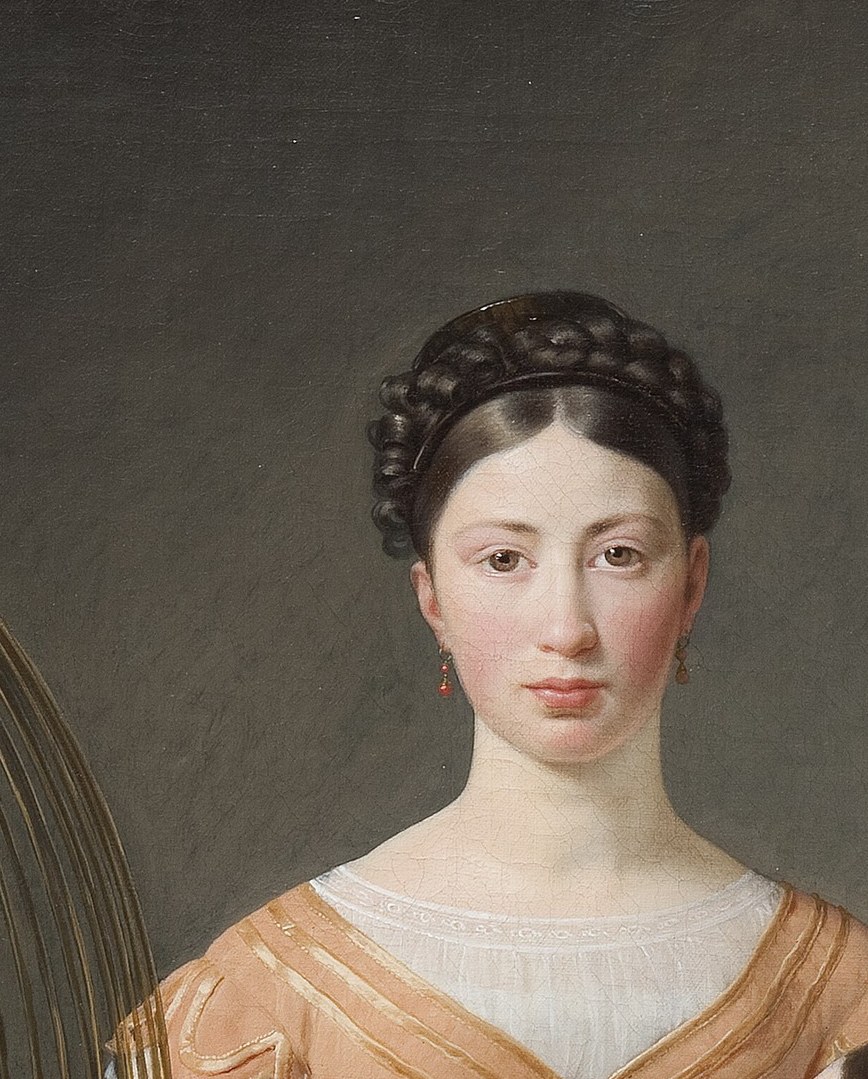
C.W. Eckersberg painted Bella and Hanna in 1820, a portrait of the two eldest daughters of Mendel Levin Nathanson. It hangs today in the National Gallery of Denmark as a cornerstone of the Danish Golden Age.
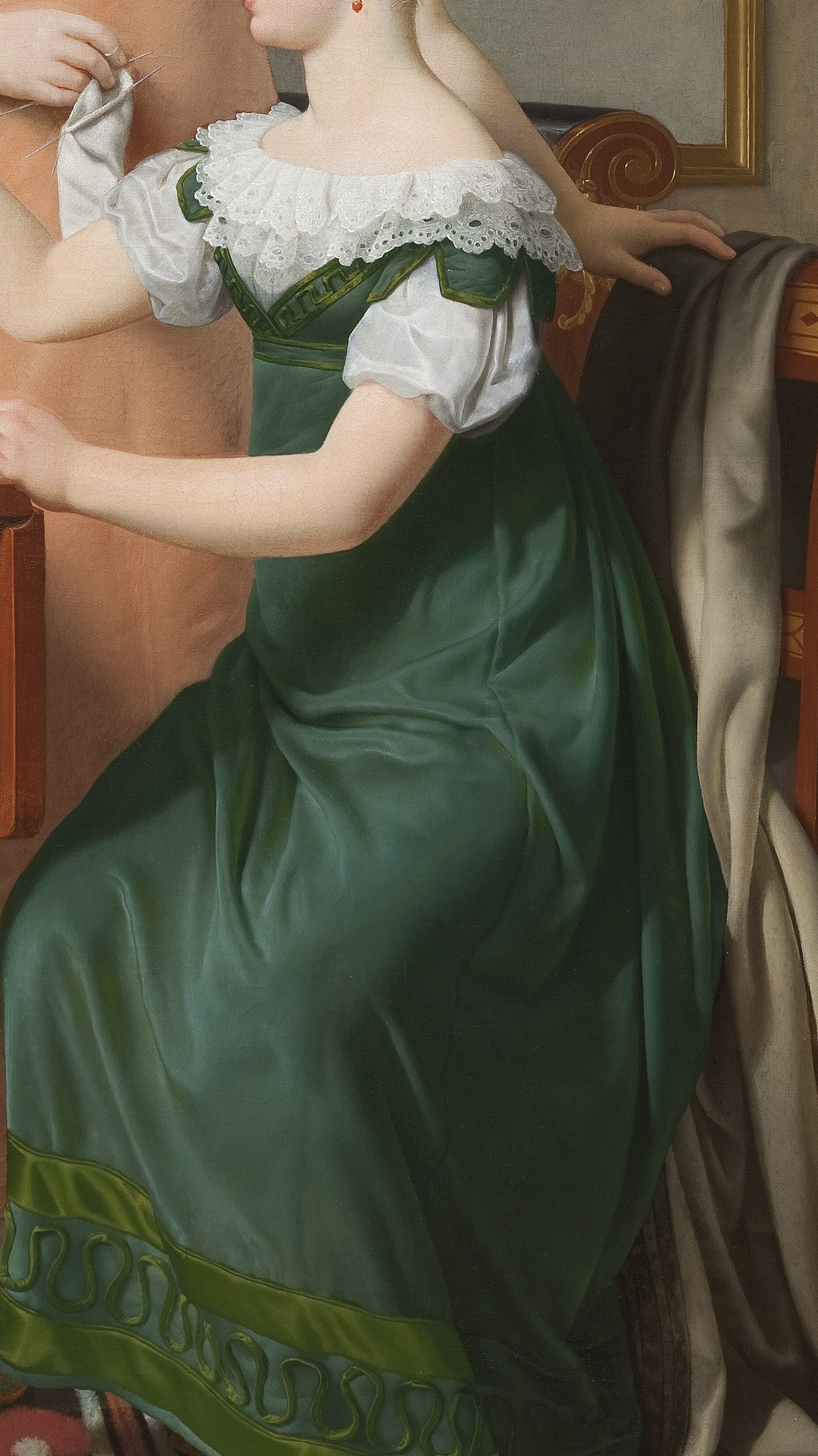
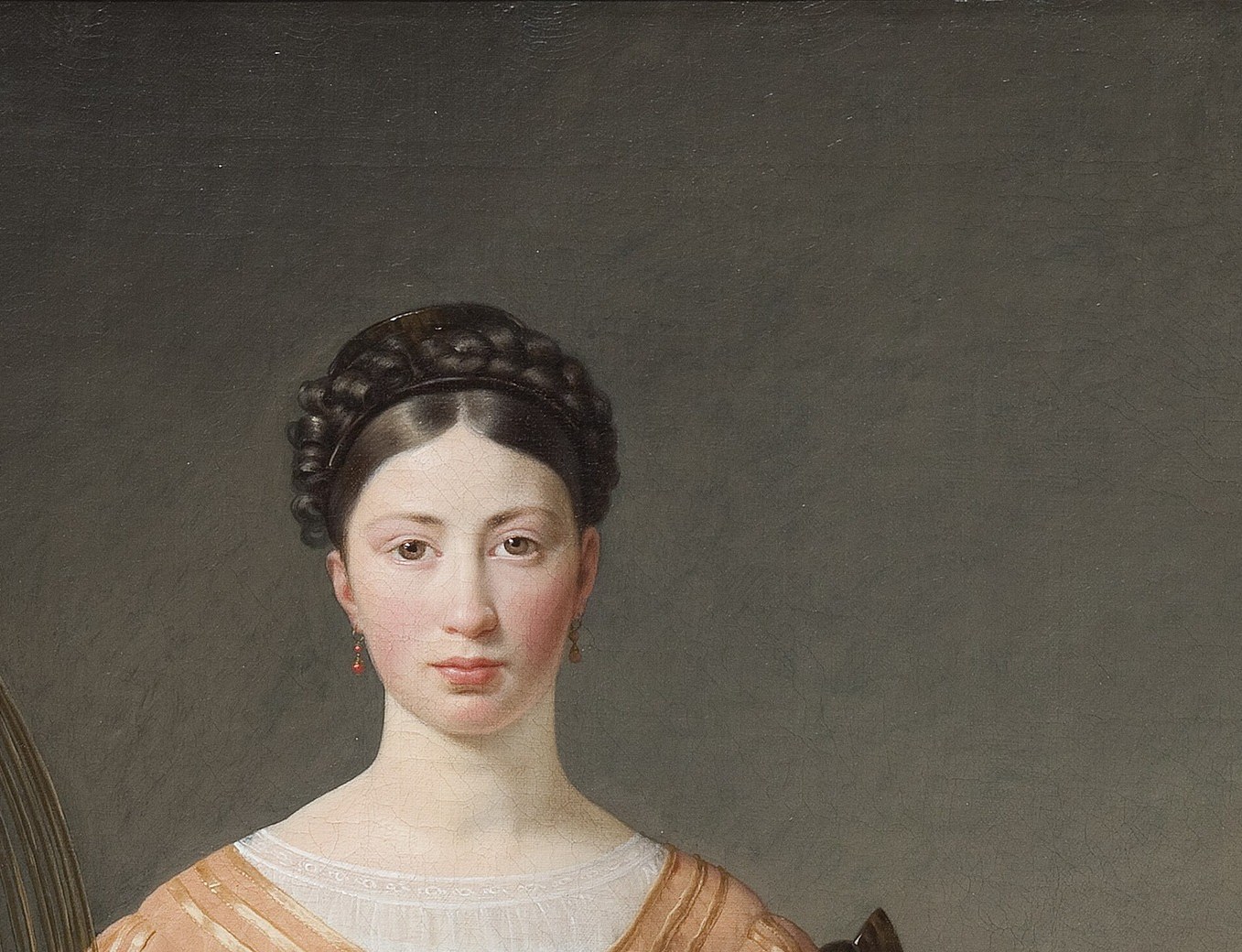
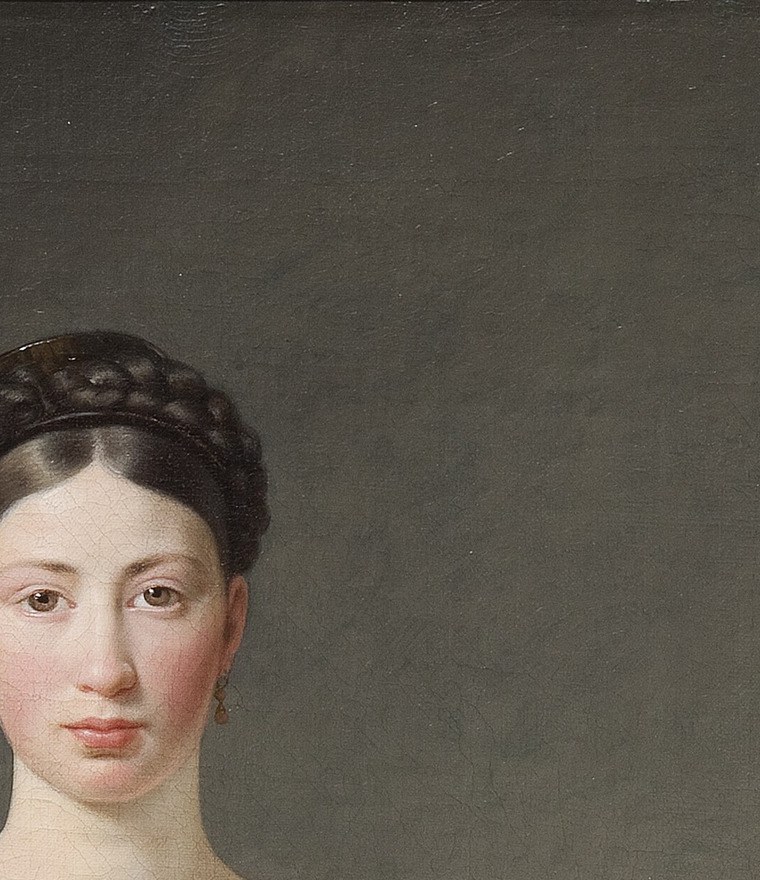
The first thing you notice is the silk. The seated sister wears emerald green satin that pools and catches the light with a weight you can feel. Eckersberg was a precise observer of texture, and that green anchors the whole composition. Then you look at the faces. Bella stands, Hanna sits, but their features are painted with a near-doubling similarity. Eckersberg called them two variations on a theme, and the effect is deliberate.
Behind them, a parrot sits in a gilded cage. It is a living creature that can fly, placed inside something beautiful but locked. Scholars read it as a symbol of the sisters themselves: raised in a sheltered, comfortable home, aware of a wider world they cannot yet enter. The standing sister's hands reach toward the cage, completing the link.
Eckersberg had trained in Paris under Jacques-Louis David and brought Neoclassical clarity back to Copenhagen. He became known as the Father of Danish Painting, and the Golden Age begins here. When you sit with this painting long enough, the resemblance between the sisters starts to feel like the real subject, and the cage answers why.
Details
Transcript
Two sisters, two poses, one striking resemblance. Eckersberg was asked to paint a large family portrait in 1820. He turned it into something stranger: two variations on a theme. Look at the silk he painted here. Every fold catches the light. Now look past them, at the gilded cage. A parrot that can fly, but cannot. The caged bird was no accident. Their longing for a life beyond this room is built into the painting.