Madonna and Child with Saints and Angels by Signorelli, Luca
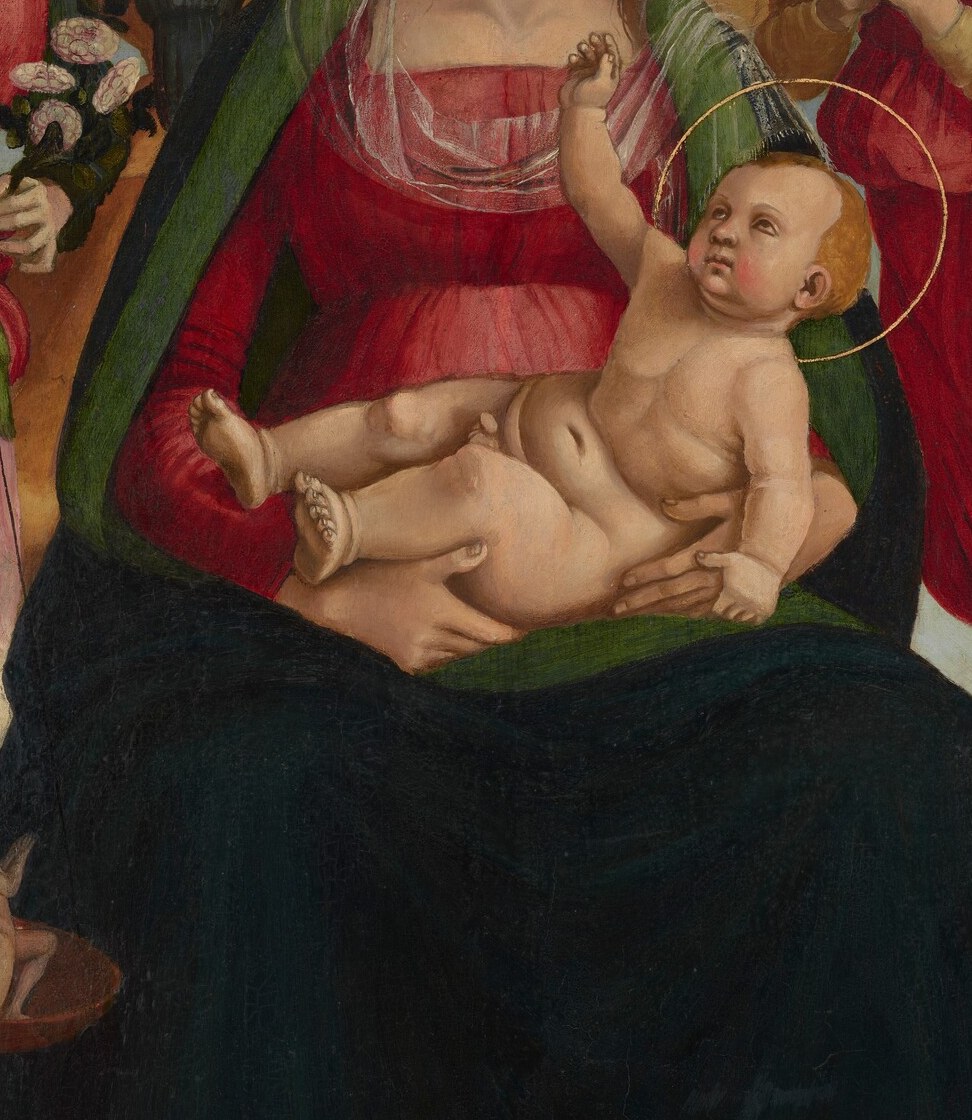
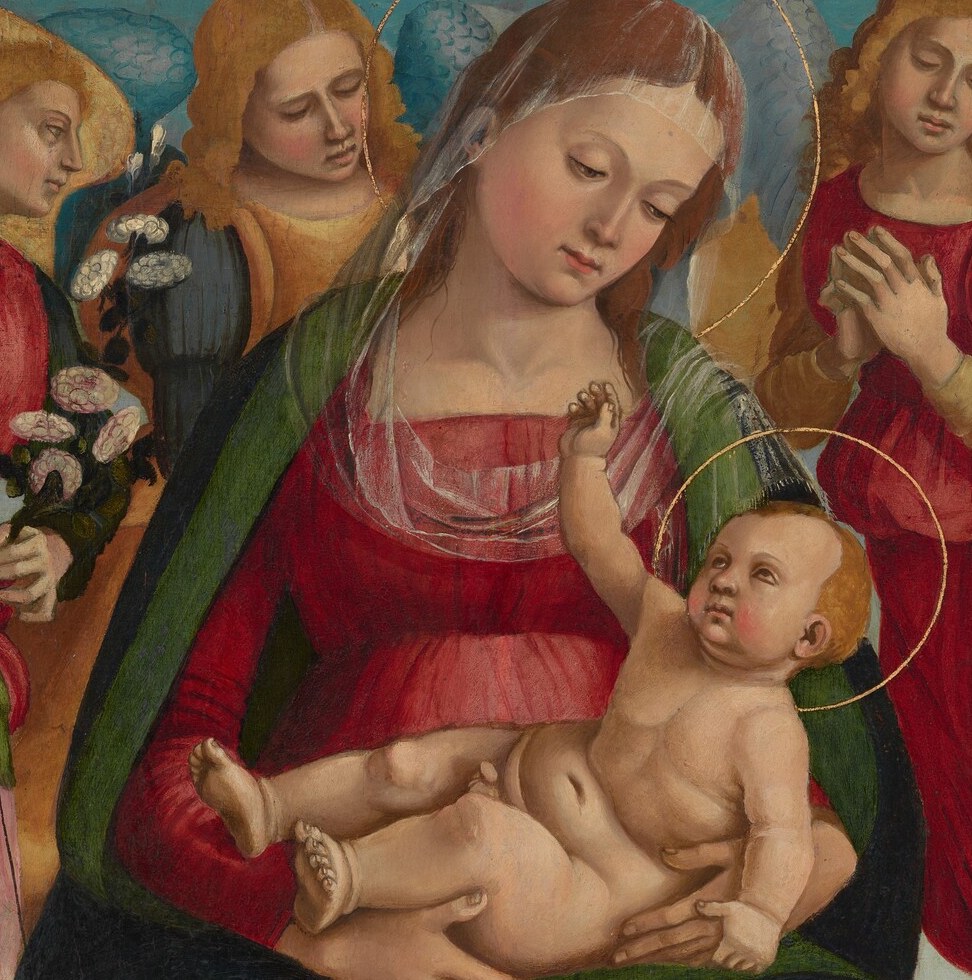
A 16th-century altarpiece, and one wing makes you forget the surface is flat. This is Luca Signorelli's Madonna and Child with Saints and Angels, painted around 1514 and now in the collection of the National Gallery of Art in Washington, D.C. Signorelli was the Tuscan painter whose figures Vasari said could "make you believe they move."
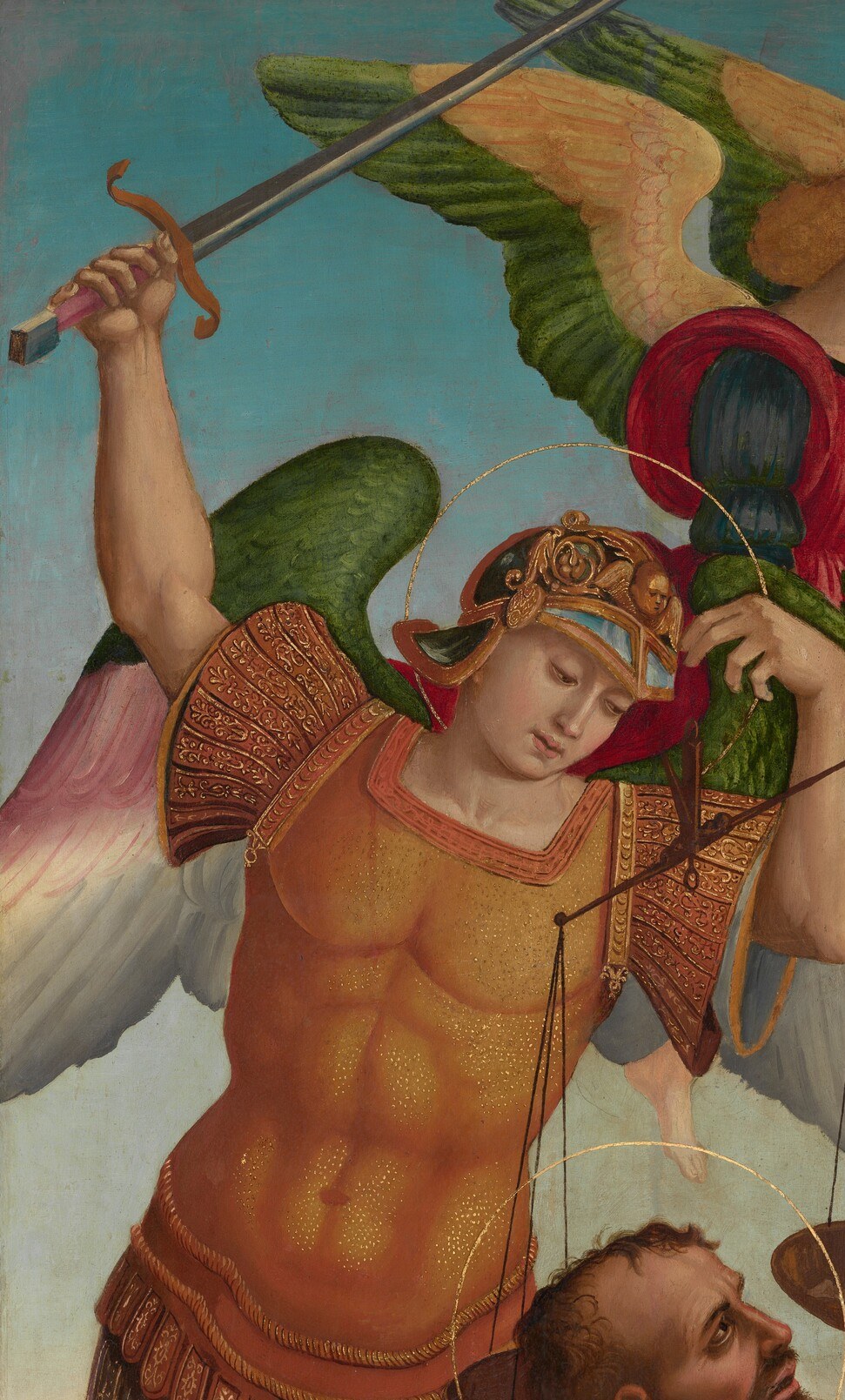
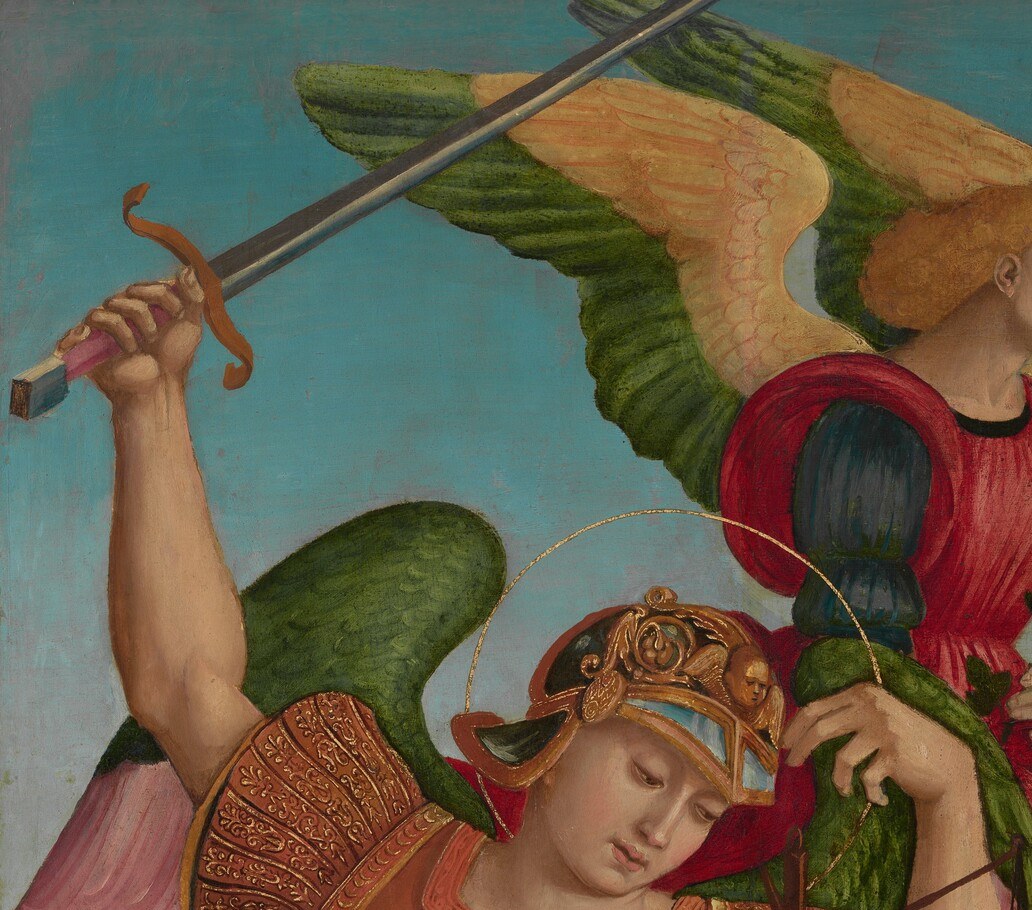
Look at the green-winged angel in the upper left. He painted the wing at an angle that tips the feathers straight toward the viewer, a showpiece of foreshortening. The long golden trumpet cuts across the picture plane, pulling your eye diagonally and giving the whole heavenly court a rush of motion. This is draftsmanship worn on a sleeve.
Signorelli, born in Cortona and likely a student of Piero della Francesca, was at the height of his reputation when he made this panel. His great fresco cycle of the Last Judgment in Orvieto Cathedral was completed more than a decade earlier. The massive, muscled bodies in that work are still cited as an influence on Michelangelo's Sistine Chapel ceiling. The Cortona altarpiece is more intimate but no less sculptural: every fold of drapery and feather is built from strong light and shadow.
The next time you stand before a Renaissance altarpiece, look for the one angel who seems to step out of the frame. It is usually deliberate.
Details
Transcript
A sacred gathering, framed like a jewel. The painter, Luca Signorelli, was famous for one skill above all. Foreshortening: making a flat shape press forward into your world. That green wing is not flat. He painted it coming at you. The trumpet cuts diagonally across the corner, pure controlled thrust. Michelangelo studied this man's bodies in Orvieto before his own Last Judgment.