Maine Seascape by Constantin Westchiloff
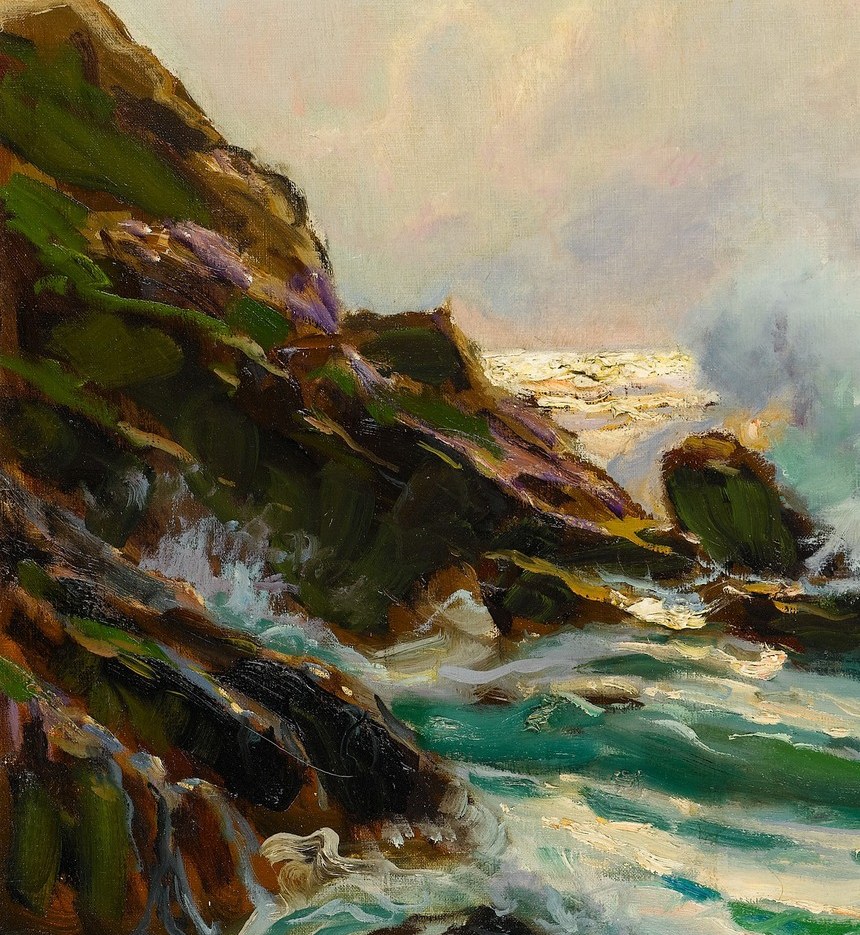
Constantin Westchiloff's "Maine Seascape," painted in 1937, captures a dramatic moment on the Atlantic coastline. This oil painting, part of The Metropolitan Museum of Art's collection, showcases the artist's ability to render the raw power of the ocean.
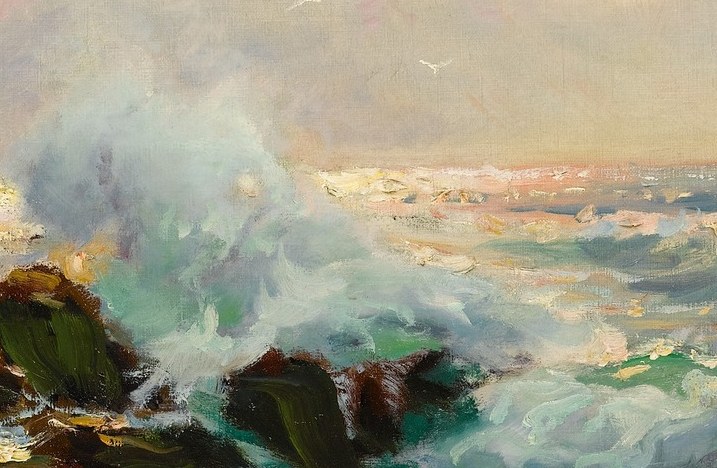
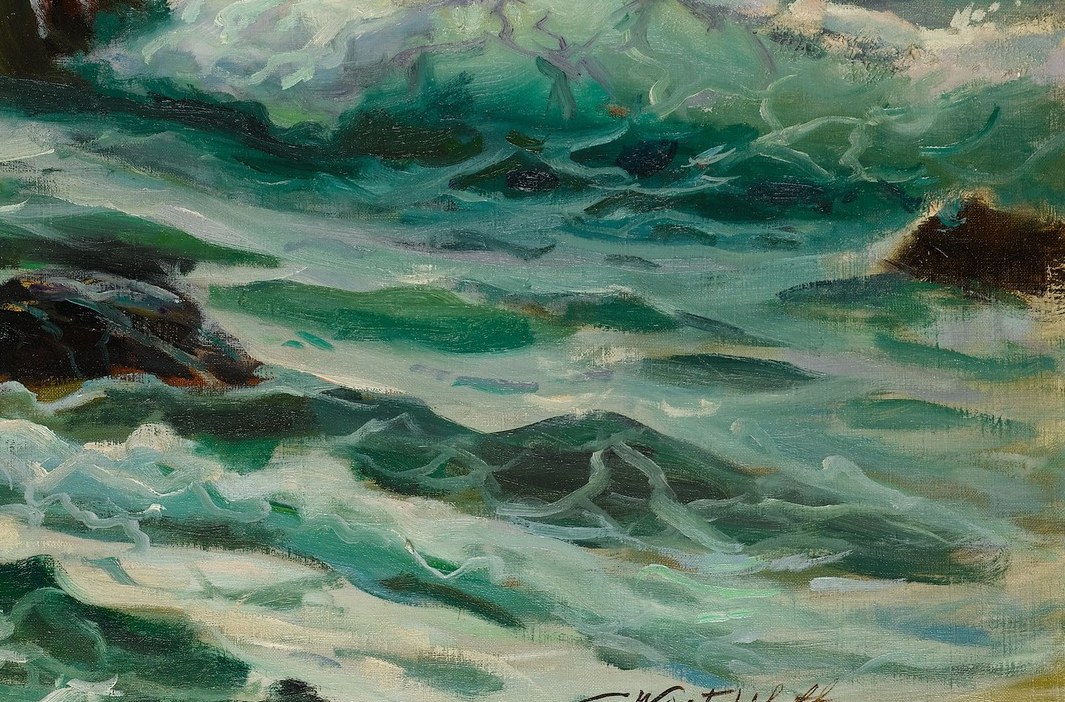
Notice the thick, textured brushstrokes, particularly in the crashing waves and foaming water around the jagged rocks. This technique, called impasto, makes the scene feel incredibly dynamic and alive, truly conveying the movement and force of the sea.
Westchiloff, a Russian-American artist, had a diverse career that included portraiture, genre scenes, graphic art, and even set design. He adopted a latinized version of his name in 1922 after moving to France, reflecting a significant personal and professional transformation. His works often capture the transient effects of light and atmosphere, aligning with American Impressionism.
What details in this seascape best convey the power of nature to you?
Details
Transcript
This painter was known for capturing the sea's power. Look closely at the crashing wave and foamy water. He used thick impasto brushstrokes to create this movement. This Russian-born artist adopted a new name in France. He was a set designer and graphic artist, too. His life mirrored the dynamic force of his seascapes.