A Shepherdess and Her Flock by Anton Mauve
Anton Mauve painted A Shepherdess and Her Flock in 1873, and it now hangs in The Metropolitan Museum of Art. Mauve was a leading figure in the Hague School, a Dutch realist movement devoted to painting everyday life without idealizing it. He was also Vincent van Gogh's cousin-in-law and an important early influence on him.
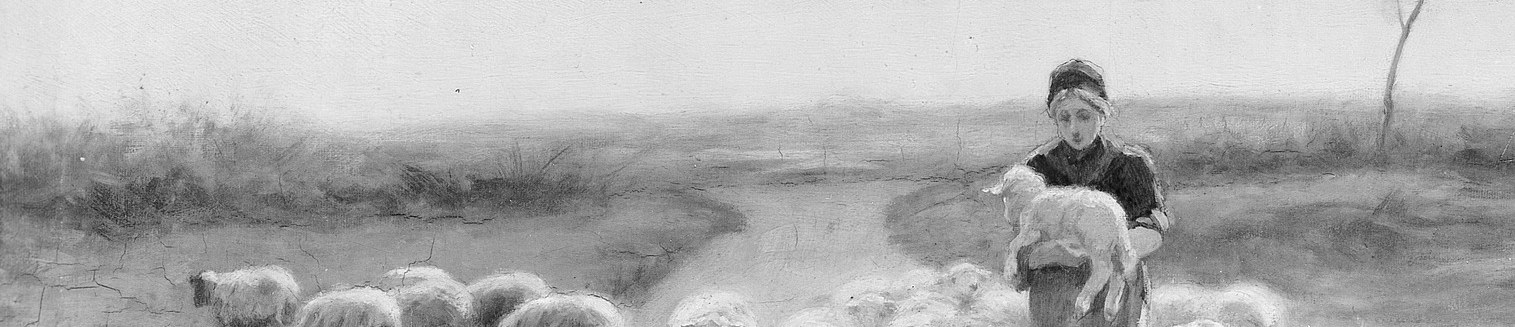
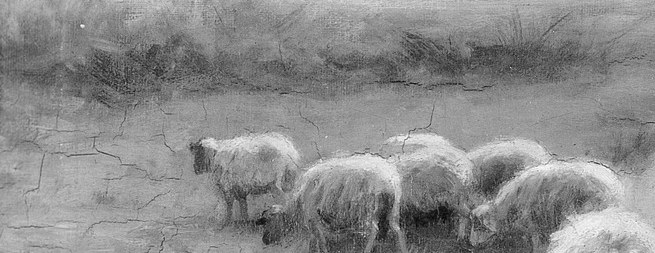
At first glance the painting centers on one figure: a shepherdess in a white head covering, cradling a lamb. But the real reward is in the distance. A barely visible flock dissolves into the horizon line, tiny grey shapes that double the scale of the world. The painting extends far beyond its central figure.
Mauve painted en plein air, outdoors in the damp Dutch polder, and you can feel it in the silvery wet ground and luminous grey sky. His sheep scenes became so popular with American collectors that a price gap opened between paintings of sheep coming toward the viewer and sheep going away.
The painting quietly insists that labor and landscape deserve sustained attention. What else do you notice when you look past the shepherdess?
Details
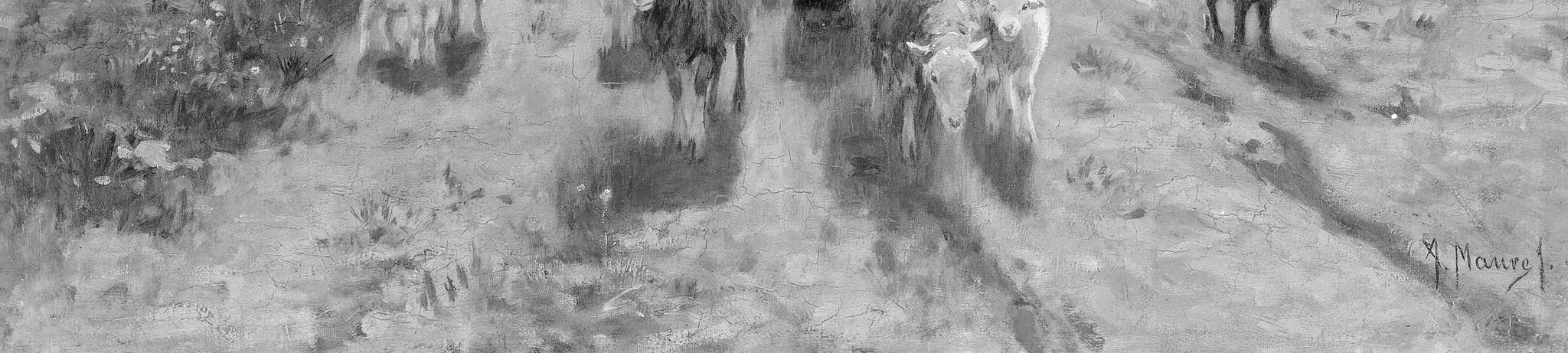
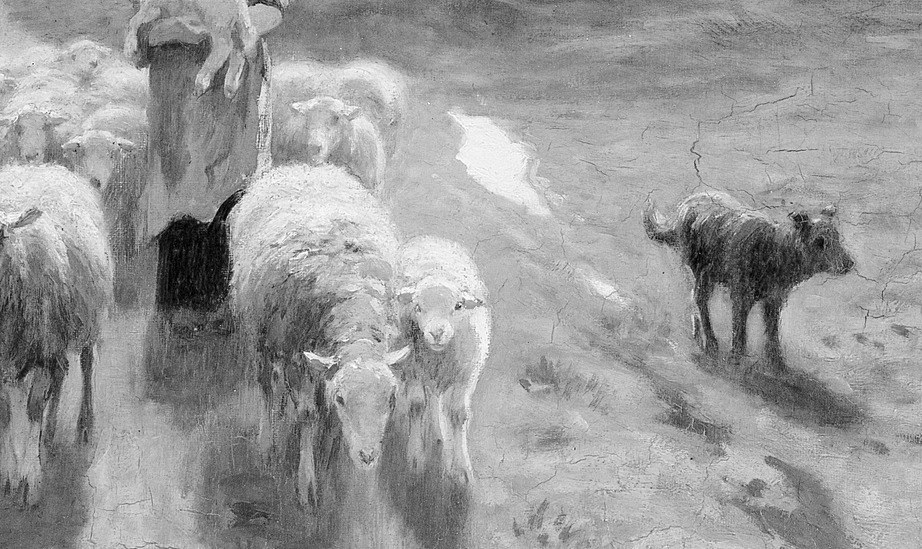

Transcript
She stands alone, holding a lamb against her heart. Anton Mauve painted her in 1873, out in the cold Dutch damp. Move past her. Follow the flat ground to the sky. Tiny grey shapes dissolve into the horizon. A second flock. The world of sheep continues beyond the frame. American collectors loved his sheep so much they paid more for sheep coming than sheep going.