伝海北友雪筆 『源氏物語』 絵巻|The Tale of Genji by Kaihō Yūsetsu
View the artwork: 伝海北友雪筆 『源氏物語』 絵巻|The Tale of Genji →
A seventeenth-century handscroll illustrates a scene from The Tale of Genji, the thousand-year-old Japanese novel by Murasaki Shikibu. The work, attributed to Kaihō Yūsetsu (1598-1677), uses ink and color on paper to render the intimate world of the Heian court for a later audience.
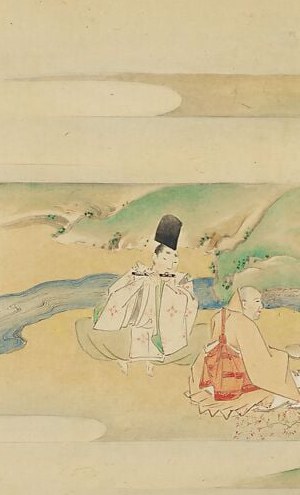
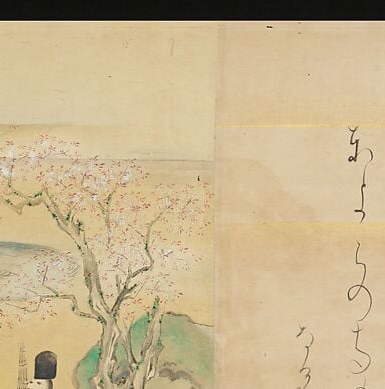
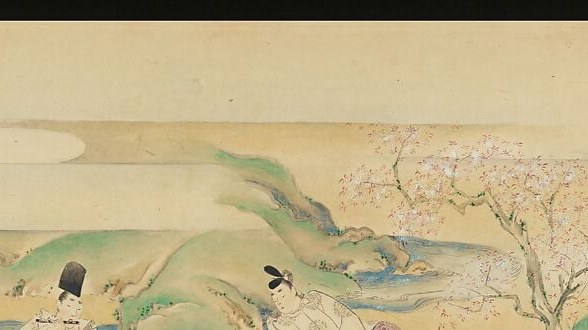
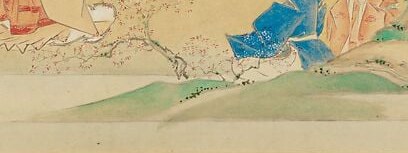
Look at the ground plane beneath the figures. It is a flat, unmodulated ochre wash with no shadow and no perspective. The rocks and hillocks behind them compress into a stage set of mineral green. This is Yamato-e space, a deliberate anti-naturalist convention that refuses depth in favor of clarity. Every character, every gesture, and every layered hem remains fully legible without the weight of a real world pressing down.
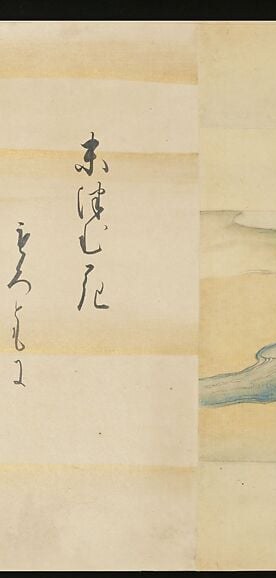
The handscroll format asks you to unroll the story a scene at a time, left to right. Here, the standing white-robed figure anchors the composition while others kneel among cascading robe layers whose color combinations once signaled season and sentiment to a courtly viewer. The prose itself appears in calligraphy at the far left, the image inseparable from the text it interprets.
To paint without shadow is an act of preservation. This world cannot decay into a single moment because it was never allowed to fall into one in the first place.
#arthistory #japaneseart #yamatoe
Details
Transcript
Seventeenth-century Japan. A thousand-year-old novel. A prince, a flute, a board game, four women. But look at the ground under their robes. No shadows. No depth. Just a floating plane of pale ochre. This is not a mistake. It is a grammar. Yamato-e space suspends figures in a timeless court world. No shadow can fall on a story that must never age.