At the Gallery Drouot by Daumier, Honoré
Honoré Daumier, a keen observer of French society, often used his art to comment on the world around him. In "At the Gallery Drouot," painted between 1865 and 1868, he captures a bustling auction scene, now held at an undisclosed location.
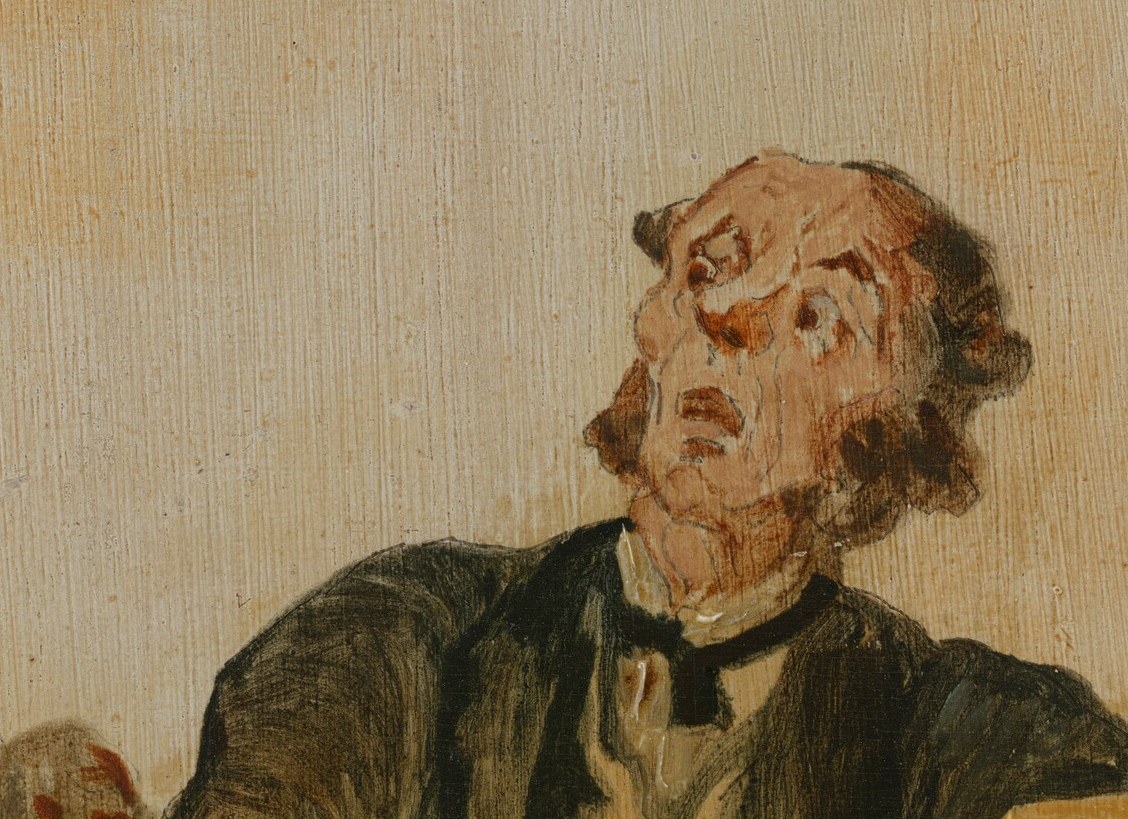
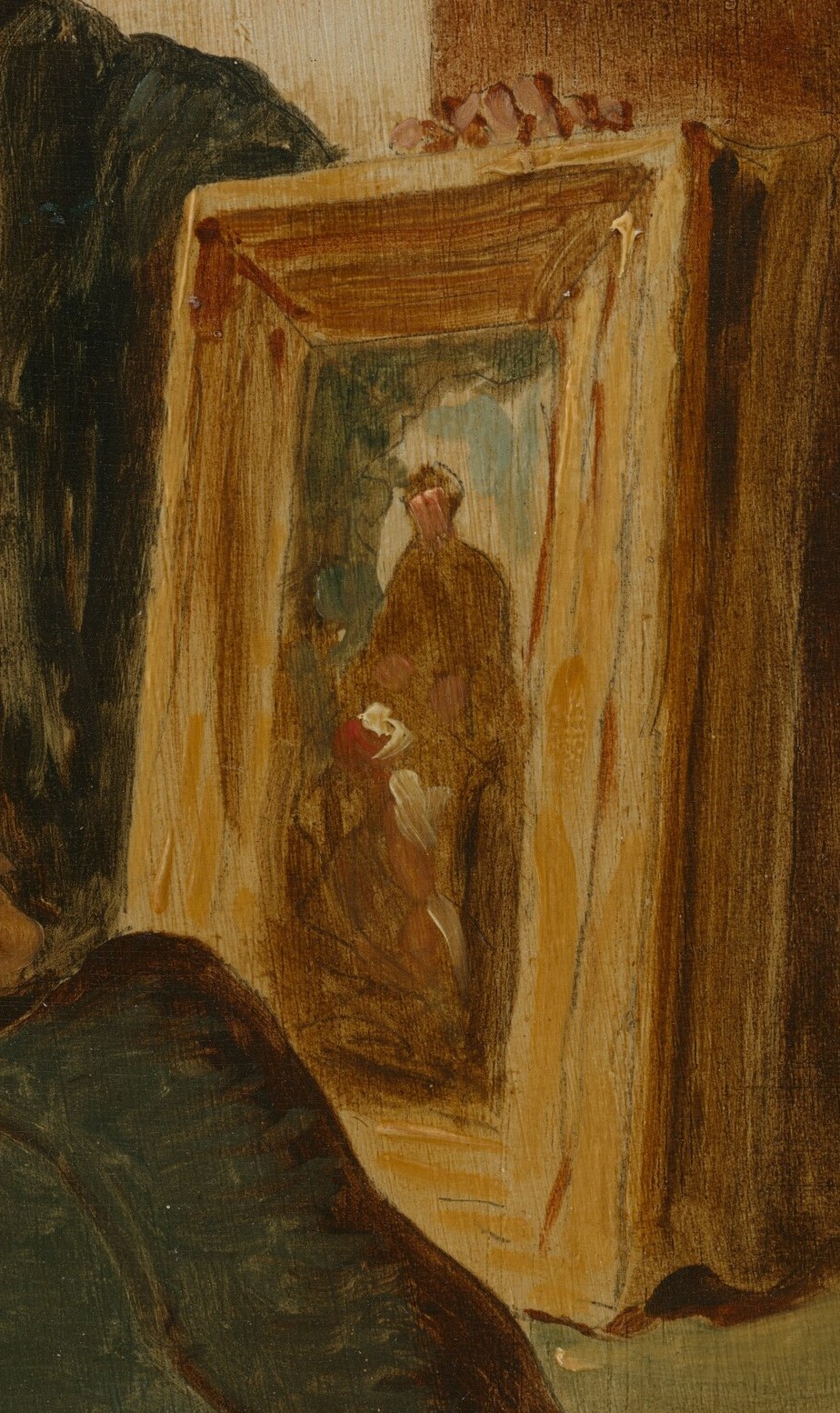
Observe the auctioneer's almost theatrical gesture, drawing all eyes to the framed artwork. The painting itself becomes the focal point, not just as an object of beauty, but as an item for sale.
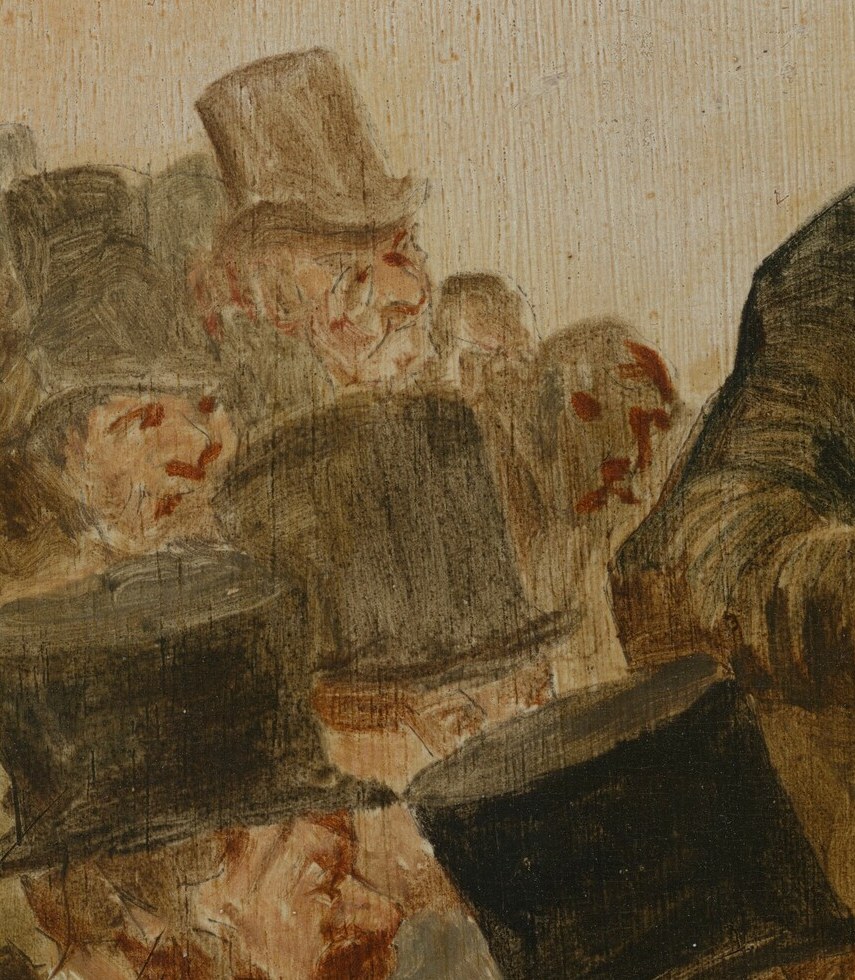
Daumier, a prolific caricaturist and painter, was deeply interested in the social rituals of his time. This work reflects the growing prominence of public auctions and the increasing commodification of art in 19th-century France. His brisk brushwork and muted palette emphasize the drama and the human interactions within this transactional setting.
What do you think Daumier's message about art and commerce was?
Details

Transcript
This painter was a master of social commentary. He often satirized French society in his works. Look closely at the auctioneer's dramatic hands. His exaggerated gesture points to the framed artwork. The art itself is the true subject of the scene. The painter captures the commodification of culture.