Under Full Sail by American 19th Century
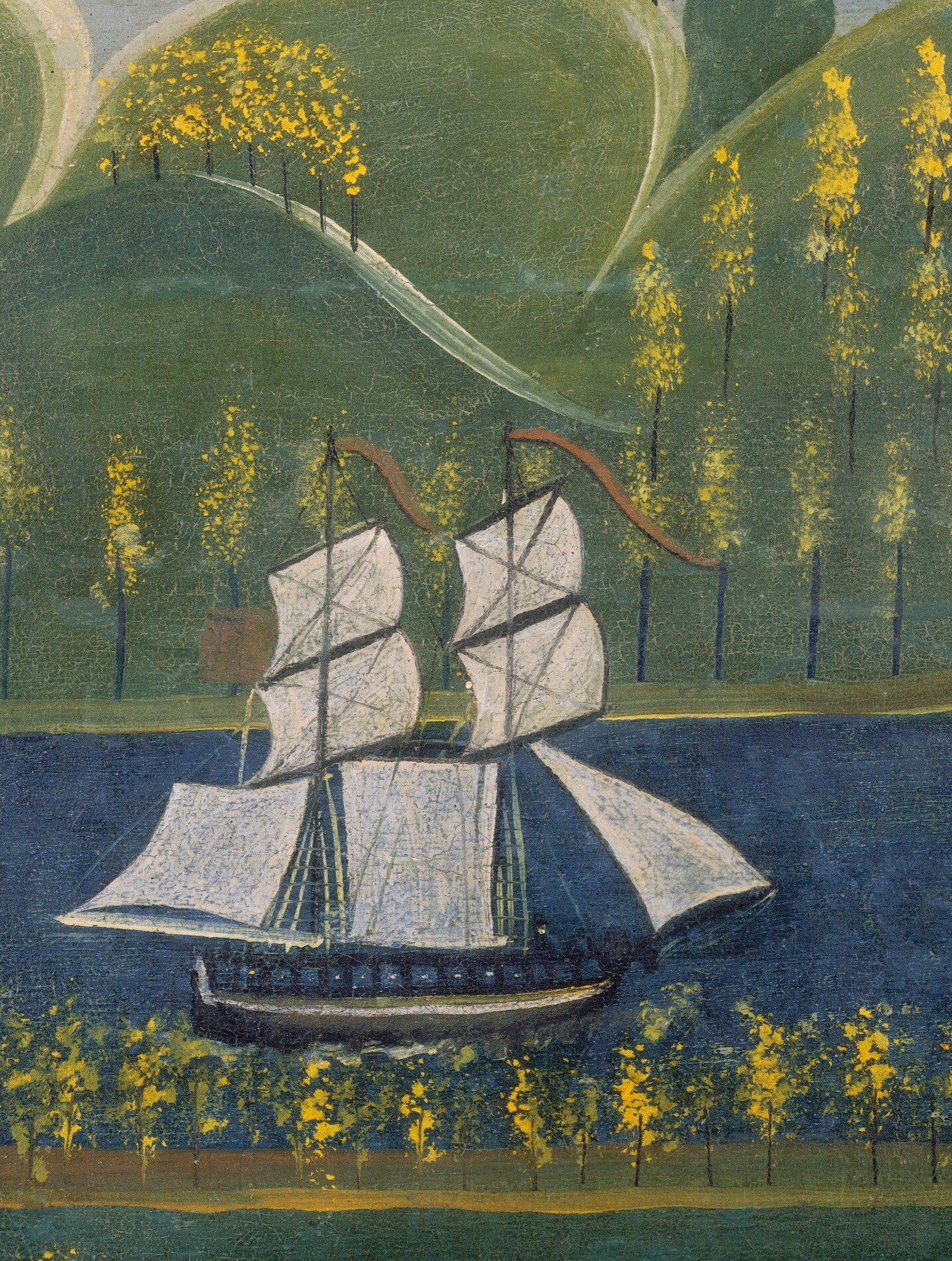
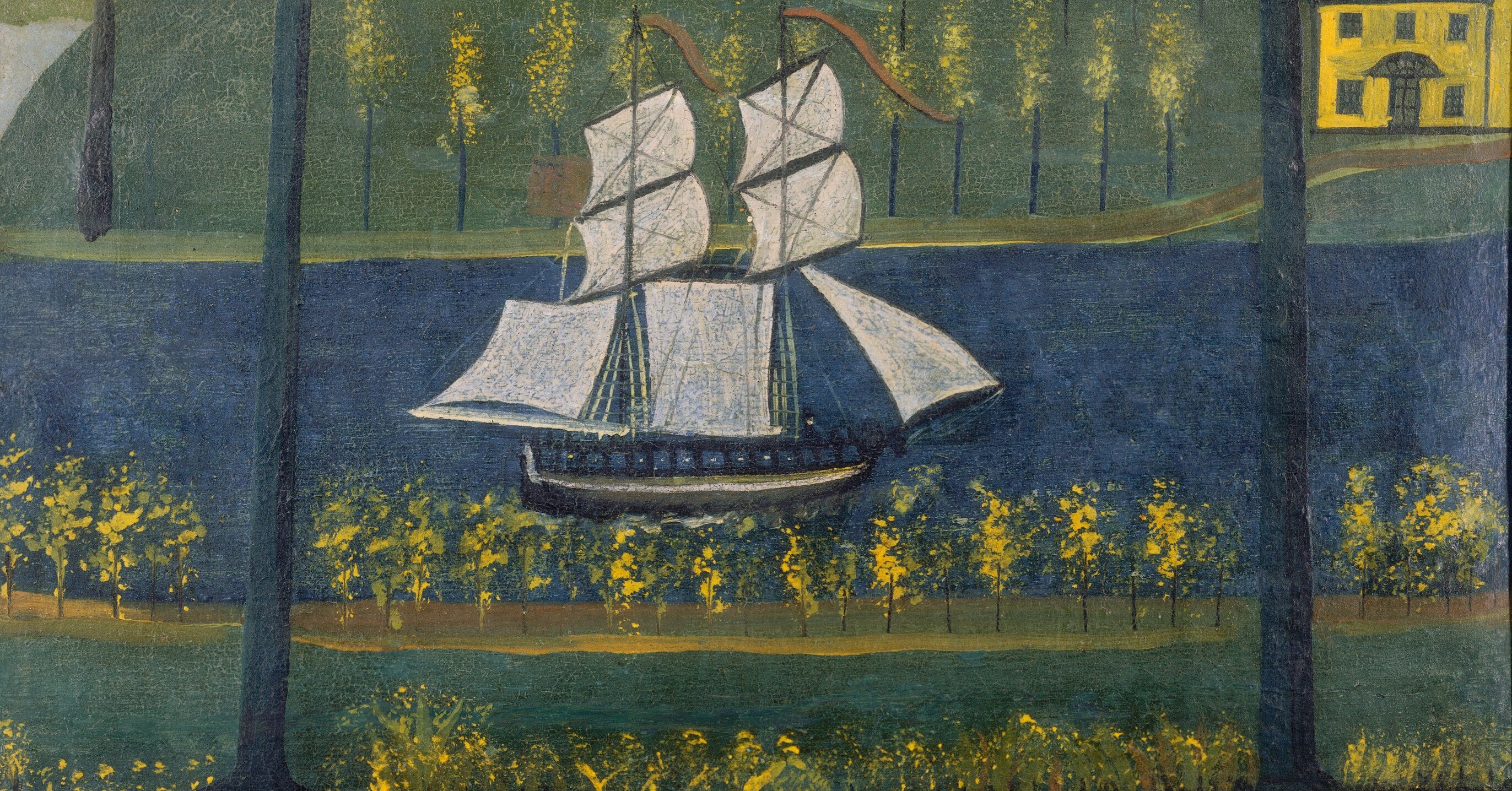
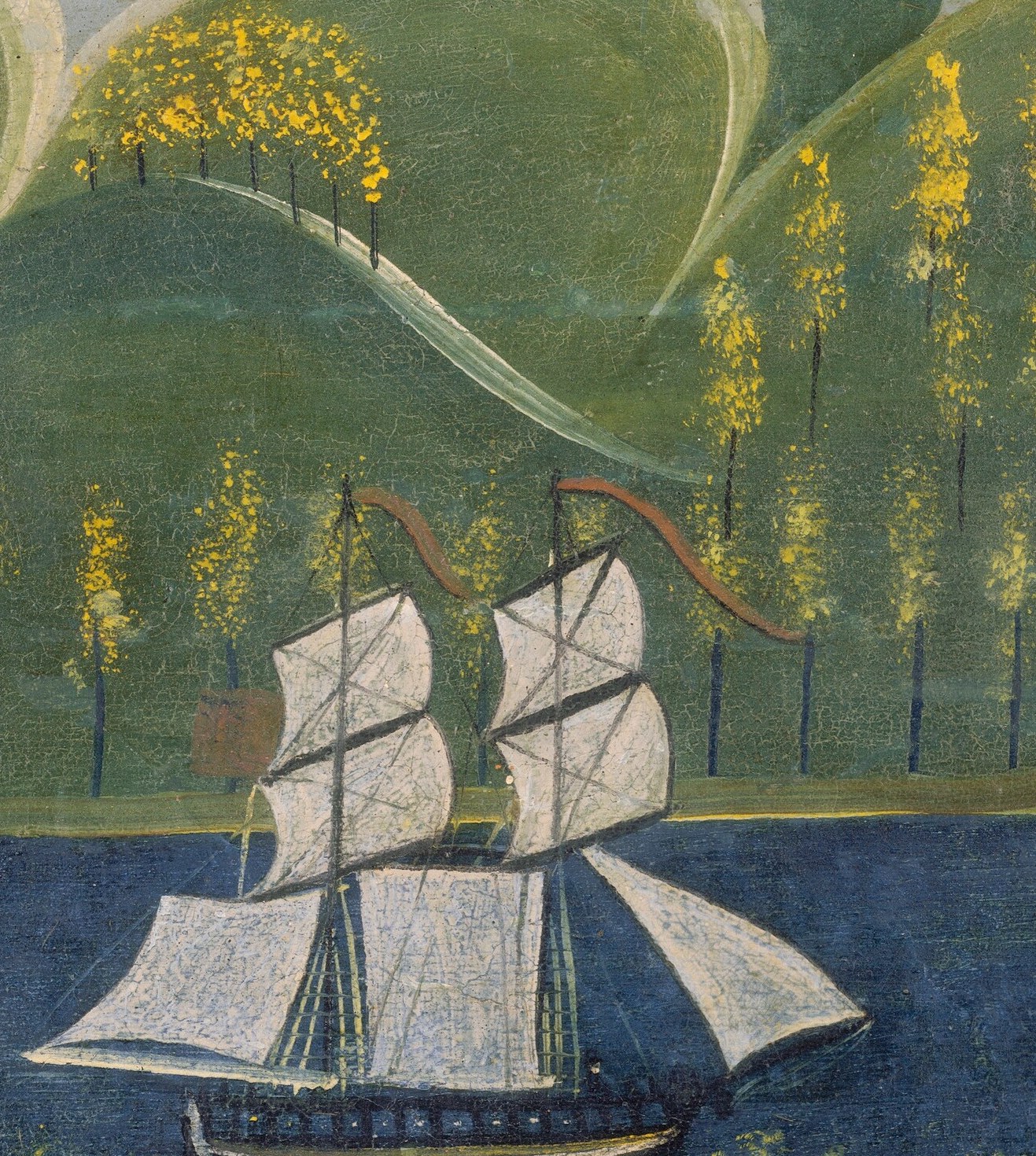
The painting "Under Full Sail" (circa 1835) by an unknown 19th-century American artist, housed in the collection, is remarkable for its distinctive material construction. Rather than traditional canvas, the artist chose a plaster and lath support, applying oil and casein paints. This unusual combination results in a unique soft, chalky texture and muted color palette that sets it apart from other folk art of the period.
Observe how the bright white sails of the ship, usually rendered with stark contrast, take on a subtle, almost diffused luminosity due to this technique. The scene balances the potential drama of an approaching storm, depicted by heavy rolling clouds, with the tranquility of a small yellow house on the shore.
The artist's choice of media not only imparts a unique aesthetic but also speaks to the resourcefulness often found in early American art. The blend of oil and casein, similar to milk paint, contributes to the painting's enduring appeal, creating a visual experience that is both simple and profound.
What details in this unique texture draw your eye the most?
Details


Transcript
This painting, 'Under Full Sail', has no known artist. But its unique surface texture sets it apart. It was painted with oil and casein, like milk paint. The artist applied it to plaster, instead of canvas. This gives the colors their soft, chalky quality. See how the bright white sails seem almost muted? The technique gives this maritime scene a quiet power.