The Descent from the Cross by Dutch 17th Century
View the artwork: The Descent from the Cross →
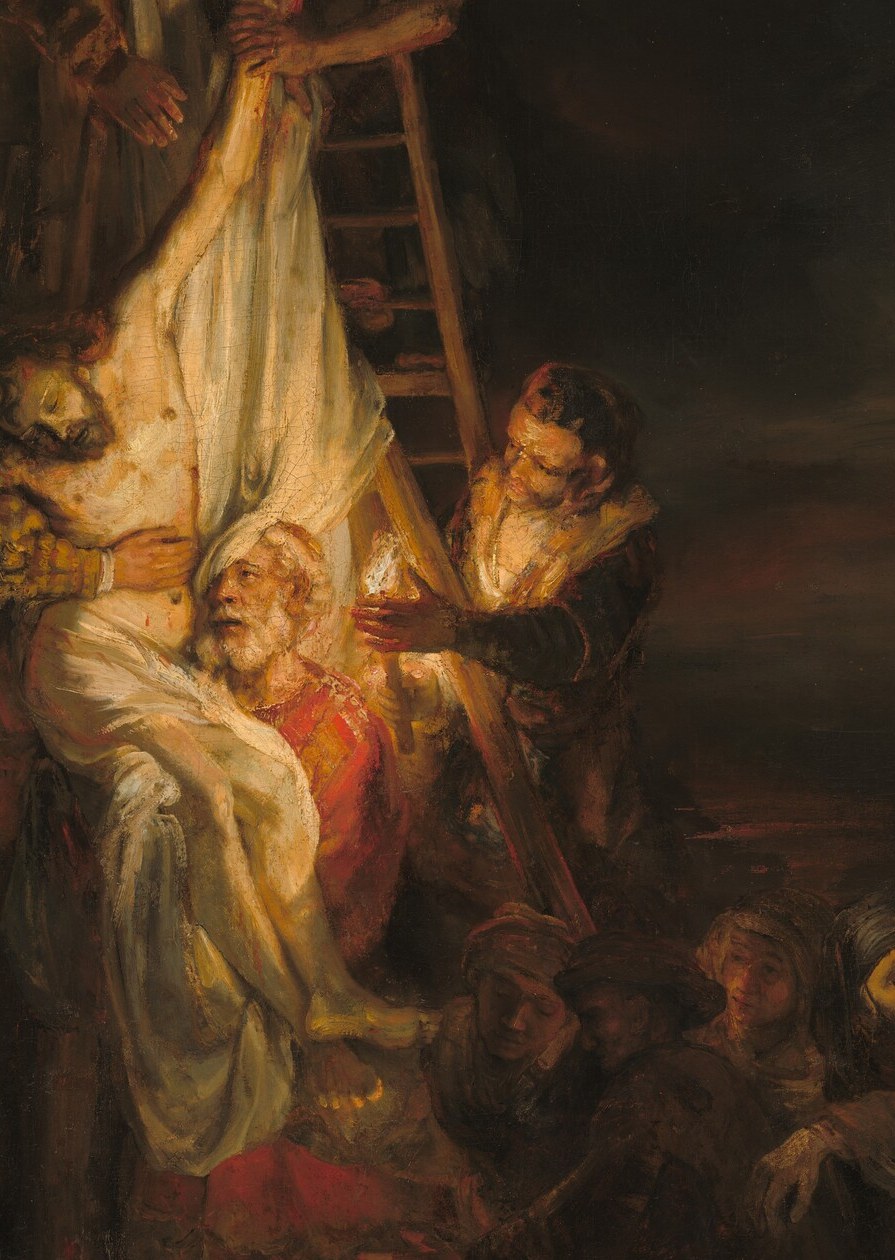
This is The Descent from the Cross, painted around 1650 in the workshop of Rembrandt, now in the National Gallery of Art in Washington. For decades it was sold and re-sold as an authentic Rembrandt, with buyers paying accordingly. Today it is catalogued as the work of an unidentified pupil, Constantijn van Renesse is the name most often proposed, and its financial downgrade tells a specific story about what connoisseurship actually costs.
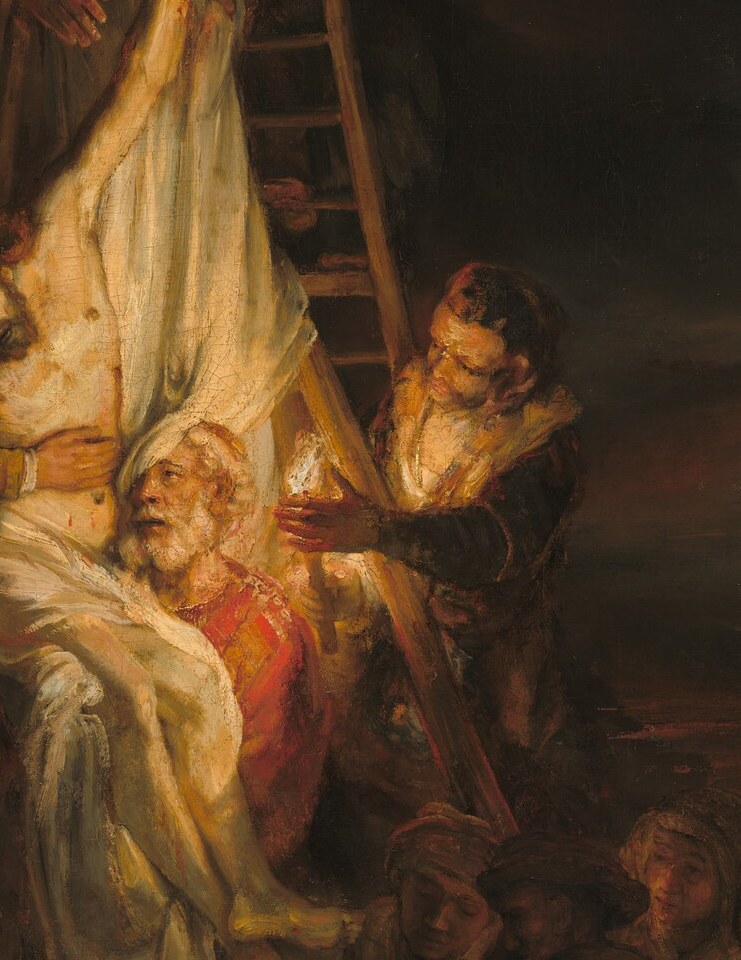
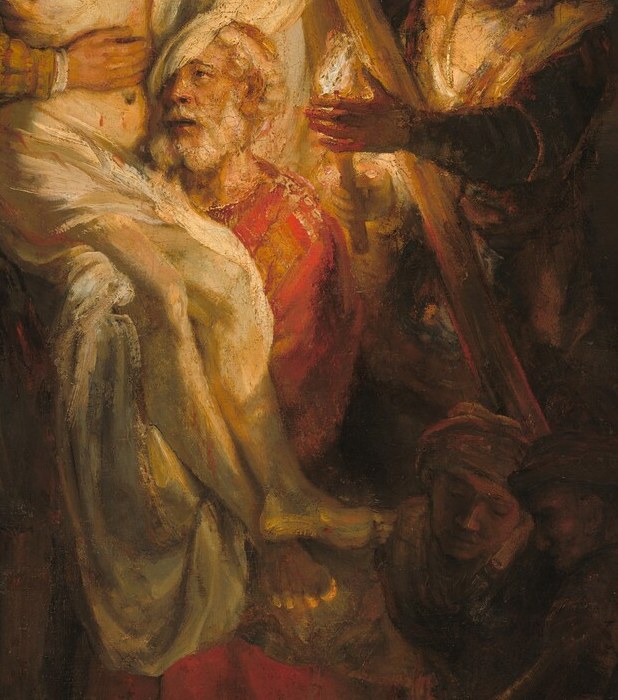
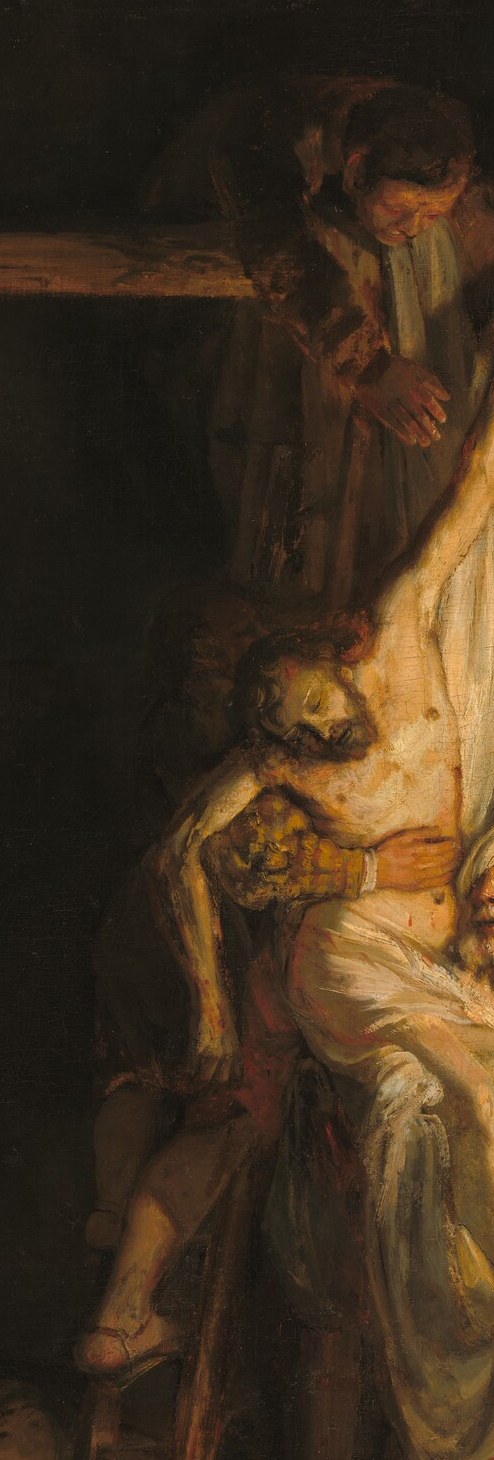
What to look at: the white burial shroud blazes out of near-total darkness. That is textbook Rembrandt composition, a single luminous anchor that organises the whole scene. The old man below receiving the body has the most legible anguished face in the picture. And then there are the hands: a tangle of fingers gripping and cradling dead weight, the tenderness of the touch doing the painting's real emotional work.
The history is a workshop story. Rembrandt almost certainly conceived the composition and may have sketched it directly onto the canvas, but the finish lacks his unmistakable brushwork. When that became clear to mid-century scholars, the painting lost its attribution, and most of its market value. A Rembrandt versus a workshop piece is the difference between a headline auction and a quiet museum wall. The paint did not change. Only what we believed about who held the brush.
There is something strange about a market that values touch over image. The shroud still glows. The hands still cradle. Nothing in the painting itself became less beautiful the day the name changed.
#arthistory #rembrandt #dutchgoldenage
Details

Transcript
This painting was sold as a Rembrandt in the 1920s. The buyer paid a fortune for the master's touch. Look at the white shroud. It pulls every eye to the body. That single blazing cloth is pure Rembrandt composition. Now look at the old man's face as he receives the dead weight. The tenderness here is the argument. The hands do the work. But experts found the brushwork was not Rembrandt's.