Execution of Hunter and Hounds by Paulus Potter
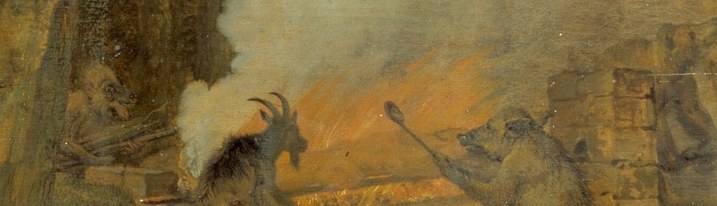
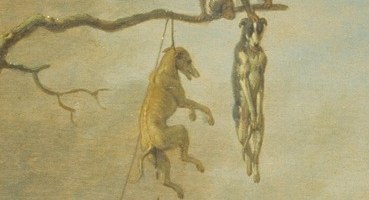
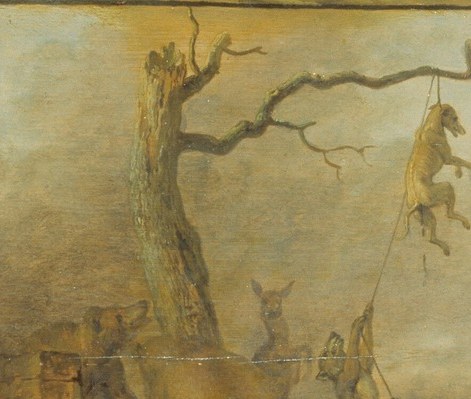
Paulus Potter, known for his serene animal portraits, painted a stark contrast in "Execution of Hunter and Hounds" around 1650. This painting, now in the State Hermitage Museum, depicts a chaotic scene of fire and animal rebellion, a departure from his usual tranquil farm animals.
While the fire rages and animals are in distress, a crucial detail on the ground reveals the human element: a discarded rifle. This small detail transforms the narrative, suggesting that the animals are not merely victims of a natural disaster, but active participants in a revolt against their human tormentors.
Potter, a Dutch Golden Age painter, specialized in landscapes featuring animals, often from a low perspective. Despite his short life (he died at 28), he produced a remarkable body of work. This particular painting showcases his versatility and willingness to explore dramatic, allegorical themes within his specialized genre.
What do you think happened to the hunter?
Details
Transcript
This painter was famous for peaceful farm animals. But this landscape shows chaos, fire, and distress. Animals flee, or stand defiant against the flames. Look closely for what started this calamity. On the ground, a discarded rifle, ending a hunt. This turns the entire scene into an animal rebellion.