A Young Woman and Her Little Boy by Bronzino, Agnolo
Bronzino's "A Young Woman and Her Little Boy," painted around 1540 and now housed in a private collection, offers a fascinating glimpse into the formal presentation of wealth during the Florentine Renaissance.
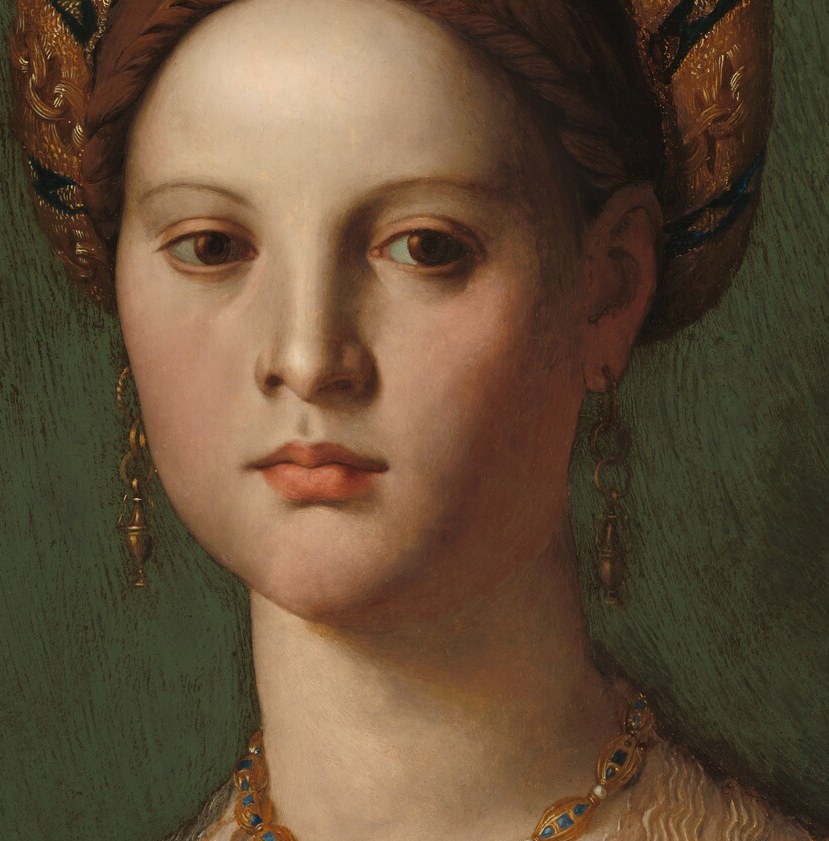
The painting meticulously details the sitters' attire. Observe the intricate gold and jewel-toned headdress worn by the woman, a clear indicator of her social status. Her voluminous red dress, likely dyed with expensive cochineal, showcases the era's luxurious fashion and the artist's skill in rendering fabric textures.
Agnolo Bronzino, known for his precise approach to portraiture, captures the subjects with a smooth, refined style typical of the High Renaissance. Every detail, from the woman's delicate lace collar to the child's ruffled garment, emphasizes their family's affluence and their desire to project it through their commissioned image.
This portrait served not just as a likeness, but as a public statement of prosperity and position. What details in their clothing do you find most striking?
Details
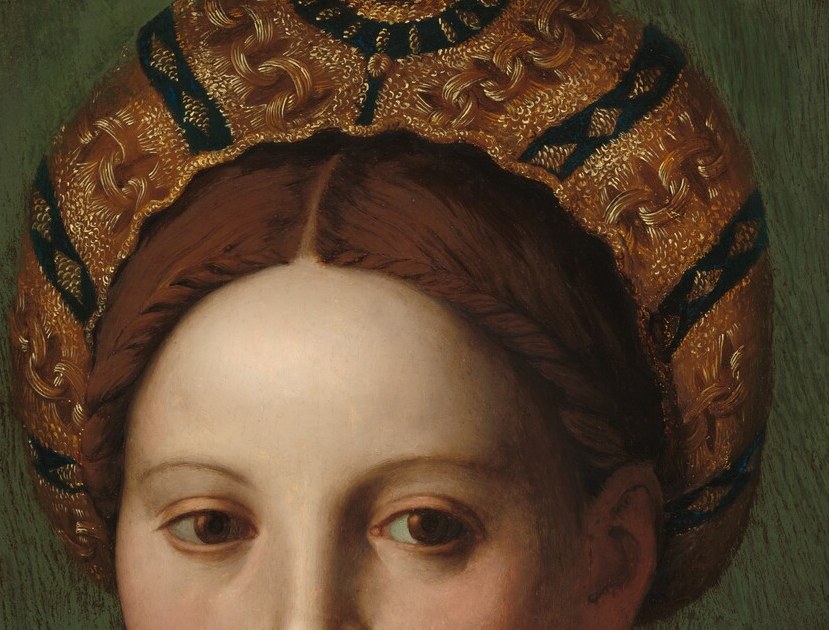
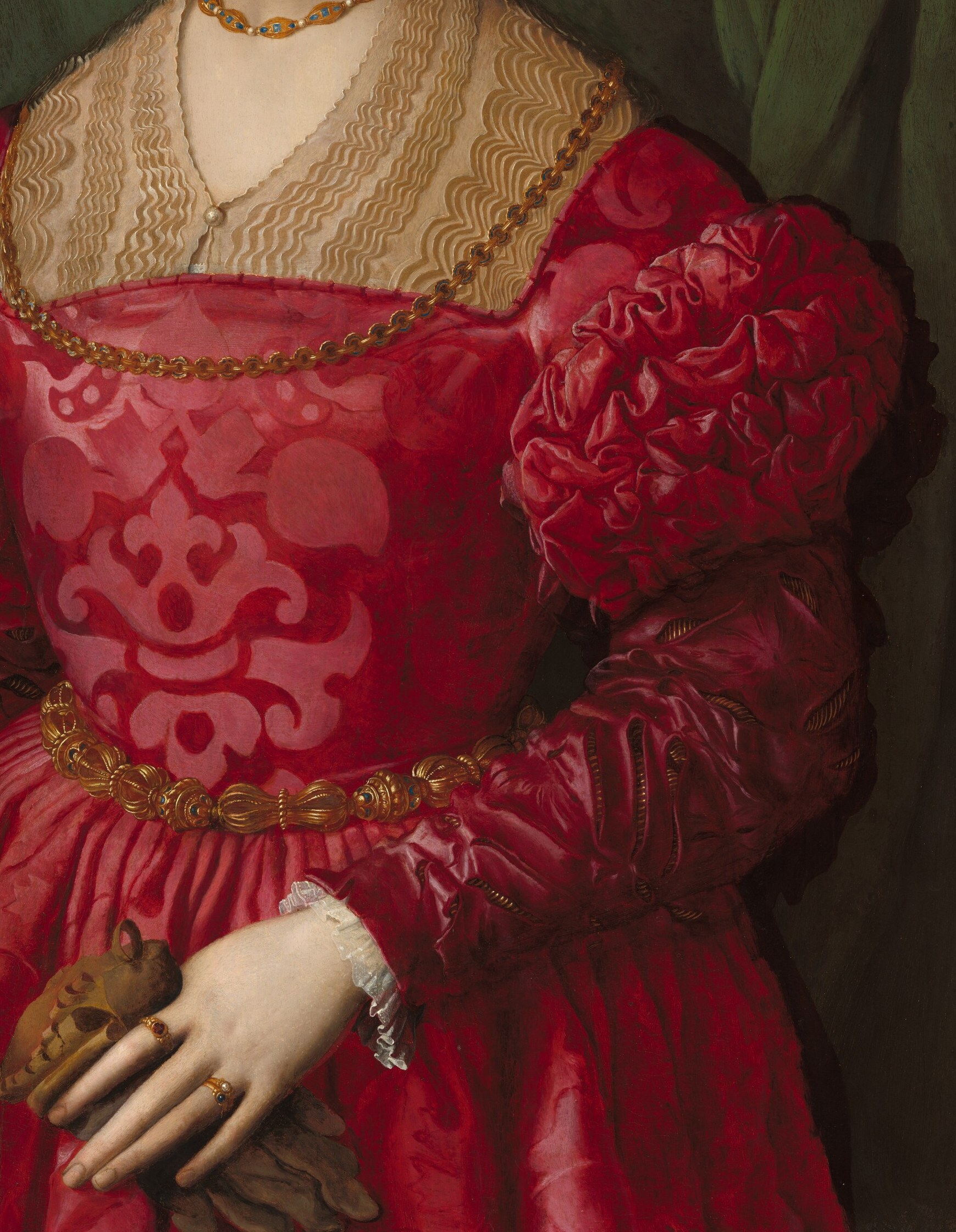
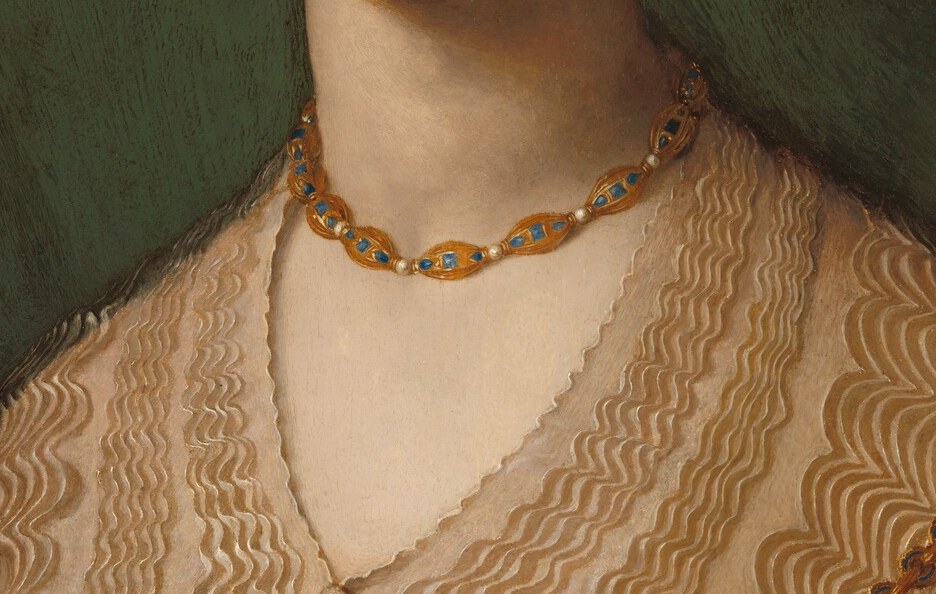
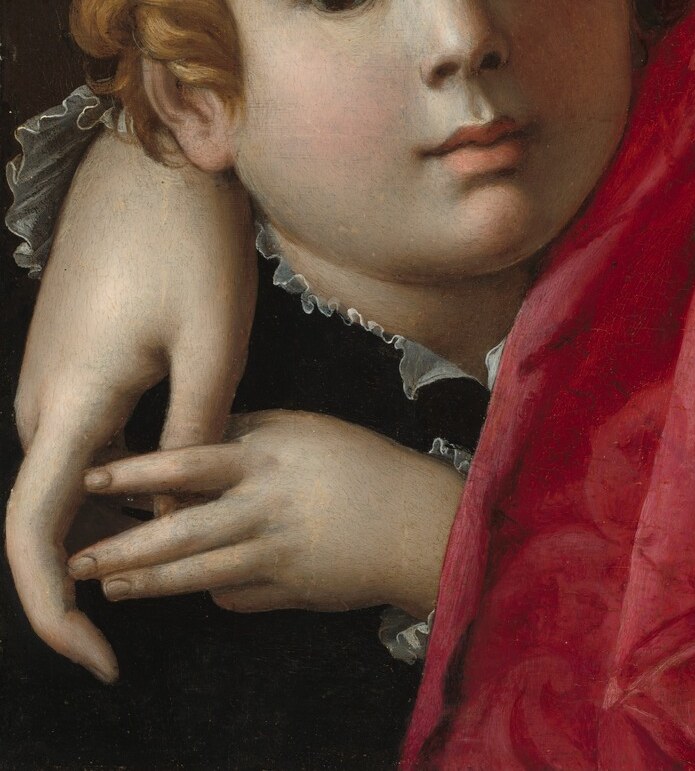
Transcript
In 1540s Florence, portraits showed wealth and status. This woman's elaborate headdress signals her high standing. Her vibrant red dress was a luxury, dyed with costly pigments. Notice her intricate lace collar, a sign of meticulous craftsmanship. Even her son's simple garment has a fine ruffled collar. Their formal poses and rich attire were meant to impress.