Héroïsme des marins du vaisseau Le Vengeur commandés par le capitaine Renaudin by Nicolas-Antoine Taunay
Nicolas-Antoine Taunay's *Héroïsme des marins du vaisseau Le Vengeur commandés par le capitaine Renaudin*, painted in 1798, immortalizes a moment from the Glorious First of June naval battle. This oil painting, held at the Palace of Versailles, transformed a military defeat into a symbol of patriotic valor.
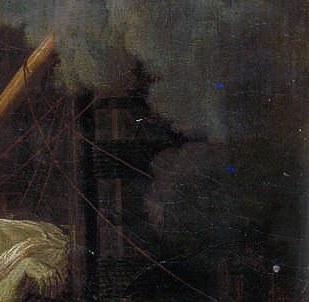
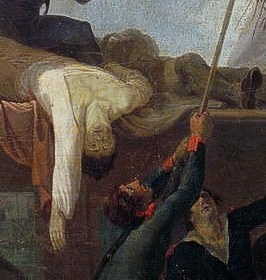
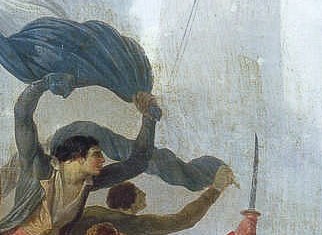
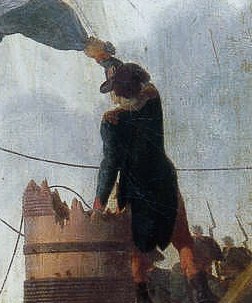
Look closely at the chaos and heroism: the dynamic movement of the French tricolor flag, the determined stance of the man with the sword, and the poignant figure of the falling sailor. Taunay's work uses dramatic chiaroscuro and vivid details to capture the intensity of naval combat.
The painting was created shortly after the French Revolutionary Wars to commemorate the Vengeur du Peuple, a ship that famously sank after a fierce fight. Its acquisition for the royal collection reflects a broader state-sponsored effort to document and celebrate French victories and sacrifices through art.
Even in defeat, there can be heroism. How does art shape our understanding of history?
Details
Transcript
This battle scene shows a French ship, Le Vengeur, in 1794. The French lost this battle, but celebrated the ship's sacrifice. The painting shows heroic defiance in the face of defeat. A sailor falls, embodying the ultimate cost of battle. It was commissioned to celebrate French naval heroism. This painting still hangs in the Palace of Versailles.