The Martyrdom of Saint Catherine by Antwerp 16th Century
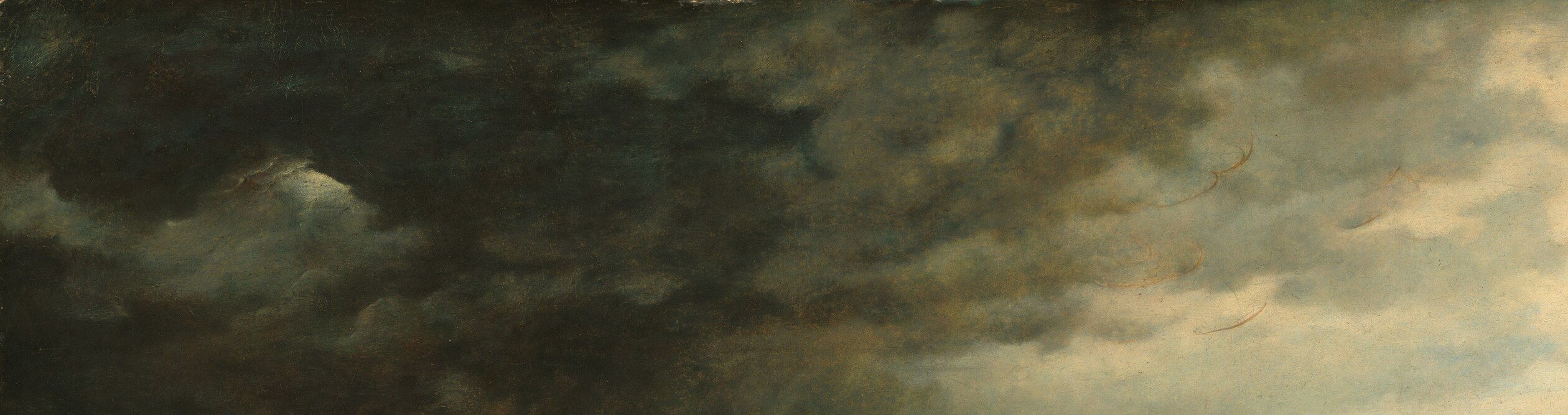
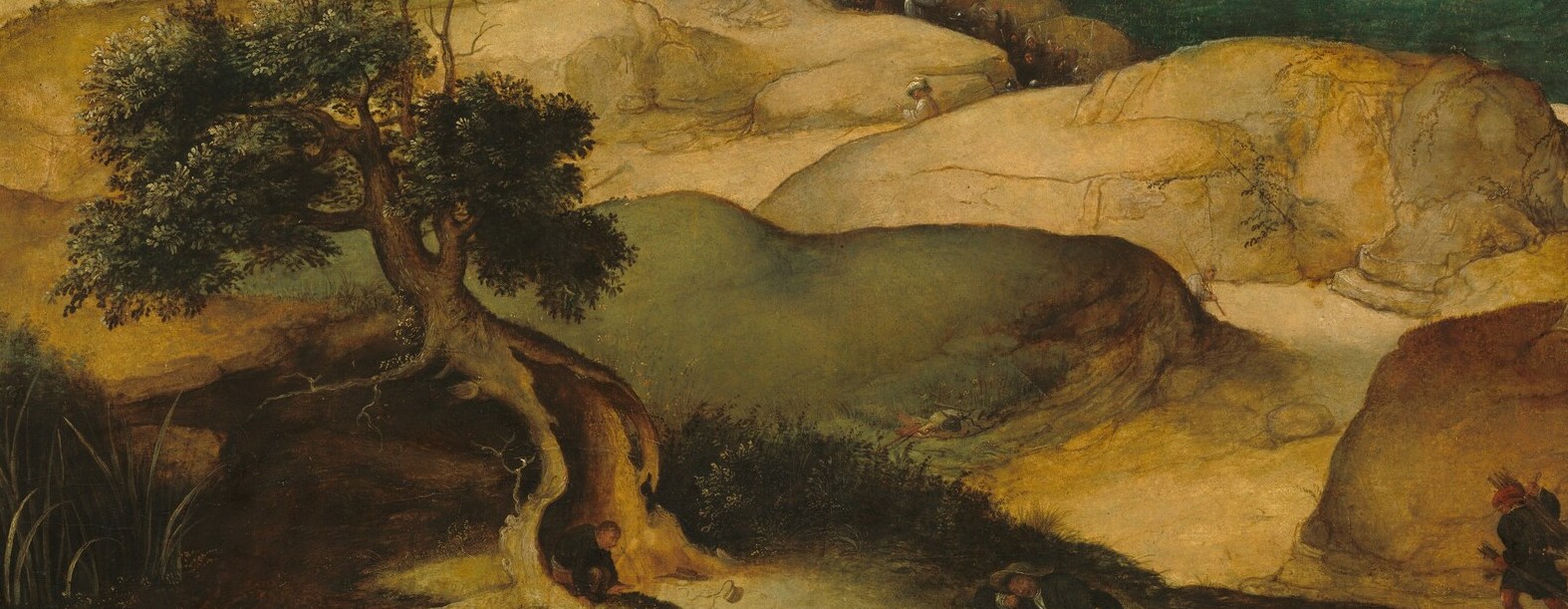
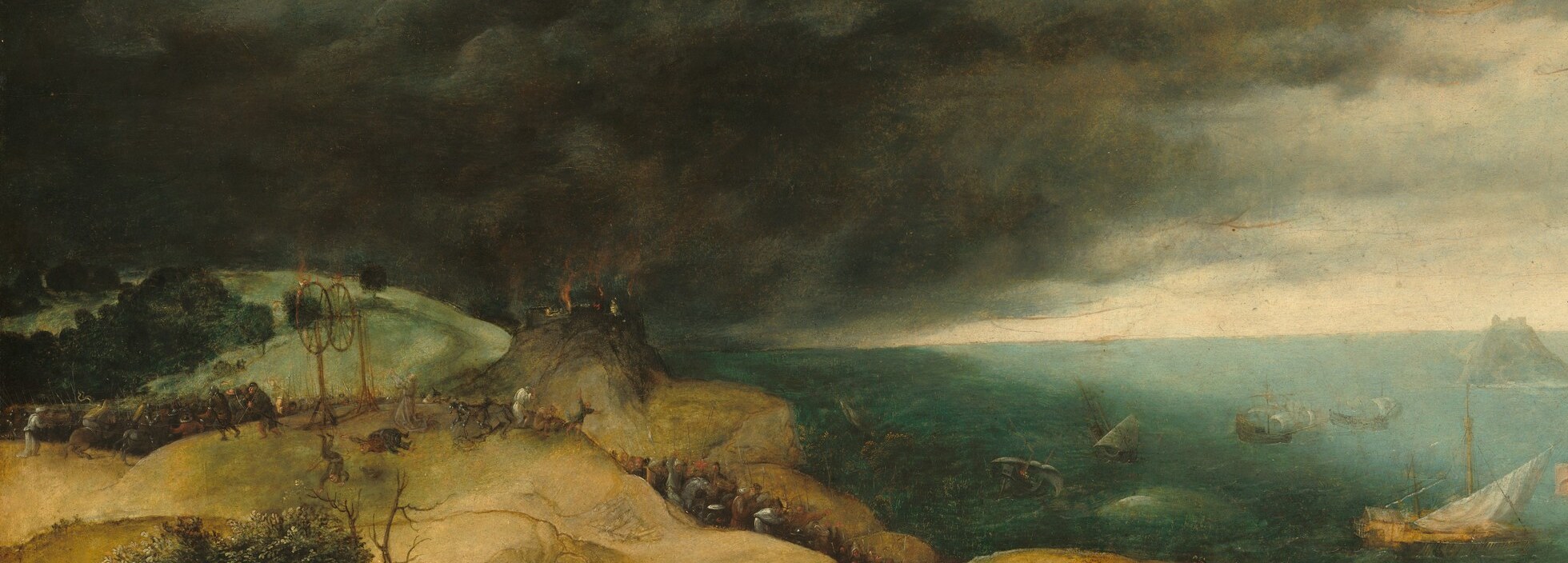
This is The Martyrdom of Saint Catherine, painted around 1540 by an unknown artist in the Antwerp school. The convention at the time was to make the figures tiny and let the landscape carry the theological argument. The drama is not just in the broken wheel and the small cluster of executioners in the lower foreground; it is written across the sky. The painting wants you to read the weather.
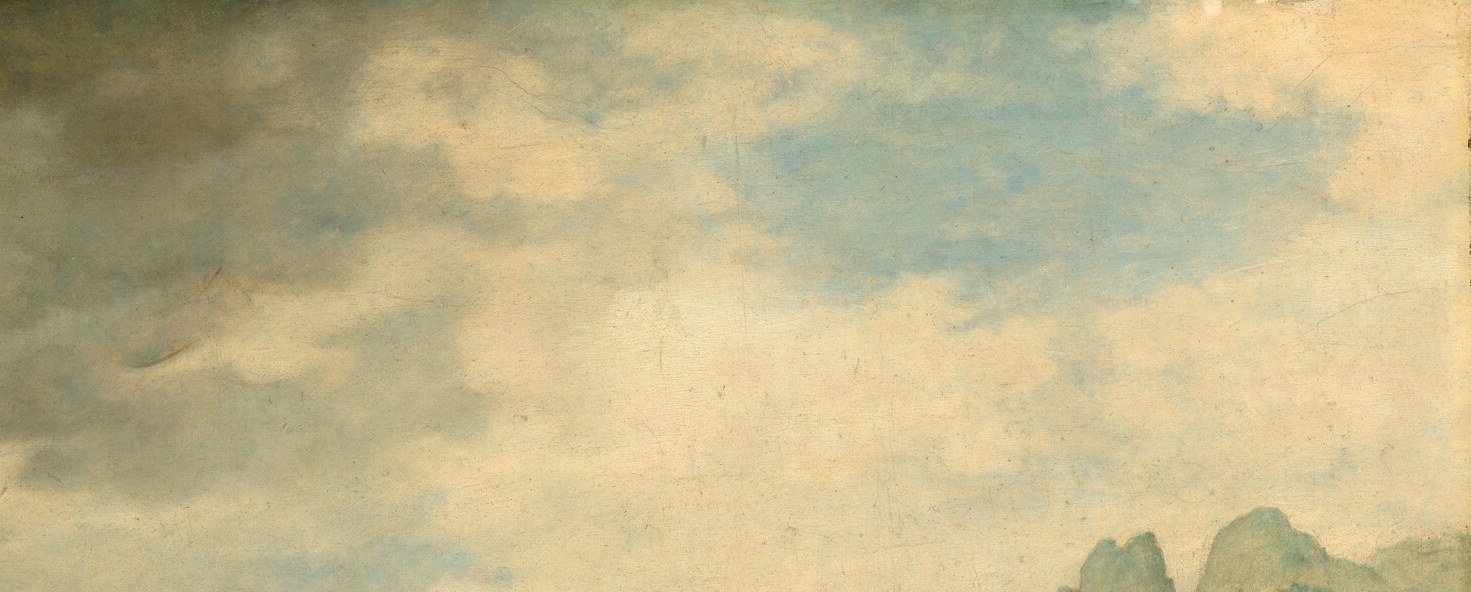
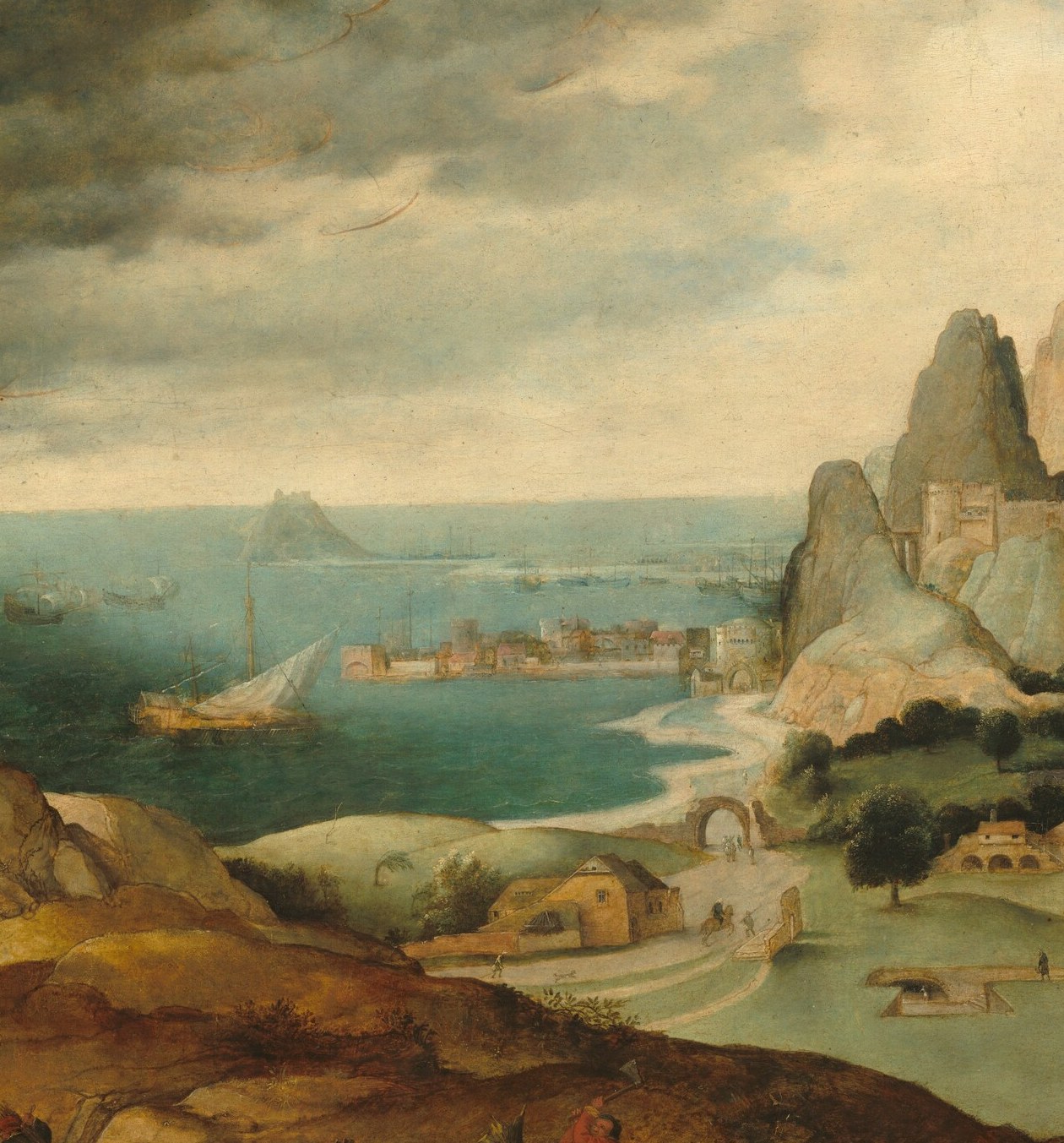
Move your eye from left to right. On one side, a mass of dark cloud pushes in, heavy and menacing, the visual language of divine judgment. On the other, a gap opens and light breaks through toward the place where Catherine kneels. The rocky spires at center-right do the same work vertically, pulling the eye upward past the violence into a suggestion of salvation. Even the broad blue inland sea in the middle distance functions as a calm counterpoint, an indifferent cosmos framing a human sacrifice.
The landscape panorama style came north from Italianate influences and passed through workshops like Joachim Patinir's. Here it becomes a decoder ring. The storm is not weather. The light is not accidental. The distant settlement, likely a cipher for Alexandria, anchors the geography, but the real setting is a spiritual argument made visible. Every rock formation and cloud mass was placed to tell you that the body below is not the end of the story.
What landscape detail in this painting holds your attention longest?
Details
Transcript
They hid the main event in the foreground. Look at the sky. It is doing the real work. Storm clouds pile in from the left. Divine judgment pressing down. And from the right: a break. Light fights through. The light lands on Catherine's side of the painting. Those rock spires are not geography. They point to where she is going. The whole landscape argues: the broken body is not the end.