Roundel with the Baptism of Christ by http://www.wikidata.org/.well-known/genid/dbf79f105f096d9134566556f696419f
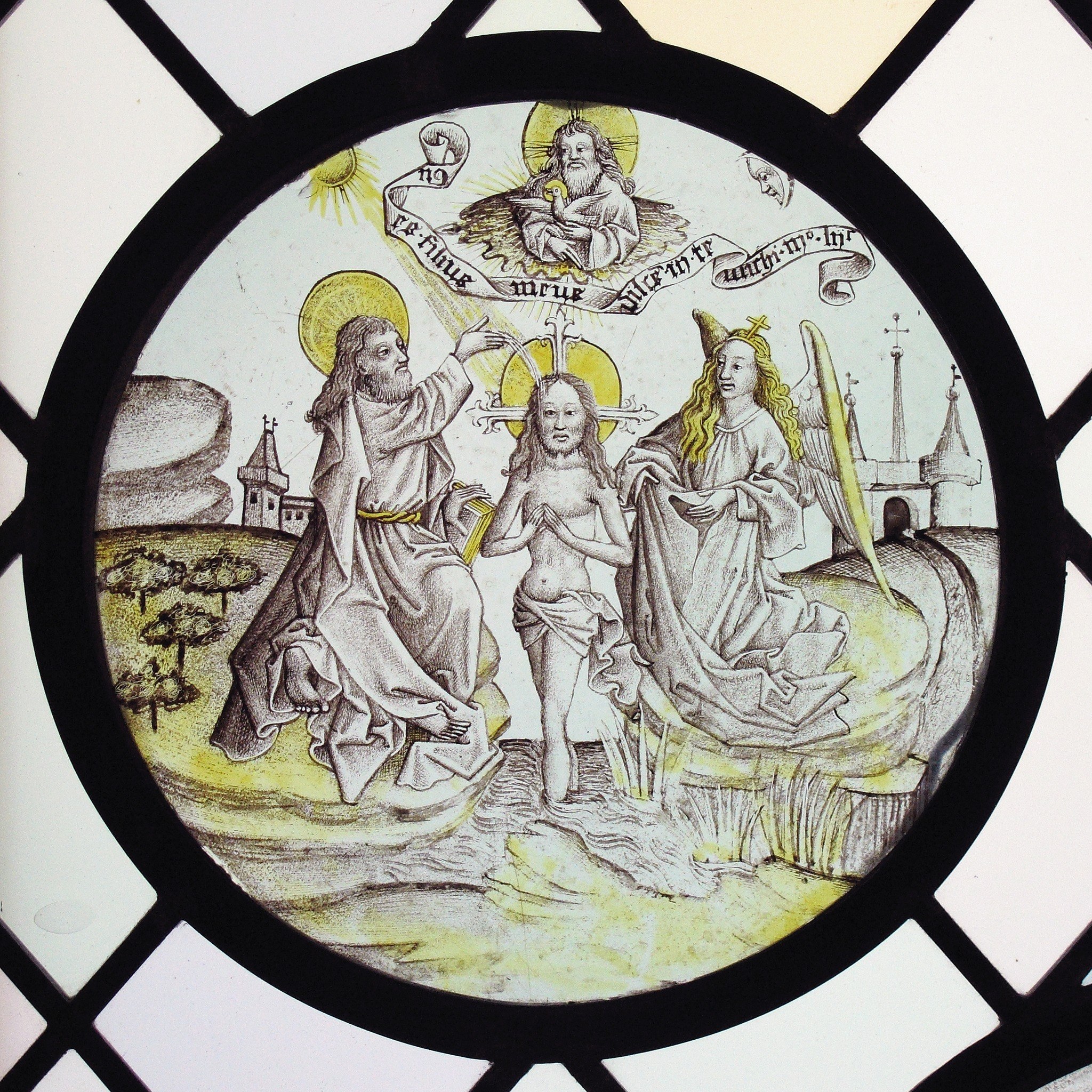
This is the Roundel with the Baptism of Christ, made around 1485 and attributed to an artist known as the Master of the Holy Blood. It is not an oil painting on panel: it is a stained-glass roundel, a luminous disc meant to be held up to a window or candlelight.
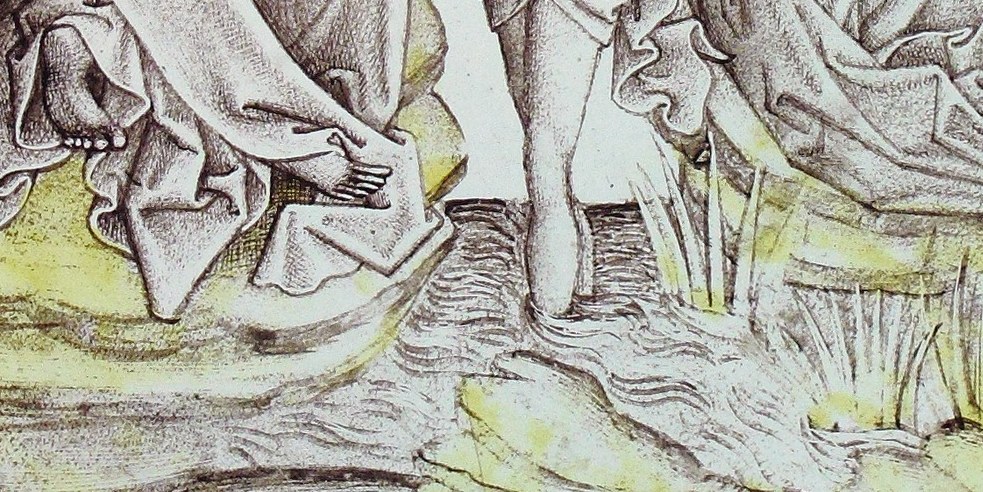
The black lead lines and diamond lozenges around the outside give it away on close inspection. This object was built for light. The transparent water around Christ's feet, the pale washes on his torso, and the gold of the halos would all have glowed when illuminated from behind.
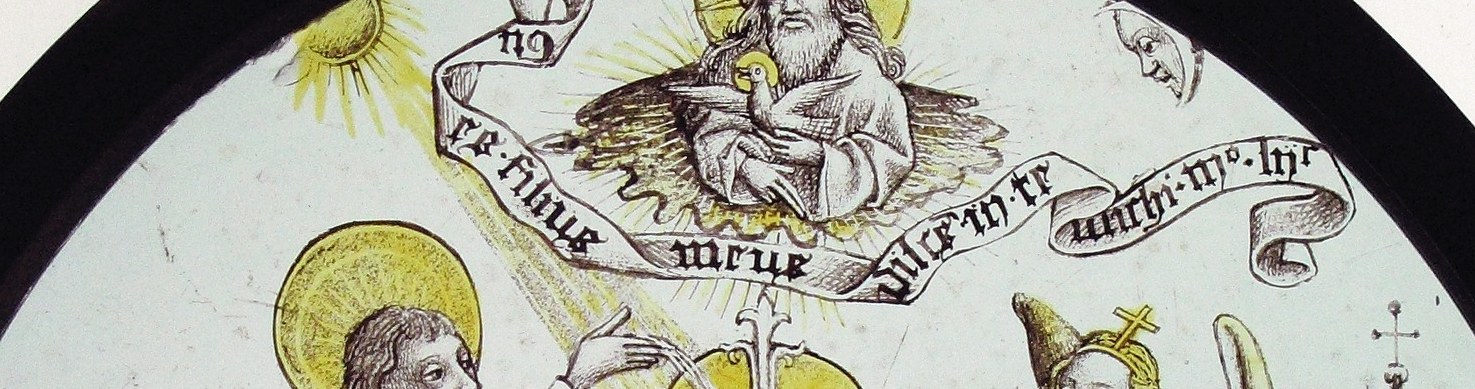
The iconography compresses the entire Trinity: God the Father enthroned above, the dove of the Holy Spirit descending, and Christ standing in the Jordan. A Latin scroll arcs across the scene declaring the words from heaven: "This is my beloved Son." Every figure points inward toward that humbling act, a man being washed in a river.
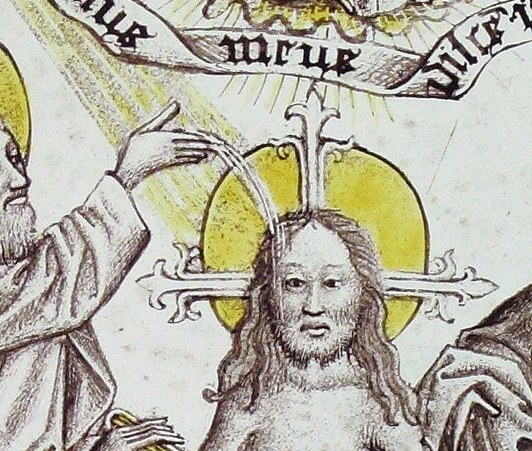
What strikes me most is Christ's face. In a small circle crowded with celestial figures, his expression is completely withdrawn. He looks down. He does not perform. For a brief moment, the divine is quiet.
Details
Transcript
This is not a panel painting. It is a stained-glass roundel, made in the 1480s. Light was meant to pass through this scene. Look at Christ's face. His eyes are downcast, not in sorrow, but in absolute humility. Above him, the scroll reads: This is my beloved Son. The artist gives us the whole Trinity in a space the size of a plate. And at the center, a man kneeling in a river, choosing to be small.