Mrs. Thomas Scott Jackson by Romney, George
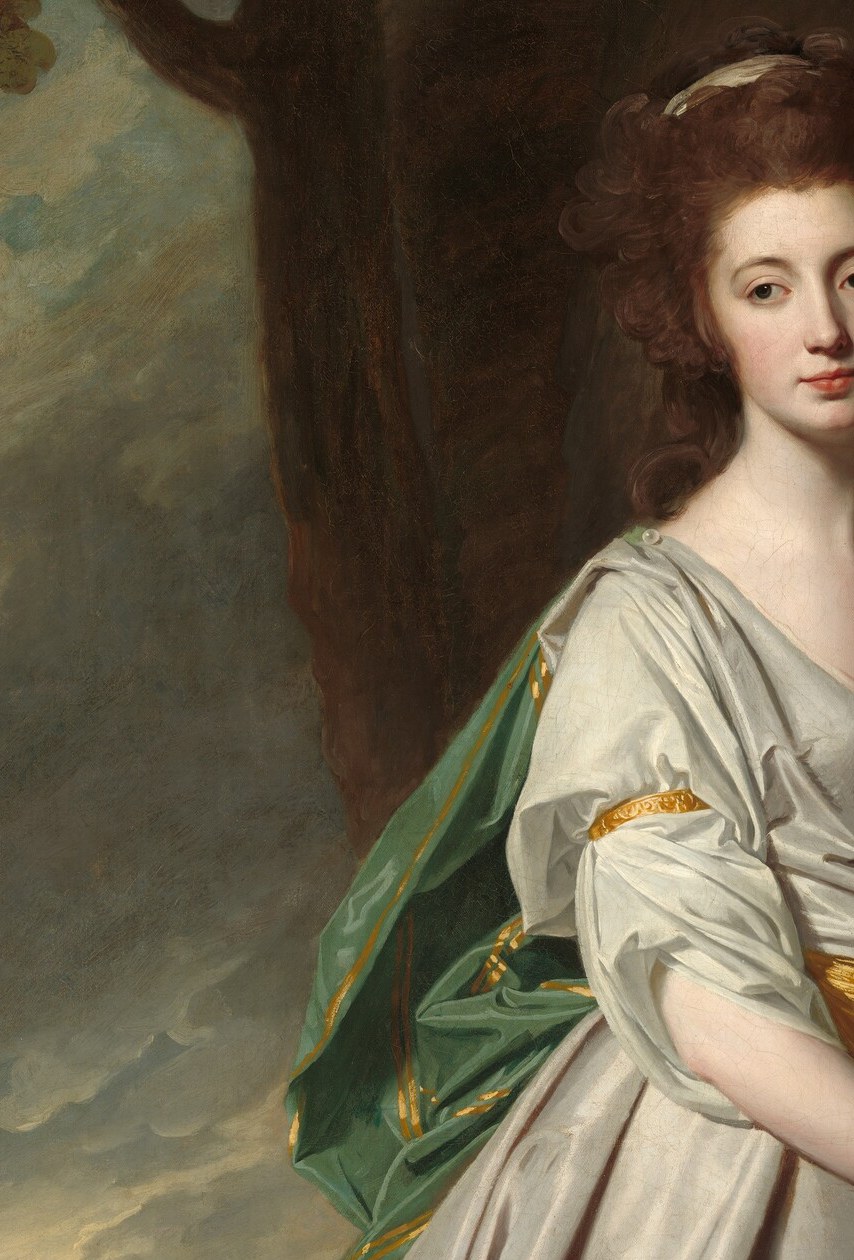
Mrs. Thomas Scott Jackson, painted by George Romney around 1772, hangs in the Yale Center for British Art. The sitter was Mary Keating, and her portrait is less a psychological study than a document of 1770s material culture.
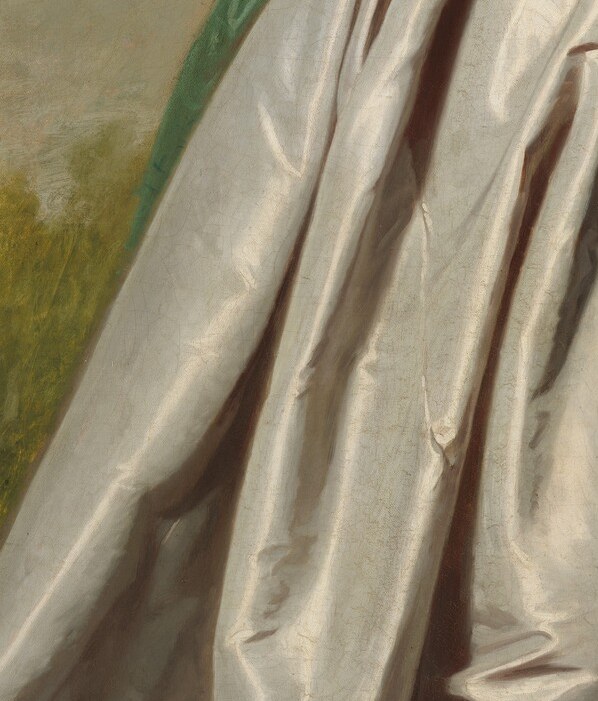
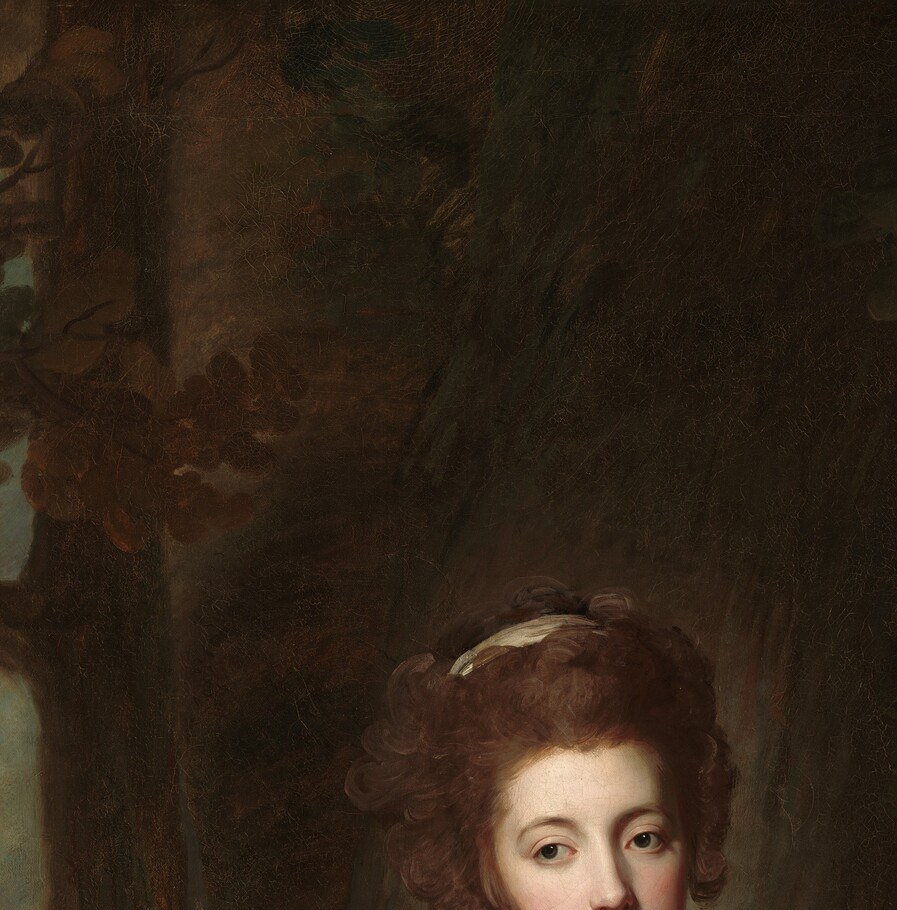
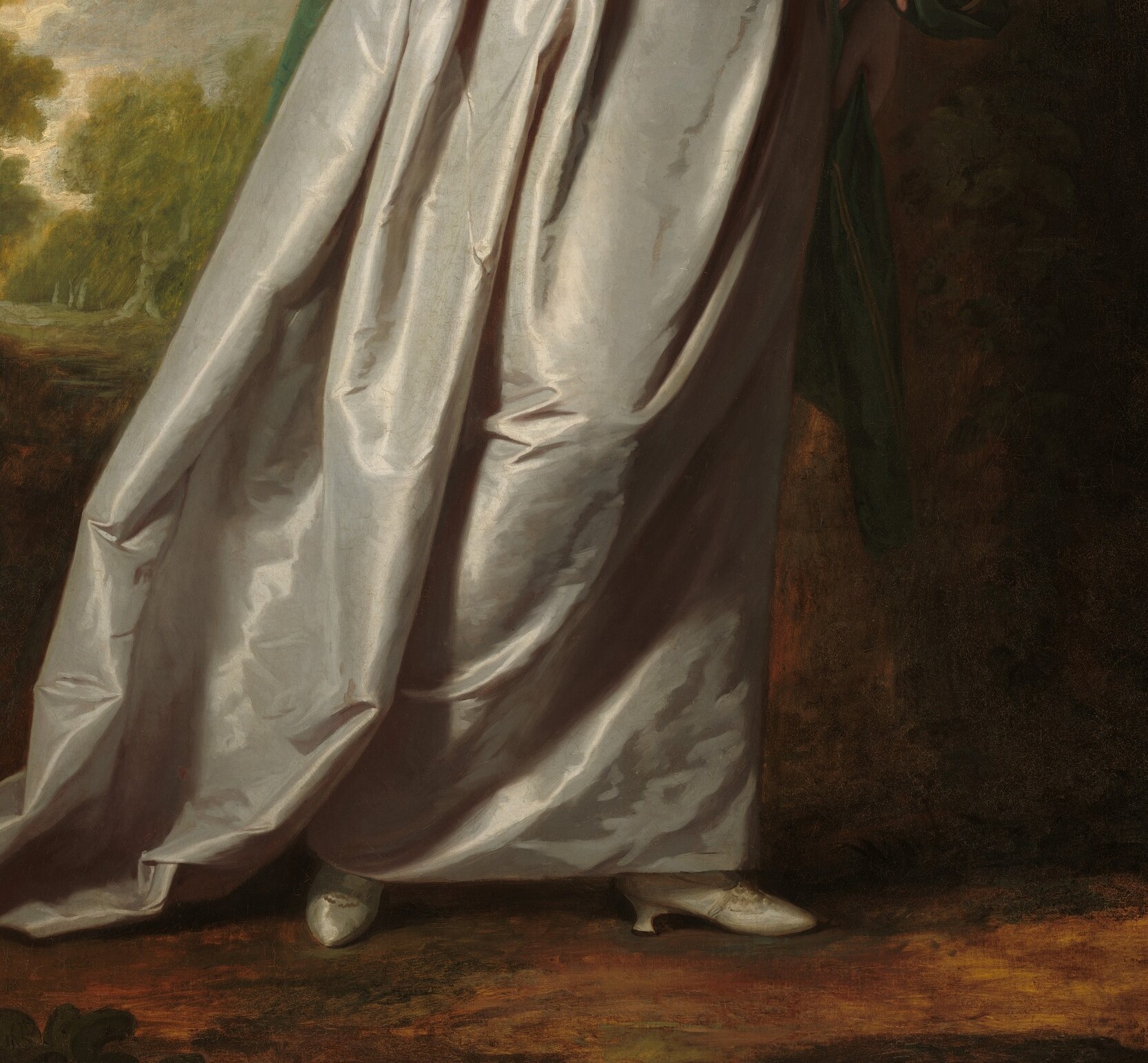
The details are precise enough to date the painting within just a few years. Her fashion says it all: the elaborately dressed, powdered hair and the vivid green silk wrap show a woman of means. The luminous white satin gown was the centerpiece of the commission, allowing Romney to show off his skill at rendering soft fabric and shadow without making the brushwork itself the star.
Romney was among the most successful portraitists in late-18th-century London, competing directly with Joshua Reynolds and Thomas Gainsborough. His reputation rested on a particular talent for graceful, relaxed hand placement and a bright, confident handling of drapery. The landscape backdrop is pure convention, a general signifier of landed gentry status rather than any specific English estate.
A small object rests in her right hand, too ambiguous to read at this resolution: an orange, a watch, or a decorative ball. Its uncertain identity is a mild reminder that portraits of this era were built from a small vocabulary of repeated props. What remains certain is the image Mary Keating wanted the world to see.
Details

Transcript
Around 1772, a woman sat for a portrait. Look at her hair. That shape and powder places her precisely in the early 1770s. The vivid green silk wrapped over her arm was the boldest color choice the painter made. Her left hand rests with a softness that was a George Romney signature. She was Mary Keating, painted as Mrs. Thomas Scott Jackson. Her white satin gown documents status, every fold a display of wealth and fashion. The landscape behind her is no real place. It is a fixture of gentry identity.