Going to Market by Constant Troyon
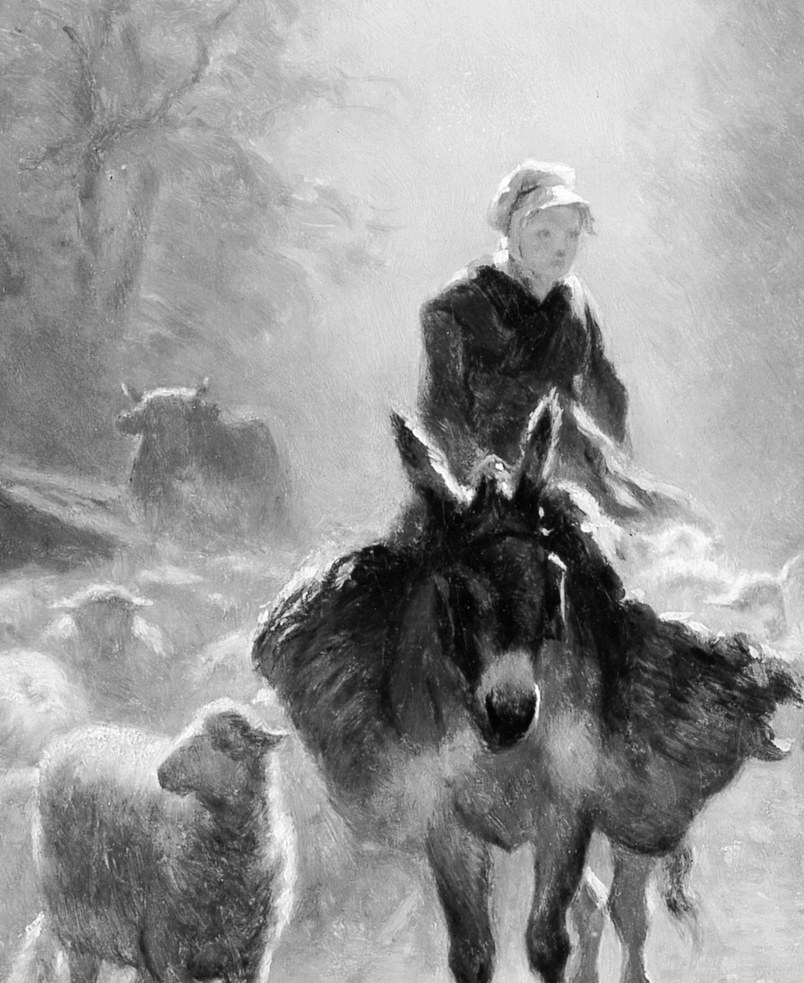
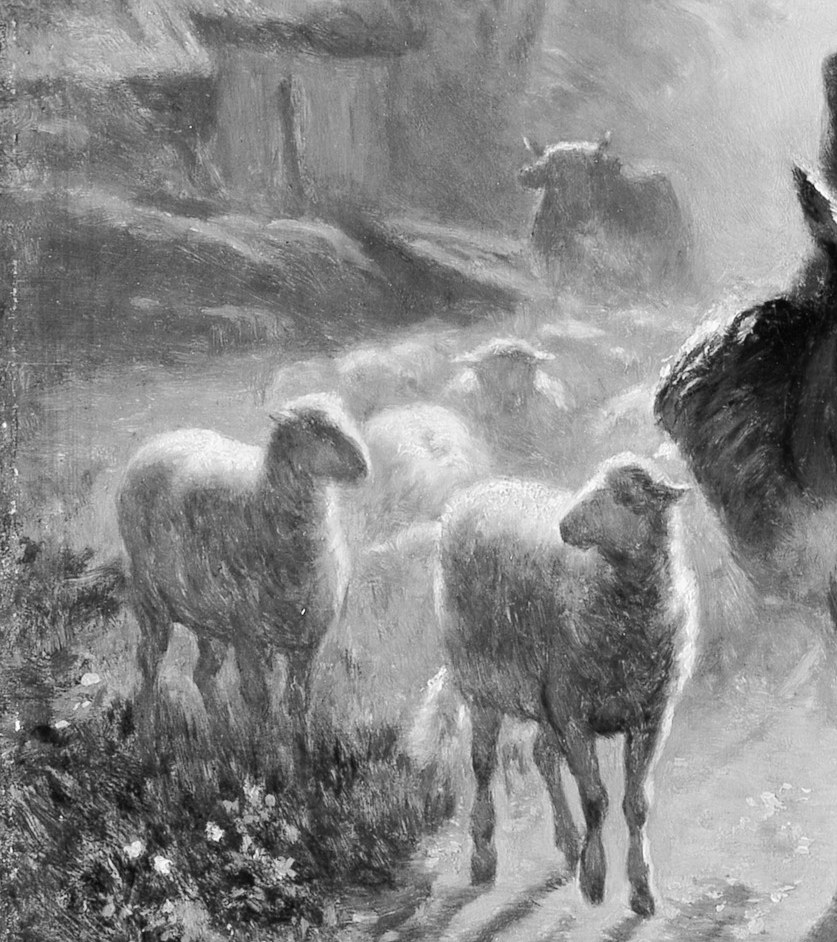
This is Constant Troyon's 'Going to Market,' painted in 1860 and now at The Metropolitan Museum of Art. It's a quiet scene of rural routine, a woman on a donkey, a flock of sheep, a small herding dog on a misty path. But its calm surface hides a turbulent 20th-century history.
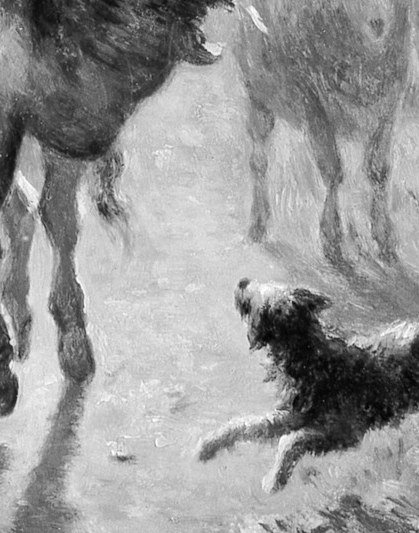
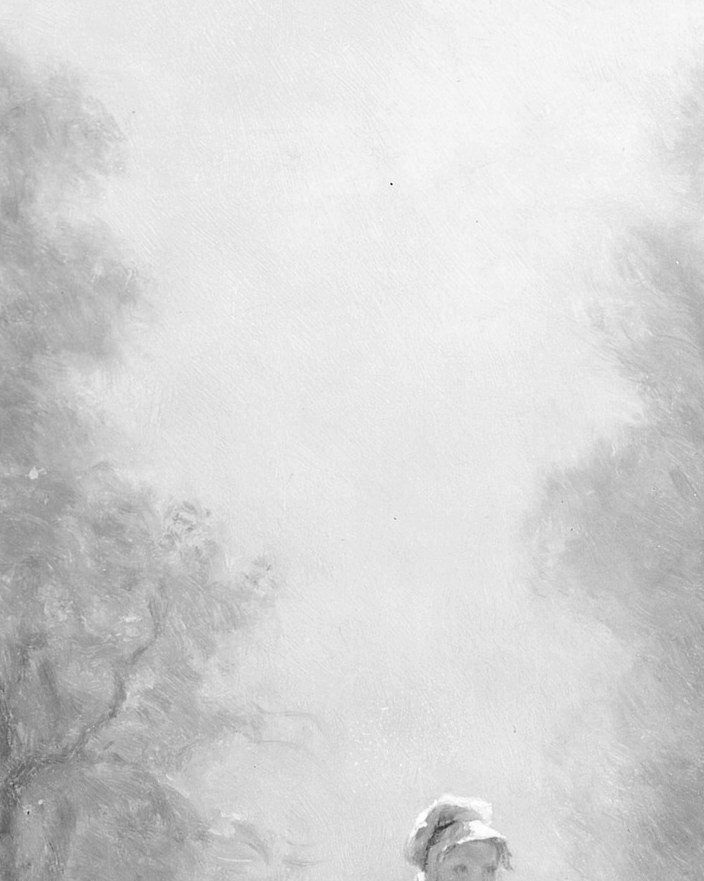
Look at the dog. It's the only figure in the painting that moves with urgency. The woman and the donkey are composed, unhurried. Troyon uses the dog's low, darting silhouette to make the whole procession feel organized by an invisible force. The woman's white bonnet is the brightest point in the composition, pulling your eye and marking her as the still center of this animal drive.
The painting belonged to a German psychiatric patient named Max Emden, a Jewish collector who fled the Nazis for Switzerland. His Hamburg home was looted, and the painting disappeared. An American serviceman acquired it in Germany after the war and brought it home. His children later donated it to the Met in good faith, unaware of its past.
In 2009, the Met reached a quiet agreement with Emden's estate to transfer the painting. The soldier who carried it out of Germany struggled for years with what he'd seen. The painting is still. Its story is not.
Details

Transcript
This painting was stolen from a mental patient. In 2009, the Met agreed to return it to his estate. Now look at the dog. The only urgent thing here. The woman shares the donkey's patience, not the dog's speed. Her face is the still center of a driven flock. The Nazis took it. An American soldier brought it home. His family donated it to the Met in good faith, decades later. The man who carried it out of Germany never fully recovered.