The Trapper's Cabin by Stanley, John Mix
John Mix Stanley's 1858 painting, "The Trapper's Cabin," offers a vivid glimpse into the demanding life of frontier trappers. While the immediate scene focuses on the men, their dog, and their game, a crucial detail on the cabin wall reveals the true economic purpose behind their rugged existence.
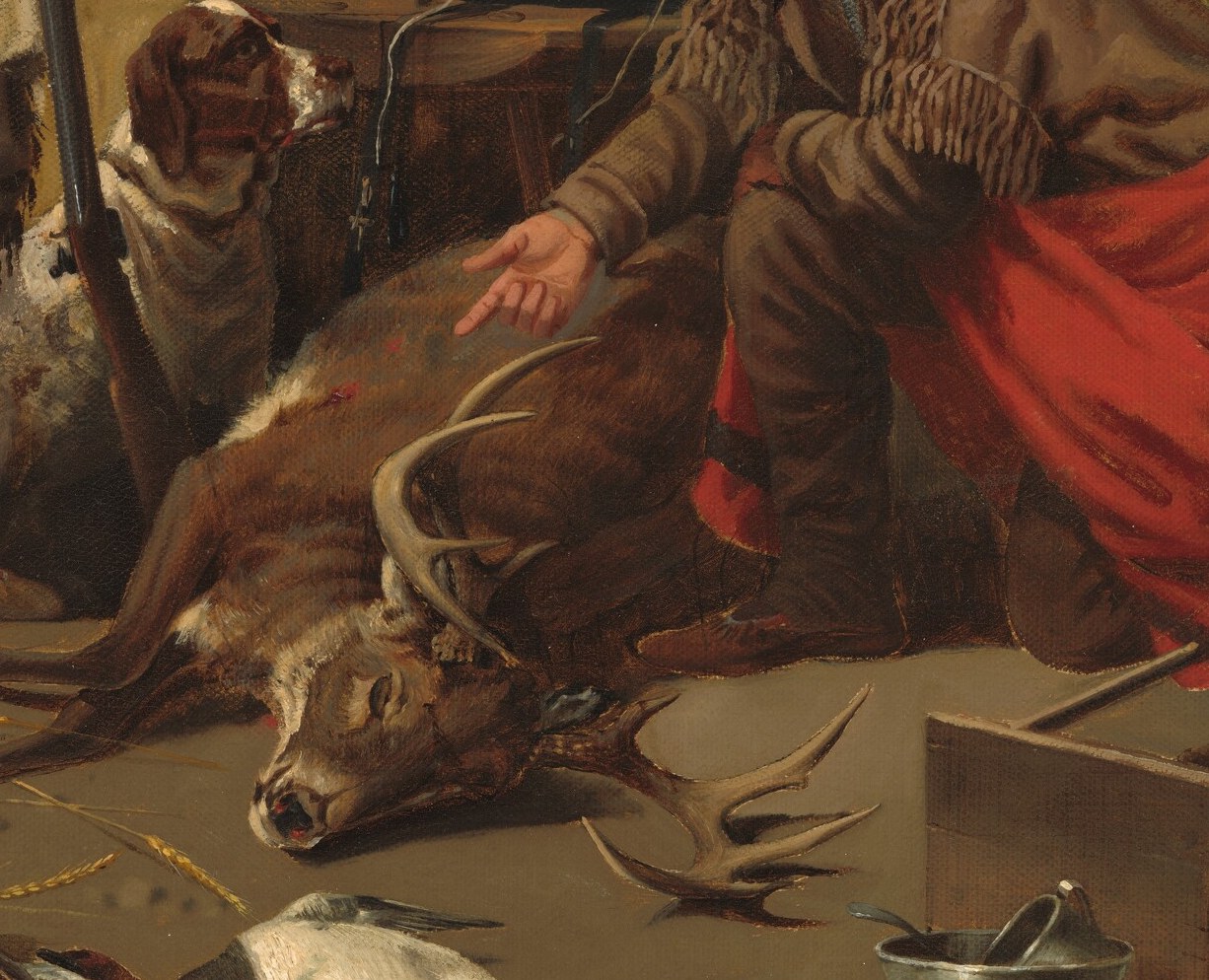
The painting shows two trappers surrounded by the spoils and tools of their trade. One man stands with a confident, weathered face, while the other sits, interacting with their alert dog. Look closely at the foreground for the dead deer and ducks, symbols of a successful hunt. These details immerse us in the daily realities of their world.
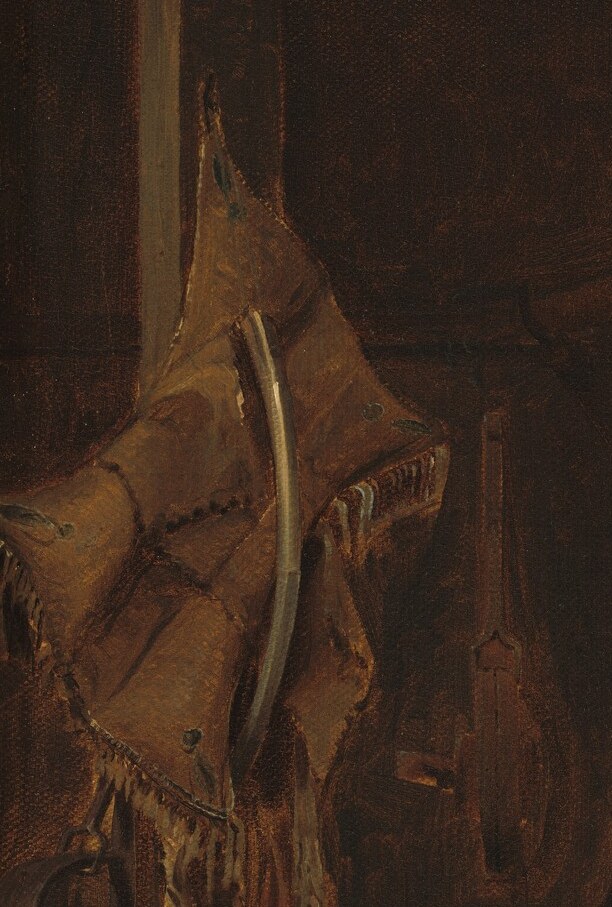
Yet, it's the animal furs hanging on the wall that truly tell the story. These aren't just decorative elements; they represent the trappers' livelihood, their currency on the American frontier. Stanley, an American artist (1814-1872), specialized in depicting Native American life and the American West, capturing the authentic experiences of ordinary people during the mid-19th century.
"The Trapper's Cabin" is more than a simple genre scene; it's a window into the self-reliance and resourcefulness required for survival and prosperity in the wilderness. What other hidden stories do you think this cabin holds?
Details
Transcript
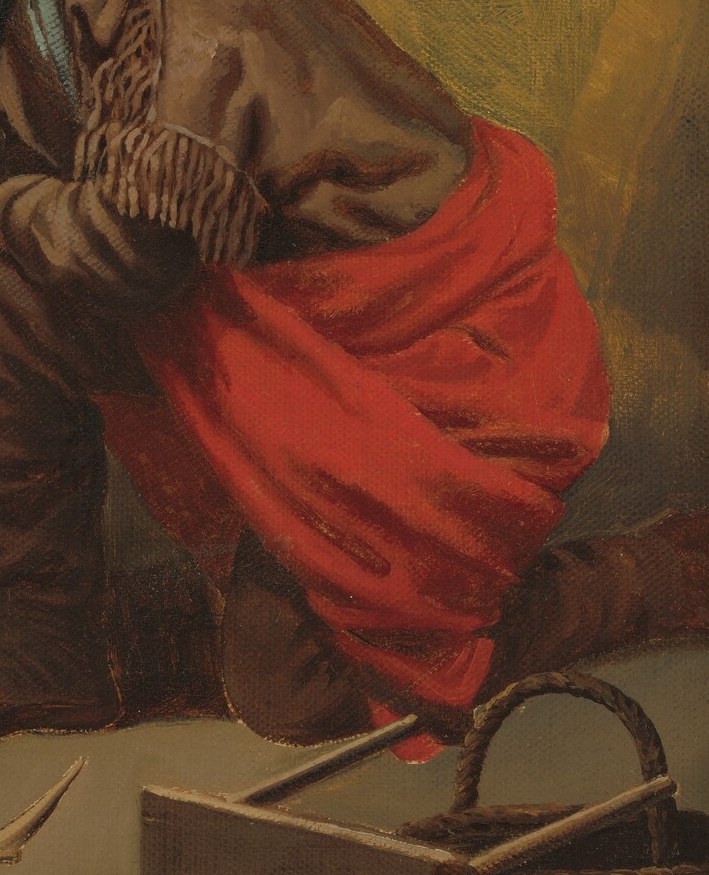
This 1858 painting shows life in a trapper's cabin. Two men, their dog, and hunting trophies fill the space. Notice the proud standing figure, dressed for the wilderness. Their success is clear from the pile of ducks and the deer. But the real purpose of their work hangs on the wall. These are the furs they would trade, their hard-won wealth.