明 佚名 吳鎮(僞款) 枯木竹石圖 卷|Bamboos by After Wu Zhen
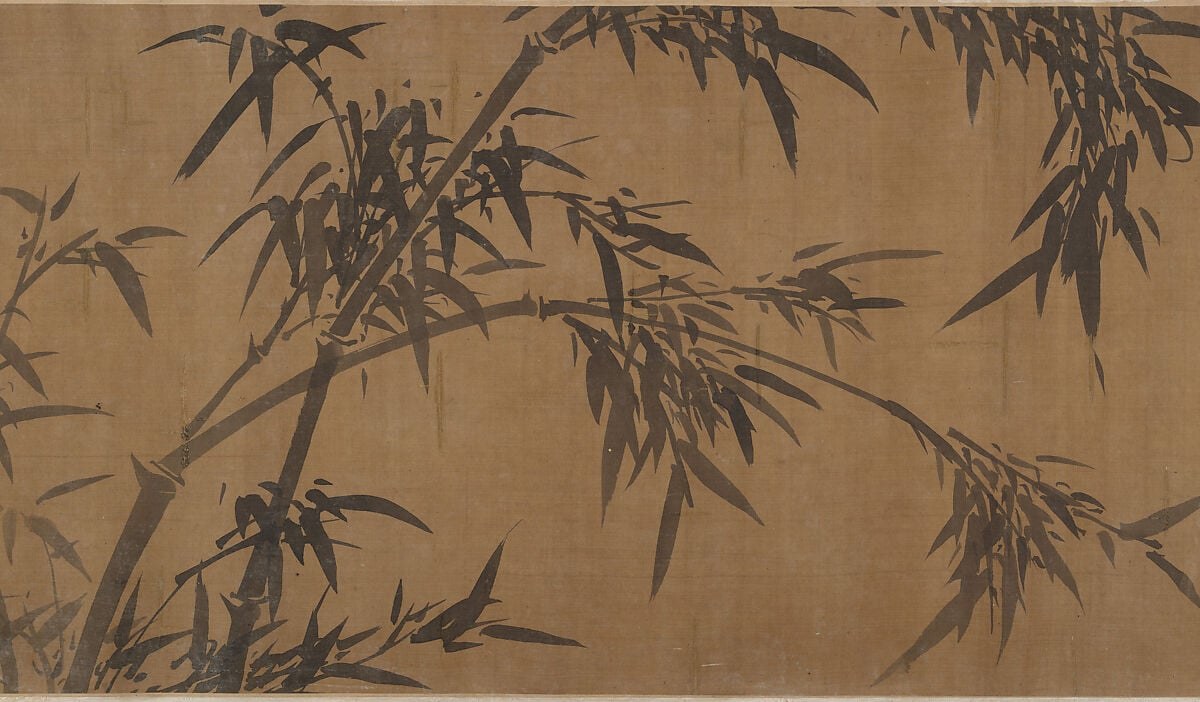
This handscroll, titled Bamboos, is an ink on silk painting from the Ming Dynasty, dated 1506, now held at The Metropolitan Museum of Art. It features a serene landscape composition, attributed to an anonymous artist working "After Wu Zhen."
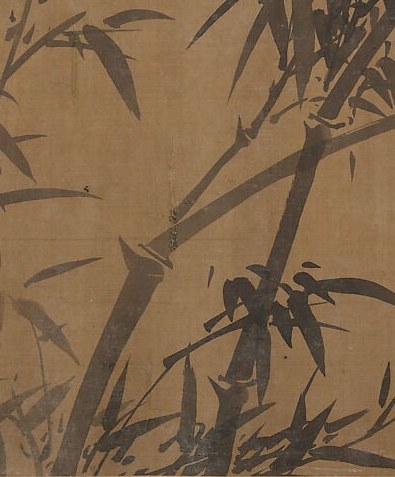
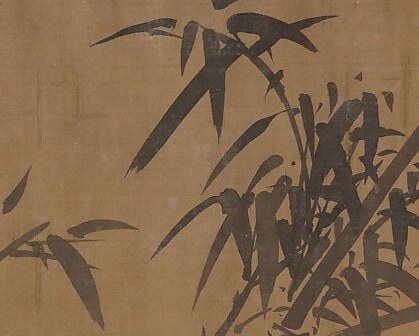
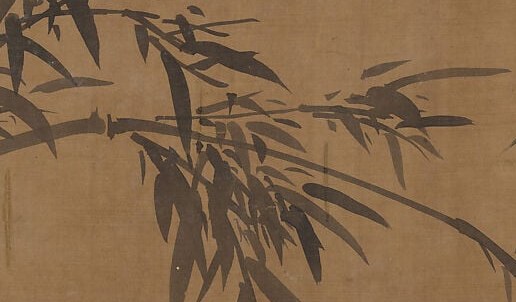
Take a close look at how the artist uses varied ink tones and brushwork to create incredible depth and movement. From the subtle ink wash that suggests an expansive sky to the individual bamboo stalks, every stroke builds a vivid natural scene.
The painting shows a sparse natural scene, dominated by bamboo and a few gnarled, dry trees. This minimalist aesthetic, typical of scholarly painting traditions, invites a contemplative viewing experience. The deliberate emptiness in the upper portion enhances the feeling of tranquility and vastness.
The work carries a spurious signature attributing it to Wu Zhen, a prominent painter of the Yuan dynasty. Such imitations were common, reflecting an admiration for earlier masters. What details do you find most striking?
Details
Transcript
This painting from 1506 is ink on silk. Observe how the artist creates depth with varied ink washes. Notice the thick, almost dry brushstrokes on this stalk. They give the bamboo a textured, ancient feeling. Now see the fine, energetic lines of the leaves. The artist makes them seem to sway in the wind.