The Ferryman by Jean Baptiste Camille Corot
Jean-Baptiste Camille Corot's *The Ferryman* (1865) at The Metropolitan Museum of Art is a quiet masterpiece. It exemplifies Corot's synthesis of classical tradition and emergent Impressionist sensibilities. The painting invites contemplation on passage and the artist's keen observation.
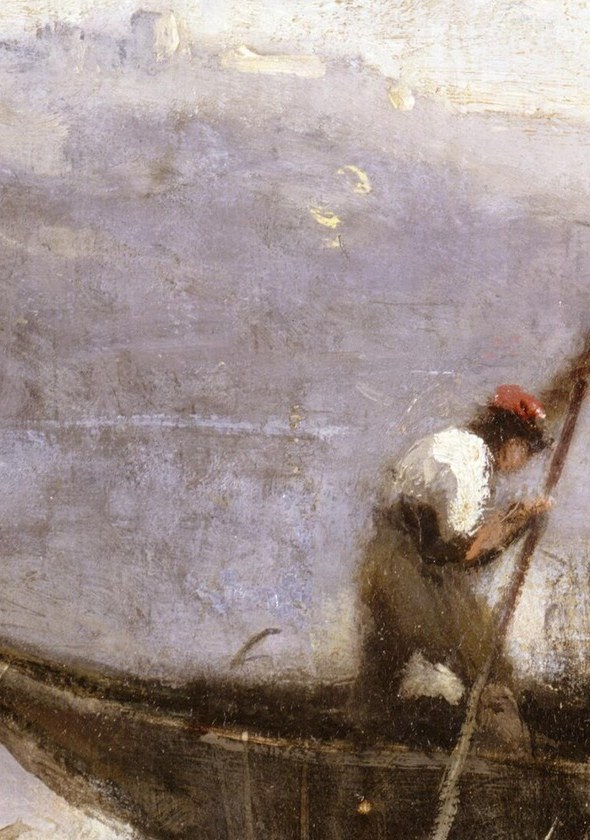
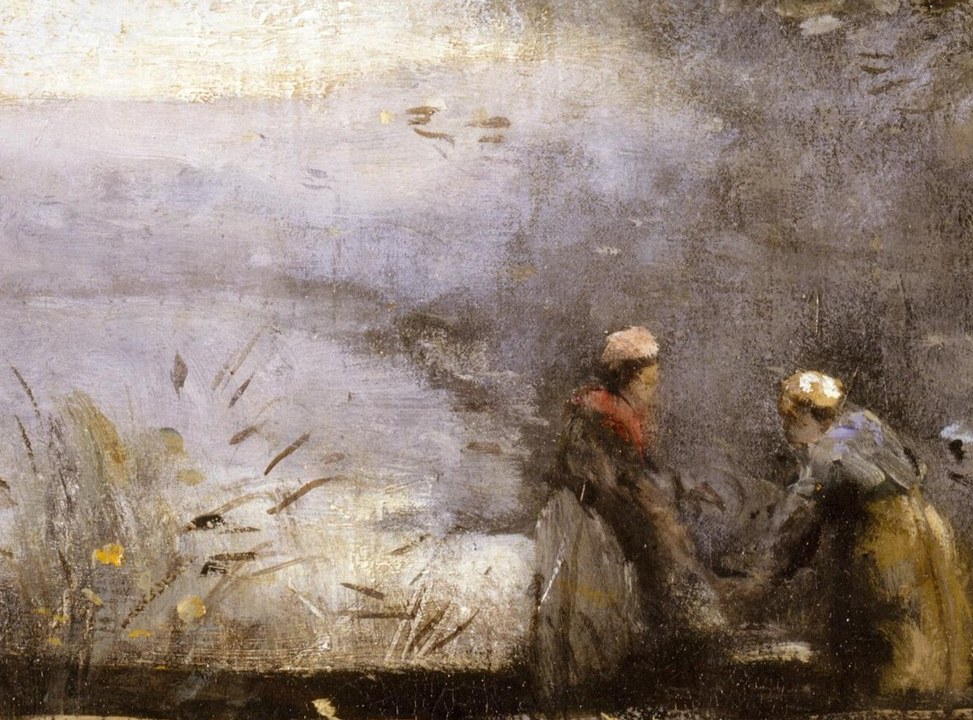
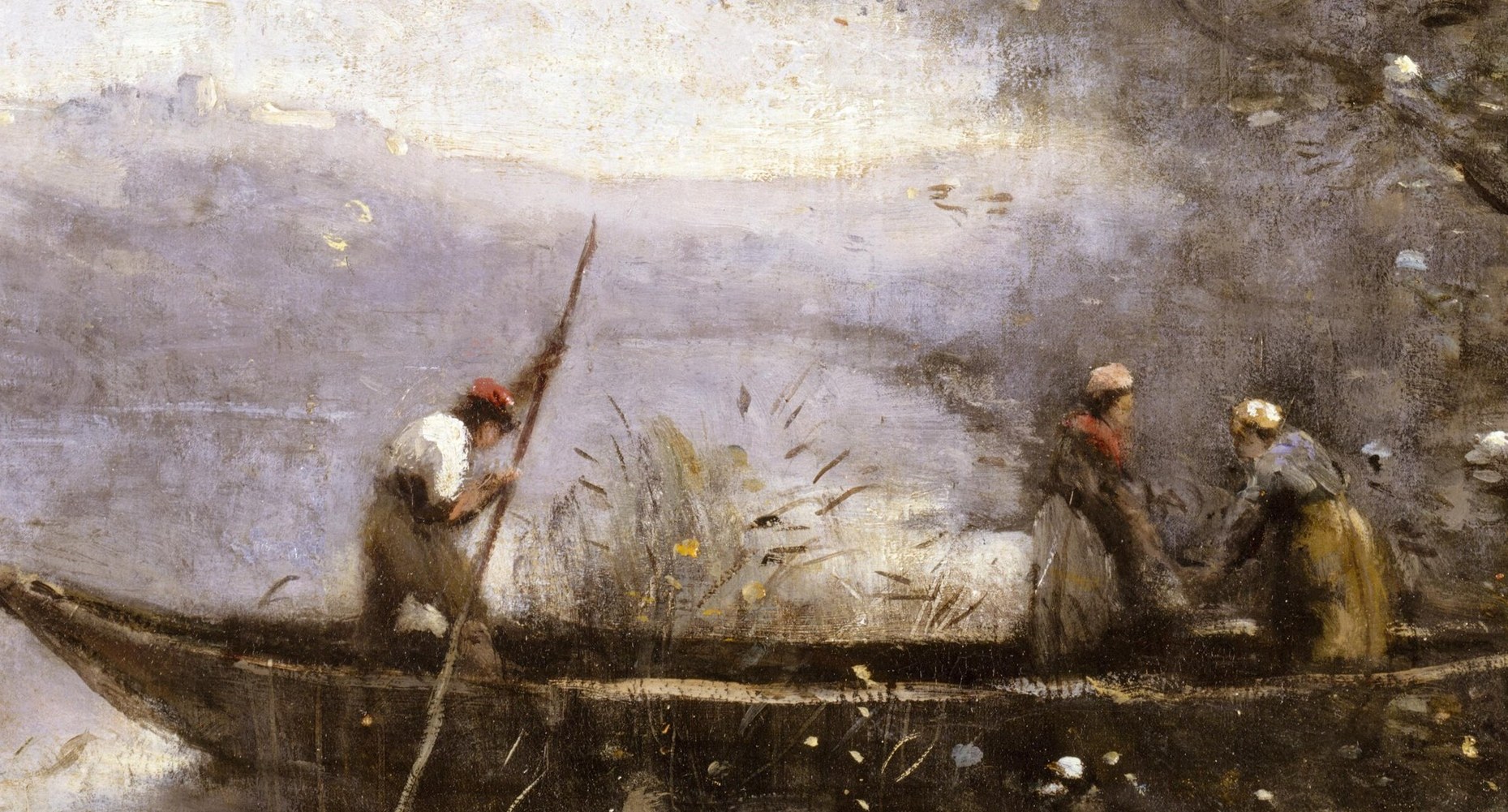
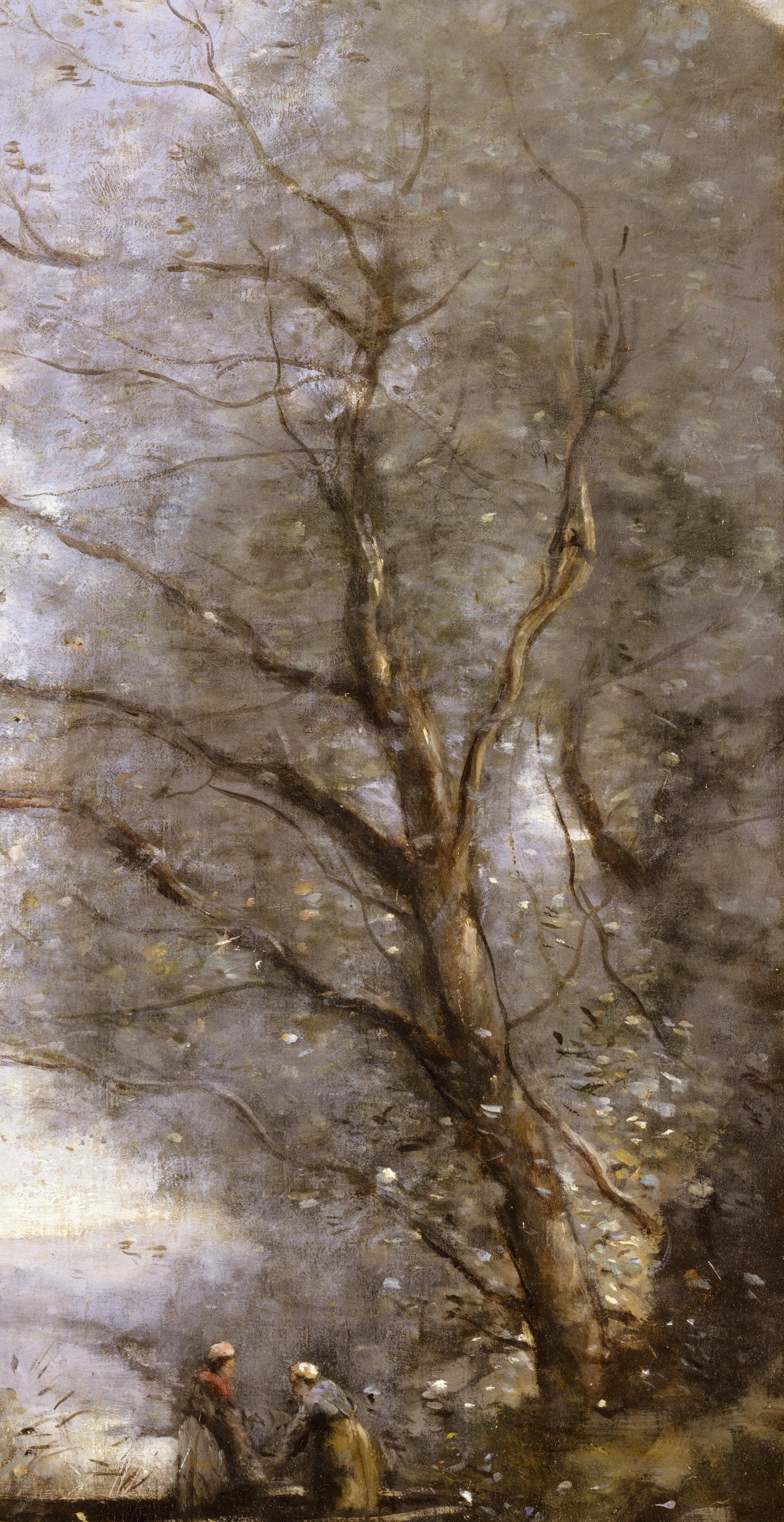
Look at the ferryman's pole, laboring on the dark water. Bundles of reeds fill the boat, suggesting a specific task or cargo. The bare branches overhead create a delicate, almost drawn, filigree against the soft sky.
Corot painted *The Ferryman* in 1865, a mature work from a pivotal artist. Known for his plein-air studies, he bridged Neo-Classicism with the Barbizon School's focus on nature. This painting shows his signature misty atmosphere and soft brushwork.
Corot's work here is both a specific scene and a symbol of transition, mirroring his own artistic journey. What does this quiet passage signify?
Details
Transcript
This ferryman rows toward a distant shore. His long pole pushes through calm, dark water. Reeds fill the boat, a harvest of labor. The boat carries three souls on their passage. Bare branches frame the sky like a sketch. Corot signed his name in 1865. He painted light, atmosphere, and quietude. Corot bridged old styles and new.