Roses and a Tulip in a Glass Vase by Thielen, Jan Philips van
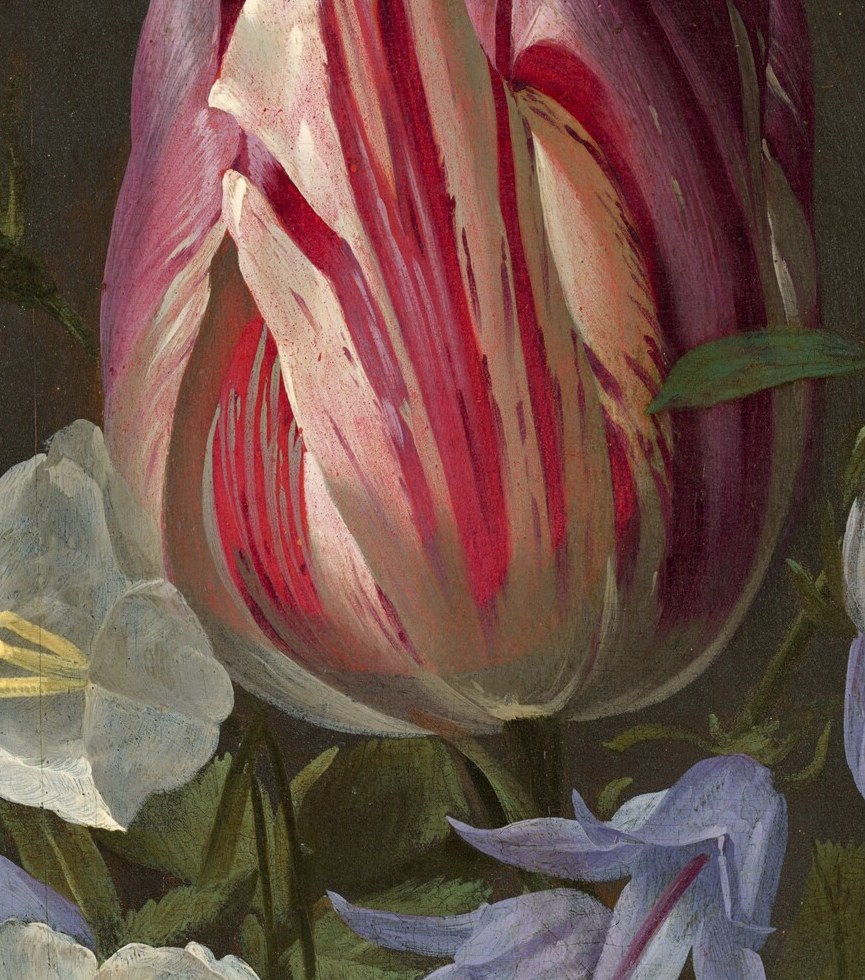
In the 17th century, a single tulip bulb could be worth more than a house, leading to a phenomenon known as "Tulip Mania." This painting, "Roses and a Tulip in a Glass Vase" by Jan Philips van Thielen, created around 1655, captures a prized red and white striped tulip, a symbol of that speculative market. It is part of the collection at the Rijksmuseum in Amsterdam.
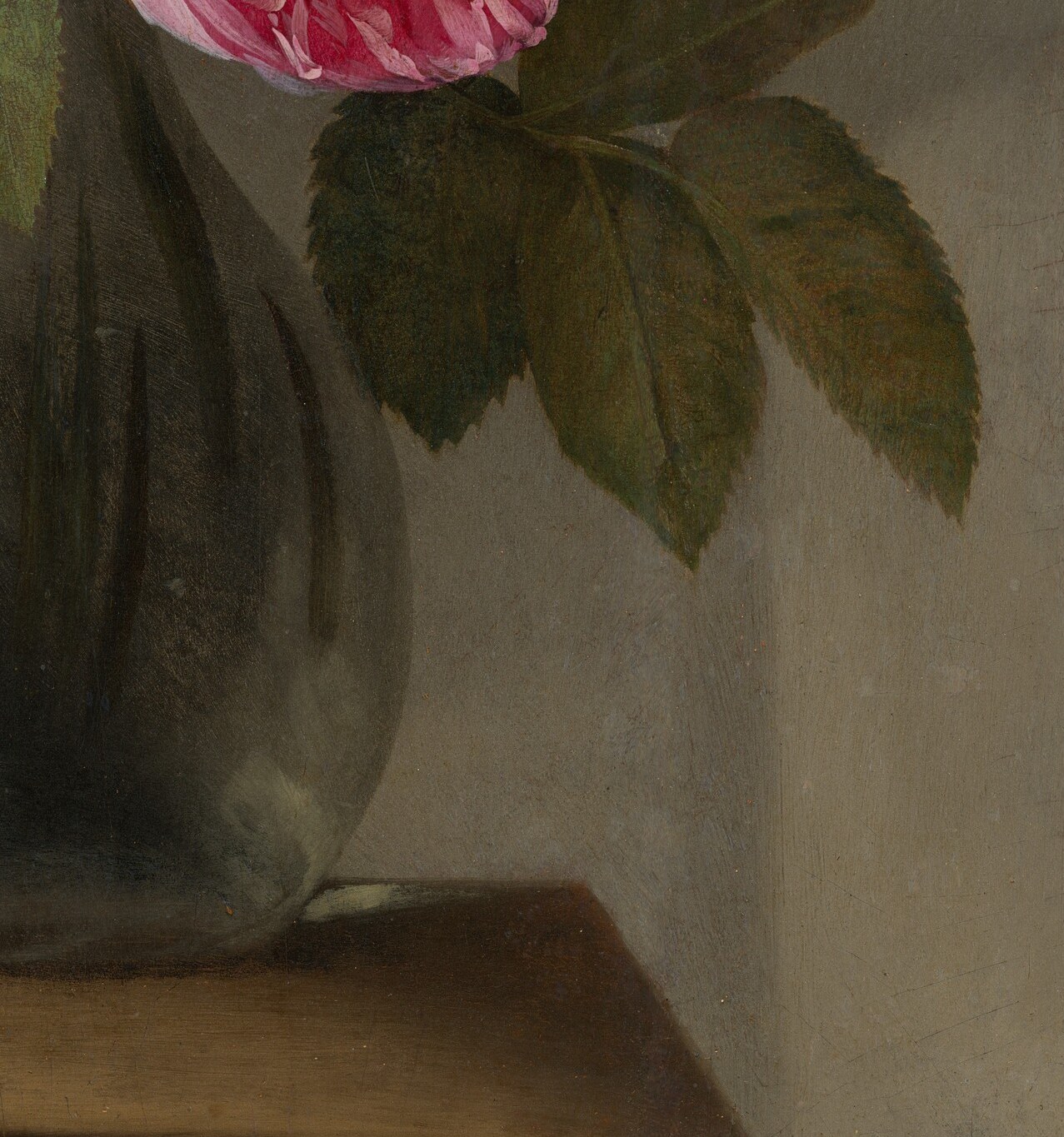
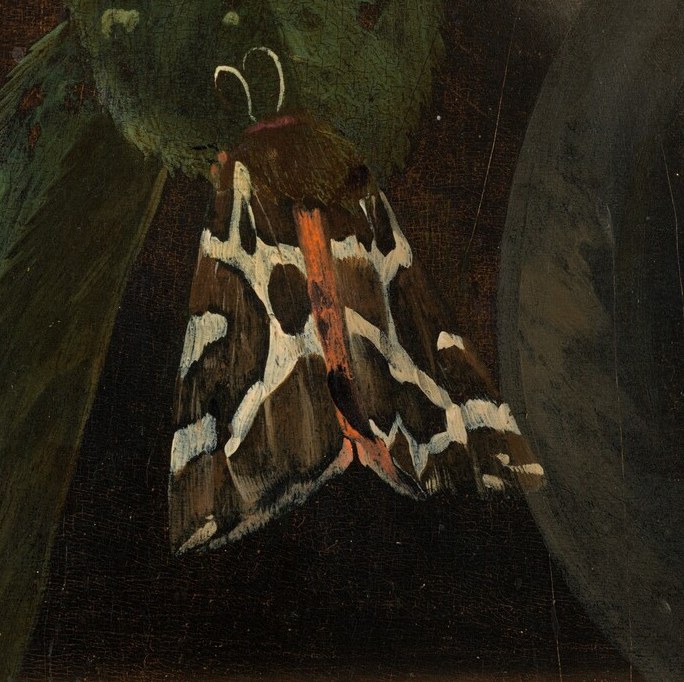
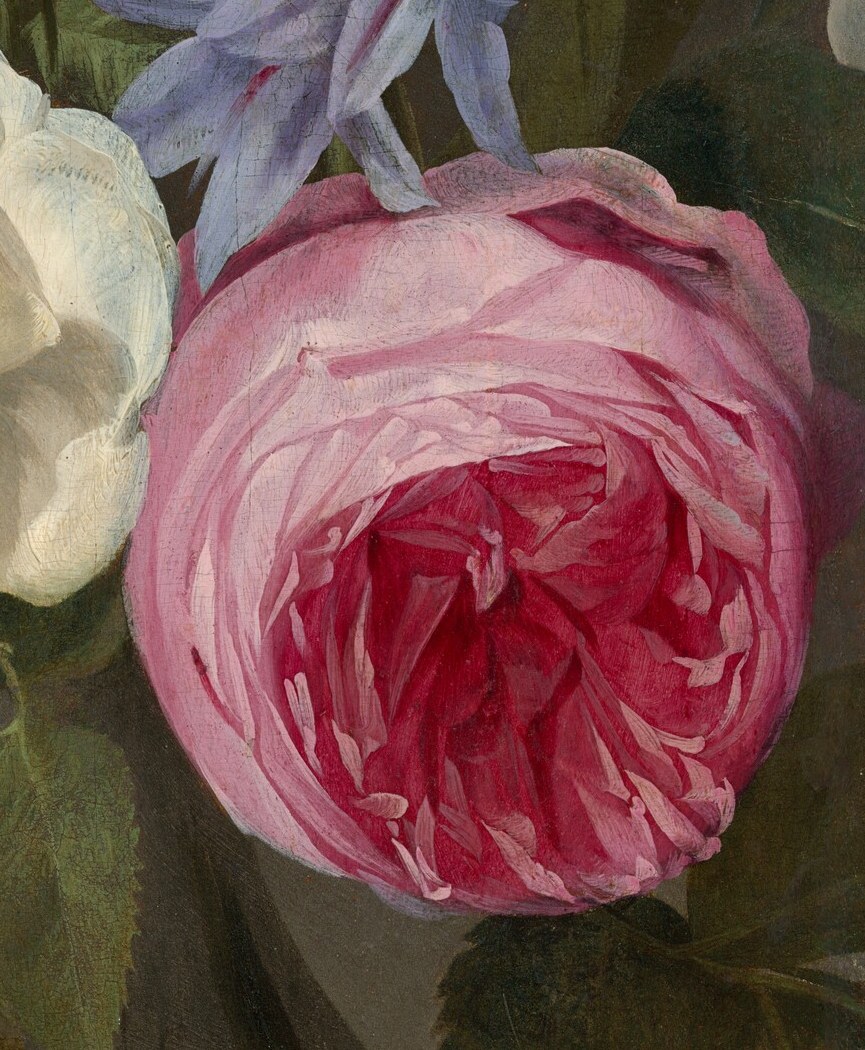
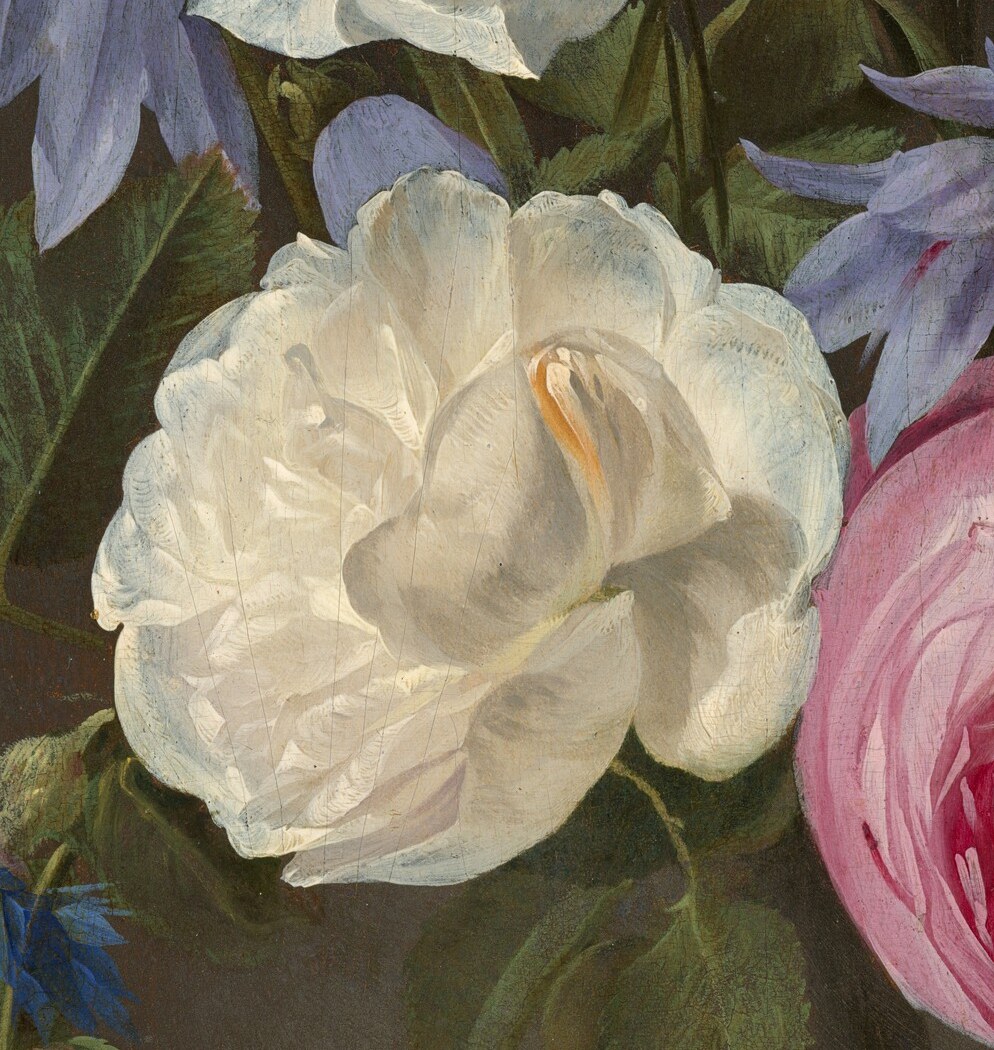
While the tulip market famously crashed, the appreciation for floral still lifes, like this one, endured. Van Thielen's meticulous brushwork renders each petal and leaf with exquisite detail, creating a vibrant arrangement that feels alive. Notice the delicate moth perched on a leaf, a common addition to such paintings that subtly reminds viewers of life's transience.
Still life painting flourished in the Low Countries during the Baroque era, often conveying deeper allegorical meanings alongside their aesthetic appeal. Artists like Van Thielen not only celebrated botanical beauty but also reflected on themes of time, wealth, and the fleeting nature of existence. This work, in its beauty and underlying message, offers a window into the values of its time.
What other hidden symbols do you think might be in paintings like these?
Details
Transcript
In the 17th century, a single tulip could cost more than a house. This red and white striped tulip was especially prized. The market for these flowers briefly boomed, then crashed. Even after the crash, flower paintings remained popular. These still lifes, like this one, celebrated natural beauty. They also hinted at the fleeting nature of life and wealth.